Source a Dual Speed Multifunctional Disperser for Coatings, Inks, and Adhesives
Compare 30 Dual Speed Multifunctional Disperser listings spanning lab units from 200 ml to production mixers up to 55 kW. Buyers can review power, rotation speed, contact materials, certifications, and packing options side by side, then request quotes from verified manufacturers.
Key considerations
Products List

$99999.00
MOQ: 1 Pieces


Double Shaft High Speed Disperser Machine for High Viscosity Material
$999.00 - $999999.00
MOQ: 1 Pieces


$6999.00 - $69999.00
MOQ: 1 Pieces


1000-2000L Working Capacity Hydraulic Lifting High Speed Paint Disperser
$1000.00 - $5000.00
MOQ: 1 Pieces


Comprehensive Sourcing Guide
Dual Speed Multifunctional Disperser Sourcing Guide
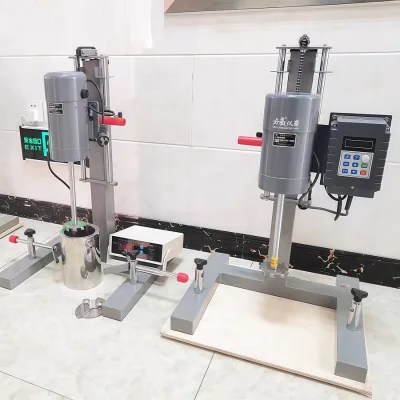
The Dual Speed Multifunctional Disperser represents a critical class of industrial mixing equipment designed to handle diverse material viscosities and particle sizes within a single unit. These machines are engineered to provide high-shear mixing capabilities, allowing buyers to process liquids with suspended solids, viscous fluids, and powders without requiring multiple dedicated machines. The core functionality relies on a robust motor system capable of stepless speed control, often featuring digital displays for precise operational adjustments ranging from low-speed stirring to high-speed homogenization.
Procurement of this equipment requires a clear understanding of the specific mechanical configurations available, as the market offers variations in stirring types, drum shapes, and layout orientations. Buyers must distinguish between vertical and horizontal layouts, as well as spiral versus forced or diving stirring mechanisms, to ensure the selected unit aligns with their specific production workflow. The versatility of these dispersers is further enhanced by additional capabilities such as milling, granulating, and coating, making them suitable for a broad spectrum of industries including chemical, agricultural, and daily chemical manufacturing.
Product Scope and Observed Listing Signals
When evaluating product listings, buyers should observe a wide range of power ratings and capacities that indicate the machine's intended scale of operation. Available models demonstrate power specifications ranging from 550W to 55kW, with capacity options spanning from 200ml to 8000ml, suggesting that the market supports both laboratory-scale testing and larger industrial batch processing. The observed price range for these units is extensive, reflecting the significant variance in motor quality, construction materials, and the complexity of the mixing drum geometry.
Listing signals also reveal distinct differences in the physical construction and operational modes of the equipment. Some units are described as new with manual lifting height adjustments, while others feature continuous operating types suitable for high-volume production lines. The mixing drum shapes vary from circular grooves to disc configurations, and the contact materials are typically specified as SUS304 or SUS316L stainless steel to ensure chemical resistance and hygiene. Buyers must carefully cross-reference these physical attributes with their specific process requirements to avoid selecting a unit with an incompatible layout or stirring type.
Technical Specifications to Verify
The motor and speed control systems are the primary technical determinants of a disperser's performance and must be verified against the intended application. High-speed mixers often utilize precision motors capable of rotation speeds up to 8000rpm, while other models may offer stepless speed control with digital displays for fine-tuning the shear force applied to the material. It is essential to confirm whether the motor is a force-cooled wind type or a standard precision motor, as this impacts the thermal management and longevity of the unit during extended operation cycles.
Material compatibility and mechanical durability are equally critical verification points that define the equipment's suitability for specific chemical environments. The contact materials, typically stainless steel grades like SUS304 or SUS316L, must be selected based on the corrosiveness of the fluids being processed. Additionally, the false work components, which may be constructed from stainless steel or carbon steel, should be inspected to ensure they can withstand the mechanical stress of the mixing process. Buyers should also verify the extraction tower type, such as vibration plate towers, if the application involves complex separation or drying processes integrated with the mixing phase.
Compliance and Safety Documentation
Certification status is a fundamental requirement for ensuring that the disperser meets international safety and quality standards before deployment. The market listings indicate that units may carry certifications such as CE, ISO, SONCAP, GOST, CCC, and API, each corresponding to different regional regulatory frameworks and industry-specific safety protocols. Procurement teams must verify that the specific model ordered holds the necessary certifications for the destination country and the intended industrial application, as the absence of these documents can lead to compliance violations and operational shutdowns.
Safety documentation extends beyond certifications to include detailed operational manuals and maintenance guidelines that ensure safe usage. The equipment often comes with a guarantee period, typically 12 months, which serves as a baseline for the manufacturer's confidence in the product's reliability. Buyers should also confirm the availability of after-sales service, specifically whether engineers are available to service the machinery overseas, as this is a critical factor for maintaining operational continuity in global supply chains. Proper documentation ensures that the machine can be operated safely and maintained effectively throughout its lifecycle.
Cost Drivers and Commercial Terms
The total cost of ownership for a Dual Speed Multifunctional Disperser is heavily influenced by the power rating, motor quality, and the complexity of the mixing drum design. Units with higher power outputs, such as those ranging from 4kW to 55kW, and those featuring advanced features like digital speed displays and specialized stirring types, command higher price points. The observed price range of 300 to 999,999 USD reflects the vast difference between basic laboratory models and heavy-duty industrial systems, requiring buyers to align their budget with the specific performance metrics needed for their production line.
Commercial terms regarding packaging and shipping are also significant cost drivers that affect the final landed cost of the equipment. Listings show a variety of packaging options, including wooden packages, carton boxes, wood encases, and plywood cases, each offering different levels of protection during transit. The origin of the product, often listed as China or specifically Shanghai, influences logistics costs and lead times, which must be factored into the procurement timeline. Buyers should negotiate clear terms regarding the minimum order quantity, which can be as low as one unit, and ensure that the packaging is robust enough to prevent damage during international shipping.
Supplier Qualification and Quality Control
Supplier qualification involves a rigorous assessment of the manufacturer's ability to deliver consistent quality and adhere to the specified technical standards. The presence of multiple certifications such as ISO and CE suggests a baseline level of quality management, but buyers should verify the specific scope of these certifications to ensure they cover the manufacturing processes relevant to the disperser. It is crucial to confirm that the supplier has a track record of providing machinery that meets the exact specifications for stirring type, layout, and material contact, as deviations can compromise the final product quality.
Quality control measures should be established to verify the physical attributes of the equipment before final acceptance. Buyers must inspect the condition of the machinery, ensuring it is new and free from defects, and verify that the mixing drum shape and stirring type match the order specifications. The verification of the motor type and power rating is essential to confirm that the unit will perform as expected under load. Additionally, the supplier's commitment to after-sales support, including the availability of overseas engineers, serves as a key indicator of their long-term reliability and dedication to customer satisfaction.
Long-Term Procurement Checks
Sustaining the operational efficiency of a Dual Speed Multifunctional Disperser requires a proactive approach to maintenance and performance monitoring. Buyers should establish a schedule for regular inspections of the motor, speed control systems, and mixing drum components to prevent wear and tear from affecting the quality of the mixed product. The ability to perform stepless speed adjustments and maintain high-speed rotation without overheating is a key performance indicator that should be monitored over time to ensure the machine remains within its optimal operating parameters.
Long-term procurement strategies also involve evaluating the supplier's capacity to provide spare parts and technical support as the equipment ages. The availability of engineers for overseas service is a critical component of this strategy, ensuring that any mechanical issues can be resolved quickly to minimize downtime. Buyers should also consider the versatility of the machine, such as its ability to handle different applications like milling, granulating, and drying, to ensure it remains a valuable asset as production needs evolve. Regular reviews of the equipment's performance against the original specifications will help identify any necessary upgrades or replacements before they become critical failures.
FAQs
What is the maximum rotation speed of the Dual Speed Multifunctional Disperser?
The maximum rotation speed is 8000 rpm. This range allows for high-speed mixing suitable for various liquid and viscous fluid applications. The speed is adjustable via stepless speed control with a digital display for precise operation.
Which materials are used for the contact parts of the disperser?
The contact materials are SUS304 or SUS316L stainless steel. These materials provide corrosion resistance and durability for handling liquids, powders, and granules. The machine body may also use carbon steel depending on the specific model configuration.
What is the capacity range of the Dual Speed Multifunctional Disperser?
The capacity range is 200 to 8000 ml. This range supports small-scale laboratory testing as well as larger batch processing. The vertical layout and manual lifting height adjustment facilitate easy loading and unloading of materials.
Can the Dual Speed Multifunctional Disperser handle viscous fluids?
Yes, it can handle viscous fluids, liquids, powders, and granules. The stirring type varies by model, including spiral, diving, and forced types. This versatility makes it suitable for chemical, agricultural, and daily chemical applications.
What certifications are available for the Dual Speed Multifunctional Disperser?
Available certifications include CE, ISO, SONCAP, GOST, CCC, and API. These certifications ensure compliance with international safety and quality standards. Buyers should verify the specific certification list for their target market before ordering.
What is the power consumption of the Dual Speed Multifunctional Disperser?
Power consumption ranges from 4 to 55 kW. Specific models like the EDF-550 use 550W, while larger units like the EBF-18.5 use higher power. The voltage options include 220V, 380V, 415V, 440V, and 460V to match local electrical standards.
How is the Dual Speed Multifunctional Disperser packaged for shipping?
Packaging options include wooden packages, cartons, wood encases, and plywood cases. The choice of packaging depends on the specific model and shipping requirements. Proper packaging ensures the equipment remains secure during international transport.