Source Dump Trailers for Mining Construction and Logistics
Explore 30 available Dump Trailer options ranging from heavy-duty steel models to self-dumping variants with varying axle configurations. Buyers can compare specifications like load capacity, suspension systems, and dimensions to find the right semi-trailer for their transport needs.
Key considerations
Products List


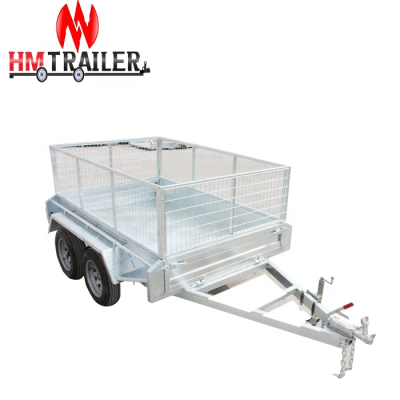


Direct Sale From Chinese Factories, Followed by Double-Axle Dump Trailers
$3800.00 - $3950.00
MOQ: 1 set

Direct Sale From Chinese Factories, Followed by Double-Axle Dump Trailers
$4650.00 - $4885.00
MOQ: 1 set


Comprehensive Sourcing Guide
Strategic Sourcing Guide for Heavy-Duty Dump Trailers
Understanding Technical Specifications and Variability
When sourcing a Dump Trailer, particularly for heavy industrial applications, the first step is to recognize that technical specifications are not uniform across the market. Buyers must treat product attributes as observations of specific listings rather than universal claims for every unit. The core keyword "Dump Trailer" encompasses a wide range of configurations, from self-dumping hydraulic tipper semi-trailers to flatbed variants designed for specific load capacities. A critical observation from current market data indicates that load capacities can vary significantly, with observed figures ranging from 30 tons to 50 tons and even up to 60,000 kilograms in specific heavy-duty models. This variance necessitates a rigorous verification process where the buyer must confirm the exact Gross Vehicle Weight Rating (GVWR) and payload capacity for the specific model under consideration.
The structural integrity of these trailers is often defined by the material grade and thickness. High-confidence data points to the use of steel and iron as primary construction materials, with specific models featuring a "Heavy Duty" grade. For the chassis and body, thickness specifications are vital; observed data suggests a bottom plate thickness of 8mm and side plate thickness of 6mm for certain heavy-duty units. However, buyers should not assume this applies to all listings. The overall dimensions also vary, with observed standard lengths around 10,000mm to 10,800mm, widths consistently near 2,500mm, and heights ranging from 3,000mm to 3,668mm. The wheelbase is another critical dimension, with observed ranges spanning from 7,000mm to 10,000mm depending on the axle configuration.
Axle configuration is a primary differentiator in Dump Trailer performance. While some listings specify a 3-axle setup with a total load capacity of 30 tons, others detail specific axle brands like Fuwa, with individual axle ratings of 13 tons or 16 tons. The number of axles directly influences the distribution of weight and the legal road compliance of the vehicle. Furthermore, the suspension system varies significantly between models. Buyers may encounter options ranging from leaf spring suspension to air suspension systems, and even cross-arm or multi-link types. The selection of the suspension system must align with the terrain and the nature of the cargo; air suspension offers superior ride quality for sensitive loads, while leaf springs provide robust durability for rough, off-road environments.
Compliance and Certification Verification
Navigating the regulatory landscape is essential for importing and operating dump trailers in various jurisdictions. The market data highlights a diverse array of certifications, including CCC (China Compulsory Certification), DOT (Department of Transportation), CE (Conformité Européenne), GCC (Gulf Cooperation Council), and ECE (Economic Commission for Europe). Additionally, ISO standards are frequently cited, sometimes appearing as ISO/TSCCC or simply ISO. It is crucial for buyers to understand that the presence of a certification on a product listing does not guarantee that the specific unit being purchased is certified for the buyer's local market.
Buyers must verify that the certification matches the destination country's requirements. For instance, a trailer certified under CCC is primarily for the Chinese domestic market, while DOT certification is required for operation in the United States. Similarly, CE and ECE marks are relevant for European markets. The data also mentions SGS as a standard, which often refers to inspection and testing services rather than a product certification itself. When evaluating a supplier, the procurement team should request valid, current certificates for the specific model number, such as SCD9400GYY or SCD1D10SCE5C02FD, rather than accepting generic claims.
The "Condition" of the product is another compliance factor. All observed listings indicate the products are "New," which is a standard expectation for B2B procurement. However, buyers should also check for any "ISOCondition:New" notations to ensure the manufacturing process adheres to quality management systems. It is important to note that while "reach" is mentioned in low-confidence background data, it should not be relied upon for concrete compliance claims. Instead, buyers should focus on the high-confidence certifications listed above and request third-party verification reports to ensure the trailer meets all safety and environmental standards required for operation in the target region.
Cost Drivers and Pricing Dynamics
The pricing of dump trailers is influenced by a complex matrix of factors, including material costs, axle quality, suspension type, and customization options. The observed price range in the market is extremely wide, spanning from $1 to $23,000 USD. This vast disparity indicates that the lowest prices likely correspond to basic, lighter-duty models or incomplete configurations, while the higher end reflects fully equipped, heavy-duty units with premium components like air suspension and specialized hydraulic systems. Buyers must be cautious not to equate a low price with a standard product; a $1 listing is likely a placeholder or a component price rather than a complete trailer.
Material grade is a primary cost driver. Models described as "Heavy Duty" with steel construction and thicker plate dimensions (8mm bottom, 6mm side) will inherently cost more than "Medium Duty" or "Iron" grade alternatives. The axle brand and rating also significantly impact the final price. A trailer equipped with 16-ton Fuwa axles will be more expensive than one with 13-ton axles. Similarly, the inclusion of advanced features such as ABS Anti-lock Braking Systems adds to the cost. While some listings explicitly state the presence of ABS, others note "No ABS Anti-lock Braking System," which will result in a lower price point but may affect safety compliance in certain markets.
Customization is another factor that can alter the cost structure. The market data confirms that customization is available, allowing buyers to tailor the trailer to specific operational needs. This could involve adjusting the wheelbase, changing the suspension type, or modifying the dimensions. However, customization often extends lead times and increases the unit price. The minimum order quantity (MOQ) is another financial consideration, with observed ranges from 1 to 20 units. Buyers purchasing a single unit may face higher per-unit costs compared to those placing bulk orders, although the data does not specify exact volume discounts.
Typical Applications and Operational Context
Dump trailers are designed for a variety of heavy-duty applications, primarily in construction, mining, and bulk material transport. The "Factory Heavy Duty 3 Axle Hydraulic Tipper Trailer" is specifically engineered for transporting loose materials such as sand, gravel, soil, and demolition debris. The self-dumping feature, confirmed in the product attributes, allows for efficient unloading without the need for additional machinery, making these trailers ideal for remote construction sites or mining operations where infrastructure is limited.
The load capacity determines the suitability for specific tasks. A 30-ton capacity trailer is suitable for medium-scale construction projects, while a 50-ton or 60,000kg capacity unit is better suited for large-scale mining or heavy infrastructure projects. The shape of the trailer, such as the "Flatbed" or "Rear Dump Tipper" configurations, also dictates its application. Flatbeds are versatile for carrying various types of cargo, while rear dump tipper trailers are optimized for bulk materials that need to be tipped quickly.
The tire specifications, such as 12r22.5 or 1200r22.5 with 12 units, are critical for maintaining traction and stability on rough terrain. The tread width, observed at 1820mm or 2240mm, affects the trailer's stability and load distribution. Buyers should match the tire and tread specifications to the expected road conditions; wider treads provide better stability on soft ground, while narrower treads may be more fuel-efficient on paved roads. The landing gear, typically rated at 28 tons, is essential for supporting the trailer when it is detached from the towing vehicle, ensuring safe storage and loading operations.
Supplier Evaluation and Geographic Considerations
When evaluating potential suppliers, geographic origin plays a significant role in logistics and quality perception. The majority of the observed listings originate from Shandong Province, China, with specific mentions of Shandong Yuncheng. This region is a known hub for heavy vehicle manufacturing, offering a concentration of suppliers with established supply chains for steel, axles, and hydraulic components. However, buyers should not assume that all suppliers from this region offer identical quality. The "prod_origin" field should be treated as a starting point for due diligence rather than a guarantee of quality.
Supplier evaluation should focus on the transparency of their product attributes. A reliable supplier will provide detailed specifications for every component, including the axle brand, suspension type, and material thickness. The presence of specific model numbers, such as SCD9400GYY, indicates a standardized production process, which is preferable to generic, unbranded listings. Buyers should also verify the supplier's ability to handle customization requests, as this demonstrates flexibility and technical capability.
The "prod_packing" method is another indicator of supplier professionalism. Options range from "Wax Spraying" to "Nude, Polish with Wax Before Shipment." Proper packing is essential to prevent corrosion during transit, especially for steel trailers. A supplier that offers polished and waxed finishes demonstrates a commitment to protecting the product's integrity. Additionally, the availability of certifications like ISO and CCC should be verified through direct communication with the supplier, ensuring that the documentation is current and valid for the specific batch of goods.
Quality Control and Long-Term Procurement
Ensuring the long-term reliability of a Dump Trailer requires a robust quality control (QC) strategy. Buyers should implement a multi-stage QC process that includes pre-shipment inspections and post-delivery testing. Key areas to inspect include the welding quality of the chassis, the functionality of the hydraulic tipping system, and the alignment of the axles. The thickness of the steel plates, observed at 8mm for the bottom and 6mm for the sides, should be verified using ultrasonic thickness gauges to ensure they meet the specified standards.
Long-term procurement considerations involve assessing the availability of spare parts and the supplier's after-sales support. The use of branded components, such as Fuwa axles, is advantageous because these parts are widely available in the global market, reducing downtime in case of failure. Buyers should also consider the maintenance requirements of different suspension systems; air suspension may require more frequent maintenance than leaf springs but offers better performance in specific conditions.
The lead time and production capacity of the supplier are critical for project planning. While specific lead times are not provided in the data, the MOQ range of 1 to 20 units suggests that suppliers can accommodate both small and large orders. Buyers should negotiate clear delivery schedules and penalties for delays in the contract. Finally, the warranty terms should be carefully reviewed to ensure coverage for structural defects and hydraulic system failures. By focusing on these quality control and long-term factors, buyers can mitigate risks and ensure the procurement of dump trailers that deliver value over their entire lifecycle.
Summary of Key Technical Observations
| Attribute | Observed Range/Value | Verification Note |
|---|---|---|
| Load Capacity | 30T - 60,000kg | Verify specific model GVWR |
| Material Grade | Heavy Duty, Medium Duty | Confirm plate thickness (e.g., 8mm/6mm) |
| Axle Configuration | 3 Axles, 13T-16T (Fuwa) | Check axle brand and rating |
| Suspension | Leaf Spring, Air, Cross Arm | Match to terrain and load type |
| Dimensions | 8200mm-10800mm (L) | Confirm internal vs. external dimensions |
| Certifications | CCC, DOT, CE, ISO | Match to destination country requirements |
| Tires | 12r22.5, 1200r22.5 | Verify tread width and quantity |
This guide emphasizes the importance of treating product attributes as specific observations rather than universal standards. By rigorously verifying specifications, certifications, and supplier capabilities, buyers can make informed decisions that align with their operational needs and regulatory requirements.
FAQs
What customization options are available for dump trailers?
Customization is available for these dump trailers to meet specific operational needs. Buyers can request adjustments to wheelbase, suspension type, or dimensions while noting that such changes may affect lead times and unit pricing.
Which suspension systems are offered for heavy-duty models?
Various suspension systems are available including air suspension, leaf spring suspension, cross-arm type, and multi-link type. The selection depends on terrain requirements, with air suspension offering better ride quality and leaf springs providing durability.
How does the load capacity vary across different Dump Trailer models?
Load capacities vary significantly, with observed figures ranging from 30 tons to 50 tons and up to 60,000 kilograms for heavy-duty units. Buyers must verify the exact Gross Vehicle Weight Rating for the specific model under consideration.
What certifications are typically listed for these dump trailers?
Common certifications include CCC, DOT, CE, GCC, ECE, and ISO standards. Buyers should verify that the specific certification matches the destination country's requirements rather than assuming all listed certifications apply to every unit.
Can buyers find dump trailers with specific axle brands like Fuwa?
Yes, specific models feature Fuwa brand axles with ratings of 13 tons or 16 tons. The axle configuration directly influences weight distribution and legal road compliance, making it a critical selection factor for heavy industrial applications.
What are the standard dimensions for heavy-duty dump trailers?
Standard dimensions often include lengths around 10,000mm to 10,800mm, widths near 2,500mm, and heights ranging from 3,000mm to 3,668mm. The wheelbase typically spans from 7,000mm to 10,000mm depending on the axle configuration.
How does the material grade affect the pricing of dump trailers?
Material grade is a primary cost driver, with heavy-duty steel models costing more than medium-duty or iron alternatives. Thicker plate dimensions, such as 8mm bottom and 6mm side, also contribute to higher pricing and structural integrity.