Source Dump Trailer Tarp Retention Bar for Stone Sand Transport
Compare 30 Dump Trailer Tarp Retention Bar options from Chinese manufacturers for transporting stone, sand, and heavy materials. These units feature steel construction, hydraulic tipping, and various suspension systems to meet heavy-duty logistics needs.
Key considerations
Products List
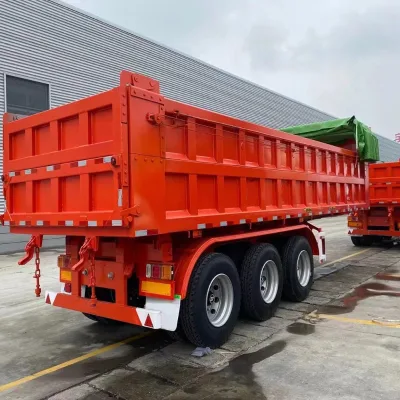
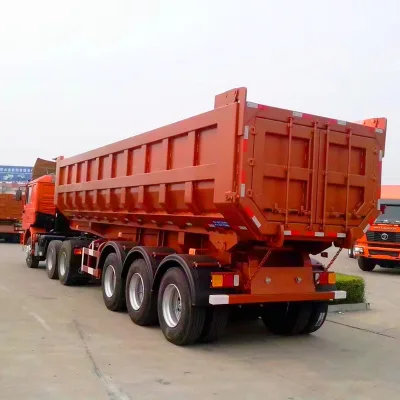


Robust Agricultural Tipping Trailer for Heavy-Duty Transport Solutions
$7000.00 - $12000.00
MOQ: 1 Pieces

High-Performance Drawbar Tractor Trailer Designed for Maximum Load Capacity
$7000.00 - $12000.00
MOQ: 1 Pieces


Manual Crank Kit Spring Bar Tension Bar Dump Truck Trailer Mesh Tarp System
$37.00 - $45.00
MOQ: 100 Pieces

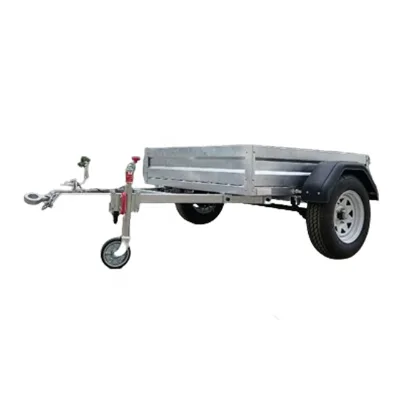


12X7 4500kg Heavy Duty Dual Axle Tarp Rolling Net Cover Hydraulic Dump Trailer
$3650.00 - $3690.00
MOQ: 8 Pieces


Drawbar Trailer Hydraulic Rear Dump Full Trailer Full Tipper Trailer for Mining Transportation
$6200.00 - $8300.00
MOQ: 1 Pieces


14rb Roll-off Bumper Pull Dump Trailer for Efficient Material Transport
$7000.00 - $15000.00
MOQ: 1 Pieces


Comprehensive Sourcing Guide
Strategic Sourcing Guide for Dump Trailer Tarp Retention Bar Systems
Understanding the Technical Specifications of Retention Bar Systems
When sourcing a Dump Trailer Tarp Retention Bar, buyers must first distinguish between the primary cargo hauling unit and the specific accessories required for load security. The core product context provided indicates a heavy-duty dump semi-trailer designed for transporting materials such as stone and sand. These trailers typically feature a flatbed or tipper configuration with dimensions ranging from 8000mm to 10000mm in length and widths between 2500mm and 3250mm. The retention bar system is an integral component of the tarping mechanism that ensures loose aggregate materials remain contained during transit.
The technical requirements for these bars are dictated by the trailer's structural geometry and payload capacity. For a trailer with a maximum payload of 60 tons and an overall dimension of 10000mm x 2500mm x 3500mm, the retention bars must possess sufficient tensile strength to withstand dynamic forces generated during braking, cornering, and road irregularities. The bars are typically constructed from steel, matching the heavy-duty grade of the trailer chassis. In the context of the supplied data, the trailer material is explicitly noted as steel, implying that retention bars should also be fabricated from high-grade steel to prevent deformation under the stress of a 60,000 kg load.
The mounting interface is another critical technical specification. The retention bars must align with the side rails or the upper edge of the trailer bed. For a dump trailer with a wheelbase of 8000-9000mm, the spacing of the retention bars must be consistent to ensure the tarp fabric, which may be a 1000d1000d 2020 customized base fabric, is held taut without sagging. The bars often function in conjunction with a cross-arm type suspension system, although the suspension primarily supports the chassis rather than the tarp mechanism directly. However, the stability of the suspension affects the vibration profile that the retention bars must endure. Buyers should verify that the bar design accommodates the specific side rail thickness and curvature of the target trailer model, such as the SCD9400GYY or YM-75BTT models mentioned in the product data.
Compliance and Certification Verification Protocols
In the heavy transport sector, compliance is not merely a regulatory formality but a fundamental safety requirement. The supplied product data indicates that the dump semi-trailers originate from manufacturers in Liaoning, Shandong, and Jiangsu provinces in China, and carry certifications such as ISO and TSCCC. While these certifications generally apply to the main trailer chassis and manufacturing process, the retention bar system must be compatible with these certified units to maintain the overall vehicle's compliance status.
Buyers must verify that the retention bars do not compromise the structural integrity validated by the ISO/TSCCC certifications. For instance, if the trailer is certified for a specific axle load distribution (such as the 13-ton Fuwa brand axles mentioned), any modification or addition of heavy retention hardware must not alter the center of gravity or the load distribution in a way that voids these certifications. The certification status of the raw materials used for the bars, particularly the steel grade, should be traceable. Although specific numerical test results for the bars are not provided in the source data, the "Heavy Duty" grade designation suggests that the materials meet rigorous industrial standards.
Furthermore, the finish of the retention bars is a compliance factor regarding corrosion resistance. The product data mentions a "Powder-Coated" finish and "Wax Spraying" as standard processes for the trailers. A retention bar system that lacks a similar protective finish may corrode rapidly, leading to failure and potential regulatory citations for unsafe cargo containment. Buyers should request documentation confirming that the bar finish meets the same environmental resistance standards as the trailer body, ensuring that the entire cargo containment system remains compliant with road safety regulations over the vehicle's lifecycle.
Cost Drivers and Economic Factors in Procurement
The cost of a Dump Trailer Tarp Retention Bar system is influenced by several variables, including material volume, manufacturing complexity, and surface treatment requirements. The primary cost driver is the grade of steel used. Given the requirement for a "Heavy Duty" application capable of securing loads for a 60-ton trailer, the cost will be significantly higher than standard light-duty alternatives. The thickness of the steel, which for the trailer body is specified as 8mm for the bottom and 6mm for the sides, serves as a benchmark for the robustness required in the retention hardware.
Secondary cost factors include the customization level. The product data notes that "Customization" is available and that the base fabric can be customized. Similarly, retention bars may need to be custom-fabricated to fit specific trailer models like the SCD9400GYY or to accommodate unique tarping mechanisms. Customization typically incurs additional tooling and setup costs. The quantity ordered also plays a role; while the observed Minimum Order Quantity (MOQ) for the trailers ranges from 1 to 100 units, individual accessory orders may have different thresholds. Buyers should anticipate that smaller order volumes for specialized retention bars may result in a higher unit price due to the lack of economies of scale.
Logistics and packaging are also economic considerations. The single package size for the trailers is listed as 800x325x150 cm, and the gross weight is 6800.000 kg. While retention bars are smaller, they are often shipped in bulk. The "Box & Pallet" packing method mentioned in the data suggests that organized, secure packaging is standard, which adds to the cost but reduces the risk of damage during transit. Buyers should evaluate the total landed cost, including shipping from origins in Liaoning, Shandong, or Jiangsu, rather than focusing solely on the unit price, as freight costs for heavy steel components can be substantial.
Typical Applications and Operational Context
The primary application for dump trailer tarp retention bars is the secure transport of loose bulk materials. The product data explicitly states the function is to "Transport stone, sand." These materials are prone to shifting, spilling, and becoming airborne if not properly contained. The retention bar system is essential for maintaining the integrity of the tarp cover, which prevents debris from scattering onto roadways, a common cause of traffic accidents and environmental hazards.
In addition to stone and sand, these systems are suitable for other heavy aggregates, construction debris, and industrial waste. The "Self-dumping" feature of the trailers implies that the retention bars must withstand the dynamic forces generated during the tipping process. When the trailer bed is raised to unload, the tarp and retention system must remain secure to prevent the load from shifting prematurely or the tarp from tearing. The "Cross Arm Type" suspension system noted in the data further highlights the need for a robust retention system that can handle the vertical and horizontal movements associated with heavy-duty hauling.
The versatility of the system is also important. The product data mentions "Customers Optional" for color and "Customization" for various attributes. This suggests that retention bars can be adapted for different operational environments. For example, in regions with high humidity or salt exposure, enhanced corrosion-resistant coatings may be necessary. In high-speed transport scenarios, the aerodynamic profile of the retention bars might be optimized to reduce wind resistance, although this is not explicitly detailed in the source data. Buyers should assess their specific operational needs, such as the frequency of loading and unloading and the types of terrain traversed, to determine the optimal specification for their retention bar system.
Supplier Evaluation and Quality Assurance Strategies
Evaluating suppliers for dump trailer retention bars requires a rigorous approach to quality assurance, particularly given the heavy-duty nature of the application. The source data lists multiple origins, including Liaoning, Shandong, and Jiangsu provinces, indicating a competitive market with various manufacturing capabilities. Buyers should prioritize suppliers who demonstrate a clear understanding of the specific trailer models they intend to support, such as the "Three Horses" brand or the "SCD9400GYY" model.
Quality control should begin with the verification of material certifications. Since the trailer axles are specified as "Fuwa Brand" or "BPW Brand," the retention bar supplier should be able to provide comparable documentation for their steel components. The "Heavy Duty" grade mentioned in the data is a qualitative claim that must be substantiated by mill test reports or third-party testing. Buyers should request samples for physical inspection to verify the thickness, weld quality, and finish consistency. The "Powder-Coated" finish mentioned in the data should be checked for uniformity and adhesion to ensure long-term durability.
Supplier reliability is another critical factor. The observed price range of 0.6 to 17000 USD and MOQs of 1 to 100 suggest a wide variety of supplier tiers. Buyers should avoid suppliers who cannot provide clear lead times or who lack a track record of supplying components for certified trailers. The presence of "ISO/TSCCC" certification on the main trailers is a strong indicator of a supplier's commitment to quality, and retention bar suppliers should ideally be part of the same supply chain ecosystem or hold equivalent certifications. Buyers should also evaluate the supplier's ability to handle customization requests, as the data indicates that customization is a standard offering.
Long-Term Procurement and Lifecycle Management
Long-term procurement considerations for dump trailer retention bars extend beyond the initial purchase price to include maintenance, replacement cycles, and total cost of ownership. The "Condition: New" status of the products indicates that buyers are acquiring fresh inventory, but the longevity of the bars depends on the operating environment. In high-abrasion environments involving stone and sand, the retention bars may suffer from wear and tear, particularly at the contact points with the tarp and the trailer rails.
Buyers should establish a maintenance schedule that includes regular inspections for rust, deformation, and loose fittings. The "Wax Spraying" and "Powder-Coated" finishes are designed to protect against corrosion, but these coatings can degrade over time. Procurement strategies should include the availability of spare parts and the ability to source replacement bars quickly to minimize downtime. The "Customization" option allows for future-proofing; if a fleet requires different bar configurations for different trailers, a supplier with flexible manufacturing capabilities is essential.
Furthermore, the integration of retention bars with the trailer's overall lifecycle is crucial. As trailers are retired or upgraded, the retention systems must be compatible with new models or adaptable to existing ones. The "Single gross weight" of 6800.000 kg for the trailer suggests that the retention system must be lightweight yet strong to avoid adding unnecessary weight that could reduce payload capacity. Buyers should consider the weight of the retention bars in their total vehicle weight calculations to ensure compliance with road weight limits. Finally, the "Selling Units: Single item" designation implies that buyers can purchase individual bars or small sets, which is beneficial for replacing worn components without the need to buy a full set, thereby optimizing inventory costs.
Comparative Analysis of Retention Bar Features
To assist buyers in making informed decisions, the following table compares key features based on the provided product data and industry standards for heavy-duty dump trailers.
| Feature Category | Standard Specification | Heavy-Duty Requirement | Verification Method |
|---|---|---|---|
| Material | Standard Steel | Heavy Duty Steel (Grade verified) | Mill Test Reports |
| Finish | Basic Paint | Powder-Coated / Wax Sprayed | Visual Inspection & Adhesion Test |
| Load Capacity | Light Duty (<10 tons) | 60 Tons Payload Support | Structural Load Testing |
| Compatibility | Universal Fit | Model Specific (e.g., SCD9400GYY) | Dimensional Alignment Check |
| Certification | None | ISO / TSCCC Compatible | Certification Documentation |
| Customization | Fixed Dimensions | Customizable (Length/Shape) | Supplier Capability Review |
| Origin | Various | Liaoning, Shandong, Jiangsu | Supply Chain Audit |
This comparison highlights that while standard bars may suffice for light loads, the specific requirements of a 60-ton dump trailer necessitate a heavy-duty approach. The verification methods listed are essential for ensuring that the selected retention bar system meets the rigorous demands of transporting stone and sand without compromising safety or compliance. Buyers should use this framework to evaluate potential suppliers and ensure that the final procurement aligns with the high standards observed in the supplied product data.
FAQs
What material is used for dump trailer tarp retention bars?
Retention bars are constructed from heavy-duty steel to match the trailer chassis. This ensures they withstand the dynamic forces of transporting stone and sand without deformation under the 60-ton payload capacity.
Which certification applies to the dump trailer retention bar system?
The system must align with ISO and TSCCC certifications held by the main trailer manufacturer. Buyers should verify that the bar finish and material grade do not compromise the structural integrity validated by these standards.
How does the suspension system affect retention bar selection?
The cross-arm type suspension system influences the vibration profile the bars must endure. Buyers must ensure the bar design accommodates the specific side rail thickness and curvature of models like the SCD9400GYY.
Can retention bars be customized for specific trailer models?
Customization is available for retention bars to fit unique tarping mechanisms and trailer dimensions. This allows adaptation for specific models like the YM-75BTT or varying tarp fabric requirements such as 1000d base fabric.
What finish protects retention bars from corrosion?
Retention bars typically feature a powder-coated finish or wax spraying to match the trailer body. This protective layer ensures long-term durability against environmental exposure while maintaining compliance with road safety regulations.
Which axle brand is compatible with these retention bar systems?
The system is compatible with trailers equipped with Fuwa or BPW brand axles. Buyers must verify that adding retention hardware does not alter the load distribution validated by the 13-ton axle capacity.
How does the payload capacity influence bar strength requirements?
Bars must possess sufficient tensile strength to secure loads for a 60-ton maximum payload. The steel thickness and grade must be robust enough to prevent sagging or failure during braking and cornering.