Source Dust Removal Air Atomizing Nozzle for Cooling Humidifying
Find 30 stainless steel and brass Dust Removal Air Atomizing Nozzle options with internal or external mix designs. Compare flat fan and full cone spray patterns for cooling, humidifying, and disinfecting applications across various thread sizes.
Key considerations
Products List


Standard Type Automatic Air Atomizing Nozzle
$82.50 - $196.50
MOQ: 1 Pieces
Shanghai Xinhou Spraying & Purification Equipment Co., Limited


Air Atomizing Stainless Steel Misting Nozzle
$13.20 - $43.80
MOQ: 1 Pieces
Shanghai Xinhou Spraying & Purification Equipment Co., Limited


Stainless Steel Pressure Conical Air Atomizing Nozzle for Dust Humidifying
$23.00 - $28.00
MOQ: 500 Pieces


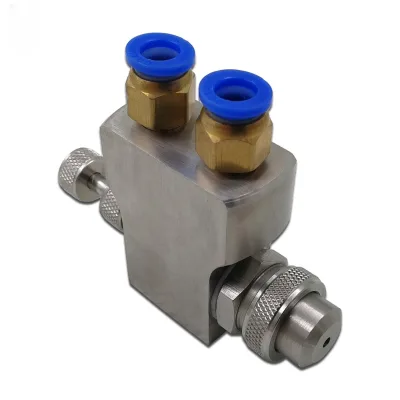
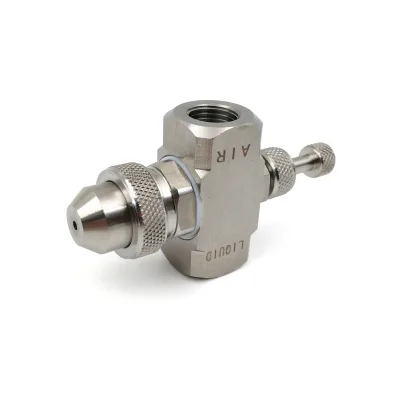
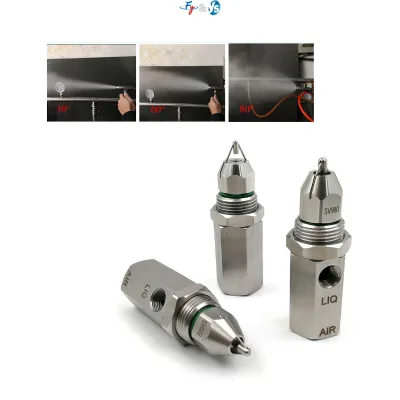
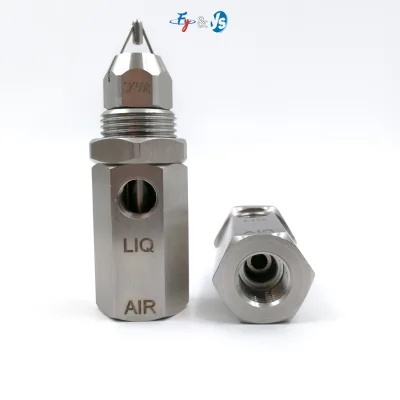
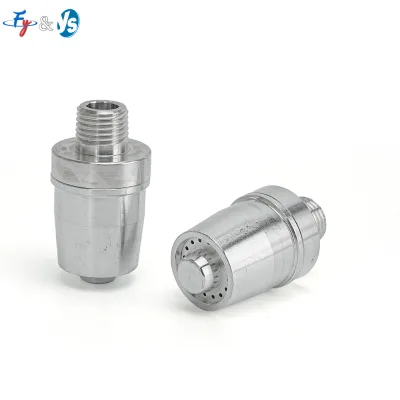
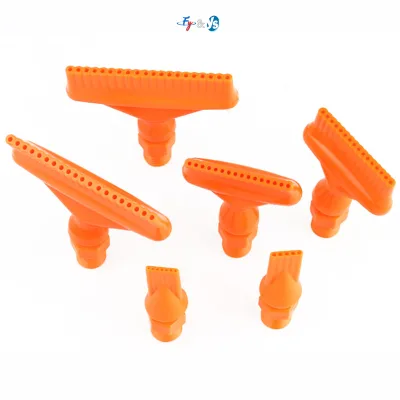


50kHz High Quality Ultrasonic Spraying System Air Atomizer Spray Nozzle for Atomization
$3000.00 - $4500.00
MOQ: 1 Piece


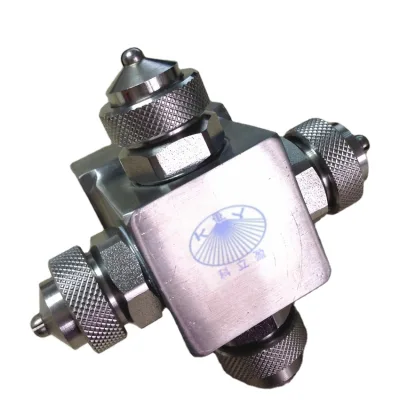
Comprehensive Sourcing Guide
Strategic Sourcing Guide for Dust Removal Air Atomizing Nozzles
Understanding Core Technical Specifications for Dust Control
When sourcing air atomizing nozzles specifically for dust removal applications, buyers must first distinguish between the mechanical and pneumatic characteristics that define performance. The core keyword "Dust Removal Air Atomizing Nozzle" implies a device designed to generate a fine mist capable of capturing airborne particulates, typically through the interaction of compressed air and liquid. Based on available product data, the primary operating mechanism for these units is the internal mix method, where air and liquid combine within the nozzle body before exiting the orifice. This configuration is critical for achieving the specific droplet sizes required for effective dust suppression.
The physical construction of these nozzles varies significantly in material composition, which directly impacts longevity in harsh industrial environments. The observed material specifications include Stainless Steel 304 and 316, as well as Brass. For dust removal in environments with high humidity or corrosive chemicals, the 316 stainless steel variant offers superior resistance to corrosion compared to standard 304 grades. The structural integrity is further supported by features described as "rust/corrosion proof," a necessary attribute for equipment exposed to constant moisture and particulate matter.
Orifice diameter is a pivotal specification that dictates the atomization quality. The available data indicates an orifice diameter range of 0.5 to 2.5mm. Selecting the correct orifice size is essential; a smaller diameter generally produces finer droplets, which are more effective at capturing fine dust particles, while a larger diameter may be required for higher flow rates in heavy-duty cooling or humidifying scenarios. The thread size, commonly observed as 1/8", 1/4", or 1/2", must align precisely with the existing piping infrastructure of the facility to ensure a leak-free installation. Additionally, the spray pattern is a key variable, with "Full Cone" and "Flat Fan" patterns being the standard options. For dust removal, a Full Cone spray is often preferred to create a uniform curtain of mist that intercepts dust clouds effectively.
Compliance, Certification, and Material Verification
In the B2B procurement of industrial components, verifying compliance and certification status is as important as the physical specifications. Buyers should prioritize suppliers who can provide documentation regarding material standards and manufacturing processes. The provided data references "SGS" as a standard or method type associated with these products. While this indicates a level of third-party verification, buyers must confirm the specific scope of the SGS certification. Does it cover the material composition, the pressure testing, or the overall manufacturing quality control? Relying on a generic mention of a standard without specific test reports can lead to procurement risks.
Material verification is another critical compliance area. The distinction between 304 and 316 stainless steel is not merely a price difference but a matter of chemical resistance. Buyers should request material test reports (MTRs) to verify the chromium and nickel content that defines these grades. The presence of brass components in some models requires separate verification to ensure they meet environmental regulations regarding lead content, especially if the mist is used in food processing or pharmaceutical environments. Furthermore, the "Export Standard Package" mentioned in the product attributes suggests that the packaging is designed to prevent damage during international shipping, which is a logistical compliance factor that ensures the product arrives in operational condition.
Cost Drivers and Pricing Structure Analysis
The pricing structure for air atomizing nozzles is influenced by several variables, including material grade, customization level, and order volume. The observed price range in the market spans from $0.01 to $4,500. This wide disparity reflects the difference between single standard nozzles and complete, custom-engineered systems or bulk orders of specialized models. The minimum order quantity (MOQ) varies from 1 to 1000 units, offering flexibility for small-scale trials but potentially increasing the unit cost for smaller buyers.
Customization is a significant cost driver. While some products are listed as "Non-Customized," others explicitly offer "Customized" options. Customization can involve altering the thread size, modifying the orifice diameter, or changing the material to a specific alloy. These modifications typically increase the unit price and may extend the lead time. The "Sample Order: Accepted" attribute suggests that buyers can procure small quantities for testing before committing to larger volumes, which helps mitigate the financial risk associated with custom specifications.
Additionally, the price term "Fob CIF" indicates that the quoted price may vary depending on the Incoterms selected. FOB (Free on Board) places the responsibility for shipping and insurance on the buyer after the goods leave the port of origin, while CIF (Cost, Insurance, and Freight) includes these costs up to the destination port. Buyers must clarify which term applies to their quote to avoid unexpected logistics costs. The origin of the products, noted as Shanghai, China, is a common hub for these components, but buyers should verify if the "Shanghai" origin applies to the manufacturing facility or merely the trading entity, as this can impact shipping costs and lead times.
Typical Applications and Performance Expectations
Air atomizing nozzles are versatile tools used across various industrial sectors, with dust removal being a primary application. The observed usage cases include "Humidifying, Cooling, Dust Control," and "Disinfecting." In the context of dust removal, the nozzle's ability to generate a specific droplet size is paramount. Data indicates a droplet size range of 7 to 12 microns for certain models, such as the "Hm-4 Dry Fog Humidifier Nozzle." This micron range is highly effective for dust suppression because the droplets are small enough to remain suspended in the air long enough to collide with and capture dust particles, yet large enough to have sufficient mass to fall out of the air column without evaporating immediately.
The spray distance is another performance metric that varies by model. Some units are rated for a spray distance of 5 to 6 meters, which is suitable for covering large open areas or specific machinery zones. The flow rate, observed between 0.9 to 12 liters per hour, allows for scalability depending on the volume of dust generated in a specific area. For instance, a high-flow rate might be necessary in a mining operation, while a lower flow rate suffices for a packaging facility.
The working method, described as "Internal Mix" or "External Mix," also influences application suitability. Internal mix nozzles generally produce a finer mist, ideal for fine dust control, whereas external mix nozzles might be preferred for applications requiring higher air-to-liquid ratios or where the liquid and air streams need to be kept separate until the point of impact. The "Style No." and "prod_model" designations, such as JN, JAU, or JBC, often correlate with specific application profiles, and buyers should match these model numbers to their specific operational needs rather than relying solely on generic descriptions.
Supplier Evaluation and Operational Compatibility
Evaluating a supplier for air atomizing nozzles requires a focus on their ability to support technical requirements and logistical needs. The "Delivery Time" is a critical factor, with observed lead times ranging from 7 days to one week. For standard models, this suggests a ready-to-ship inventory, but for customized orders, the timeline may extend. Buyers should verify if the "7 Days" lead time applies to all models or only specific stock items. The "Installation Type" being listed as "Movable Type" offers flexibility for temporary setups or areas where dust generation is intermittent, whereas fixed installations might require different mounting hardware.
The "Operation Type" includes both "Pressure" and "Syphon" methods. This distinction is vital for system design. Pressure-fed systems require a pump to pressurize the liquid, while syphon systems rely on the venturi effect of the air stream to draw the liquid up. The choice between these methods depends on the existing infrastructure and the desired pressure levels. Additionally, the "Power Source" is noted as an "Electric Motor" in some contexts, which may refer to the air compressor or pump system rather than the nozzle itself, a distinction buyers must clarify to ensure compatibility with their facility's power supply.
Supplier reliability is further indicated by the "Lubrication Style" and "Cooling System" attributes. While "Lubricated" and "Air Cooling" are standard features, their presence suggests the nozzle is part of a larger mechanical assembly or requires specific maintenance protocols. Buyers should inquire about the maintenance schedule and the availability of spare parts, particularly for the "Open Type" structure which may be more susceptible to clogging if not properly maintained. The "Feature" of being "Rust / Corrosion Proof" should be validated through real-world testing or customer references, as this claim is critical for long-term reliability in dusty, wet environments.
Long-Term Procurement and Quality Control Strategies
Sourcing air atomizing nozzles for dust removal is not a one-time transaction but a long-term procurement strategy that requires ongoing quality control. The "prod_packing" being an "Export Standard Package" is a baseline requirement, but buyers should also establish protocols for inspecting the nozzles upon receipt. This includes checking for physical damage, verifying thread integrity, and ensuring the orifice diameter matches the order specifications. The "Sample Order: Accepted" feature is a valuable tool for this phase, allowing buyers to test the nozzle's performance in their specific environment before scaling up the order.
Quality control should also extend to the verification of the "Standard" mentioned, such as SGS. Buyers should request detailed test reports that confirm the nozzle's performance under specific pressure and flow conditions. The "Method Type" being SGS implies a standardized testing procedure, but the specific parameters of that test (e.g., pressure rating, flow consistency) must be understood to ensure the nozzle meets the facility's operational demands.
Finally, the "Customization" aspect should be managed carefully. While "Customized" options are available, they introduce variability into the supply chain. Buyers should maintain a clear specification sheet for custom orders to ensure that future replacements or expansions match the original performance characteristics. The "prod_model" variations, such as the JN series or JAU series, should be cataloged and documented to facilitate future reordering. By maintaining a disciplined approach to specification, certification, and supplier communication, buyers can ensure a reliable supply of high-performance air atomizing nozzles for effective dust removal.
FAQs
How does the internal mix method benefit dust removal?
Internal mix combines air and liquid inside the nozzle to create a fine mist ideal for capturing airborne particulates. This method is critical for achieving the specific droplet sizes required for effective dust suppression in industrial environments.
Which material grades are available for corrosion resistance?
Stainless steel 304 and 316 are the primary material options, offering superior resistance to rust and corrosion. These grades ensure longevity in harsh industrial settings with high humidity or exposure to corrosive chemicals.
What is the typical droplet size for effective dust control?
Certain models produce droplets ranging from 7 to 12 microns, which are highly effective for dust suppression. This size allows droplets to remain suspended long enough to collide with dust particles without evaporating immediately.
Can buyers order samples before committing to bulk purchases?
Yes, sample orders are accepted to allow buyers to test performance before scaling up. This approach helps mitigate financial risks associated with custom specifications and ensures the nozzle meets specific operational needs.
What is the standard delivery time for these nozzles?
The standard delivery time is typically seven days or one week for ready-to-ship items. Customized orders may require extended timelines, so buyers should verify the specific lead time for their requested configuration.
Which spray patterns are suitable for creating a dust curtain?
Full cone and flat fan spray patterns are the standard options available for these nozzles. A full cone spray is often preferred to create a uniform curtain of mist that effectively intercepts dust clouds.
How does the orifice diameter affect atomization quality?
Orifice diameters range from 0.5 to 2.5mm, directly dictating the atomization quality and droplet size. Smaller diameters generally produce finer droplets better for fine dust control, while larger ones suit higher flow rates.