Source Eco Friendly Aluminum Rivets for construction, automotive, and furniture
Compare 30 listings for Eco Friendly Aluminum Rivets with varying grades, head styles, and surface finishes. Buyers can evaluate customization options, lead times, and packaging details to find suitable fasteners for industrial applications.
Key considerations
Products List


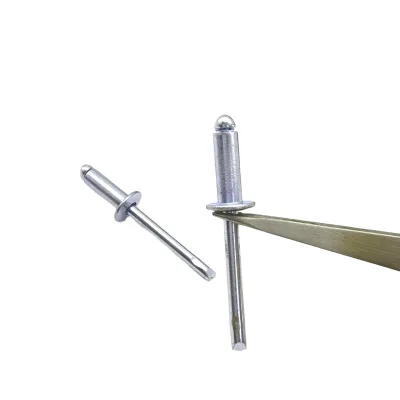


Custom Metal Rivets Large Flat Round Head Pot Rivets Aluminum Pan Head Solid Rivets
$0.01 - $0.02
MOQ: 5000 Pieces


Customized Length Coller Aluminum Open End Stainless Steel Solid Metal Rivet
$0.01 - $0.02
MOQ: 5000 Pieces

Non-Standard 304 316 Stainless Steel Flat Head Different Types Aluminum Solid Rivet
$0.01 - $0.02
MOQ: 5000 Pieces


Comprehensive Sourcing Guide
Strategic Sourcing Guide for Eco-Friendly Aluminum Rivets
Understanding Product Attributes and Technical Specifications
When sourcing eco-friendly aluminum rivets, buyers must first distinguish between general fastener categories and specific material compositions. The market offers a diverse range of rivet types, including solid, semi-hollow, and tubular varieties, each serving distinct structural needs. For applications requiring lightweight durability, aluminum remains a primary choice due to its favorable strength-to-weight ratio and corrosion resistance. The observed product landscape indicates that aluminum rivets are frequently paired with specific surface finishing processes, such as zinc plating, to enhance longevity and environmental resistance. However, it is critical to note that while aluminum is the core material for this specific keyword, the broader market also includes steel variants with grades up to 12.9, which serve high-strength requirements but differ significantly in weight and corrosion properties.
Head style is another critical technical parameter. Buyers will encounter options ranging from flat heads to dome heads, with flat head designs often preferred for flush mounting applications where aerodynamics or surface smoothness are priorities. The connection method is typically categorized as a common bolt or blind rivet system, depending on whether the installation requires access to both sides of the workpiece. In the context of "eco-friendly" claims, the manufacturing process and the recyclability of the aluminum alloy become as important as the physical dimensions. The product data suggests that models such as MR114, MR115, and MR89 represent specific configurations available in the market, though these model numbers often correspond to specific dimensions or head styles rather than a universal standard.
Standardization of dimensions is essential for compatibility. Specifications often reference diameters such as 3.2mm, 4.0mm, 4.8mm, and 6.4mm, alongside imperial measurements like 3/16" and 1/4". When sourcing, buyers should verify that the supplier's inventory aligns with these precise metrics. Furthermore, the "eco-friendly" aspect may be linked to the production of custom models or specific finishes that reduce waste during manufacturing. The availability of customization allows for tailored solutions, where the rivet can be modified to fit unique drawing requirements, ensuring minimal material scrap during the production run.
Compliance, Certification, and Environmental Standards
Verifying compliance is a non-negotiable step in the procurement of industrial fasteners, particularly when the product is marketed with environmental attributes. The presence of ISO certification is a strong indicator of a supplier's adherence to international quality management systems. Some suppliers in the market also hold CE certification, which is mandatory for products entering the European Economic Area, ensuring that the fasteners meet specific safety and health requirements. However, buyers must exercise caution; the mere presence of an ISO or CE label on a product listing does not guarantee that every specific batch of aluminum rivets meets the latest environmental directives.
The term "eco-friendly" in the context of rivets often refers to the recyclability of the base material and the environmental impact of the finishing processes. Aluminum is inherently recyclable, but the sustainability claim depends heavily on the supply chain's transparency regarding energy consumption during smelting and the chemical treatments used for surface finishing. For instance, zinc plating is a common process observed in the market, but the specific chemicals and waste management protocols associated with this process vary by manufacturer. Buyers should request documentation that details the environmental compliance of the plating process, such as RoHS (Restriction of Hazardous Substances) compliance, which is not explicitly listed in the general data but is a standard expectation for eco-conscious procurement.
Additionally, the "according to drawing" standard noted in product specifications implies a high degree of flexibility but also places the burden of verification on the buyer. If a supplier claims their products meet specific environmental standards, the buyer must verify if these standards are third-party audited or self-declared. The market data shows that some products are labeled with "Customer's demand" for packaging and finishing, which suggests that environmental specifications can be customized. This flexibility is advantageous for buyers seeking to align with corporate sustainability goals, but it requires clear communication of requirements during the initial inquiry phase.
Cost Drivers and Pricing Dynamics
The pricing of aluminum rivets is influenced by a complex interplay of material costs, manufacturing complexity, and order volume. The observed price range in the market spans from $0 to $5,000, which reflects the vast difference between small sample orders and bulk industrial shipments. It is important to understand that the lower end of this range typically represents unit prices for small quantities or sample kits, while the upper end may reflect the total value of a large palletized order or a custom manufacturing run. The Minimum Order Quantity (MOQ) is a significant cost driver, with observed ranges extending from 1 unit to 100,000 pieces.
For buyers seeking eco-friendly aluminum rivets, the MOQ can be a critical factor. High-volume orders, such as those requiring 100,000 pieces, often benefit from economies of scale, reducing the per-unit cost significantly. However, smaller buyers may face higher unit costs or may need to negotiate custom packaging solutions that do not require large batch sizes. The "Free Sample" attribute observed in the market can be a valuable tool for cost management, allowing buyers to validate quality and specifications before committing to a large financial outlay.
Material grade also impacts pricing. While aluminum is generally less expensive than high-grade steel (such as Grade 12.9), the cost can fluctuate based on the specific alloy used and the complexity of the surface finishing. Customization, such as specific head styles or unique diameters, adds to the production cost. Furthermore, the origin of the product plays a role; suppliers from regions like Jiangsu and Shandong in China are prominent in the market, and their proximity to raw material sources can influence logistics costs. Buyers should analyze the total landed cost, including shipping and potential tariffs, rather than focusing solely on the unit price.
Typical Applications and Performance Requirements
Aluminum rivets are predominantly used in industries where weight reduction and corrosion resistance are paramount. The automotive sector, for example, utilizes these fasteners to reduce vehicle weight and improve fuel efficiency. The aerospace industry also relies heavily on aluminum rivets for similar reasons, requiring high-strength connections that do not add unnecessary mass. The "High Strength Rivet" classification observed in the market suggests that aluminum variants are engineered to meet rigorous performance standards, often matching the tensile strength of steel in specific configurations.
The "Eco-Friendly" performance attribute indicates suitability for applications where environmental impact is a consideration, such as green building projects or sustainable transportation initiatives. The durability of these rivets, often enhanced by zinc plating, makes them ideal for outdoor applications where exposure to moisture and varying temperatures is common. The "Durable" feature listed in product attributes reinforces the expectation that these fasteners will maintain structural integrity over long periods.
In terms of connection types, the "Common Bolt" and "Blind Rivet" configurations offer versatility. Blind rivets are particularly useful in assembly lines where access to the rear of the joint is restricted, a common scenario in the construction of aircraft fuselages or vehicle panels. The "Multi-Grip" capability mentioned in product descriptions suggests that these rivets can accommodate varying material thicknesses, making them suitable for complex assemblies with multiple layers. Buyers should ensure that the selected rivet model, such as the MR114 or MR115, matches the specific thickness and material properties of the components being joined.
Supplier Evaluation and Origin Verification
Evaluating suppliers requires a deep dive into their operational capabilities and geographical origins. The market data indicates that products originate primarily from China, with specific manufacturing hubs in Jiangsu and Shandong provinces. These regions are known for their robust manufacturing infrastructure and expertise in metal processing. However, the diversity of origins means that buyers must verify the specific factory location to ensure alignment with their logistics and compliance requirements.
Supplier evaluation should also focus on their customization capabilities. The "Customization Available" and "Customized" attributes suggest that many suppliers are willing to tailor products to specific needs, including unique head styles, diameters, and surface finishes. This flexibility is crucial for buyers with specialized requirements. Additionally, the "Accept" attribute regarding OEM (Original Equipment Manufacturer) services indicates that suppliers are open to branding and private labeling, which is beneficial for companies looking to integrate fasteners into their own product lines.
When assessing suppliers, buyers should look for evidence of consistent quality control. The presence of ISO certification is a positive indicator, but it should be complemented by requests for recent audit reports or quality assurance protocols. The "according to drawing" standard implies that the supplier is capable of precision manufacturing, but buyers must ensure that the supplier has the necessary equipment and expertise to meet tight tolerances. The lead time, observed as 10 to 15 days, is another critical factor; buyers should confirm if these timelines are consistent or if they vary based on order volume and customization complexity.
Quality Control and Long-Term Procurement Considerations
Implementing a robust quality control (QC) strategy is essential for maintaining the integrity of the supply chain. Given the "according to drawing" standard, buyers should establish clear acceptance criteria for dimensions, head styles, and surface finishes. The "Zinc Plated" finish, while common, requires verification to ensure it meets corrosion resistance standards. Buyers should request test reports or certificates of analysis that confirm the plating thickness and adhesion properties.
Long-term procurement considerations involve building a relationship with suppliers who can scale with the buyer's needs. The "Packaging: Customer's request" attribute suggests that suppliers are flexible in their logistics, which can be advantageous for supply chain optimization. However, buyers should also consider the environmental impact of packaging, ensuring that materials used are recyclable and minimize waste. The "Box+Pallet" and "Carton Box" packaging options observed in the market offer different levels of protection and efficiency; selecting the right option can reduce damage rates and lower shipping costs.
Sustainability should be a core component of the long-term strategy. Buyers should prioritize suppliers who demonstrate a commitment to reducing their environmental footprint, whether through energy-efficient manufacturing processes or waste reduction initiatives. The "Eco-Friendly" performance claim should be backed by tangible actions, such as the use of recycled aluminum or non-toxic finishing chemicals. By focusing on these factors, buyers can ensure that their procurement of aluminum rivets aligns with both operational efficiency and corporate sustainability goals.
Comparison of Key Product Attributes
To facilitate decision-making, the following table summarizes the key attributes observed in the market for aluminum rivets and related fasteners. This comparison highlights the variability in specifications and helps buyers identify the most suitable options for their specific needs.
| Attribute Category | Observed Options | Relevance to Eco-Friendly Sourcing |
|---|---|---|
| Material | Aluminum, Steel | Aluminum is preferred for weight reduction and recyclability. |
| Head Style | Flat Head, Dome Head | Flat head for flush mounting; Dome for aesthetic or specific load needs. |
| Surface Finish | Zinc Plated, Custom | Zinc plating offers corrosion resistance; Custom finishes allow for eco-friendly options. |
| Certification | ISO, CE | Essential for quality assurance and market compliance. |
| Customization | Available, Customized | Allows for tailored solutions to minimize waste and meet specific needs. |
| Origin | Jiangsu, Shandong, China | Major manufacturing hubs with varying logistical advantages. |
| Lead Time | 10 Days, 15 Days | Impacts inventory planning and supply chain responsiveness. |
| MOQ | 1 - 100,000 PCS | Determines cost efficiency and order flexibility. |
By carefully analyzing these attributes and verifying them against specific project requirements, buyers can make informed decisions that balance performance, cost, and environmental responsibility. The market offers a wide array of options, but success lies in rigorous verification and clear communication with suppliers.
FAQs
What certifications do Eco Friendly Aluminum Rivets typically hold?
These rivets typically hold ISO and CE certifications to ensure quality and safety compliance. Some listings also mention adherence to specific drawing standards, which allows for customized dimensions while maintaining international quality management system requirements for the manufacturing process.
Can buyers request free samples for Eco Friendly Aluminum Rivets?
Yes, free samples are available for many eco friendly aluminum rivet listings to allow quality validation. Buyers can use these samples to verify head styles, surface finishes like zinc plating, and material grades before committing to larger orders that may have higher minimum order quantities.
Which lead times apply to custom eco friendly aluminum rivet orders?
Lead times for these orders generally range from 10 to 15 days depending on the complexity. Customization options such as specific diameters or head styles may influence the duration, but standard production cycles often fall within this window for suppliers in China.
How are Eco Friendly Aluminum Rivets packaged for shipment?
Packaging typically involves inner boxes placed into cartons, which are then stacked on pallets for bulk shipping. Some suppliers offer flexible packaging based on customer requests, ensuring the rivets are protected during transit while accommodating specific logistical requirements for different order sizes.
What surface finishes are available for Eco Friendly Aluminum Rivets?
Zinc plating is a common surface finish observed for these rivets to enhance corrosion resistance. Suppliers also accommodate customer demands for other finishes, allowing buyers to select treatments that meet specific environmental or durability requirements for their intended applications.
Which specifications define the dimensions of these rivets?
Specifications often include diameters such as 3.2mm, 4.0mm, 4.8mm, and 6.4mm alongside imperial sizes like 3/16 inch. Models like MR114 and MR115 represent specific configurations, and buyers can request custom dimensions according to their engineering drawings for precise fitment.
Where are Eco Friendly Aluminum Rivets manufactured?
Manufacturing primarily occurs in China, with specific hubs located in Jiangsu and Shandong provinces. These regions provide robust infrastructure for metal processing, and the origin location can influence logistics costs and lead times for international buyers sourcing these fasteners.