Source Eco-Friendly Lined Crop Top Hoodie for casual wear, gym, and travel
Compare 30 listings for Eco-Friendly Lined Crop Top Hoodie options featuring nylon and cotton blends. Buyers can review specifications including hooded designs, solid patterns, and seasonal winter suitability from suppliers in Fujian, China.
Key considerations
Products List
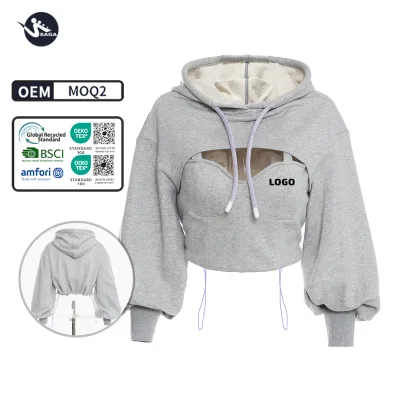


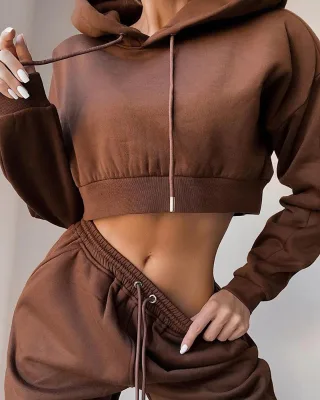


OEM Service Crop Top Hoodie Women Zip Wholesale Womens Cropped Zip Hoodie
$9.00 - $13.50
MOQ: 200 Pieces


Zipper Hoodie Oversized Hoodie Women Custom Zip Hoodie Crop Top Sweatshirt
$3.60 - $4.00
MOQ: 1000 Pieces

Comprehensive Sourcing Guide
Eco-Friendly Lined Crop Top Hoodie Sourcing Guide
Sourcing eco-friendly lined crop top hoodies requires a nuanced understanding of how sustainable materials intersect with specific garment construction techniques. The term "eco-friendly" in this context often refers to the use of recycled fibers, organic cotton blends, or low-impact dyeing processes, while "lined" indicates an additional inner layer for warmth, typically essential for winter wear. Buyers must distinguish between marketing claims and verifiable material compositions, as the presence of a lining can significantly alter the weight, breathability, and environmental footprint of the final product. This guide provides a structured approach to evaluating suppliers, verifying technical specifications, and ensuring that the procurement process aligns with both quality standards and sustainability goals.
The market for these garments is diverse, ranging from casual streetwear to performance-oriented activewear, each demanding different levels of scrutiny regarding fabric integrity and design durability. A crop top hoodie combines the structural elements of a pullover with a shortened hemline, requiring precise pattern making to ensure the lining does not compromise the fit or cause bunching. Procurement teams should focus on suppliers who demonstrate transparency in their supply chain, particularly regarding the origin of raw materials and the manufacturing processes used to achieve the desired eco-friendly attributes. This guide outlines the critical steps for validating these claims and securing a reliable supply of high-quality garments.
Product Scope and Observed Listing Signals
The observed product landscape for lined crop top hoodies reveals a wide variance in material composition and design features, which directly impacts sourcing strategy. Listings frequently highlight attributes such as "hooded" collars, "full" or "long" sleeve lengths, and "regular" clothing lengths, indicating a standard silhouette that balances coverage with the cropped aesthetic. Buyers should note that while many products are described as "casual" or "pullover" styles, the inclusion of a lining suggests a focus on winter wear, necessitating careful evaluation of thermal properties and fabric weight. The presence of features like "kangaroo pockets" or "heat-transfer printing" adds functional and aesthetic value, but these elements must be verified for durability and alignment with the eco-friendly narrative.
Material specifications vary significantly across listings, with some products citing "nylon/cotton" blends while others specify "cotton" alone, often accompanied by "knitted" fabric types. This variation is critical for buyers assessing breathability, durability, and environmental impact, as synthetic blends may offer different performance characteristics compared to natural fibers. Additionally, the observed price range and minimum order quantities (MOQs) suggest a market segmented by customization levels and production scale, with some suppliers offering OEM services and others providing in-stock items. Buyers must carefully review these signals to determine whether a supplier’s capabilities align with their specific volume requirements and design customization needs, ensuring that the final product meets both functional and aesthetic expectations.
Technical Specifications to Verify
Verifying technical specifications is paramount to ensuring that the ordered hoodies meet the intended design and performance criteria. Buyers should request detailed tech packs that specify the exact fabric composition, including the percentage of recycled or organic materials, to validate eco-friendly claims. The presence of a lining requires precise measurement of the inner fabric’s weight and texture, as well as confirmation of how it is attached to the outer shell to prevent shifting or detachment during wear. Specifications such as "single package size" and "gross weight" are also critical for logistics planning, as lined garments typically have higher shipping costs due to increased volume and weight compared to unlined alternatives.
Design elements such as "hooded" collars, "full" sleeves, and "regular" lengths must be cross-referenced with physical samples to ensure consistency with the buyer’s requirements. Features like "heat-transfer printing" or "silk screen printing" for logos and graphics should be evaluated for colorfastness and adhesion, particularly on blended fabrics. Additionally, the "needle detection" process mentioned in some listings is a crucial quality control step that ensures the absence of broken needles or metal fragments in the finished garment, a standard requirement for many retail markets. Buyers should insist on seeing these specifications documented in the supplier’s quality assurance protocols to mitigate risks associated with product defects and safety compliance.
Compliance and Safety Documentation
Compliance and safety documentation are non-negotiable components of sourcing eco-friendly apparel, particularly when dealing with materials that may have undergone chemical treatments or dyeing processes. Buyers must request certificates of conformity that verify the absence of harmful substances, such as azo dyes, formaldehyde, or heavy metals, in both the outer fabric and the lining. For products marketed as "eco-friendly," additional certifications such as Global Organic Textile Standard (GOTS) or Recycled Claim Standard (RCS) may be required to substantiate sustainability claims, although buyers should verify the validity of these certifications directly with the issuing bodies.
Safety standards also extend to physical hazards, including the integrity of seams, zippers, and other hardware components. The "needle detection" process observed in some listings is a key indicator of a supplier’s commitment to product safety, ensuring that no metal fragments remain in the finished garment. Buyers should also inquire about flammability standards, particularly for lined garments that may be worn in close proximity to heat sources. Documentation should include test reports from accredited laboratories, providing objective evidence that the products meet the regulatory requirements of the target market, thereby protecting the buyer from potential liability and reputational damage.
Cost Drivers and Commercial Terms
Understanding the cost drivers associated with eco-friendly lined crop top hoodies is essential for accurate budgeting and negotiation. The primary cost factors include the price of raw materials, particularly recycled or organic fibers, which often command a premium over conventional materials. The complexity of the construction, including the addition of a lining and specialized printing techniques, also contributes to higher production costs. Buyers should analyze the supplier’s pricing structure to identify these components, ensuring that the quoted price reflects the true cost of materials and labor rather than inflated margins.
Commercial terms such as minimum order quantities (MOQs), lead times, and payment terms significantly impact the overall procurement strategy. Suppliers may offer different MOQs for customized versus in-stock items, with higher customization levels typically requiring larger orders to justify setup costs. Lead times for sample orders and bulk production should be clearly defined, with penalties for delays included in the contract to mitigate supply chain disruptions. Buyers should also consider the total cost of ownership, including shipping, duties, and potential returns, to make informed decisions that balance cost efficiency with product quality and sustainability goals.
Supplier Qualification and Quality Control
Supplier qualification is a critical step in ensuring a reliable and consistent supply of eco-friendly lined crop top hoodies. Buyers should conduct thorough due diligence, including on-site audits or virtual inspections, to assess the supplier’s manufacturing capabilities, quality control processes, and commitment to sustainability. Key areas of focus include the supplier’s ability to source certified raw materials, their adherence to safety standards, and their capacity to handle complex designs and customizations. Suppliers with a proven track record of exporting to the buyer’s target market are often preferable, as they are likely to be familiar with local regulatory requirements and consumer expectations.
Quality control measures should be integrated into the procurement process from the initial sample stage through to final shipment. Buyers should establish clear acceptance criteria for product quality, including fabric integrity, stitching precision, and print durability, and require pre-shipment inspections to verify compliance. The "needle detection" process observed in some listings is a positive indicator of a supplier’s attention to detail, but buyers should also request random sampling and testing of finished goods to ensure consistency. By implementing robust quality control protocols, buyers can minimize the risk of defects and ensure that the final products meet their high standards for quality and sustainability.
Long-Term Procurement Checks
Long-term procurement success depends on establishing ongoing relationships with suppliers who can adapt to changing market demands and regulatory landscapes. Buyers should regularly review supplier performance metrics, including on-time delivery rates, product quality consistency, and responsiveness to issues, to identify potential areas for improvement. Continuous communication and collaboration with suppliers can foster innovation and drive improvements in sustainability practices, such as the adoption of new eco-friendly materials or more efficient production methods. Buyers should also stay informed about emerging trends and regulations in the apparel industry, ensuring that their sourcing strategies remain compliant and competitive.
Periodic re-evaluation of supplier contracts and pricing structures is essential to maintain cost efficiency and value over time. Buyers should negotiate volume-based discounts or long-term agreements to secure favorable terms, while also maintaining flexibility to switch suppliers if performance declines or market conditions change. Additionally, buyers should invest in building a diverse supplier base to mitigate risks associated with single-source dependencies, ensuring business continuity in the event of supply chain disruptions. By adopting a proactive and strategic approach to supplier management, buyers can secure a reliable supply of high-quality, eco-friendly lined crop top hoodies that meet their evolving business needs.
FAQs
What materials are used for the Eco-Friendly Lined Crop Top Hoodie?
The product is constructed from a blend of Nylon and Cotton materials. Some variations also utilize 100% Cotton fabric. This combination ensures the garment remains breathable while providing the necessary warmth for winter seasons.
Can I request custom logo designs on the hoodie?
Yes, customization is available for logo placement and graphic design. Buyers can choose between Heat-Transfer Printing or Silk Screen Printing methods. The logo is typically positioned on the front of the garment to ensure visibility.
How long does it take to receive a sample order?
Sample order lead times vary depending on the specific supplier configuration. Some options support a 7-day sample order lead time, while others do not support this service. Buyers should verify the specific lead time capability before placing an order.
Which sizes are available for the Eco-Friendly Lined Crop Top Hoodie?
The product is offered in standard sizes including S, M, L, and XL. Specific listings may also feature single size options like S or M. The garment is designed with a regular length and full sleeve style to fit various body types.
What is the minimum order quantity for this product?
The minimum order quantity ranges from 2 to 1000 units depending on the supplier. Some vendors offer single item selling units, while others require larger bulk purchases. Buyers must check the specific MOQ requirements for their chosen supplier.
Are these hoodies suitable for winter wear?
Yes, the product is explicitly designed for the winter season. It features a lined design and a hooded collar to provide extra warmth. The fabric type is knitted, which contributes to its thermal properties for cold weather conditions.
Where are these products manufactured?
The products originate from Fujian, China. This location is the primary place of origin for the listed items. Buyers sourcing from this region can expect specific logistics and shipping considerations associated with Chinese manufacturing hubs.