Source Eco Friendly Pen Holder for Office, School, and Gifts
Find and compare 30 Eco Friendly Pen Holder options from verified Chinese suppliers. Buyers can review specifications, customization, and pricing for office, school, and promotional gift uses.
Key considerations
Products List


Custom Pattern Office Eco Friendly Promotion Desk Organizer Plastic Pen Holder
$0.68 - $0.80
MOQ: 1000 Pieces


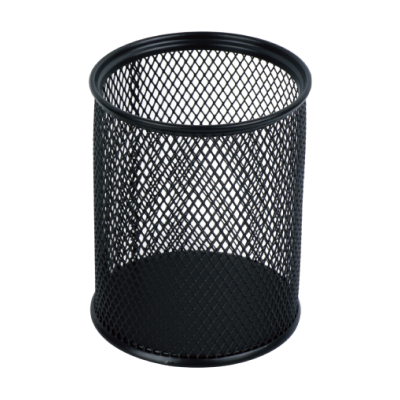


Comprehensive Sourcing Guide
Strategic Sourcing Guide for Eco-Friendly Pen Holders
Understanding Product Variants and Material Composition
When sourcing eco-friendly pen holders, buyers must first navigate the diverse landscape of product definitions and material compositions available in the global market. The term "eco-friendly" often encompasses a spectrum of materials, ranging from sustainably harvested natural fibers to recycled synthetic polymers. In the current supply chain, specific product attributes indicate distinct manufacturing approaches. For instance, some listings explicitly identify Bamboo as a primary material, leveraging its rapid renewability and natural aesthetic for office environments. Conversely, other segments of the market utilize PU Leather or standard Leather materials, which may be sourced through different supply chains and require distinct verification processes regarding their environmental impact.
The product specifications reveal a wide variance in design intent. While some items are categorized strictly under Office Supplies, others are positioned as Promotional Gifts or School accessories, indicating that the "eco-friendly" claim may be tied to the product's lifecycle usage rather than just its raw material. A critical observation in the current market data is the presence of Self-Adhesive features on certain organizers, which introduces a different set of material considerations compared to freestanding units. Buyers must distinguish between these variants, as the environmental footprint of a self-adhesive unit differs significantly from a disassembly-capable, modular organizer. The Style attributes range from Office and Business to Simple designs, suggesting that the eco-friendly aspect is often integrated into a functional aesthetic rather than a purely decorative one.
Technical Specifications and Dimensional Standards
Technical specifications are the backbone of any procurement decision, ensuring that the selected pen holder fits the intended workspace and usage requirements. The market data indicates that dimensions are not uniform; instead, they are often Customised to meet specific client needs. However, standard reference points exist, such as a specific model with dimensions of 7.3x7.3x 3.6 inch and another listed at 17.5x9x10cm. These figures highlight the importance of verifying size compatibility before placing bulk orders, as the "One Size Fits All" assumption can lead to logistical mismatches.
Furthermore, the Shape of the product is a critical technical parameter. While some units are defined as Square, others may offer different geometries to maximize desk space. The Disassembly feature is a notable technical specification that impacts both shipping efficiency and end-of-life recyclability. Products designed for disassembly allow for flat-pack shipping, which reduces carbon emissions during transport, and facilitate easier recycling or repair at the end of the product's life. Buyers should verify if the Condition is consistently New and if the Shape aligns with ergonomic requirements. Additionally, the Feature set, such as Self-Adhesive capabilities, must be cross-referenced with the surface materials of the target office environment to ensure compatibility. The Size being listed as Customized in several entries suggests that buyers have the opportunity to define exact dimensions, but this requires a clear technical brief to avoid production errors.
Compliance, Certification, and Environmental Verification
In the realm of eco-friendly procurement, compliance and certification are non-negotiable elements that validate environmental claims. The supply chain data indicates that certain products carry ISO, CE, and RoHS certifications. These are critical markers for buyers seeking to ensure that the pen holders meet international safety and environmental standards. ISO certification typically relates to quality management systems, while CE indicates conformity with health, safety, and environmental protection standards for products sold within the European Economic Area. RoHS (Restriction of Hazardous Substances) is particularly relevant for eco-friendly claims, as it restricts the use of specific hazardous materials in electrical and electronic equipment, though its application to non-electronic office supplies like pen holders serves as a strong indicator of material safety and environmental responsibility.
However, buyers must exercise caution. The presence of these certifications in the data does not guarantee that every listed product possesses them. Instead, these should be treated as verification targets. When evaluating a supplier, the procurement team must request current, valid certificates for the specific model being ordered. The Standard attribute in the data shows entries like Custom Logo or specific dimensional standards, but these do not inherently equate to environmental compliance. Buyers should verify if the Material sourcing, such as Bamboo or Leather, adheres to sustainable forestry or ethical tanning practices, which are often separate from the ISO/CE/RoHS certifications listed. The Customized nature of many products means that the certification status may vary based on the specific configuration chosen, making pre-order verification essential.
Cost Drivers and Pricing Dynamics
The pricing structure for eco-friendly pen holders is influenced by a complex interplay of material costs, customization levels, and order volume. The observed market data reveals a significant price range, with values spanning from 0.1 to 7.28 USD. This wide disparity suggests that the unit cost is heavily dependent on the specific Material used, the complexity of the Customization, and the MOQ (Minimum Order Quantity) tier. For example, products with Customized Logo capabilities or Customised dimensions likely command a higher price point due to the additional tooling and labor required.
The MOQ is another critical cost driver. The data shows a range from 1 to 10000, with specific instances of 500PCS, 3000PCS, and 5000PCS minimums. Higher MOQs generally correlate with lower unit costs, as they allow manufacturers to optimize production runs and reduce per-unit overhead. Buyers with smaller volume requirements may face higher per-unit prices or may need to negotiate with suppliers who offer lower MOQs, potentially at a premium. The Payment Term structure, typically T/T 30% Deposit, 70% Balance, also impacts cash flow and overall procurement costs. Additionally, the Shipping options, including by Sea, by Air, and by Express, introduce variable logistics costs that must be factored into the total landed cost. Sea freight is generally more cost-effective for large volumes but incurs longer lead times, while Air and Express options offer speed at a significantly higher price.
Supplier Evaluation and Production Capabilities
Evaluating suppliers requires a deep dive into their production capabilities, lead times, and flexibility. The data indicates that Sample Lead Time can range from 5-7 days, which is a standard benchmark for initial product verification. However, the Production Lead Time is substantially longer, ranging from 45-50 days for some models and 20-35 days for others. This variance underscores the importance of aligning procurement timelines with production schedules to avoid stockouts. Buyers must assess whether the supplier can meet their specific delivery deadlines, especially when dealing with Customized orders that may require additional setup time.
The Terms of trade, such as EXW (Ex Works) and Fob (Free on Board), define the extent of the supplier's responsibility. Under EXW, the buyer assumes all risks and costs from the factory gate, whereas Fob shifts some responsibility to the supplier until the goods are loaded onto the vessel. Understanding these terms is crucial for managing logistics and insurance. Furthermore, the OEM (Original Equipment Manufacturer) and Customized Logo acceptability indicate the supplier's willingness to engage in private labeling and design modification. Buyers should verify the supplier's capacity to handle Customized requests, including the ability to produce Any Colour or specific Shape configurations. The Product Origin is listed as China, which is a major manufacturing hub, but buyers should verify the specific factory location and audit the supply chain for ethical and environmental compliance.
Quality Control and Long-Term Procurement Strategy
Implementing a robust quality control (QC) strategy is essential for maintaining the integrity of eco-friendly claims and product performance. The Condition of the products is listed as New, but this is a baseline expectation. Buyers should establish clear acceptance criteria for Material quality, Packing integrity, and Feature functionality. The Packing methods, such as 1PC/Inner Box, Export Cartons, or OPP Bags, must be verified to ensure they protect the product during transit and align with sustainability goals. For instance, Export Cartons may offer better protection but could be less eco-friendly than biodegradable alternatives if not sourced responsibly.
Long-term procurement considerations involve building a relationship with suppliers who can scale with demand while maintaining quality and compliance. The Delivery Time variability, ranging from 20-35 days to 45-50 days, highlights the need for buffer stock planning. Buyers should consider the Suitable for attributes, such as Universal usage, to ensure the product remains relevant across different departments or client bases. The Feature of Disassembly offers a long-term advantage in terms of repairability and end-of-life management, reducing waste and supporting circular economy principles. By focusing on suppliers who offer Customized solutions and maintain ISO/CE/RoHS standards, buyers can secure a supply chain that is resilient, compliant, and aligned with corporate sustainability goals. Regular audits and continuous communication regarding Material sourcing and Production processes will ensure that the eco-friendly promise is delivered consistently over time.
FAQs
What materials are available for eco friendly pen holders?
Available materials include Bamboo, PU Leather, and standard Leather. Buyers must verify specific material sourcing for each model, as environmental claims vary by product configuration and supplier verification.
Can I request a customized logo on these organizers?
Yes, customized logos are acceptable for most models. The standard packing is 1PC per inner box, but custom packaging options exist for bulk orders meeting the minimum quantity requirements.
What are the typical lead times for production?
Production lead times range from 20 to 50 days depending on the model. Sample lead times are shorter, typically taking 5 to 7 days for initial verification before full manufacturing begins.
Which certifications do these products typically hold?
Some products carry ISO, CE, and RoHS certifications. Buyers should request valid certificates for specific models, as these standards indicate compliance with safety and environmental regulations for international markets.
How does the minimum order quantity affect pricing?
Minimum order quantities range from 500 to 5000 pieces depending on the supplier. Higher volumes generally correlate with lower unit costs, while smaller orders may face higher per-unit pricing tiers.
Are there disassembly options for better shipping efficiency?
Yes, some models feature a disassembly design for flat-pack shipping. This reduces carbon emissions during transport and facilitates easier recycling or repair at the end of the product lifecycle.
What payment terms are standard for these orders?
Standard payment terms require a 30% deposit with the 70% balance due before shipment. This structure is typical for T/T transactions and helps manage cash flow for both buyers and manufacturers.