Source Eco-Friendly Paperboard Seed Packaging Box for Fruit, Electronics, and Cosmetics
Find 30 verified options for the Eco-Friendly Paperboard Seed Packaging Box tailored for fruit, electronics, and cosmetic applications. Buyers can compare customization features, sizes, and pricing to select the ideal solution for their specific packaging needs.
Key considerations
Products List


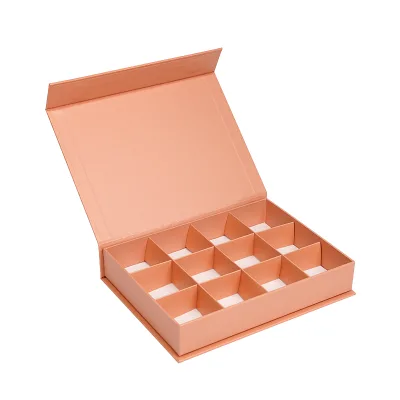
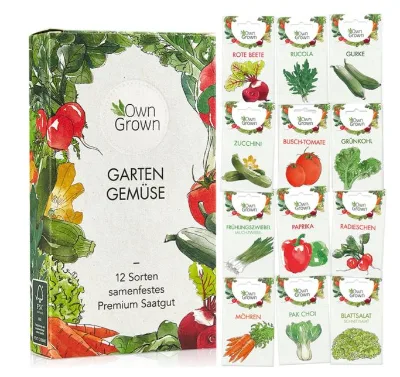
Custom Printed Magnetic Paper Box for Live Plant Flower Seeds Packaging
$0.10 - $0.70
MOQ: 1000 Pieces




Comprehensive Sourcing Guide
Strategic Sourcing Guide for Eco-Friendly Paperboard Seed Packaging Boxes
Understanding Material Composition and Structural Specifications
When sourcing eco-friendly paperboard seed packaging boxes, the primary focus must be on the material integrity and structural adaptability of the product. Based on current market observations, the core material for these packaging solutions is consistently identified as paper, with specific references to cardboard and craft paper variants. This material choice aligns with the fundamental requirement for biodegradability and recyclability, which are central to the "eco-friendly" designation in the seed packaging sector. The structural design of these boxes is not static; the available data indicates that "Custom Size" and "Customized size" are standard specifications, allowing buyers to tailor dimensions to specific seed packet volumes or bulk storage needs.
The physical dimensions observed in the market vary significantly depending on the intended application. For instance, specific models have been noted with dimensions such as 12x12x5 cm or 8x8x4.5 cm, while others are explicitly defined by custom parameters. The thickness of the paperboard is another critical variable, with observed values ranging from 2 mm to fully customizable thicknesses. This variability allows procurement teams to balance protection against seed moisture or physical damage with cost efficiency. The product models identified in the supply chain, such as "YS-0021H24b," "I1122," and "Andres 0427," suggest a diverse range of manufacturing capabilities, though the specific model numbers serve as internal identifiers rather than universal standards.
Buyers should verify the "Paper Type" and "Thickness" for every specific order, as these attributes directly influence the box's ability to maintain seed viability. The presence of "Folding Paper Box" designs indicates that many suppliers offer collapsible structures, which can significantly reduce shipping volume and storage costs prior to filling. Additionally, the "Single Package Size" and "Weight" (often observed under 0.5 kg) are essential metrics for logistics planning. The "Artwork Format" requirements, typically accepting PDF, AI, and CDR files, highlight the necessity for precise digital preparation to ensure that custom branding and planting instructions are printed accurately on the paperboard surface.
Compliance, Certification, and Environmental Standards
In the realm of sustainable packaging, compliance with international standards is a non-negotiable aspect of the procurement process. The supply data explicitly lists ISO9001:2008 as a certification held by certain manufacturers, indicating a baseline commitment to quality management systems. While this standard does not directly certify environmental sustainability, it ensures that the manufacturing process is consistent and controlled, which is a prerequisite for reliable eco-friendly claims. Buyers must also investigate the presence of other relevant certifications, such as FSC (Forest Stewardship Council), which is mentioned in background knowledge as a trusted indicator of responsible forestry. However, since FSC status is not explicitly confirmed in the primary product facts for all listed items, it must be treated as a verification point rather than a guaranteed attribute.
The "Feature" attribute of "Recyclable" is a key selling point for seed packaging, as it supports the circular economy. Seeds are often planted in soil, and the packaging itself should ideally be compostable or easily recyclable to minimize environmental impact. The "Green Plant Box" commodity name further reinforces the alignment with botanical and agricultural themes. When evaluating suppliers, procurement teams should request documentation proving the recyclability of the specific paperboard grade being used. This includes verifying that the inks and adhesives used in the "Two-Sided" or "Single" printing processes are also eco-friendly, as traditional inks can sometimes compromise the recyclability of the paper substrate.
Furthermore, the "Standard" attribute is frequently listed as "Customisation" or "Customized," suggesting that there is no single rigid industry standard for these boxes. Instead, the standard is often defined by the buyer's specific requirements or the supplier's internal quality protocols. Buyers should ensure that the "Specifications can be customized" clause is backed by a robust quality assurance process. This is particularly important for seed packaging, where moisture barriers and structural integrity are vital. The absence of a universal "eco-certification" in the provided facts means that buyers must actively audit the supplier's supply chain to confirm the origin of the paper and the environmental impact of the production methods.
Cost Drivers and Pricing Dynamics
The pricing structure for eco-friendly paperboard seed packaging boxes is influenced by several dynamic factors, primarily driven by customization levels and order volume. The observed price range in the market spans from $0.01 to $3.80 USD, a wide spectrum that reflects the difference between standard off-the-shelf items and highly customized, premium solutions. This variance suggests that the cost is heavily dependent on the "Customisation" of the "Size of Paper Box," the "Thickness" of the material, and the complexity of the "Logo Printing" and design elements.
Minimum Order Quantity (MOQ) is a significant cost driver, with observed ranges between 100 and 10,000 units. Lower MOQs, such as 100 units, may command a higher per-unit price due to the setup costs associated with custom molds and printing plates. Conversely, larger orders within the 10,000-unit range likely benefit from economies of scale, potentially bringing the unit cost closer to the lower end of the observed price range. Buyers should be aware that the "Custom Order" acceptance policy often implies a tiered pricing model where the unit price decreases as the volume increases.
Additional cost factors include the "Printing Handling" requirements. Options such as "Two-Sided" printing or specific "Artwork Format" processing may incur additional fees compared to single-sided or standard printing. The "Design Service" being offered as "Free" by some suppliers can offset initial design costs, but this does not necessarily reduce the production cost. The "Lead Time," observed to be 10-15 days depending on quantity, also impacts cost; expedited orders may require premium pricing or higher MOQs to justify the resource allocation. Furthermore, the "Sample Time" of 3-5 working days is a standard expectation, but rush samples could affect the overall project timeline and budget.
Typical Applications and Functional Versatility
The versatility of paperboard seed packaging boxes is evident in their diverse application spectrum. The data indicates usage across a broad range of sectors, including "Fruit," "Egg," "Electronic Product," "Cosmetic," "Toy," "Medicine," "Hardware," and "Food." For seed packaging specifically, the "Green Plant Box" designation and the "Usage" categories of "Arts and Crafts," "Jewelry," "Greeting Cards," and "Gifts" highlight the product's adaptability for both agricultural and retail environments. The "Application" fields further confirm suitability for "Electronic," "Apparel," "Cosmetics," and "Household" goods, suggesting that the same packaging infrastructure can be repurposed for various seed types, from small flower seeds to larger vegetable seeds.
The functional requirements for seed packaging often include protection from light, moisture, and physical damage. The "Box Type" of "Folding Paper Box" and the availability of "Corrugation" as a packing material suggest that suppliers can offer enhanced protection for delicate seeds. The "Use" category of "Gift & Packaging & Shipping" indicates that these boxes are designed to withstand the rigors of logistics while maintaining an aesthetic appeal suitable for retail display. The "Logo Printing" capability allows for branding that can communicate planting instructions, seed variety, and eco-friendly credentials directly to the consumer.
In the context of seed packaging, the "Custom Size" feature is particularly valuable. Different seed varieties require different storage volumes; for example, large seeds like beans or corn may need larger boxes, while small flower seeds require compact packaging. The ability to customize dimensions ensures that the packaging is neither wasteful nor insufficient. The "Handmade" feature observed in some listings suggests a niche market for artisanal or boutique seed companies that value unique, non-mass-produced packaging aesthetics. This versatility makes paperboard seed boxes a robust solution for a wide array of agricultural and horticultural businesses.
Supplier Evaluation and Geographic Considerations
Evaluating suppliers for eco-friendly paperboard seed packaging requires a careful assessment of their geographic location, production capabilities, and service offerings. The supply data reveals that manufacturers are located in various regions of China, including "Guangdong," "Shanghai," and "Fujian." Each of these regions has its own industrial strengths; Guangdong is known for its extensive manufacturing ecosystem, while Fujian is often associated with paper and packaging industries. Buyers should consider the logistical implications of these locations, including shipping costs and lead times, when selecting a supplier.
The "OEM Service" being "Welcome" and the "Custom Order" acceptance policies indicate that most suppliers are open to working with buyers to create bespoke solutions. However, the "Design Service" being "Free" does not guarantee that the design will meet all technical requirements for seed packaging. Buyers must verify that the supplier has the technical expertise to handle the specific "Artwork Format" requirements (PDF, AI, CDR) and ensure that the final print quality meets the necessary standards. The "Sample Time" of 3-5 working days is a standard metric for evaluating supplier responsiveness, but buyers should also inquire about the quality of the samples provided.
When evaluating suppliers, it is crucial to verify the "Certificate" status beyond the generic ISO9001:2008. Buyers should request evidence of the "Recyclable" claim and any specific environmental certifications. The "prod_packing" attributes, such as "Carton Box," "Carton," "Craft Paper," and "Corrugation," suggest that suppliers have diverse packaging capabilities, but the buyer must specify which packing method is required for the final delivery of the seed boxes. The "Lead Time" of 10-15 days is a general guideline, and buyers should confirm if this timeline is consistent with their production schedules.
Quality Control and Long-Term Procurement Strategy
Implementing a robust quality control (QC) strategy is essential for ensuring the reliability of eco-friendly paperboard seed packaging boxes. The "Feature" of "Recyclable" and the "Material" of "Paper" must be consistently maintained across all production batches. Buyers should establish clear acceptance criteria for the "Thickness" (e.g., 2 mm or customized), "Size" (e.g., 8x8x4.5 cm or custom), and "Weight" (under 0.5 kg) to prevent discrepancies in the final product. The "Printing Handling" and "Logo Printing" quality should be verified to ensure that the information on the box is legible and accurate, as this is critical for seed identification and planting instructions.
Long-term procurement considerations involve building a sustainable relationship with suppliers who can consistently meet the "Customisation" and "Standard" requirements. The "Customisation" of the "prod_model" and "prod_standard" suggests that the market is dynamic, and buyers should maintain flexibility in their specifications to adapt to changing needs. The "Sample Time" and "Lead Time" should be factored into the overall supply chain planning to avoid delays. Additionally, the "Design Service" being free can be leveraged to optimize packaging designs for cost and sustainability over time.
Buyers should also consider the "Application" diversity when planning long-term procurement. A supplier that can handle "Electronic," "Apparel," and "Cosmetics" applications may offer better scalability for a seed packaging business that expands into related product lines. The "Custom Order" acceptance and "OEM Service" availability are key indicators of a supplier's ability to grow with the buyer. Finally, maintaining a clear record of "Artwork Format" and "Printing Page" requirements will ensure that future orders are processed efficiently, reducing the risk of errors and rework. By focusing on these quality and strategic factors, buyers can secure a reliable supply of eco-friendly paperboard seed packaging boxes that meet both functional and environmental goals.
FAQs
Can I customize the size of the paperboard seed box?
Yes, the size of the paper box is fully customizable to meet specific seed storage needs. Buyers can request custom dimensions such as 12x12x5 cm or 8x8x4.5 cm, ensuring the packaging fits various seed packet volumes perfectly without waste.
What certifications do these manufacturers hold for quality?
Some manufacturers hold ISO9001:2008 certification to ensure consistent quality management systems. While this standard verifies production control, buyers should also verify the recyclability of the paperboard and inks used for eco-friendly compliance.
How long does it take to receive a sample?
Sample time is typically 3 to 5 working days for standard requests. This allows buyers to verify the material thickness, printing quality, and structural integrity before committing to a larger custom order volume.
What is the minimum order quantity for these boxes?
The minimum order quantity ranges from 100 to 10,000 units depending on the supplier and customization level. Lower MOQs like 100 units may have higher per-unit costs due to setup fees for custom molds and printing plates.
Which printing formats are accepted for custom designs?
Suppliers accept artwork formats including PDF, AI, and CDR files for custom logo printing. This ensures that branding and planting instructions can be printed accurately on the paperboard surface for both single and two-sided designs.
Where are the factories for these packaging boxes located?
Manufacturers are located in key Chinese regions including Guangdong, Shanghai, and Fujian. These locations offer diverse industrial strengths, with Fujian often associated with paper industries and Guangdong known for extensive manufacturing ecosystems.
Can the boxes be made with recycled materials?
Yes, the product features are explicitly listed as recyclable, supporting circular economy goals. The core material is paper or cardboard, which aligns with biodegradability requirements essential for eco-friendly seed packaging solutions.