Source Eco-Friendly Recyclable Glass Honey Jar for Food Tea Storage
Find 30 eco-friendly recyclable glass honey jar options from Hebei China. Buyers can compare models like XC-HJ04 and IDEA102, viewing capacities from 100ml to 730ml, certifications such as FDA and LFGB, and MOQs starting at 100 pieces.
Key considerations
Products List


Food Grade Glass Storage Container 280ml 380ml Glass Honey Jar with Lids
$0.14 - $0.16
MOQ: 10000 Pieces


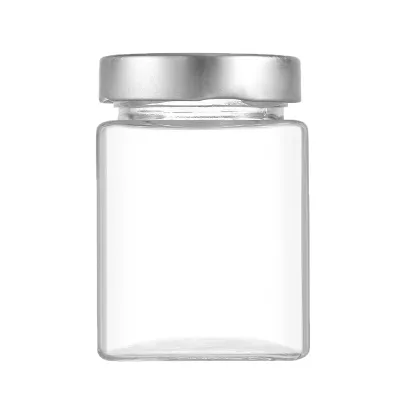
Recyclable Empty Cylinder Glass Jam Jar Pickles Jars Honey Jar with Lids
$0.26 - $0.43
MOQ: 2000 Pieces


Comprehensive Sourcing Guide
Strategic Sourcing Guide for Eco-Friendly Recyclable Glass Honey Jars
Understanding Material Integrity and Core Specifications
When sourcing eco-friendly recyclable glass honey jars, the primary focus must be on the material composition and its physical specifications. The core material identified in current market offerings is glass, a choice that aligns directly with sustainability goals due to its infinite recyclability and inert nature. Unlike plastic alternatives, glass does not leach chemicals into food products, making it an ideal vessel for honey, which is sensitive to environmental interactions. The observed product attributes indicate that these jars are frequently designed as single-piece units, ensuring structural integrity without the complexity of multi-part assemblies that might compromise the seal.
The physical dimensions and capacity of these jars vary significantly to accommodate different market needs. Specifications observed in the supply chain include a wide range of volumes, such as 45ml up to 1000ml, with specific standard sizes like 4oz, 8oz, 16oz, 120ml, 220ml, 380ml, and 450ml. This variability allows buyers to select containers that match their specific honey viscosity and retail packaging requirements. The shape is predominantly round, a design choice that offers structural strength and efficient stacking capabilities. Furthermore, the glass is noted to be clear, which is a critical aesthetic feature for honey products where visual appeal and product visibility drive consumer purchasing decisions. Buyers should verify that the glass is explicitly lead-free, a key safety attribute for food contact applications that ensures the material does not introduce heavy metal contaminants into the final product.
Compliance, Certification, and Regulatory Standards
Navigating the regulatory landscape is essential for any procurement of food-grade glass containers. The supply chain for these jars typically includes specific certifications that validate safety and quality. High-confidence data points indicate the presence of LFGB and FDA certifications, which are critical for markets in Europe and North America respectively. LFGB (Lebensmittel-, Bedarfsgegenstände- und Futtermittelgesetzbuch) is the German food code that sets stringent standards for food contact materials, while FDA (Food and Drug Administration) compliance is the baseline requirement for selling food packaging in the United States. Additionally, some product lines may carry ISO and CE certifications, indicating adherence to international management systems and European conformity standards.
It is vital for buyers to distinguish between general ISO standards and specific food-contact certifications. While ISO9001 is a background standard often associated with quality management systems, it does not inherently guarantee food safety. Instead, procurement teams must prioritize the specific LFGB and FDA documentation for each batch of jars. The Harmonized System (H.S.) Code for these glass storage jars is typically 7010902000, which is used for customs classification and tariff determination. When evaluating suppliers, buyers should request current, batch-specific certificates of analysis (CoA) rather than relying on general marketing claims. The absence of these specific documents should be treated as a red flag, regardless of the supplier's reputation.
Cost Drivers and Pricing Structures
The pricing of eco-friendly glass honey jars is influenced by several dynamic factors, primarily volume, customization, and packaging requirements. The observed market price range for these items spans from $0.08 to $5.00 USD. This wide variance is not arbitrary; it is directly correlated with the size of the jar, the complexity of the mold, and the order quantity. Smaller jars, such as the 45ml or 120ml variants, tend to sit at the lower end of the price spectrum, while larger capacity jars like the 730ml or 1000ml models command higher unit costs.
Minimum Order Quantity (MOQ) is another significant cost driver. The market data shows an MOQ range from 100 units to 1,000,000 units. For buyers with smaller initial requirements, the lower MOQ of 100 units allows for market testing without excessive capital commitment. However, buyers must be aware of the specific terms attached to these low MOQs. Some suppliers explicitly state that the lowest prices and smallest MOQs apply only to the smallest size without a custom logo. Once a buyer requests custom branding or larger capacities, the MOQ often increases, and the unit price adjusts accordingly. Payment terms are typically structured around T/T (Telegraphic Transfer), a standard method in international trade that requires careful management of cash flow and risk.
Customization, Packaging, and Logistics
Customization is a defining feature of the modern glass jar market, allowing brands to differentiate their honey products. The supply chain supports extensive customization options, including the ability to accept customer shapes through the creation of new molds. This flexibility is crucial for brands seeking unique silhouettes that stand out on retail shelves. However, buyers should note that open new molds involve additional costs and lead times. Customized packing is also widely accepted, with options ranging from simple brown boxes to white boxes with bubble bags for enhanced protection. For larger shipments, pallet or carton packaging is available to facilitate efficient logistics.
The origin of these products is predominantly Hebei, China, a region known for its glass manufacturing capabilities. The lead time for production is typically observed to be between 7 to 10 days, which is relatively fast for custom glassware. However, this timeline can be extended if new molds are required or if the order volume is substantial. Sample availability is another logistical consideration; many suppliers offer free samples, with a sample lead time of 5 to 7 days. This allows buyers to physically inspect the glass quality, clarity, and seal before committing to a large order. Buyers should plan their procurement timeline to accommodate these sample and production phases to avoid delays in product launches.
Supplier Evaluation and Quality Control Protocols
Evaluating a supplier for glass honey jars requires a rigorous assessment of their quality control (QC) processes. High-confidence data indicates that reputable manufacturers implement a multi-stage inspection protocol where all products are checked over three times. This rigorous approach helps minimize the rate of defects such as chips, cracks, or seal failures. When selecting a supplier, buyers should inquire about the specific metrics of these inspections, including the criteria for rejection and the statistical methods used to ensure consistency.
The supplier's ability to handle the "Attention" factors mentioned in product data is also indicative of their professionalism. For instance, some suppliers highlight that MOQ and price terms are specific to the smallest size without a logo. A transparent supplier will clearly communicate these conditions upfront, preventing misunderstandings later in the negotiation process. Additionally, the availability of OEM (Original Equipment Manufacturer) services suggests that the supplier is equipped to handle private label requirements. Buyers should verify the supplier's capacity to handle the full scope of their needs, from initial design to final packaging, ensuring a seamless supply chain experience.
Long-Term Procurement and Application Versatility
The long-term viability of sourcing glass honey jars depends on the supplier's ability to maintain consistency and adapt to market changes. The versatility of these jars extends beyond honey; they are frequently marketed for food storage, tea, candy, fruit, and other edible goods. This multi-application capability makes them a resilient investment for buyers who may expand their product lines in the future. The "Eco-Friendly" feature is not merely a marketing term but a functional attribute that aligns with global sustainability trends, potentially offering a competitive advantage in eco-conscious markets.
Buyers should also consider the promotional aspects of their procurement strategy. Many suppliers indicate that promotions are available upon contact with sales teams, which can provide opportunities for cost savings or value-added services. However, these promotions are often time-sensitive and may depend on order volume or specific product lines. To ensure long-term success, buyers should establish a relationship based on clear communication, verified certifications, and a shared commitment to quality. By focusing on suppliers who demonstrate robust QC processes and transparent pricing structures, buyers can secure a reliable supply of eco-friendly glass honey jars that meet both regulatory requirements and consumer expectations.
Comparative Overview of Product Attributes
To assist in the decision-making process, the following table summarizes key attributes observed across different product models in the market. This comparison highlights the diversity in specifications and helps buyers identify the best fit for their specific needs.
| Attribute Category | Model A (XC-HJ04) | Model B (IDEA102) | Model C (IDBE2024022705) | Model D (IDEM-102) |
|---|---|---|---|---|
| Standard Capacity | 450ML | 100ml - 730ml | 4oz - 16oz | 45ml - 1000ml |
| Material | Glass | Glass | Glass | Glass |
| Certifications | LFGB, FDA | ISO, CE | Lead Free | Clear (Material) |
| MOQ | 100 | Variable | 5000 PCS | Variable |
| Packing | White Box w/ Bubble | Pallet or Carton | Customized | Standard |
| Lead Time | 7-10 Days | 7-10 Days | 7-10 Days | 7-10 Days |
| Sample Policy | Free | Free | Free | Free |
| Customization | Available | Yes | Accept Customized | Customer Shape Accepted |
This table illustrates that while the core material remains consistent, the capacity ranges and MOQ requirements vary significantly. Buyers must align their order volume with the specific MOQ of the chosen model to ensure cost-effectiveness. Furthermore, the variation in certification (LFGB/FDA vs. ISO/CE) underscores the importance of verifying compliance with the specific regulations of the target market. By carefully analyzing these attributes, procurement teams can make informed decisions that balance cost, quality, and regulatory compliance.
FAQs
What certifications do eco-friendly recyclable glass honey jars have?
High-confidence facts indicate these jars typically hold LFGB and FDA certifications for food safety. Some product lines may also carry ISO and CE certifications. Buyers should request batch-specific certificates of analysis rather than relying on general marketing claims to ensure compliance.
How much is the minimum order quantity for these glass jars?
The observed minimum order quantity ranges from 100 to 1,000,000 units depending on the supplier. Specific terms often apply where the lowest MOQ and price are only for the smallest size without a custom logo. Buyers must verify the exact MOQ for their chosen capacity and customization needs.
Can suppliers provide free samples for testing before bulk orders?
Yes, many suppliers offer free samples with a typical sample lead time of 5 to 7 days. This allows buyers to inspect glass quality and clarity before committing. However, production lead times for bulk orders are generally observed to be between 7 to 10 days.
Which capacities are available for glass honey storage jars?
Available capacities vary widely, including specific standards like 450ml, 100ml, 250ml, 500ml, 730ml, and 120ml. Other models offer ranges from 4oz to 16oz or 45ml up to 1000ml. The shape is predominantly round, and the glass is noted to be clear and lead-free.
What are the pricing and payment terms for these jars?
The observed market price range spans from $0.08 to $5.00 USD, influenced by size and customization. Payment terms are typically structured around T/T (Telegraphic Transfer). Prices often adjust based on order volume, with specific conditions applying to the smallest sizes without logos.
How can buyers customize the shape and packaging of the jars?
Suppliers accept customized packing options such as brown boxes, white boxes with bubble bags, or pallet packaging. Customer shapes are accepted through the creation of new molds, though this involves additional costs and lead times. OEM services are available for private label requirements.
Where are these glass jars manufactured and what is the origin?
The origin of these products is predominantly Hebei, China, a region known for glass manufacturing capabilities. This location supports the production of jars with capacities ranging from small 45ml units to large 1000ml models. Buyers should verify the specific origin for each batch to ensure consistency.