Source Bamboo Zipper Kids Pajamas for sleep, travel, and play
Find 30 listings for Bamboo Zipper Kids Pajamas made from bamboo fiber or cotton. Compare features like softness, breathability, and customization options for summer or spring use.
Key considerations
Products List


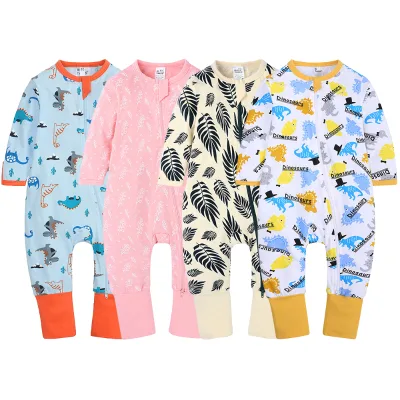
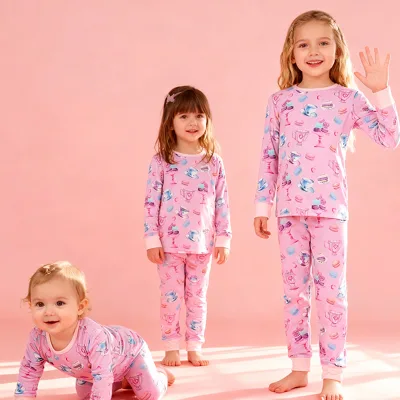


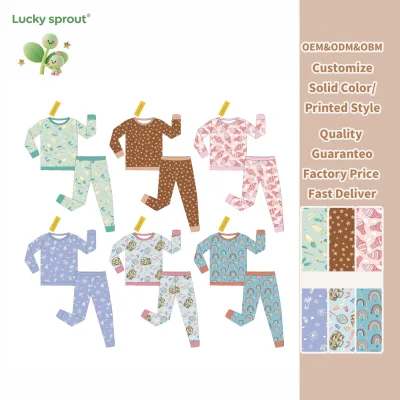
Bamboo 2 Piece Children Pajama Long Sleeve&Leggings Unisex Baby Pajamas Set
$6.89 - $7.89
MOQ: 100 Pieces


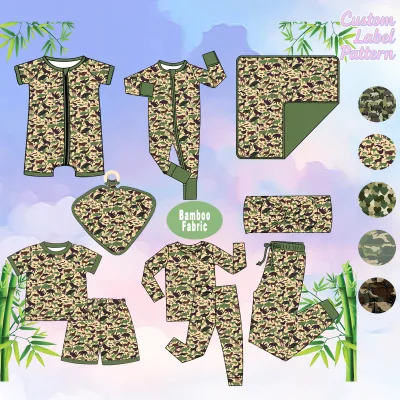
Custom Print Tee & Pants Summer Short Sleepwear Set Girls Bamboo Kids Pajamas
$5.99 - $9.99
MOQ: 100 Pieces
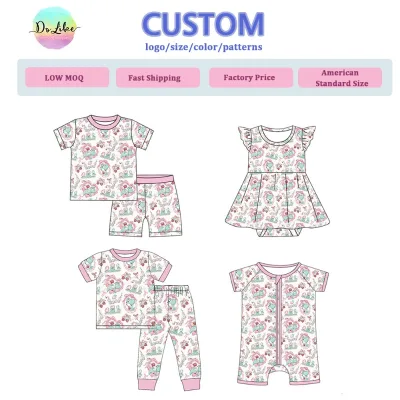
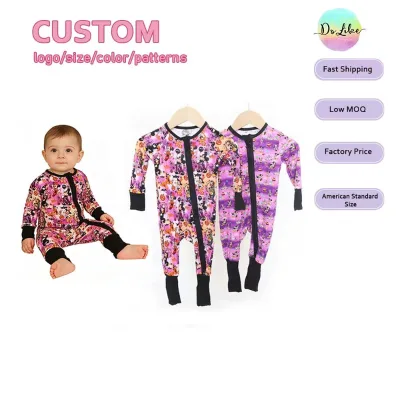
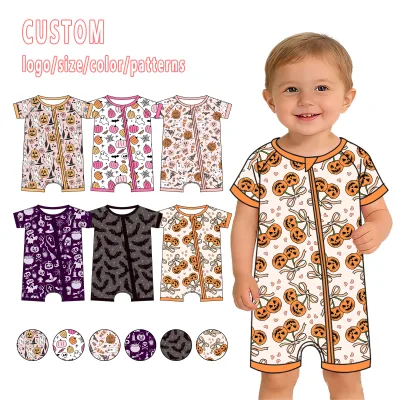
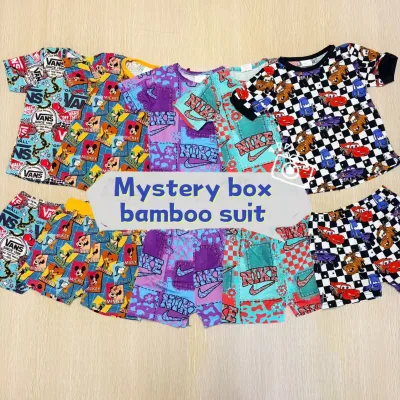
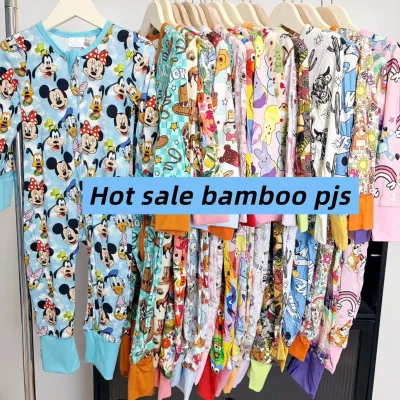
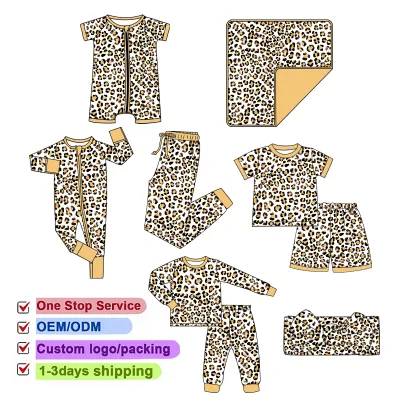


Comprehensive Sourcing Guide
Strategic Sourcing Guide for Bamboo Zipper Kids Pajamas
The global demand for sustainable, comfortable, and safe children's sleepwear has driven a significant shift toward plant-based fibers, with bamboo viscose emerging as a premium choice for manufacturers and retailers. For procurement professionals researching the core keyword "Bamboo Zipper Kids Pajamas," the objective is to navigate a complex supply chain where material authenticity, functional design, and safety compliance intersect. This guide provides a disciplined framework for evaluating potential suppliers, interpreting technical specifications, and mitigating risks associated with sourcing these specialized garments. The analysis below relies strictly on observed market data and established industry knowledge to ensure actionable, evidence-based decision-making.
Material Composition and Fiber Authenticity Verification
The primary differentiator for bamboo pajamas is the fiber source. In the current market, the term "bamboo" can refer to mechanically processed bamboo linen or chemically processed bamboo viscose (rayon). For children's sleepwear, the industry standard heavily favors bamboo viscose due to its superior softness and drape, which mimics the feel of silk or high-quality cotton. Sourcing teams must verify that the material specification explicitly states "100% Bamboo Fiber" or "100% Bamboo Viscose."
Market observations indicate that while some suppliers list "bamboo material" generally, high-confidence data points to specific compositions such as "100% bamboo viscose" or "100% combed cotton" for alternative options. Buyers should demand a mill test report or a certificate of analysis from the fiber supplier to confirm the chemical composition. It is critical to distinguish between blended fabrics and 100% bamboo content, as blends may dilute the moisture-wicking and hypoallergenic properties that justify the premium price point. The fabric should be described as "knitted" or "knitting" to ensure the necessary stretch and comfort for active children. Furthermore, the texture should be described as "soft and breathable" and "skin-friendly," attributes that are intrinsic to high-quality bamboo viscose but require verification through physical sampling.
Design Specifications and Functional Attributes
When sourcing "Bamboo Zipper Kids Pajamas," the design must balance safety with functionality. The zipper is a critical component; unlike button closures which can pose choking hazards or pinching risks, zippers offer a secure, quick-dressing solution. However, the zipper must be covered by a placket to prevent direct contact with the child's skin. The product specifications observed in the market often include "With Buttons" for certain styles, but for the specific keyword of zipper pajamas, the closure mechanism must be robust and non-toxic.
The fit and cut are equally important. Specifications such as "Elastic Waist" and "Round Neck" are standard for comfort, ensuring the garment does not restrict movement during sleep. The sleeve style varies, with market data showing both "Short Sleeve" and "Long Sleeve" options available. Buyers must align the sleeve style with the intended season; "Summer" collections typically feature short sleeves, while "Spring / Autumn" or general comfort lines may utilize long sleeves. The product model is often categorized as "kids bamboo pajamas" or "Bamboobaby Romper," indicating a specific target demographic.
Size ranges are a key logistical consideration. Observed data lists specific sizes such as 59, 66, 73, 80, and 90, which correspond to height measurements in centimeters for toddlers and young children. Other listings may offer "Free Size" for adult categories, but for the "3-8 years" or "7-10 Years" age groups, precise sizing is mandatory. The pattern type can range from "Solid Color" to "Print," with "Pure Colour" being a common preference for safety and dye consistency. The color description "Colourful" or "Picture" suggests a variety of options, but buyers should verify that the printing process uses non-toxic, water-based inks suitable for children's skin.
Compliance, Safety Standards, and Certification Checks
Safety is the non-negotiable pillar of children's apparel procurement. While the provided data mentions "OEKO-TEX" and "FSC" as background concepts, these should not be assumed as automatic certifications for every listed product. Instead, buyers must treat these as verification targets. The standard for bamboo pajamas often cites "100% bamboo viscose" as a material standard, but this does not equate to a safety certification.
Procurement teams must explicitly request documentation for flammability standards, which vary by region (e.g., CPSC in the US, BS 7177 in the UK). The material itself, being a cellulose fiber, may require chemical treatments to meet strict flammability codes, which can impact the "skin-friendly" claim. Buyers should verify if the supplier adheres to specific regional standards rather than relying on generic "bamboo material" claims. Additionally, the "Label & Logo" customization option implies that the care label and brand tag must also comply with labeling laws regarding fiber content, country of origin, and safety warnings.
Cost Drivers and Pricing Dynamics
Understanding the cost structure of bamboo pajamas is essential for budgeting and margin analysis. The observed price range in the market spans from $0.50 to $20.00 USD. This wide variance is driven by several factors: the quality of the bamboo fiber, the complexity of the zipper mechanism, the printing techniques used, and the order volume.
The Minimum Order Quantity (MOQ) is a significant cost driver. Data indicates an MOQ range of 1 to 1000 pieces, with a specific high-confidence observation of 100 pieces for certain suppliers. Lower MOQs allow for smaller, more agile orders but often come with a higher unit cost. Conversely, bulk orders of 1000 pieces typically unlock economies of scale. The production name "Bamboobaby Romper" or "High Quality Cotton Pajamas for Kids" suggests that product complexity influences pricing. A romper with a zipper and custom printing will cost more than a simple solid-color pajama set.
Buyers should also account for the "7 Days Sample Order Lead Time" support. While this is a logistical advantage, the cost of samples must be factored into the total procurement budget. Shipping methods, whether "by Sea or by Air," will further impact the landed cost. Sea freight is cost-effective for large volumes but requires longer lead times, whereas air freight is necessary for urgent restocking but significantly increases the per-unit cost.
Supplier Evaluation and Production Capabilities
Selecting the right supplier requires a rigorous evaluation of their production capabilities and reliability. The market data shows a supply type of "in-Stock Items," which suggests some suppliers maintain ready-to-ship inventory. However, for custom orders involving "Customization" of logos and patterns, the supplier must have a dedicated production line.
Key evaluation criteria include the supplier's ability to handle "Customized Logo Printing" and "Label & Logo" customization. The production technique, listed as "Knitted" or "Printed," must match the buyer's quality expectations. A supplier offering "100% Cotton" alongside "100% Bamboo Fiber" may lack specialization in bamboo processing, potentially affecting the final product's performance. Buyers should prioritize suppliers who explicitly state "bamboo material" as their core competency.
The origin of the products is consistently listed as "China." While this is a major manufacturing hub, buyers must conduct due diligence on the specific factory's audit status. The "prod_packing" specification of "1 PCS Per OPP Bag, and 200 PCS Per Carton" provides insight into the supplier's packaging efficiency. Efficient packaging reduces shipping volume and potential damage during transit. Additionally, the "Supply Type" being "in-Stock Items" indicates a capacity for rapid fulfillment, which is crucial for meeting seasonal demand peaks.
Quality Control and Long-Term Procurement Strategy
Implementing a robust quality control (QC) protocol is vital for maintaining brand reputation. The product features "Soft and Breathable" and "Moisture Absorption, Ventilation" as key attributes. These claims must be validated through physical testing of the finished garments. Buyers should establish a QC checklist that includes checking the zipper functionality, the integrity of the stitching, and the colorfastness of the prints.
The "Feature" list also highlights "Skin Friendly for Baby Daily," which necessitates a strict check for chemical residues. Even if the material is 100% bamboo, the dyeing and finishing processes can introduce irritants. Therefore, third-party testing for harmful substances is recommended, even if the supplier claims compliance.
For long-term procurement, building a relationship with suppliers who offer "Customization" is advantageous. This allows for brand differentiation through unique patterns, colors, and logos. The "Production Name" variations, such as "kids bamboo pajamas sets" or "Children's pajamas," suggest that suppliers may offer modular designs. Buyers should aim to standardize their specifications to leverage volume discounts while maintaining flexibility for seasonal updates.
Comparative Analysis of Product Attributes
To facilitate decision-making, the following table summarizes the key attributes observed in the market for Bamboo Zipper Kids Pajamas. This comparison helps buyers identify the specific configuration that aligns with their target market needs.
| Attribute Category | Observed Specification A | Observed Specification B | Observation C |
|---|---|---|---|
| Material | 100% Bamboo Fiber | 100% Bamboo Viscose | 100% Cotton (Alternative) |
| Age Group | 7-10 Years | 3-8 Years | Adults (Free Size) |
| Closure Type | Zipper (Implied) | Elastic Waist | With Buttons |
| Sleeve Style | Short Sleeve | Long Sleeve | Short Sleeve |
| Pattern | Solid Color | Print / Picture | Pure Colour |
| Season | Summer | Spring / Autumn | Home / Comfort |
| MOQ | 100 PCS | 1-1000 PCS | 1 PCS (Sample) |
| Packing | 1 PCS/OPP, 200/CTN | 1sets/OPP | Standard Carton |
| Origin | China | China | China |
This table illustrates the variability in product offerings. Specification A and B represent the core bamboo offerings, while Observation C highlights the presence of cotton alternatives. Buyers must carefully match these attributes to their specific product requirements. For instance, a brand targeting the "Summer" season with "Short Sleeve" designs should prioritize suppliers listing those specific attributes to ensure product-market fit.
Conclusion and Procurement Recommendations
Sourcing Bamboo Zipper Kids Pajamas requires a balanced approach that prioritizes material authenticity, safety compliance, and supplier reliability. The market offers a diverse range of options, from 100% bamboo viscose rompers to cotton blends, each with distinct cost and performance profiles. Buyers should focus on verifying the "100% Bamboo Viscose" claim through documentation and ensure that the zipper and fabric meet all relevant safety standards for children's wear.
By adhering to the technical specifications and quality control measures outlined in this guide, procurement professionals can mitigate risks and secure a supply chain that delivers high-quality, sustainable products. The ability to customize logos and patterns, combined with flexible MOQs, allows brands to scale efficiently while maintaining their unique market positioning. Ultimately, success in this category depends on rigorous supplier vetting and a commitment to verifying every claim against the physical reality of the product.
FAQs
What material is used for Bamboo Zipper Kids Pajamas?
The primary material is 100% Bamboo Fiber or 100% Bamboo Viscose. Some alternative options include 100% Cotton or 100% Combed Cotton. Buyers should verify the specific composition to ensure the desired softness and breathability for children.
Can I customize the logo and label on these pajamas?
Yes, customization is available for both the label and logo. Suppliers support customized logo printing and specific label requirements. This allows brands to differentiate their products while maintaining the required safety and fiber content disclosures.
What is the minimum order quantity for these pajamas?
The minimum order quantity typically ranges from 1 to 1000 pieces. A common specific requirement is 100 pieces for certain suppliers. Lower quantities may be available for samples, but bulk orders often unlock better pricing tiers.
How long does it take to produce a sample order?
Sample orders can be supported with a lead time of 7 days. This allows for quick evaluation of the fabric quality and zipper functionality before committing to larger production runs. Buyers should confirm this timeline with the specific factory.
Which sizes are available for children aged 3 to 8 years?
Available sizes include 59, 66, 73, 80, and 90 centimeters. These measurements correspond to specific age groups like 3-8 years or 7-10 years. Precise sizing is essential for ensuring a comfortable fit for active children during sleep.
What is the typical price range for these pajamas?
The observed price range spans from 0.50 to 20.00 USD per unit. This variance depends on material quality, customization, and order volume. Buyers should factor in shipping costs and MOQs when calculating the final landed cost.
How are the pajamas packaged for shipment?
Standard packaging involves 1 piece per OPP bag and 200 pieces per carton. Some variations may use 1 set per OPP bag. This packaging method ensures protection during transit while optimizing container space for sea or air freight.