Source eco-friendly wooden christmas table calendar for Office Gifts, Home Decoration, and Living Room
Compare 30 listings of eco-friendly wooden christmas table calendar options suitable for office gifts, home decoration, and living room settings. Buyers can review specifications like material, size, and customization availability to find the right supplier.
Key considerations
Products List

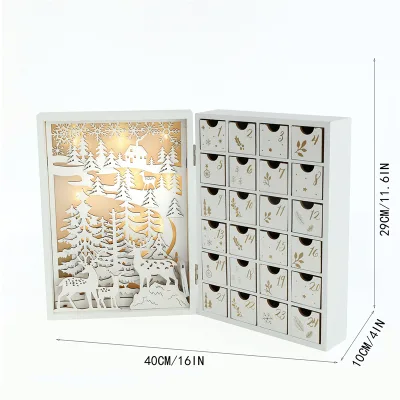
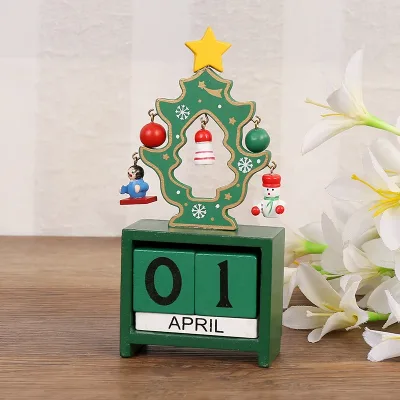


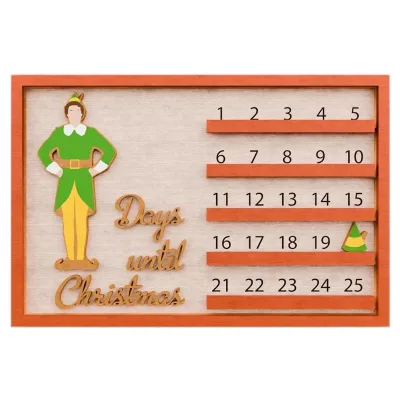


Christmas Gift Box Countdown Calendar Ornament Wooden Creative Decoration
$15.44 - $16.91
MOQ: 5 Pieces

Tabletop Ornaments 24 Day Wooden Decoration Advent Calendar for Christmas Holiday Party
$10.00 - $12.50
MOQ: 300 Pieces

Eaglegifts Christmas White Wood House Desk Countdown Box Wooden Advent Calendar
$11.90 - $13.50
MOQ: 500 Pieces

Candy Gift Storage Box Tabletop Christmas Advent Calendar with 24 Drawers
$13.70 - $14.90
MOQ: 500 Pieces
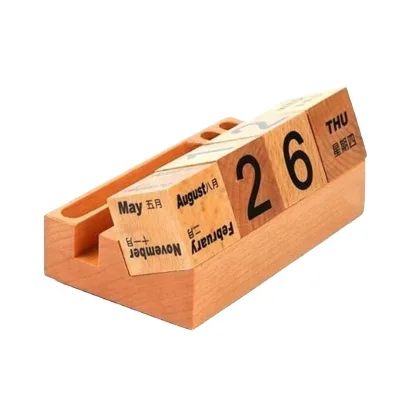
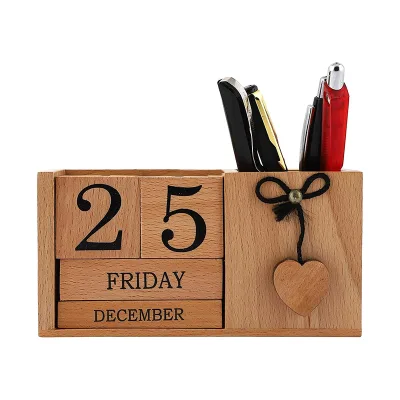
Wooden Handicraft Desktop Office Use Christmas Calendar Wooden Desk Calendar
$3.28 - $6.76
MOQ: 1000 pieces



Comprehensive Sourcing Guide
Strategic Sourcing Guide for Eco-Friendly Wooden Christmas Table Calendars
Understanding Product Definitions and Material Composition
The core keyword "eco-friendly wooden christmas table calendar" represents a specific intersection of functional office supplies, seasonal decor, and sustainable material sourcing. In the B2B procurement landscape, this category is not monolithic; it encompasses distinct product types that share a common aesthetic and material base but differ significantly in mechanical function and intended usage. Based on observed market data, buyers must distinguish between products explicitly categorized as "Desk Calendars" with "Monthly Calendar" date types and those classified broadly as "Wood Crafts" or "Christmas Decorations."
The primary material constraint for this category is wood. The supply chain for wooden table calendars relies heavily on timber processing, where the "Wood Handicraft" technique is a standard specification. This implies that the manufacturing process involves manual or semi-automated shaping, sanding, and assembly, rather than purely injection molding or mass printing on paper. The "Eco-friendly" designation in this context is often associated with the natural material source, though buyers must verify if the wood species are sourced from managed forests or if the finish involves sustainable treatments. The observed product attributes indicate a "Modern" design style with "Exquisite" detailing, often featuring "Irregular" shapes to enhance the artisanal appeal.
A critical technical distinction lies in the "Power Source" attribute. True wooden table calendars are "Non Power" devices, relying entirely on mechanical movement or static display. This contrasts with digital or electronic calendars. The mechanical aspect is defined by the "MOVABLE" and "Multi-Functional" capabilities observed in specific models. Some units utilize a "Spring" format, suggesting a specific binding mechanism that allows the calendar pages or wooden elements to rotate or flip. Others may rely on a "Saddle Stitched" binding method, which is a traditional paper-binding technique often integrated with a wooden base or cover. Buyers must verify if the "Spring" attribute refers to a metal coil mechanism or a specific wooden hinge design, as this impacts durability and the "Eco-friendly" narrative.
Technical Specifications and Functional Attributes
When evaluating technical specifications for wooden Christmas table calendars, the physical dimensions and structural integrity are paramount. The market data reveals a wide variance in size, ranging from compact items measuring approximately 3.6 x 7.8 x 14.5 cm to larger units reaching 20 x 10 x 29 cm. This variation dictates the "Application" environment. Smaller units are often suitable for "Living Room" or personal desk use, while larger, heavier units with a "Single gross weight" of up to 3.000 KG are designed for prominent "Tabletop" display in corporate offices or retail spaces.
The "Surface Treatment" is a critical technical factor that influences both the aesthetic and the longevity of the product. The standard industry practice involves "Matt/Glossy Lamination" to protect the wood grain and printed calendar dates from moisture and wear. For an "eco-friendly" product, the buyer should inquire about the specific chemical composition of the lamination or if water-based coatings are utilized to minimize VOC emissions. The "Pattern" attribute is frequently observed as "Horizontal," which aligns with the "Advertising" usage case, allowing for ample space for brand logos or promotional messages alongside the calendar dates.
Functionality extends beyond the calendar mechanism. The "Customization" attribute is a defining feature of this category, with suppliers offering "Customzied" standards. This allows buyers to alter the "prod_model" or "model number" to fit specific branding needs. The "Shape" is often "Irregular," moving away from standard rectangular blocks to create unique silhouettes that serve as "Ornaments" as well as functional calendars. The "Single package size" and "Multi-piece Package" specifications indicate that some units are shipped as complete sets, while others may require assembly or are sold as components. The "OEM" brand name status confirms that these products are typically manufactured for private label distribution rather than being sold under a generic public brand.
Compliance, Certification, and Sustainability Verification
Sourcing "eco-friendly" products requires rigorous verification of certifications, as the term itself is not legally defined in all jurisdictions and can be subject to greenwashing. The supply chain data indicates that high-confidence certifications include "SGS" and "BSCI." SGS is a global leader in inspection, verification, testing, and certification, providing assurance regarding product safety and quality. BSCI (Business Social Compliance Initiative) focuses on social compliance in the supply chain, ensuring that labor conditions meet ethical standards.
While "FSC" (Forest Stewardship Council) is a trusted standard for sustainable wood sourcing, it appears in the low-confidence background data. Therefore, buyers should not assume FSC certification is present unless explicitly confirmed by the supplier. Instead, the procurement strategy should mandate that suppliers provide documentation for any wood origin claims. The "prod_origin" is listed as "China Guangdong" and "Shandong, China," regions known for significant manufacturing capabilities. Buyers must verify if the wood used in these regions is imported or locally sourced and if the harvesting practices align with international sustainability standards.
The "Certificate" field in the product data suggests that compliance is a standard requirement for export. However, the absence of specific environmental standards like FSC in the high-confidence list means that "eco-friendly" claims must be backed by the supplier's internal quality control reports or third-party testing results for the specific batch. Buyers should request test reports regarding the "Surface Treatment" to ensure that the "Matt/Glossy Lamination" does not contain hazardous substances that would violate regulations in the destination market, such as REACH in Europe or TSCA in the United States.
Cost Drivers and Pricing Dynamics
The pricing structure for wooden Christmas table calendars is influenced by several variable factors, including material costs, customization levels, and order volume. The observed price range in the market spans from $0.05 to $16.91 USD. This wide disparity is not necessarily indicative of quality differences alone but reflects the diversity of product configurations. The lower end of the range likely corresponds to simple, small-scale wooden ornaments with basic calendar functionality or minimal branding. The higher end reflects larger, more complex units with intricate "Wood Handicraft" designs, extensive customization, and premium packaging.
The "MOQ" (Minimum Order Quantity) is a significant cost driver. The data shows a range from 1 to 5000 units, with specific high-confidence entries citing 50 PCS and 12 pcs. This suggests that the market is flexible, catering to both small boutique buyers and large corporate procurement teams. However, the "Production Time" of 15-25 days and "Sample Time" of 7-10 days indicate that lead times are substantial. Buyers must factor these timelines into their procurement planning, especially for seasonal items like Christmas calendars where timing is critical. Rush orders may incur premium costs or require expedited shipping, which significantly impacts the total landed cost.
Packaging also influences cost. The "prod_packing" is listed as "OPP" (Oriented Polypropylene) bags, while other entries specify "box" packaging. Upgrading from simple OPP bags to custom-printed boxes adds material and labor costs. Furthermore, the "Single gross weight" of 3.000 KG for larger units affects shipping logistics. Heavier items incur higher freight charges, particularly for air freight, which is often necessary for time-sensitive seasonal goods. Buyers should calculate the total cost of ownership, including freight, duties, and storage, rather than focusing solely on the unit price.
Typical Applications and Usage Scenarios
The versatility of wooden Christmas table calendars allows them to serve multiple functions across different sectors. The primary "Usage" categories identified are "Office Gifts & Decoration," "Home Decoration," and "Gift." In a corporate context, these items are frequently used as "Office Gifts" for clients or employees during the holiday season. The "Advertising" pattern and "Customization" options make them ideal for branding, with companies imprinting their logos on the "Horizontal" pattern or the wooden surface.
For home use, the "Living Room" and "Tabletop" applications are prominent. The "Modern" design style and "Exquisite" finish ensure that these calendars blend seamlessly with contemporary interior decor. The "Christmas Gift" and "Anniversary" occasions highlight their role as sentimental or celebratory items. The "Type" is explicitly listed as "Christmas Decorations," and the "Decoration" attribute reinforces their dual nature as functional timekeepers and aesthetic ornaments.
The "Application" scope extends to both "Indoor" and "Outdoor" environments, although the "Wood" material suggests that outdoor use may require specific treatments to withstand weather conditions. The "Non Power" nature of the product ensures reliability in various settings without the need for batteries or charging. The "Multi-Functional" aspect allows these items to be used as display stands, photo holders, or general decorative pieces when the calendar dates are no longer relevant, extending their lifecycle and value proposition for the end-user.
Supplier Evaluation and Quality Control Protocols
Evaluating suppliers for wooden Christmas table calendars requires a focus on craftsmanship and consistency. The "technics" of "Wood Handicraft" imply a reliance on skilled labor. Buyers should assess the supplier's capacity to maintain quality across large batches, as handcrafted items can suffer from variability. The "Customzied" standard suggests that the supplier must have flexible production lines capable of handling different "prod_model" numbers and design variations.
Quality control should begin at the raw material stage. Buyers must verify the "Species" of wood and ensure it meets the "Eco-friendly" criteria. The "Surface Treatment" process is another critical control point; the "Matt/Glossy Lamination" must be applied evenly without bubbles or peeling. The "Binding" method, whether "Saddle Stitched" or utilizing a "Spring" mechanism, must be tested for durability. The "MOVABLE" function should be tested for smooth operation over multiple cycles to ensure the calendar pages or wooden elements do not jam or break.
Inspection protocols should include checking the "Single package size" and "Single gross weight" against the supplier's specifications to ensure accurate shipping and inventory management. The "Package" type, whether "box" or "OPP," must be robust enough to protect the product during transit. Given the "Christmas" and "Anniversary" occasions, the visual presentation is paramount. Any defects in the "Color" or "Design style" can render the product unsellable. Buyers should request pre-shipment inspections, particularly for large orders, to verify that the final product matches the approved sample.
Long-Term Procurement and Strategic Considerations
For long-term procurement, buyers should consider the lifecycle of the product and the potential for repeat orders. The "OEM" nature of the products allows for brand building over time. By establishing a consistent relationship with a supplier, buyers can secure better pricing and more favorable lead times. The "Production Time" of 15-25 days suggests that planning ahead is essential. Buyers should align their order cycles with the "Sample Time" of 7-10 days to allow for design iterations before mass production.
Sustainability is a growing concern in the B2B sector. While the "Wood" material is inherently renewable, the "Surface Treatment" and "Binding" processes must also be evaluated for environmental impact. Buyers should explore suppliers who can provide data on their carbon footprint or waste reduction initiatives. The "BSCI" certification indicates a commitment to social responsibility, which is increasingly important for corporate social responsibility (CSR) reporting.
Finally, buyers should monitor market trends for the "Style" and "Design." The "Modern" and "Exquisite" styles observed currently may evolve. Maintaining a flexible supply chain that can adapt to changing design preferences will ensure that the product remains relevant. The "Multi-piece Package" and "Irregular" shape options offer opportunities for innovation, allowing buyers to differentiate their offerings in a competitive market. By focusing on these strategic elements, buyers can secure a reliable supply of high-quality wooden Christmas table calendars that meet both functional and ethical standards.
FAQs
What certifications do eco-friendly wooden christmas table calendars have?
High-confidence certifications include SGS and BSCI for product safety and social compliance. While FSC is a trusted standard, it appears only in low-confidence data, so buyers must verify forest sourcing claims directly with suppliers before purchase.
How long does production take for custom wooden calendar orders?
Production time typically ranges from 15 to 25 days for standard orders. Sample creation requires 7 to 10 days, so buyers must plan lead times carefully to ensure delivery before the Christmas season begins.
Which minimum order quantities are available for these wooden calendars?
Minimum order quantities vary from 12 pieces to 5000 units depending on the specific model. Some listings show a baseline of 12 pieces, while others require 50 pieces, allowing flexibility for both small and large procurement teams.
Can buyers customize the design and branding of these calendars?
Yes, customization is available with a customized standard allowing for OEM branding. Buyers can alter the model number and apply horizontal patterns for advertising, ensuring the product fits specific corporate or retail branding needs.
What materials and finishes are used for these wooden table calendars?
Products are made from wood with wood handicraft techniques and feature Matt or Glossy Lamination. The surface treatment protects the grain while the irregular shapes and modern design styles enhance their appeal as home or office decorations.
Where are these eco-friendly wooden calendars manufactured?
Products originate from manufacturing hubs in China, specifically Guangdong and Shandong provinces. Buyers should verify specific batch origins as the supply chain relies on these regions for timber processing and assembly capabilities.
What are the typical dimensions and weight of these calendars?
Sizes range from compact 3.6 by 7.8 by 14.5 cm units to larger 20 by 10 by 29 cm models. Some units have a single gross weight of up to 3.000 KG, impacting shipping costs and storage requirements significantly.