Source Electric ATV for Farm, Off-road, and Industrial Uses
Explore 30 Electric ATV models from verified Chinese manufacturers. Buyers can compare motor power, speed, and dimensions to find the right vehicle for agricultural, recreational, or industrial applications.
Key considerations
Products List




Comprehensive Sourcing Guide
Strategic Sourcing Guide for Electric ATVs
Understanding Technical Specifications and Performance Variability
When sourcing electric all-terrain vehicles (ATVs), buyers must navigate a landscape where technical specifications vary significantly even within the same product category. The core keyword "Electric ATV" encompasses a wide range of configurations, from compact utility models to high-performance recreational units. Based on current market observations, the powertrain architecture is a primary differentiator. Some units are equipped with high-output electric motors rated at 3000W, while others operate with power ranges between 800W and 1000W. A specific model in the current supply pool features a 2000W motor, indicating that power output is not standardized across the category.
Voltage systems also present a critical decision point for procurement. The market data reveals a divergence between 36V systems, which are often associated with lower power outputs and shorter range capabilities, and 72V systems, which typically support higher wattage motors and improved torque. For instance, a 72V configuration is observed in models with a 2000W motor, whereas 36V systems are paired with lower displacement units around 1060W. This variance directly impacts the vehicle's ability to handle gradients and payload capacity.
Speed capabilities further complicate the specification matrix. Observed maximum speeds range from units capped below 50 km/h to models capable of reaching 65 km/h (approximately 40 miles/h). Some listings indicate a speed band of 50-75 km/h, suggesting that "maximum speed" is a variable attribute dependent on the specific motor and battery configuration. Buyers must verify the actual top speed against their operational requirements, as a vehicle rated for 50 km/h may not suffice for larger properties or high-speed recreational trails.
Charging infrastructure is another technical pillar. Charging times are observed to fall between 5 to 8 hours, with some specific models citing a 6-8 hour window. This duration is contingent upon the voltage and battery capacity. For fleets requiring rapid turnaround, the 8-hour charging cycle represents a logistical constraint that must be factored into the operational schedule. Additionally, the transmission system varies, with some units utilizing chain drives while others employ shaft drives. The choice between these systems affects maintenance frequency and durability in muddy or debris-heavy environments.
Compliance and Certification Verification Protocols
In the global B2B market, compliance is not merely a formality but a prerequisite for market access and liability protection. The Electric ATV sector is subject to rigorous safety and environmental standards. Current market data indicates that certifications such as CE and ISO9001 are present in the supply chain. The CE marking is particularly critical for European markets, signifying conformity with health, safety, and environmental protection standards. The ISO9001 certification points to a manufacturer's adherence to quality management systems, which is a strong indicator of consistent production processes.
However, buyers must exercise caution when interpreting certification claims. While some listings explicitly mention ECE (Economic Commission for Europe) certification alongside CE, others only list CE or ISO9001. The presence of ECE certification is vital for vehicles intended for road use or specific off-road regulatory zones. It is essential to verify that the certification applies to the specific model being purchased, as certifications are often model-specific rather than company-wide.
Dimensional standards also play a role in compliance, particularly for storage and transport logistics. Observed product standards include dimensions such as 185011601150 mm and 1165725765 mm. These measurements are not arbitrary; they dictate the required warehouse space and the type of shipping container needed. A mismatch between the product dimensions and the intended logistics infrastructure can lead to unexpected costs. Furthermore, the structural design, such as the "Without Door" configuration observed in several models, must be evaluated against local safety regulations regarding roll-over protection and operator enclosure.
Cost Drivers and Pricing Dynamics
The pricing structure for electric ATVs is influenced by a complex interplay of technical specifications, brand positioning, and order volume. The observed price range in the market spans from $35 to $2180 USD. This wide disparity highlights the diversity of the product category, ranging from basic utility models to high-specification recreational vehicles. The lower end of the spectrum likely corresponds to units with lower motor power (800-1000W), smaller battery capacities (36V), and simpler transmission systems. Conversely, the higher price points are associated with 3000W motors, 72V systems, and advanced features like shaft drives and disc brakes.
Minimum Order Quantity (MOQ) is a significant factor in the total cost of ownership. The market data shows an MOQ range of 1 to 30 units. Buyers seeking to minimize upfront capital expenditure can source single units, but this often results in a higher per-unit cost. Conversely, orders meeting the higher end of the MOQ spectrum may benefit from economies of scale, though the specific discount structure is not publicly standardized.
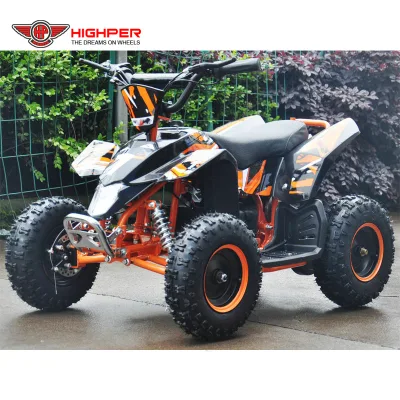
Brand reputation also influences pricing. Models from established brands like Raymon and Highper are observed in the market. While brand value can justify a premium, it is crucial to correlate the price with the actual technical specifications provided. A higher price should be backed by verifiable improvements in motor power, battery life, or build quality. Buyers should avoid assuming that a higher price automatically equates to superior performance without cross-referencing the specific wattage, voltage, and speed ratings.
Typical Applications and Operational Environments
The versatility of electric ATVs makes them suitable for a diverse array of applications, from agricultural utility to recreational use. The "Without Door" structure observed in many models suggests a design optimized for open-air operation, which is ideal for inspection, patrolling, and light utility tasks. The grade ability of these vehicles is a critical metric for specific terrains. Data indicates a maximum grade ability of ≤10°, which limits their effectiveness on steep inclines. Buyers targeting hilly or mountainous regions must verify if this gradient capability meets their site requirements.
Driving mileage is another key application determinant. Some models are rated for a driving mileage of ≤30km per charge. This range is sufficient for small farms, golf courses, or residential properties but may be insufficient for large-scale industrial sites or extended recreational trails. The 2WD driving type observed in certain models further defines their application; while adequate for flat or moderately uneven terrain, they may lack the traction necessary for deep mud or steep slopes compared to 4WD alternatives.
The wheel configuration, specifically 12-inch wheels with alloy rims, offers a balance between maneuverability and stability. This setup is well-suited for paved paths, grassy fields, and light off-road trails. However, for heavy-duty applications involving rough terrain, the tire size and suspension characteristics (noted as 2.5-10 in some models) must be carefully evaluated. The braking systems, ranging from front drum and rear disc combinations to full disc setups, also dictate the suitability for high-speed or heavy-load scenarios.
Supplier Evaluation and Selection Criteria
Selecting a reliable supplier requires a multi-faceted approach that goes beyond simple price comparison. The origin of the products is a primary indicator of supply chain stability. The majority of the observed products originate from Zhejiang, China, a region known for its manufacturing capabilities in the electric vehicle sector. While this location offers access to a robust supply chain, buyers should verify the specific factory capabilities and export history of the supplier.
Certification verification is a cornerstone of supplier evaluation. Buyers should request valid certificates for CE, ISO9001, and ECE, ensuring they are current and applicable to the specific model. The presence of these certifications should be cross-checked with the issuing bodies to prevent fraud. Additionally, the condition of the products, listed as "New," must be confirmed through factory audits or third-party inspections to ensure no refurbished or damaged units are being sold as new.
Packaging standards are also indicative of supplier professionalism. The use of "Export Carton" or standard "Carton" packaging suggests a commitment to protecting the product during transit. Buyers should inquire about the specific packaging materials and whether they meet international shipping standards to prevent damage during long-haul logistics. Finally, the customization availability listed in the product attributes is a significant differentiator. Suppliers offering customization can tailor the vehicle to specific brand or operational needs, adding value to the procurement process.
Quality Control and Long-Term Procurement Considerations
Ensuring long-term value requires a robust quality control (QC) strategy. Given the variability in motor power, voltage, and transmission systems, buyers must implement strict incoming inspection protocols. Key areas of focus include verifying the actual motor power against the stated specifications, testing the charging time to ensure it aligns with the 5-8 hour window, and checking the braking performance of disc and drum systems. The structural integrity of the "Without Door" frame must be assessed for durability, especially if the vehicle is intended for rough terrain.
Maintenance and spare parts availability are critical for long-term procurement. The choice of transmission system (chain vs. shaft) will dictate the maintenance schedule. Chain drives may require more frequent tensioning and lubrication compared to shaft drives. Buyers should negotiate with suppliers to include a supply of spare parts, such as tires (2.5-10 size) and brake components, to minimize downtime. The standard dimensions of the vehicles also impact storage and maintenance logistics; consistent sizing facilitates easier planning for fleet management.
Finally, the warranty and after-sales support provided by the supplier are essential for risk mitigation. While specific warranty terms are not detailed in the current data, buyers should explicitly define warranty coverage for the motor, battery, and structural components. The ability to source replacement batteries and motors from the same supplier ensures compatibility and simplifies the repair process. By focusing on these quality control and long-term considerations, buyers can secure a reliable supply of electric ATVs that meet their operational needs while minimizing total cost of ownership.
Summary of Key Specifications for Comparison
To assist buyers in making informed decisions, the following table summarizes the key technical attributes observed in the current market data. This comparison highlights the variability in specifications that must be considered during the sourcing process.
| Attribute | Observed Range / Options | Notes for Verification |
|---|---|---|
| Motor Power | 800-1000W, 2000W, 3000W | Verify actual wattage vs. model rating. |
| Voltage | 36V, 72V | Higher voltage supports higher power. |
| Max Speed | <50 km/h, 50-75 km/h, 65 km/h | Confirm speed limits for intended use. |
| Charging Time | 5-8 Hours | Check battery capacity impact on time. |
| Transmission | Chain Drive, Shaft Drive | Shaft drive generally requires less maintenance. |
| Brake Type | Disc, Front Drum/Rear Disc | Ensure braking system matches load requirements. |
| Dimensions | 1100-1850mm (L) x 570-1160mm (W) | Verify fit for storage and transport. |
| Certification | CE, ISO9001, ECE | Validate certificates for specific models. |
| Origin | Zhejiang, China | Confirm factory location and export capability. |
| MOQ | 1-30 Units | Negotiate based on order volume. |
This structured approach to sourcing electric ATVs ensures that buyers can navigate the complexities of the market with confidence, focusing on verified data and practical operational requirements rather than unverified claims.
FAQs
What motor power options are available for electric ATVs?
Motor power options range from 800 to 3000 watts depending on the specific model configuration. Some units feature 2000W motors while others operate with 3000W outputs, directly impacting torque and speed capabilities for different operational needs.
How long does it take to charge an Electric ATV battery?
Charging times typically fall between 5 to 8 hours based on the voltage and battery capacity. Specific models may cite a 6 to 8 hour window, which is a critical factor for fleet scheduling and operational turnaround requirements.
Which certifications are standard for Electric ATV manufacturers?
Common certifications include CE, ISO9001, and ECE, which verify safety and quality management standards. Buyers must verify that these certifications apply to the specific model, as they are essential for market access and liability protection in various regions.
Can electric ATVs handle steep gradients effectively?
Most observed models have a grade ability of 10 degrees or less, limiting their use on steep inclines. Buyers targeting hilly terrain must verify if this gradient capability meets their specific site requirements before procurement.
What is the typical driving range per charge for these vehicles?
Driving mileage is rated at 30 kilometers or less per charge for many models in the current supply pool. This range is suitable for small farms or residential properties but may be insufficient for large-scale industrial sites.
Which transmission systems are used in electric ATVs?
Transmission systems vary between chain drives and shaft drives, affecting maintenance frequency and durability. Chain drives may require more frequent tensioning, while shaft drives offer different performance characteristics in muddy or debris-heavy environments.
What voltage systems are commonly found in electric ATVs?
Voltage systems diverge between 36V and 72V configurations, with 72V supporting higher wattage motors. Lower voltage systems often pair with reduced power outputs, directly influencing the vehicle's ability to handle gradients and payload capacity.