Source Electric AMR Transfer Vehicle with Obstacle Detection Sensors for Warehouse, Factory, and Plant
Find 30 Electric AMR Transfer Vehicle with Obstacle Detection Sensors designed for material handling in industrial settings. Buyers can compare models with varying load capacities, navigation methods, and safety features to select the right automated guided vehicle for their facility.
Key considerations
Products List


Omni Direction Electric Trackless Transfer Automated Guided Vehicle
$20000.00 - $500000.00
MOQ: 1 Pieces


180t Omnidirectional Lifting Agv Workshop Automated Remote Control Electric Transfer
$20000.00 - $500000.00
MOQ: 1 Pieces


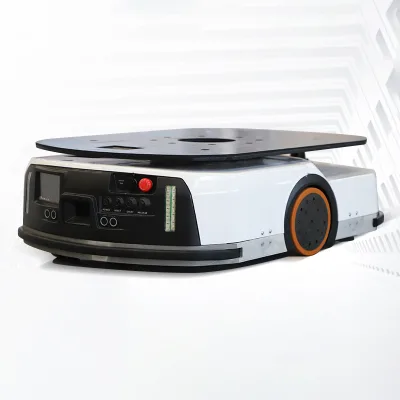


Electric Trackless Transfer Vehicle with a Load Capacity of 30 Tons for Steel Coils
$4000.00 - $4500.00
MOQ: 1 Pieces

Electric Transfer Trolley and Die Transfer Vehicle for Factory Transportation
$3000.00 - $3500.00
MOQ: 1 Pieces


20t Trackless Transfer Cart Remote Control Electric Rail Transfer Vehicle for Sale
$3800.00 - $4000.00
MOQ: 1 Pieces


Unpowered Electric Transfer Cart Transfer Vehicle Suitable for Warehouse and Factory Handling
$18000.00 - $19999.00
MOQ: 1 Pieces


Rear-Drive Electric Unmanned Delivery Vehicle with Lithium Iron Phosphate Battery
$8499.00 - $39999.00
MOQ: 1 Pieces


Trackless Transfer Cart Remote Control Electric Transport Vehicle for Industrial Plant
$3500.00 - $4000.00
MOQ: 1 Pieces

Export Handling Equipment Electric Transfer Cart 10t Trackless Electric Vehicle
$3500.00 - $4000.00
MOQ: 1 Pieces

Heavy Loads Electrical Warehouse Transfer Vehicle Motorized Transportation
$3500.00 - $4000.00
MOQ: 1 Pieces


Trackless 35t Transfer Vehicle with Steering and Wireless Remote Control System
$2500.00 - $9000.00
MOQ: 1 Sets

Trackless 30t Transfer Vehicle with Steering and Wireless Remote Control System
$2500.00 - $11000.00
MOQ: 1 Sets
Comprehensive Sourcing Guide
Strategic Sourcing Guide for Electric AMR Transfer Vehicles with Obstacle Detection Sensors
Understanding the Technical Landscape of Heavy-Duty Autonomous Mobile Robots
The procurement of electric AMR (Autonomous Mobile Robot) transfer vehicles, specifically those equipped with obstacle detection sensors, requires a nuanced understanding of the diverse technical architectures available in the current market. These machines are not monolithic; they range from light-duty logistics units to massive heavy-load transfer vehicles designed for industrial plant operations. When sourcing a unit described as a "Heavy Load AGV" or "180t Omnidirectional Lifting AGV," buyers must first distinguish between the underlying drive mechanisms and navigation systems that define performance.
The core functionality of these vehicles relies on a sophisticated integration of propulsion and perception. In the observed product spectrum, drive systems vary significantly, with some units utilizing a "Low Voltage Servo Motor" paired with independent servo control, while others employ a "Super Drive" configuration. For heavy-duty applications, the number of drive modules is critical. A vehicle designed for 14-ton loads may feature a four-wheel drive system, whereas a unit capable of 180 tons might utilize eight independent drive modules. This variance directly impacts the vehicle's ability to handle the rated load, which can range from 10 kilograms to 180,000 kilograms depending on the specific model architecture.
Navigation is the second pillar of technical specification. While some advanced units utilize a hybrid approach combining GNSS (Global Navigation Satellite System), multi-line laser scanning, and inertial navigation to achieve an accuracy of ±30mm, other models rely on magnetic navigation or wireless communication protocols. The choice of navigation method dictates the operational environment. Units with GNSS and laser capabilities are often suited for outdoor operations or large-scale open yards, whereas magnetic navigation is typically confined to indoor, structured environments. Buyers must verify that the navigation accuracy claimed by the supplier aligns with the precision requirements of their specific facility layout.
Safety is paramount in the design of these transfer vehicles. The presence of obstacle detection sensors is a non-negotiable feature for modern AMRs. The observed product data confirms the inclusion of safety laser scanners, emergency stop buttons, and collision avoidance systems. Some models specify "Long-Distance Obstacle Avoidance Detection" combined with contact sensors, ensuring that the vehicle can react to both static and dynamic obstacles. The ability to perform lateral movement, in addition to forward and backward travel, is another technical differentiator. This omnidirectional capability, often achieved through the specific arrangement of driving wheel pairs, allows for precise positioning in tight workshop spaces without the need for complex turning radii.
Compliance, Certification, and Safety Standards Verification
When evaluating electric AMR transfer vehicles, compliance with international and regional safety standards is a critical step in the procurement process. While specific certification statuses vary by manufacturer, the market data indicates that reputable suppliers often provide certifications such as ISO, ISO9001, CE, and SGS. These certifications are not merely marketing terms; they serve as evidence that the manufacturing process, design safety, and quality control systems meet established benchmarks.
Buyers must verify the scope of these certifications. For instance, an ISO9001 certification validates the quality management system of the supplier, ensuring consistent production standards. CE marking is essential for products intended for the European market, indicating compliance with health, safety, and environmental protection standards. SGS certification often relates to product testing and inspection, providing third-party validation of the vehicle's structural integrity and safety features. However, buyers should not assume that a listed certification covers all aspects of the specific model being purchased. It is necessary to request the specific test reports and compliance documentation for the exact model number, such as the "Ly-Ak-14t-2-2b" or "Ly-Au-180t-8-0A," to ensure the safety features like the emergency stop button and collision avoidance system have been rigorously tested.
The working environment is another factor influencing compliance requirements. Vehicles designed for outdoor operation, as noted in the product specifications, must withstand environmental variables such as weather, temperature fluctuations, and uneven terrain. The climbing capacity, observed to be ≤5°, is a specific performance metric that must be verified against the site's topography. If a facility has ramps or inclines exceeding this threshold, the standard model may not be suitable without customization. Furthermore, the battery system, often utilizing Lithium Iron Phosphate (LiFePO4) technology, must comply with transportation and storage regulations, particularly regarding fire safety and battery lifecycle management.
Safety features such as obstacle detection sensors and emergency stop buttons must be integrated into the vehicle's control logic to meet functional safety standards. Buyers should inquire about the specific safety integrity level (SIL) or performance level (PL) of the safety system, although these specific metrics may not be explicitly listed in all product descriptions. The presence of a "Collision Avoidance System" and "Obstacle Detection Sensors" suggests a proactive safety approach, but the exact range and reaction time of these sensors should be confirmed. For heavy-load applications, the weight of the vehicle itself, ranging from 3.5 tons to 40 tons, adds significant kinetic energy, making the reliability of the braking and stopping systems a critical compliance issue.
Cost Drivers and Financial Considerations in AMR Procurement
The financial landscape of sourcing electric AMR transfer vehicles is complex, driven by a multitude of technical and operational factors. The observed price range in the market spans from $100 to $500,000, reflecting the vast disparity between light-duty units and heavy-duty industrial giants. This wide range is not arbitrary; it is a direct reflection of the vehicle's rated load capacity, drive system complexity, and navigation accuracy.
The primary cost driver is the rated load capacity. A vehicle designed to carry 10 kilograms will naturally be less expensive than one engineered to transport 180 tons. The structural reinforcement required for heavy loads, the number of drive motors, and the power capacity of the battery system all contribute to the final price. For example, a 14-ton backpack heavy-load AGV will cost significantly more than a standard 10kg unit due to the robustness of its chassis and the power of its "Super Drive" system. Additionally, the battery capacity, such as the 400Ah units observed, plays a crucial role in cost. Larger batteries provide longer operational life but increase the initial investment and potentially the weight of the vehicle.
Customization is another significant factor influencing cost. The product data indicates that customization is available for these vehicles. Customization can range from specific body dimensions, such as the "450025001250(2683)" mm configuration, to specialized control methods or navigation enhancements. Each customization request adds to the engineering and manufacturing time, thereby increasing the unit price. Buyers must carefully evaluate whether standard models meet their needs or if the investment in customization is justified by operational efficiency gains.
Packaging and logistics costs also contribute to the total cost of ownership. The observed product packing options include "Customized Packaging" and "Wooden Box," which are essential for protecting heavy machinery during international shipping. The origin of the product, identified as China, implies that buyers must factor in shipping costs, import duties, and potential tariffs. While the base price of the vehicle is a key consideration, the total landed cost must include these ancillary expenses.
Warranty and after-sales service are long-term cost drivers. A standard one-year warranty is common, but the availability of "24 Hours on Line" support and "Video/Site Guidance" can reduce long-term maintenance costs. Buyers should consider the cost of potential downtime and the availability of spare parts when evaluating the total cost of ownership. A slightly higher initial price for a unit with robust after-sales support may result in lower operational costs over the life of the vehicle.
Typical Applications and Operational Scenarios
Electric AMR transfer vehicles with obstacle detection sensors are versatile tools deployed across a wide spectrum of industrial applications. The core application identified in the market data is "Material Handling," which encompasses a broad range of activities from raw material transport to finished goods distribution. However, the specific use cases vary significantly based on the vehicle's load capacity and navigation capabilities.
In heavy-duty industrial settings, these vehicles are often used for "Industry, Plant Transfer, and Workshop Transfer." A 180-ton Omnidirectional Lifting AGV, for instance, is ideal for moving massive machinery components, large steel coils, or heavy industrial equipment within a factory or between different plant sites. The ability to perform lateral movement and the high load capacity make these units indispensable for tasks that require precise positioning of extremely heavy loads. Similarly, 14-ton models are suitable for transporting large batches of materials, palletized goods, or heavy machinery parts in manufacturing plants.
For lighter applications, AMRs with a 10kg rated load are used in environments requiring high precision and frequent movement. These units are often deployed in assembly lines, packaging facilities, or distribution centers where the transport of smaller components or finished products is necessary. The "Forward, Backward, Left and Right Lateral Movement" capability allows these vehicles to navigate tight spaces and integrate seamlessly with existing production lines.
Outdoor operations are another key application area. Vehicles designed for "Outdoor Operation" with climbing capacities of ≤5° are suitable for logistics yards, ports, and construction sites. These units must be robust enough to handle uneven terrain and varying weather conditions while maintaining their navigation accuracy. The use of GNSS and laser navigation in these outdoor settings ensures that the vehicles can operate safely and efficiently over large distances.
The "Heavy Load Agv" category also finds application in specialized industries such as automotive manufacturing, aerospace, and heavy machinery production. In these sectors, the ability to transport heavy components with high precision and safety is critical. The integration of obstacle detection sensors ensures that these vehicles can operate safely alongside human workers and other machinery, reducing the risk of accidents and improving overall operational efficiency.
Supplier Evaluation and Quality Assurance Protocols
Selecting the right supplier for electric AMR transfer vehicles requires a rigorous evaluation process that goes beyond price comparisons. Buyers must assess the supplier's technical capabilities, manufacturing quality, and after-sales support. The presence of certifications like ISO, CE, and SGS is a positive indicator, but it is essential to verify the authenticity and scope of these certifications.
One of the key evaluation criteria is the supplier's ability to provide customization. The product data indicates that customization is available, which suggests that the supplier has the engineering flexibility to meet specific client needs. Buyers should inquire about the customization process, including the timeline, cost implications, and the extent of modifications possible. A supplier that offers "Online Technical Support" and "24 Hours on Line" service demonstrates a commitment to customer satisfaction and long-term partnership.
Quality control is another critical factor. Buyers should request detailed information about the manufacturing process, including the testing procedures for safety features like obstacle detection sensors and emergency stop buttons. The ability to provide test results and performance data for specific models, such as the "Ly-Ak-14t-2-2b" or "Ly-Au-180t-8-0A," is a strong indicator of a supplier's commitment to quality. Additionally, the warranty period and the terms of the warranty should be carefully reviewed. A one-year warranty is standard, but buyers should clarify what is covered and what is excluded.
The supplier's experience in the industry is also a valuable metric. Suppliers with a proven track record in manufacturing heavy-load AGVs and AMRs are more likely to deliver reliable products. Buyers should ask for references and case studies from previous clients, particularly those in similar industries or with similar operational requirements. The ability to provide "Video/Site Guidance" for installation and commissioning is another sign of a competent supplier.
Finally, the supplier's location and logistics capabilities should be considered. Since the product origin is listed as China, buyers must evaluate the supplier's ability to handle international shipping, customs clearance, and delivery to the final destination. A supplier with a robust logistics network can ensure that the vehicle arrives on time and in good condition, minimizing the risk of delays and damage.
Long-Term Procurement and Lifecycle Management
Procuring an electric AMR transfer vehicle is a long-term investment that requires careful planning for lifecycle management. Buyers must consider the total cost of ownership, including maintenance, battery replacement, and software updates. The battery system, often a Lithium Iron Phosphate type, has a specific lifespan that must be factored into the procurement strategy. Understanding the battery life and the cost of replacement is essential for budgeting over the vehicle's operational life.
Maintenance is another critical aspect of lifecycle management. The drive system, whether it is a "Low Voltage Servo Motor" or a "Super Drive," requires regular inspection and maintenance to ensure optimal performance. Buyers should establish a maintenance schedule and ensure that the supplier provides the necessary spare parts and technical support. The availability of "Online Technical Support" and "Video/Site Guidance" can significantly reduce downtime and maintenance costs.
Software updates and navigation system upgrades are also important considerations. As technology evolves, the navigation accuracy and obstacle detection capabilities of the vehicle may need to be enhanced. Buyers should inquire about the supplier's policy on software updates and whether these updates are included in the warranty or require additional fees. The ability to upgrade the navigation system from magnetic to GNSS+Laser+Inertial, for example, could extend the vehicle's usability in different environments.
Finally, buyers should consider the end-of-life disposal and recycling of the vehicle. The battery and electronic components must be disposed of in accordance with environmental regulations. A supplier that offers a take-back program or recycling services can help mitigate the environmental impact and ensure compliance with local laws. By planning for the entire lifecycle of the vehicle, buyers can maximize the return on investment and ensure the long-term success of their automated material handling operations.
FAQs
What safety features do these vehicles include?
These vehicles include safety laser scanners, obstacle detection sensors, emergency stop buttons, and collision avoidance systems. Some models also feature long-distance obstacle avoidance detection combined with contact sensors to ensure safe operation in dynamic environments.
Which navigation methods are available for these units?
Available navigation methods include GNSS combined with multi-line laser and inertial navigation, as well as magnetic navigation. The GNSS-based systems offer an accuracy of ±30mm and are suitable for outdoor operations, while magnetic navigation is typically used indoors.
Can these vehicles operate outdoors on inclines?
Yes, specific models are designed for outdoor operation with a climbing capacity of up to 5 degrees. This capability allows them to navigate ramps and uneven terrain found in logistics yards or construction sites while carrying heavy loads.
What is the maximum load capacity for these AGVs?
Load capacities vary significantly, ranging from 10 kilograms to 180 tons depending on the specific model architecture. Heavy-duty units like the 180-ton omnidirectional lifting AGV utilize eight drive modules to handle massive industrial equipment transfers.
Are these vehicles customizable for specific needs?
Yes, customization is available for body dimensions, control methods, and navigation enhancements. Buyers can request specific configurations such as the 4500*2500*1250 mm body shape or specialized packaging to fit unique operational requirements.
What certifications do these manufacturers typically hold?
Reputable suppliers often provide ISO, ISO9001, CE, and SGS certifications. These documents validate quality management systems and product safety, ensuring the vehicles meet international standards for manufacturing and operational safety.
How are these vehicles powered and maintained?
They are powered by Lithium Iron Phosphate batteries with capacities up to 400Ah and feature low voltage servo motors. After-sales support typically includes online technical assistance, video guidance, and a standard one-year warranty for peace of mind.