Source Electric Automation Coil Slitter Machine for Steel, Stainless, and Auto Plate
Compare 30 electric automation coil slitter machines from Chinese manufacturers offering CNC drive modes and CE certification. Buyers can evaluate specifications like width accuracy, line speed, and material thickness for cold rolled stainless steel and hot rolled plate applications.
Key considerations
Products List


Reliable 12mm Thick Slitter Machine / Uncoiler Machine/Decoiler Machine
$150000.00 - $500000.00
MOQ: 1 piece


Hot Sale High Accuracy Fully Automatic Slitting Machine Coil Cut to Length Line
$150000.00 - $500000.00
MOQ: 1 Sets


High Precision Automatic Coil Slitting Machine for Efficient Cutting
$32857.00 - $60000.00
MOQ: 1 Pieces


High Efficiency Steel Coil Slitting Machine with User-Friendly Operation
$20000.00 - $25000.00
MOQ: 1 Sets


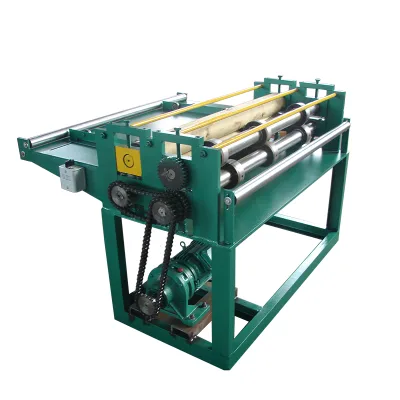


$72500.00 - $82500.00
MOQ: 1 Sets

Comprehensive Sourcing Guide
Sourcing Guide for Electric Automation Coil Slitter Machines
Understanding Core Technical Specifications and Capabilities
When sourcing an Electric Automation Coil Slitter Machine, buyers must first align their production requirements with the specific technical parameters available in the market. The core functionality of these machines revolves around the precise division of large metal coils into narrower strips, a process that demands high levels of accuracy and consistency. Based on current market offerings, the industry standard for these units often centers on specific model configurations designed for varying material widths and thicknesses.
A critical specification to evaluate is the slitting width capacity. Available units in the current supply chain demonstrate capabilities ranging from 600mm to 1700mm, with specific models engineered for widths up to 1800mm. This variance dictates the maximum coil size a facility can process. For instance, a machine with a 1650mm width capacity is frequently cited in product listings, suggesting it is a robust choice for medium-to-large scale operations. The material thickness tolerance is equally vital; observed specifications indicate that machines are available to handle materials ranging from 2mm to 10mm. Buyers must ensure their raw material inventory falls within these operational limits to avoid mechanical strain or substandard cuts.
The automation level of the machine is another defining characteristic. Modern electric slitters are predominantly equipped with CNC (Computer Numerical Control) drive modes, which facilitate precise strip width adjustments and automated feeding sequences. This automation is often paired with features labeled as "High Efficiency" and "Precision," ensuring that the production line can maintain a steady output without constant manual intervention. The line speed is a direct indicator of throughput capability. Market data shows line speeds varying significantly, with some units operating at 60 meters per minute and others reaching up to 180 meters per minute. The selection between these speeds depends heavily on the volume requirements of the buyer's specific application.
Furthermore, the physical dimensions of the machine and its footprint are essential for factory floor planning. Specifications indicate that the standard footprint for these units can range from approximately 30 meters in length by 10 meters in width to 40 meters by 11 meters. This substantial size requirement necessitates careful facility layout planning. The machines are designed to handle heavy loads, with coil weight capacities observed between 20 and 30 tons. The internal coil ID (Inner Diameter) is typically standardized at 508mm, a dimension that must match the incoming coil specifications to ensure smooth loading and unloading operations.
Compliance, Certification, and Safety Standards
In the global B2B machinery market, compliance with international safety and quality standards is non-negotiable. For electric automation coil slitter machines, the primary certification observed in the supply chain is the CE mark. This certification indicates that the product meets the essential health, safety, and environmental protection requirements for products sold within the European Economic Area. Buyers should verify that the CE certification is current and applies specifically to the model being purchased, as it serves as a baseline for electrical safety and mechanical integrity.
In addition to CE, some listings reference ISO certification standards. While the specific ISO standard number is not always explicitly detailed in general product summaries, the presence of "ISO" alongside CE suggests adherence to international quality management systems. When evaluating a supplier, procurement teams must request the actual certification documents to confirm validity. It is important to note that certification status is a property of the specific unit or batch, not necessarily a universal attribute of every supplier's entire catalog. Therefore, verification should be conducted on a per-order basis.
Safety features are integral to the design of these electric machines. The protection level for electrical components is often rated at IP40, which provides protection against solid objects larger than 1mm and no protection against water. For facilities with high dust or moisture levels, buyers should inquire if higher IP ratings are available or if additional protective enclosures are recommended. The power supply requirements are another compliance factor; the standard electrical input is AC 380V at 50Hz. Facilities operating on different voltage frequencies must ensure that the machine's power system can be adapted or that the local power grid matches these specifications to prevent equipment damage.
Warranty provisions also serve as a form of compliance and risk mitigation. Standard offerings typically include a 1-year or 12-month warranty. This period covers defects in materials and workmanship under normal operating conditions. However, the scope of the warranty, including what constitutes "normal use" and the process for claiming repairs, varies by supplier. Buyers should scrutinize the warranty terms to understand if labor, parts, and on-site service are included, as this significantly impacts the total cost of ownership.
Cost Drivers and Pricing Structures
The pricing of electric automation coil slitter machines is influenced by a complex array of factors, resulting in a wide observed range from $100 to $500,000 USD. This vast disparity is not indicative of a single product type but rather reflects the differences in machine capacity, automation level, material handling capabilities, and customization. Lower-cost units in this range may be smaller, semi-automatic, or designed for thinner materials and lower throughput. Conversely, the upper end of the price spectrum typically corresponds to fully automated, CNC-controlled systems capable of handling heavy coils (up to 30 tons), wide widths (1800mm), and high line speeds (180m/min).
Material thickness and width are primary cost drivers. A machine designed to slit 10mm thick hot-rolled plates requires significantly more robust structural components, heavier-duty motors, and more precise cutting mechanisms than a unit designed for 2mm cold-rolled stainless steel. The complexity of the cutting mechanism, such as the number of slitting strips (observed up to 35 strips), also adds to the cost. More strips require more precision in alignment and a more sophisticated control system to manage the tension and separation of the strips.
Customization is another significant factor affecting the final price. While standard models are available, the market data indicates that "Customization" and "Customized" options are readily available. Buyers requiring specific modifications, such as unique conveyor lengths, specialized winding systems, or integration with existing factory automation, will incur additional costs. The "Easy to Maintenance" feature, while a value-add, may also influence the initial price if it involves the use of higher-grade components or modular designs that are more expensive to manufacture.
Packaging and logistics costs are often bundled into the final price or quoted separately. The observed packaging standards include "Container Packing" and "Seaworthy Packing," which are essential for international shipping from the origin location, China. The weight and dimensions of the machine, combined with the need for heavy-duty crating to prevent damage during transit, contribute to the overall landed cost. Buyers should clarify whether the quoted price includes freight, insurance, and customs duties, as these can substantially increase the total expenditure.
Typical Applications and Material Compatibility
Electric automation coil slitter machines are versatile tools designed for a wide range of industrial applications, primarily within the metal fabrication and processing sectors. The specific material compatibility of these machines determines their suitability for different industries. The observed product data highlights the ability to process "Cold Rolled Stainless Steel," "Hot Rolled Plate," and "Auto Plate." This versatility allows a single facility to serve multiple market segments, from automotive manufacturing to construction and general metal fabrication.
The precision and accuracy specifications of these machines make them ideal for applications where dimensional tolerance is critical. For example, the width accuracy of 0.05mm to 0.1mm and length accuracy of 0.3mm are essential for downstream processes like stamping, welding, or forming, where even minor deviations can lead to assembly failures. The diagonal accuracy of 0.5mm and leveling accuracy of 1mm/M2 further ensure that the final strips are flat and square, reducing waste and rework in subsequent manufacturing steps.
High-efficiency models, capable of line speeds up to 180m/min, are particularly suited for high-volume production environments. These machines are often deployed in large-scale steel service centers or automotive component plants where throughput is a primary concern. The ability to handle coil weights up to 30 tons allows for extended production runs without frequent stoppages for coil changes, thereby maximizing operational efficiency.
The "Use Widely" advantage noted in product attributes suggests that these machines are adaptable to various industries. Whether the end product requires thin, precision-cut strips for electronic components or thicker, robust plates for structural applications, the electric automation coil slitter serves as a critical link in the supply chain. The specific choice of machine depends on the balance between the required material properties, the desired output volume, and the tolerance levels of the final product.
Supplier Evaluation and Quality Control Protocols
Selecting the right supplier for an Electric Automation Coil Slitter Machine requires a rigorous evaluation process that goes beyond price comparison. Buyers should prioritize suppliers who demonstrate a clear understanding of the technical specifications and can provide detailed documentation regarding the machine's construction and performance. The origin of the product, consistently noted as China, indicates a mature manufacturing ecosystem, but it also necessitates careful vetting of the specific factory's capabilities.
Quality control should be a central component of the supplier selection criteria. Buyers must verify that the supplier has established protocols for testing the machine's accuracy, such as verifying the width accuracy (0.05mm to 0.1mm) and line speed consistency before shipment. The "New" condition of the products is a standard expectation, but buyers should request evidence of factory testing or pre-shipment inspection reports to ensure the machine meets the advertised specifications.
The "Easy to Maintenance" feature is a strong indicator of a well-designed product, but it is only valuable if the supplier provides adequate support. Buyers should evaluate the availability of spare parts, the clarity of maintenance manuals, and the responsiveness of the technical support team. A supplier that offers comprehensive training and readily available replacement parts will minimize downtime and extend the machine's operational life.
Furthermore, the supplier's ability to handle customization requests is a key differentiator. Since "Customization" is a listed attribute, buyers should assess the supplier's flexibility in adapting the machine to specific needs. This includes the ability to modify the cutting head, adjust the control system, or alter the physical dimensions of the unit. A supplier with a strong track record of successful custom projects will be better equipped to handle unique requirements.
Long-Term Procurement and Operational Considerations
Procuring an Electric Automation Coil Slitter Machine is a long-term investment that requires careful consideration of the total cost of ownership. While the initial purchase price is a significant factor, the long-term operational costs, including energy consumption, maintenance, and potential downtime, play a crucial role in the overall financial impact. The electric power source, typically AC 380V, 50Hz, implies a consistent energy demand that should be factored into the facility's utility planning.
The warranty period, typically 1 year or 12 months, provides a safety net for the initial period of operation. However, buyers should plan for the post-warranty phase by establishing a maintenance schedule and budgeting for potential repairs. The "1 Year" warranty suggests that the manufacturer is confident in the product's durability, but it also highlights the importance of proper operation and maintenance to avoid voiding the coverage.
Packaging and logistics are also long-term considerations. The use of "Seaworthy Packing" and "Container Packing" ensures that the machine arrives in good condition, but buyers should verify that the packaging is robust enough to withstand the rigors of international shipping. Once installed, the machine's footprint, which can be as large as 40m x 11m, will impact the facility's layout and workflow. Buyers should plan for future expansion or modifications that might require additional space or changes to the production line.
Finally, the adaptability of the machine to future market changes is essential. As industry standards evolve and material specifications change, the ability to upgrade or reconfigure the machine becomes increasingly valuable. Suppliers that offer software updates, modular components, or the option to add new features will provide a better long-term value proposition. By focusing on these long-term factors, buyers can ensure that their investment in an Electric Automation Coil Slitter Machine remains productive and profitable for years to come.
Comparative Analysis of Machine Capabilities
To assist buyers in making informed decisions, the following table summarizes the key technical specifications observed in the market for electric automation coil slitter machines. This comparison highlights the variance in capabilities and helps identify the right machine for specific production needs.
| Feature | Specification Range A | Specification Range B | Specification Range C |
|---|---|---|---|
| Model Number | 600-1700mm Coil Slitting | 1350 mm Coil Slitting | ZSL-3X1650 / ZSCL-2X1650 |
| Width Capacity | 1650mm | 1650mm | 1800mm |
| Material Thickness | 2mm - 3mm | 3mm | 10mm |
| Line Speed | 60 M/Min | 180m/Min | Variable |
| Coil Weight | 20 Tons | 25 Tons | 30 Tons |
| Width Accuracy | 0.05 mm | 0.1mm | 0.1mm |
| Cutting Burr | 3% | 3% | Not Specified |
| Power Source | AC 380V, 50Hz | AC 380V, 50Hz | AC 380V, 50Hz |
| Certification | CE, ISO | CE | CE |
| Warranty | 12 Months | 1 Year | 1 Year |
| Drive Mode | CNC | CNC | CNC |
| Material Type | Cold Rolled Stainless Steel | Cold Rolled Stainless Steel | Hot Rolled Plate, Auto Plate |
This table illustrates that while the core technology (CNC drive, electric power) remains consistent, the specific application parameters vary significantly. Buyers should match their material requirements and production volume against these specifications to select the most appropriate unit. The presence of multiple models with overlapping features suggests that customization and specific configuration options are key to finding the perfect fit for a buyer's unique operational context.
FAQs
What certifications do these machines hold?
Most units carry CE certification, with some listings also referencing ISO standards. Buyers must verify specific certification documents for each batch, as compliance applies to individual units rather than the entire supplier catalog.
How wide can the machine slit materials?
Available models handle widths ranging from 600mm to 1800mm, with 1650mm being a common capacity. The specific width depends on the model configuration, such as the 600-1700mm or 1350mm coil slitting machines.
Can the machine handle heavy coil weights?
Yes, the machines are designed to process coil weights between 20 and 30 tons. This capacity allows for extended production runs without frequent coil changes, supporting high-volume manufacturing environments effectively.
What is the standard power supply requirement?
The standard electrical input is AC 380V at 50Hz. Facilities must ensure their local power grid matches these specifications to prevent equipment damage, as the protection level is rated IP40.
How accurate is the slitting process?
Width accuracy ranges from 0.05mm to 0.1mm, while length accuracy is typically 0.3mm. These precision levels ensure the final strips meet strict dimensional tolerances required for downstream fabrication processes.
Is customization available for these machines?
Customization is available to meet specific production needs, including unique conveyor lengths or winding systems. Buyers should request detailed modification options as standard models may not cover all specialized requirements.