Source Electric Ball Lollipop Making Machine for Candy, Biscuit, and Donut Production
Compare 30 Electric Ball Lollipop Making Machine listings from verified suppliers. These units support mild processing for candy, chips, biscuit, popcorn, ice cream, donut, and chocolate applications with capacities ranging from 150 to 300 kg per hour.
Key considerations
Products List


Ball Lollipop Making Machine/Hard Candy Making Machine/Lollipop Making Machine
$10000.00 - $50000.00
MOQ: 1 Sets


Ball Lollipop Forming Machine/Hard Candy Forming Machine/Lollipop Making Machine
$10000.00 - $50000.00
MOQ: 1 Sets

Ball Lollipop Making Machine/High Speed Lollipop Making Machine/Hard Candy Making Machine
$10000.00 - $50000.00
MOQ: 1 Sets

Ball Lollipop Making Machine/High Speed Lollipop Making Machine/Hard Candy Machine
$10000.00 - $50000.00
MOQ: 1 Sets

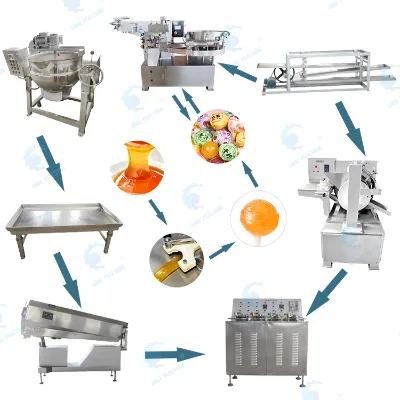


Auto Ball Shape Lollipop Candy Production Line Lollipop Making Machine Price
$9800.00 - $89850.00
MOQ: 1 Pieces


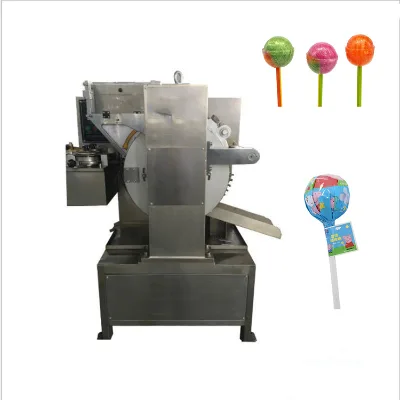


Comprehensive Sourcing Guide
Strategic Sourcing Guide for Electric Ball Lollipop Making Machines
The global confectionery market continues to demand high-efficiency automation, particularly for small-batch and specialized candy production. For procurement professionals researching the Electric Ball Lollipop Making Machine, the decision-making process hinges on aligning technical capabilities with specific production requirements. These machines are designed to automate the formation of spherical confections, offering a significant departure from manual molding methods. The following guide synthesizes observed market data and technical specifications to provide a structured approach for evaluating potential suppliers and equipment.
Technical Specifications and Operational Parameters
When evaluating an Electric Ball Lollipop Making Machine, the primary focus must be on the machine's capacity, dimensions, and power requirements. The market presents a diverse range of models, from compact units to large-scale production lines. Observed specifications indicate that capacity varies significantly depending on the model. Some units are rated for a throughput of 150 to 300 kilograms per hour, while others in the same category may claim a capacity of 100 to 300 kilograms per hour. More industrial-grade models in the observed data suggest a capacity of 1 to 2 tons per 8-hour shift. Buyers must verify these figures against their specific production targets, as the "Automatic Grade" is a critical attribute for high-volume operations.
Physical dimensions are equally critical for facility planning. The footprint of these machines can be substantial. Data indicates a size specification of approximately 16 meters by 2 meters by 2.7 meters for larger configurations, whereas other models are listed with dimensions of 1200mm by 1000mm by 1300mm. This variance suggests a modular approach or different machine tiers. For instance, a specific model identified as IE-LPM-05B has a single package size of 120 by 100 by 130 centimeters, which aligns with the smaller dimensional data. Buyers should confirm the exact footprint to ensure the equipment fits within their factory floor constraints.
Power and utility requirements are standardized but must be matched to local infrastructure. The primary power source for these machines is electric, with observed voltage specifications of 220V at 50Hz and a power consumption of 2200 watts for certain units. However, larger industrial lines may require different power inputs. Air pressure is another essential utility, with observed requirements ranging from 0.4 to 0.6 MPa. Additionally, steam consumption is a factor for heating elements within the machine, with some models listing a consumption of 450 kg. It is imperative to verify the steam and electrical requirements for the specific model under consideration, as these directly impact operational costs and facility modifications.
Compliance and Certification Verification
In the food processing industry, regulatory compliance is non-negotiable. The materials used in contact with food must meet strict safety standards. The observed data frequently references "304 stainless steel" and "SUS304" as the standard material for construction. This grade of stainless steel is widely recognized for its corrosion resistance and suitability for food contact applications. Buyers should insist on documentation confirming that all food-contact surfaces utilize this specific grade to ensure hygiene and longevity.
Certifications serve as a third-party validation of the machine's safety and quality. The market data lists several certification marks, including CE, ISO, CSA, MET, and ISOSAUL. Specific entries mention "ISOCE" and "CE&ISO" as standards. The presence of the CE mark indicates conformity with health, safety, and environmental protection standards for products sold within the European Economic Area. Similarly, ISO certifications suggest adherence to international management standards. However, the exact nature of the ISO certification (e.g., ISO 9001 for quality management) should be verified with the supplier. Buyers must not assume that all listed machines possess every certification mentioned in the general market data; each unit must be validated individually against the specific regulatory requirements of the buyer's target market.
Cost Drivers and Pricing Structure
The pricing for electric ball lollipop making machines is influenced by several factors, including capacity, automation level, and material quality. The observed price range in the market spans from 1,000 to 120,000 USD. This wide disparity reflects the difference between entry-level semi-automatic units and fully automated production lines. The "Fully Automatic" classification is a key driver for higher pricing, as it reduces labor costs and increases consistency.
Material costs also play a significant role. Machines constructed with high-grade 304 stainless steel generally command a premium over those using lower-grade alloys. The "Customization" attribute is another variable; while some models are listed as "Customized" or offering "Customrized" shapes, others are "Non-Customized." Customization typically adds to the cost due to the engineering and tooling required to create unique shapes or integrate specific production line features.
Minimum Order Quantity (MOQ) data indicates a range of 1 to 1, suggesting that most suppliers are willing to sell single units. This is advantageous for small businesses or pilot projects. However, buyers should be aware that while the MOQ may be low, the unit price for a single order might be higher than bulk purchase rates. Supply ability is another factor; some suppliers list a capacity of 100 sets per month, which can affect lead times and pricing stability during peak demand periods.
Typical Applications and Production Versatility
Electric ball lollipop making machines are designed for a broad spectrum of confectionery applications. The observed data lists applications including Candy, Chips, Biscuit, Popcorn, Ice Cream, Donut, and Chocolate. This versatility suggests that the machinery can be adapted for various product types, though the primary function is often identified as a "lollipop form machine" or "lollipop make machine." The ability to produce different shapes, such as the "Customrized" shapes mentioned, allows manufacturers to diversify their product lines without investing in multiple specialized machines.
The "Process" attribute is noted as "Mild Processing," which implies that the machine is suitable for products that do not require extreme heat or pressure, preserving the texture and flavor of delicate ingredients. This is particularly relevant for chocolate and ice cream applications where temperature control is critical. The machine's function as part of a "lollipop production line" indicates that it can be integrated with upstream and downstream equipment, such as depositors, cooling tunnels, and wrapping machines, to create a seamless manufacturing workflow.
Supplier Evaluation and Operational Features
Selecting the right supplier requires a thorough evaluation of their operational support and machine features. Key selling points observed in the market include "Easy To Operate" and "Easy Operation High Performance." These attributes are crucial for reducing training time and minimizing operator error. The "Type" of machine is often "Fully Automatic," which further supports ease of use by automating complex sequences.
Warranty and condition are also vital indicators of supplier confidence. The data shows a standard warranty period of 1 Year for new machines. Buyers should verify the scope of this warranty, including whether it covers parts, labor, and on-site support. The condition of the machine is listed as "New," but buyers must ensure that the equipment is indeed factory-fresh and not refurbished or reconditioned unless explicitly stated.
Packaging details are often overlooked but are essential for safe transport. Observed packaging includes "Wooden Box," "Wooden Cases with Steel Bases," and "standard packaging." The use of steel bases in wooden cases suggests a focus on stability and protection during shipping. The single gross weight of some units is recorded at 460.000 kg, highlighting the need for appropriate logistics planning and handling equipment at the destination port. The port of dispatch is listed as "Any port," which implies flexibility, but buyers should confirm the specific shipping terms and Incoterms to avoid unexpected costs.
Quality Control and Long-Term Procurement Considerations
Quality control extends beyond the initial purchase to the long-term reliability of the equipment. The "Single package size" and "Single gross weight" data points are useful for calculating shipping costs and storage requirements. Buyers should also consider the "Production Line" aspect; a machine that operates in isolation may be less efficient than one designed to integrate into a larger system. The "Advantage" of high performance suggests that the machine maintains consistent output over time, but this should be validated through reference checks or trial runs.
Long-term procurement considerations include the availability of spare parts and technical support. The "Place of Origin" for many of these machines is listed as China, specifically Henan, which is a known hub for food machinery manufacturing. While this offers competitive pricing, buyers must ensure that the supplier has a robust after-sales network. The "Supply Ability" of 100 sets per month indicates that the supplier has the capacity to fulfill orders, but lead times may vary based on customization requests.
Buyers should also verify the "Model Number" and "Product Name" to ensure they are ordering the correct configuration. Specific models like DA-380, DA-900, and FLD-380 represent different tiers or configurations. The "Shape" capability, ranging from standard to customized, allows for product differentiation. Finally, the "Standard" of 304 stainless steel and certifications like CE and ISO provide a baseline for quality, but continuous monitoring of performance metrics is necessary to ensure the machine meets the expected "Mild Processing" and "Automatic Grade" standards over its lifespan.
Comparative Analysis of Machine Attributes
To assist in the final selection process, the following table summarizes the key attributes observed in the market data for electric ball lollipop making machines. This comparison highlights the variability in specifications that buyers must navigate.
| Attribute | Observed Range / Specific Values | Notes for Verification |
|---|---|---|
| Capacity | 100-300 kg/h; 150-300 kg/h; 1-2 tons/8h | Verify against peak production needs. |
| Power Source | Electric (220V 50Hz, 2200W) | Confirm voltage compatibility with local grid. |
| Material | 304 Stainless Steel (SUS304) | Ensure food-grade certification for all contact parts. |
| Certifications | CE, ISO, CSA, MET, ISOSAUL | Check specific ISO standard (e.g., 9001) and regional validity. |
| Dimensions | 1200x1000x1300mm to 16x2x2.7m | Measure factory floor space carefully. |
| Air Pressure | 0.4-0.6 MPa | Verify compressor capacity on-site. |
| Steam Consumption | 450 kg | Assess steam boiler capacity. |
| Warranty | 1 Year | Clarify coverage terms (parts vs. labor). |
| Customization | Available / Non-Customized | Define exact shape and size requirements early. |
| Origin | China (Henan) | Consider logistics and import duties. |
In conclusion, sourcing an Electric Ball Lollipop Making Machine requires a meticulous review of technical specifications, compliance documentation, and supplier capabilities. By focusing on the observed data regarding capacity, material standards, and certifications, buyers can make informed decisions that align with their production goals. The wide range of options, from compact units to full production lines, offers flexibility, but the complexity of the market demands a disciplined approach to evaluation and verification.
FAQs
What is the typical capacity of an Electric Ball Lollipop Making Machine?
Capacity ranges from 100 to 300 kilograms per hour for standard models, while larger industrial units can process 1 to 2 tons per 8-hour shift. Buyers must verify the specific throughput against their production targets before ordering.
Which certifications are commonly available for these machines?
Common certifications include CE, ISO, CSA, MET, and ISOSAUL. Specific models may list ISOCE or CE&ISO standards, but buyers should verify the exact certification type and regional validity for their target market.
Can the machine produce customized lollipop shapes?
Yes, customization is available for specific shapes, though some models are listed as non-customized. The machine supports customized shapes to allow manufacturers to diversify their product lines without investing in multiple specialized units.
What material is used for food contact surfaces?
The standard material for construction is 304 stainless steel or SUS304. This grade is widely recognized for its corrosion resistance and suitability for food contact applications, ensuring hygiene and longevity during operation.
How much power does the machine consume?
Power consumption is typically 2200 watts at 220V 50Hz for certain units. Larger industrial lines may require different power inputs, so verifying the specific electrical requirements is essential for facility planning.
What is the minimum order quantity for these machines?
The minimum order quantity is typically 1 unit, allowing for single-item purchases. This is advantageous for small businesses or pilot projects, though unit prices may vary based on bulk purchase rates.
How long is the warranty period for new machines?
The standard warranty period is 1 year for new machines. Buyers should verify the scope of this warranty to ensure it covers parts, labor, and on-site support for long-term reliability.