Source Electric Cabinet ATS Controller for Common Units
Compare 30 Electric Cabinet ATS Controller options featuring air cooling, automatic control, and protection functions. Buyers can evaluate models like ATS700 and SKR2-A for land use, standby, and emergency crew applications with fixed installation methods.
Key considerations
Products List


Smart ATS Electrical Board Commercial Power Management Control Cabinet
$128.00 - $328.00
MOQ: 3 pieces

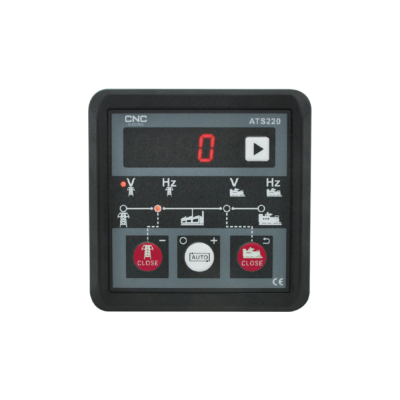


Automatic Transfer Switch 80A ATS Generator Controller Cabinet Changeover Switch
$100.00 - $300.00
MOQ: 1 Pieces


Intelligent Dual-Supply ATS Controller for Generators and Power Systems
$110.00 - $125.00
MOQ: 1 Pieces


$1100.00 - $1400.00
MOQ: 1 Pieces


High Current ATS Controller Rated 630A Four Pole Automatic Transfer Switch
$370.00 - $380.00
MOQ: 5 Pieces


Comprehensive Sourcing Guide
Strategic Sourcing Guide for Electric Cabinet ATS Controllers
Navigating the global market for Automatic Transfer Switch (ATS) controllers requires a disciplined approach to technical verification and compliance. For procurement professionals, the core keyword "Electric Cabinet ATS Controller" represents a critical component in power management systems, specifically designed to ensure seamless power transition between utility sources and backup generators. The following guide synthesizes available product attributes and industry standards to provide a framework for evaluating potential suppliers and selecting the right equipment for land-based applications.
Technical Architecture and Operational Specifications
The fundamental architecture of an Electric Cabinet ATS Controller is defined by its ability to monitor input power and execute automatic switching based on predefined logic. Based on observed product data, these units typically operate with an AC Voltage Input, functioning within a Working Voltage range of AC 170V to 277V. This range is critical for compatibility with various regional power grids, ensuring the controller remains active during fluctuations that might otherwise trigger false alarms or failure to switch. The Rated Frequency is generally specified as 50/60 Hz, indicating a dual-frequency capability that supports international deployment without requiring hardware modification.
In terms of signal processing, the controller utilizes a Continuous Signal to monitor the status of the power lines. The internal logic is described as a Non-Linear Mathematical Model, suggesting that the device employs complex algorithms to handle transient power conditions rather than simple linear thresholds. This is essential for distinguishing between momentary dips and actual power failures. The Control Method is predominantly Electronic Type, which allows for precise timing and automation, although some variants may feature Mechanical Control elements for redundancy or specific legacy integration.
Power consumption is a key efficiency metric for these units. High-performance models are designed with an Overall Power Consumption of Less Than 3W, ensuring that the controller itself does not significantly drain the battery or backup power source it is meant to protect. The Generator Start Relay is a critical interface point, rated at 7A AC250V, which dictates the maximum load the controller can directly drive to initiate the generator start sequence. This specification must be matched against the specific generator's starter motor requirements to prevent relay failure.
Functional Capabilities and Control Logic
The functional scope of a modern ATS controller extends beyond simple switching. The primary Function set includes Automatic Control, Protection, and Monitoring. These three pillars ensure that the system not only switches power sources but also safeguards the electrical infrastructure and provides real-time status updates to operators. The Task associated with these units is often described as Adjust, implying that the controller allows for the fine-tuning of transfer parameters, such as delay times and voltage thresholds, to suit specific site requirements.
Communication capabilities are increasingly vital for modern facility management. Many units feature an RS485 Interface, enabling integration with Building Management Systems (BMS) or remote monitoring platforms. This digital connectivity allows for data logging and remote diagnostics, reducing the need for on-site physical inspections. The Display Type is typically LED, providing immediate visual feedback on the system status, such as "Utility Power," "Generator Running," or "Fault."
The Structure of these controllers is often a Combination type, integrating the control logic with necessary protection circuitry in a compact form factor. The Shell Material is frequently Steel Plate or Stainless Steel, offering robust physical protection against environmental hazards. The Protection Level is commonly rated at IP55, indicating that the enclosure is dust-protected and resistant to water jets from any direction, making it suitable for outdoor or semi-outdoor installations.
Compliance, Certification, and Standards Verification
When sourcing electric cabinet ATS controllers, verifying compliance with international and regional standards is non-negotiable. The supply chain data indicates that products often carry RoHS, CCC, ISO, and CE certifications. The CE mark signifies conformity with health, safety, and environmental protection standards for products sold within the European Economic Area. CCC (China Compulsory Certification) is a mandatory requirement for products sold in the Chinese market, ensuring basic safety and quality.
Furthermore, ISO 9001 is a widely recognized standard for quality management systems. While specific test data for IEC 61439-1 or EN 60439-1 may appear in background knowledge, buyers must request explicit test reports from the supplier to confirm that the specific unit meets these low-voltage switchgear and controlgear assembly standards. The Certification list should be cross-referenced with the specific country of import, as requirements vary significantly. For instance, a unit intended for the US market may require UL listing, which is not explicitly listed in the current product attributes but is a common industry expectation.
Buyers should also verify the Standard compliance regarding physical dimensions and material quality. Some units list a Standard of 1.5kg or specific dimensions like 14012050mm, which are critical for cabinet fitment. The Material composition, such as Stainless Steel or Steel, must be verified against corrosion resistance requirements for the intended Conditions of Use, which are typically Land Use.
Cost Drivers and Procurement Parameters
The cost of an Electric Cabinet ATS Controller is influenced by several variables, including the level of customization, material quality, and certification breadth. The observed Price Range in the market spans from 1 to 15,500 USD, a wide variance that reflects differences in functionality, brand positioning, and capacity. A basic unit with standard features will sit at the lower end, while a fully customized, high-availability unit with advanced communication protocols and premium materials will command a higher price.
MOQ (Minimum Order Quantity) is another significant factor. The observed MOQ Range is 1 to 2000 units. This flexibility allows small projects to procure single units for testing or replacement, while large infrastructure projects can leverage bulk pricing for orders up to 2000 units. The Stock availability is noted to be substantial, with some listings indicating 5000 Units in stock, which suggests a mature supply chain capable of fulfilling immediate orders without long lead times.
Packaging standards also impact logistics costs. Products are typically shipped in Standard Export Carton or Standard Carton, with some specific models packed at 6PCS/Carton. The Product Origin is predominantly China, with specific manufacturing hubs noted in Yangzhou City. Buyers should factor in shipping costs and import duties associated with sourcing from this region. The Condition of the products is consistently listed as New, ensuring that buyers receive factory-fresh equipment rather than refurbished units.
Typical Applications and Usage Scenarios
The Usage profile of these controllers is diverse, covering Common Units, Standby Units, and Emergency Crew applications. In Common Units, the ATS controller manages routine power transfers in commercial buildings or industrial facilities where power reliability is essential but not life-critical. Standby Units are deployed in hospitals, data centers, and critical infrastructure where power interruption must be minimized to prevent data loss or operational downtime.
The Generator Type supported is typically Diesel Generator, which is the most common backup power source for land-based applications. The Cooling Method is Air Cooled, which is standard for electronic controllers and does not require complex liquid cooling systems. The Cooling Purpose is listed as Production, indicating that the controller is designed to operate continuously in an industrial production environment.
The Installation Method is specified as Fixed, meaning these units are designed to be permanently mounted within an electrical cabinet or control panel. This contrasts with portable units that might be designed for temporary setups. The Color is typically Black, a standard choice for industrial equipment to hide dust and maintain a professional aesthetic. The Operation Voltage is categorized as Low Voltage, which aligns with standard commercial and industrial power distribution systems.
Supplier Evaluation and Quality Assurance
Evaluating a supplier for ATS controllers requires a multi-dimensional approach. First, verify the Customization capabilities. While some units are Customized to specific client needs, others are Non-Customized (standard off-the-shelf). Buyers must determine if their project requires specific modifications, such as custom communication protocols or unique mounting configurations. The Controller brand, such as Aisikai, may be a factor in reliability, though buyers should always verify the reputation of the specific manufacturer rather than relying solely on the brand name.
Quality control should focus on the Shell Protection Grade and Material integrity. The Shell Material being Steel Plate or Stainless Steel must be confirmed through material certificates. The Protection Level of IP55 must be validated through independent testing reports, as this rating is crucial for outdoor or harsh environment installations. Buyers should also inspect the Packing quality to ensure that the Standard Export Carton provides adequate protection during transit, preventing damage to the sensitive electronic components inside.
When assessing Lead Times and Delivery, buyers should note that while Stock levels are high, specific custom orders may require additional time. The Origin being China implies a robust manufacturing base, but buyers should establish clear communication channels to monitor production progress. The Task of the supplier includes not just delivering the unit but ensuring it meets the Standard specifications for the intended application.
Long-Term Procurement and Lifecycle Management
Long-term procurement considerations for ATS controllers involve maintenance, spare parts availability, and software support. The Function of Monitoring implies that the unit will generate data over its lifecycle. Buyers should ensure that the Communication interface (e.g., RS485) is compatible with their existing or planned monitoring software to avoid obsolescence. The Mathematical Model of the controller should be stable and well-documented to ensure that future firmware updates or replacements are compatible.
The Condition of the unit as New is a starting point, but buyers should inquire about the expected service life and warranty terms. The Usage as a Standby Unit means the device may sit idle for long periods, requiring periodic testing to ensure the Generator Start Relay and other components remain functional. The Overall Power Consumption of less than 3W is beneficial for long-term energy efficiency, but the standby power draw should be factored into the facility's energy budget.
Finally, the Standard compliance must be maintained throughout the product's life. If regulations change, the supplier should be able to provide updated documentation or retrofit solutions. The Certification status, including RoHS and CE, should be reviewed periodically to ensure continued compliance with evolving environmental and safety laws. By focusing on these long-term factors, buyers can secure a reliable power management solution that minimizes downtime and maximizes the return on investment over the asset's lifecycle.
FAQs
What is the working voltage range for these controllers?
The working voltage range is AC 170V to 277V. This specification ensures compatibility with various regional power grids and allows the unit to remain active during minor fluctuations without triggering false alarms or failure to switch.
Which certifications are typically available for these units?
Typical certifications include RoHS, CCC, ISO, and CE. These marks indicate compliance with safety, environmental, and quality management standards, though specific test reports for standards like IEC 61439-1 should be requested from the supplier.
Can the controller be customized for specific needs?
Customization is available for some models, while others are non-customized standard units. Buyers must verify if their project requires specific modifications like unique communication protocols or mounting configurations before placing an order.
How is the protection level defined for outdoor use?
The protection level is commonly rated at IP55. This rating indicates the enclosure is dust-protected and resistant to water jets, making it suitable for outdoor or semi-outdoor land-based installations in harsh environments.
What is the minimum order quantity for these controllers?
The minimum order quantity ranges from 1 to 2000 units. This flexibility allows small projects to procure single units for testing while large infrastructure projects can leverage bulk pricing for orders up to 2000 units.
Which generator type is supported by these controllers?
These controllers typically support Diesel Generator types. They are designed for land-based applications with an air-cooled method and are used to manage power transitions between utility sources and backup diesel generators.