Source Electric Cable Extrusion Machine for Wire, Power, and Building Applications
Find 30 electric cable extrusion machines available for building wire, power cable, and general extruding applications. Buyers can compare models like XJ-30 to XJ-150, screw diameters, and motor brands such as Siemens and Yaskawa.
Key considerations
Products List


Wire Extrusion Machine/ Cable Machine PVC Wire and Cable Extrusion Machine
$30000.00 - $50000.00
MOQ: 1 Sets


Double-Layer Cable Extruder Extrusion Machine for Wire Cable Production Line
$40000.00 - $80000.00
MOQ: 1 Sets

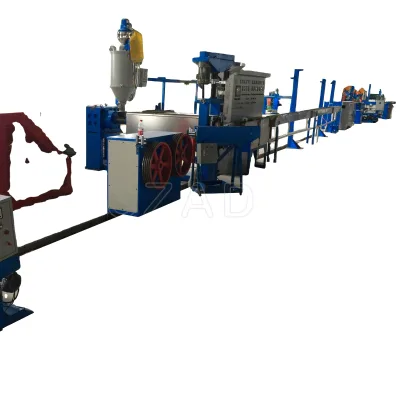
Used Machine Extrusion Machine for Electrical Cable/Network Cable
$10000.00 - $16000.00
MOQ: 1 Minimum


$160000.00 - $166666.00
MOQ: 1 Pieces


Cable Making Machine Wire Extrusion Machine for Power Cable Extruding
$57888.00 - $58800.00
MOQ: 1 Sets


High Speed Insulation Electric Cable Wire Extrusion Making Machine Extruding Machine
$30000.00 - $40000.00
MOQ: 1 Sets


Comprehensive Sourcing Guide
Strategic Sourcing Guide for Electric Cable Extrusion Machines
Understanding Technical Specifications and Core Configurations
When sourcing an Electric Cable Extrusion Machine, buyers must first distinguish between the specific mechanical configurations that define the machine's capability. The market offers a diverse array of models, often identified by specific model series such as XJ-30/40/50/60, XJ-70mm/80mm/90mm/120mm/150mm, and XJ-45/65/90/115. These numerical designations typically correlate with the screw diameter and the maximum output capacity of the extruder. For instance, specific configurations are observed with screw diameters of 50mm and 70mm, while other model lines support cable sizes ranging from 1mm to 10mm.
The heart of the extrusion process is the screw mechanism. High-performance units in this category frequently utilize a single-screw design with a length-to-diameter (L/D) ratio of 26:1. This specific ratio is critical for achieving the necessary pressure and mixing efficiency required for consistent insulation and sheathing. The driven type is predominantly electric, ensuring precise control over the extrusion speed and torque. However, certain auxiliary functions, such as demoulding, may operate on a pneumatic basis, highlighting the hybrid nature of modern automation in these systems.
Material compatibility is another primary technical consideration. The machines are engineered to process a wide spectrum of thermoplastics and elastomers, including PVC, PE, LSHF, TPU, and XLPE. This versatility allows a single production line to adapt to different cable types, from standard building wires to specialized power cables. The precision of the extrusion is paramount; high-precision models are designed to maintain tight tolerances on cable diameter, which is essential for meeting international electrical safety standards. Buyers should verify that the specific model they are evaluating supports the exact material grade required for their end product, as not all machines are optimized for every polymer type.
Compliance, Certification, and Regulatory Standards
Navigating the regulatory landscape is a non-negotiable aspect of sourcing industrial machinery. Manufacturers of electric cable extrusion machines often adhere to a rigorous set of international certifications to ensure safety and operational reliability. Common certifications observed in the market include CE, ISO, RoHS, CCC, FDA, and PSE. The presence of these marks indicates that the equipment meets specific safety, environmental, and quality benchmarks required for operation in various global markets.
The CE mark is particularly significant, as it certifies conformity with health, safety, and environmental protection standards for products sold within the European Economic Area. Similarly, ISO certification suggests that the manufacturer operates under a quality management system that adheres to international standards. The RoHS directive ensures that the machinery and its components are free from specific hazardous materials, which is increasingly important for environmental compliance. Additionally, certifications like CCC (China Compulsory Certification) and PSE (Product Safety of Electrical Appliances & Materials) are critical for domestic sales in China and Japan, respectively.
Buyers must exercise caution when interpreting certification claims. While a product listing may state "CE SGS" or list multiple certifications, it is the responsibility of the procurement team to verify the validity of these certificates for the specific unit being purchased. The standard for the machine is often cited as CE SGS, but this should be treated as an observation of the product line rather than a guarantee for every individual transaction. Verification should include checking the certificate numbers against the issuing bodies to ensure they are current and applicable to the specific machine model. This due diligence prevents the acquisition of non-compliant equipment that could lead to operational shutdowns or legal liabilities in the buyer's jurisdiction.
Cost Drivers and Pricing Variables
The pricing structure for electric cable extrusion machines is highly variable, reflecting the complexity of the machinery and the customization options available. The observed price range in the market spans from approximately $1 to $800,000 USD. This vast disparity is not indicative of quality differences alone but rather the scope of the machine's capabilities, the level of automation, and the extent of customization.
Several key factors drive the final cost. First, the screw diameter and the overall machine size are primary determinants. A machine with a 50mm screw diameter will generally be less expensive than a unit with a 150mm screw, which requires a more robust frame, a more powerful motor, and a larger extruder barrel. Second, the brand of critical components significantly influences the price. High-end models often feature motors from Siemens, inverters from Yaskawa or Inovance, and bearings from NSK. These premium brands offer superior reliability and longevity, justifying a higher initial investment compared to machines using generic or unbranded components.
Customization is another major cost driver. While the base models may be standard, many manufacturers offer "Customized" options to meet specific production needs. This can include modifications to the screw design, the addition of specific control systems, or changes to the packing and delivery configuration. The "Customization: Available" attribute suggests that buyers can tailor the machine to their specific workflow, but this flexibility comes with a premium. Furthermore, the condition of the machine, typically listed as "New," ensures that the buyer receives a unit with full warranty coverage and no hidden wear, which is a critical factor in the total cost of ownership.
Typical Applications and Production Capabilities
Electric cable extrusion machines are versatile tools designed for a wide range of industrial applications. The primary use cases include building wire extrusion and power cable manufacturing. In the building wire sector, these machines produce the insulation and sheathing for residential and commercial electrical wiring. The high-temperature resistance attribute of these machines ensures they can handle the thermal requirements of various insulation materials without degrading the polymer quality.
For power cable applications, the machines must deliver higher precision and consistency to meet stringent safety regulations. The capability to process materials like XLPE (Cross-Linked Polyethylene) and TPU (Thermoplastic Polyurethane) makes these units suitable for high-voltage and flexible cable production. The "Automatic Grade" designation indicates that the machines are designed for continuous, high-volume production with minimal manual intervention, which is essential for maintaining productivity in large-scale manufacturing environments.
The demoulding process is often automated, further enhancing efficiency. This automation reduces the risk of human error and ensures that the finished cable products are handled with care, preventing surface damage. The application scope also extends to the production of cables with specific diameter requirements, ranging from small control cables to larger power transmission cables. Buyers should align their machine selection with their specific product mix, ensuring that the extruder's output capacity and precision capabilities match their production targets.
Supplier Evaluation and Quality Assurance
Evaluating a supplier for electric cable extrusion machines requires a focus on technical competence, service support, and proven track records. The location of the manufacturer is a relevant factor, with many leading producers based in Dongguan City, Guangdong Province, China, a hub for machinery manufacturing. However, the geographic location should not be the sole criterion for selection. Instead, buyers should prioritize suppliers who offer comprehensive service packages, including technical support and training.
Quality control is paramount in the extrusion industry. The "Mould Life" attribute, often cited as greater than 1,000,000 shots, is a key indicator of the durability and precision of the tooling used in the production process. Buyers should verify that the supplier can provide test results or performance data that substantiate these claims. Additionally, the warranty period, typically 12 months, is a standard offering that provides a baseline of protection for the buyer. However, the scope of the warranty should be clearly defined to understand what is covered and what is excluded.
When assessing suppliers, buyers should also consider the payment terms and delivery logistics. Standard payment terms often include T/T (Telegraphic Transfer) and L/C (Letter of Credit), which offer different levels of security for both parties. The delivery time, observed to be around 60 days, is a critical factor in production planning. Buyers must ensure that the lead time aligns with their project schedules and that the supplier has a reliable track record of meeting these deadlines. The packing method, typically involving PE film and wooden boxes or pallets, is also essential to ensure the machine arrives in pristine condition.
Long-Term Procurement and Operational Considerations
Sourcing an Electric Cable Extrusion Machine is a long-term investment that requires careful consideration of the total cost of ownership. Beyond the initial purchase price, buyers must evaluate the operational efficiency, maintenance requirements, and the availability of spare parts. The use of high-quality components like Siemens motors and NSK bearings suggests a design focused on longevity and reduced downtime. However, the specific maintenance schedule and the cost of consumables should be factored into the financial planning.
The "Condition: New" status of the machines ensures that the buyer starts with a unit that has not undergone wear and tear, but the long-term performance will depend on the quality of the installation and the operator's training. Suppliers that offer training services can significantly reduce the learning curve and ensure that the machine is operated at peak efficiency. Furthermore, the availability of technical support is crucial for troubleshooting any issues that may arise during the production process.
Buyers should also consider the scalability of the machine. As production demands grow, the ability to upgrade or modify the machine becomes increasingly important. The "Customized" attribute indicates that many suppliers are willing to adapt their machines to future needs, but this should be discussed during the initial procurement phase. Finally, the environmental impact of the machine, as indicated by RoHS compliance, should be considered in the context of the buyer's sustainability goals. By focusing on these long-term factors, buyers can ensure that their investment in electric cable extrusion machinery delivers sustained value and operational excellence.
FAQs
What certifications do electric cable extrusion machines typically have?
These machines commonly carry CE, ISO, RoHS, CCC, FDA, and PSE certifications. Buyers should verify specific certificate validity for the model, as standards like CE SGS are observed product attributes rather than universal guarantees for every unit.
Which screw configurations are standard for these extrusion machines?
High-performance units often feature a single-screw design with a 26:1 length-to-diameter ratio. Specific models support screw diameters ranging from 50mm to 150mm, directly correlating with the machine's output capacity and cable size capabilities.
Can these machines process materials like PVC and XLPE?
Yes, they are engineered to process PVC, PE, LSHF, TPU, and XLPE materials. This versatility allows the equipment to handle both standard building wires and specialized power cables requiring high-temperature resistance and precise insulation.
What is the typical delivery time for these machines?
The standard delivery time is approximately 60 days. This lead time should be factored into production planning, and buyers must ensure it aligns with their project schedules before finalizing procurement agreements.
How are these machines typically packed for shipping?
Machines are usually packed with PE film inside wooden boxes or on wooden pallets. This packaging method ensures the equipment arrives in pristine condition, protecting it from damage during transit from the origin in Dongguan, China.
What warranty coverage is provided for new machines?
New machines typically come with a 12-month warranty. This coverage provides a baseline of protection, but the specific scope should be clearly defined to understand what components and services are included in the agreement.