Source Electric LED Ice Bucket for Hotels, Bars, and Parties
Compare 30 Electric LED Ice Bucket options from verified suppliers in Guangdong, China. These units feature LED illumination, various capacities, and customizable designs suitable for hotels, bars, and parties.
Key considerations
Products List
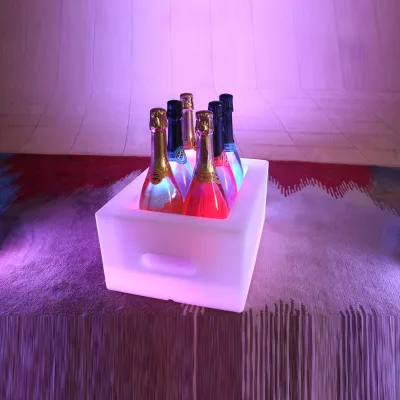


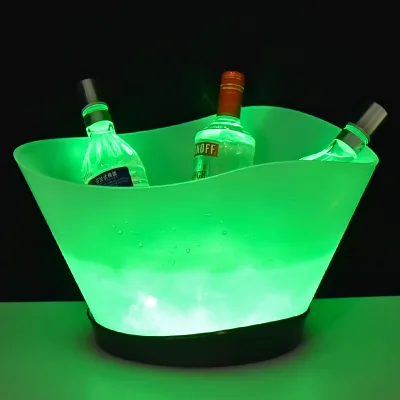
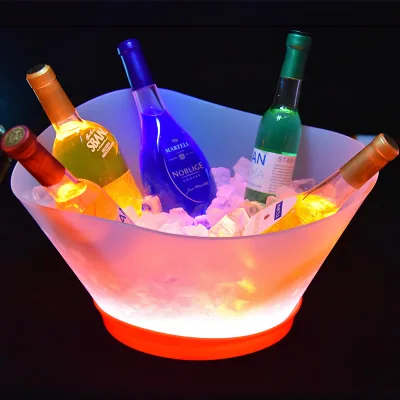


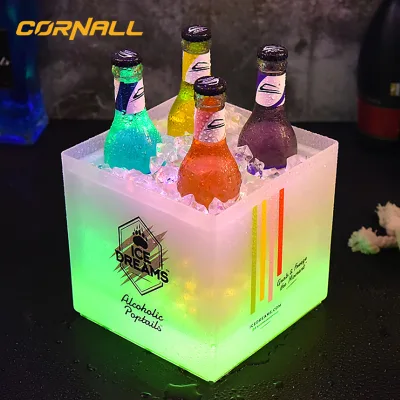
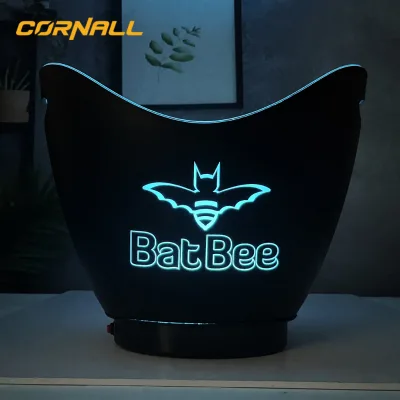
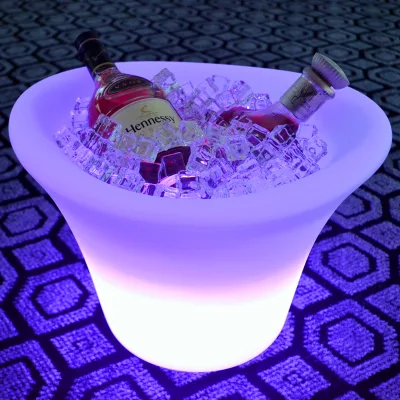
New Square Shape Illuminant LED Ice Bucket Wine Cooler with Personalised Logo
$21.00 - $24.00
MOQ: 50 Pieces




Comprehensive Sourcing Guide
Strategic Sourcing Guide for Electric LED Ice Buckets
Understanding Product Specifications and Variations
The Electric LED Ice Bucket represents a specialized segment within bar tools and hospitality equipment, designed to combine functional cooling storage with ambient lighting. When sourcing these items, buyers must first navigate a landscape of varying technical specifications that define the product's utility and compatibility. The core functionality relies on an integrated lighting system, often described as "LED Illuminant" or "Rechargeable Use," which requires careful evaluation of power sources. Some units operate on battery power, while others may utilize rechargeable mechanisms, a distinction that significantly impacts operational logistics in venues without immediate access to charging infrastructure.
Physical dimensions and capacity are critical variables that differ across product lines. Market observations indicate a wide range of sizes, from compact units with capacities around 1050ml to larger industrial-grade buckets holding up to 12 liters. Specific model data points reveal dimensions such as 392918cm or 26X21X19.5cm, alongside larger configurations reaching 42X32X21 cm in single package size. The diameter of these buckets typically exceeds 10cm, ensuring sufficient volume for standard ice cubes and beverage bottles. Material composition is predominantly plastic PE, chosen for its durability and resistance to moisture, though handle materials are also specified as plastic to ensure a secure grip even when wet.
The aesthetic design often leans towards a "Modern" style, with color options ranging from standard white to customized hues like "Milk white-red base" or "Milk white-black base." The "Open Mouth" design is a common feature, facilitating easy access for serving. Buyers should note that while some listings specify a single gross weight of 7.0 kg, others indicate a lighter weight of 530g, suggesting a variance between heavy-duty commercial models and portable or decorative variants. Understanding these specific physical attributes is the first step in aligning product selection with the intended venue's spatial and functional requirements.
Compliance and Certification Verification
In the B2B procurement of electrical and food-contact products, verifying compliance with international safety and material standards is non-negotiable. The Electric LED Ice Bucket involves both electrical components and direct contact with food and beverages, necessitating rigorous certification checks. Buyers should prioritize suppliers who can provide documented evidence of certifications such as CE, RoHS, FDA, and LFGB. These marks indicate adherence to European safety directives, restrictions on hazardous substances, and food-grade material safety, respectively.
Specific product data highlights the presence of "CE ROHS" and "FDA" certifications, with some entries listing "FDA, LFGB, CE / EU" together. The inclusion of LFGB is particularly relevant for products intended for the European market, as it is a strict German food safety standard. Additionally, the "SGS" standard is mentioned in certain contexts, pointing to third-party testing and quality assurance processes. It is crucial for buyers to request current, valid certificates rather than relying on generic claims. The presence of these certifications should be cross-referenced with the specific model numbers, such as ES-IC031, PPL-LEDIB003, or PPL-LEDIB010, to ensure the documentation matches the exact unit being purchased.
Furthermore, the electrical safety of the LED components must be validated. Since these are battery-powered or rechargeable devices, the risk of short circuits or battery leakage is a primary concern. The "CE" mark specifically addresses electrical safety in the European Economic Area, while "RoHS" ensures that the manufacturing process does not utilize prohibited heavy metals. Buyers must verify that the supplier can provide the actual test reports associated with these certifications, as the presence of a logo on a product listing does not guarantee the product's compliance status.
Cost Drivers and Pricing Dynamics
The pricing of electric LED ice buckets is influenced by a complex interplay of factors, including material costs, customization levels, and order volume. The observed price range in the market spans from $1.50 to $55.98 USD, reflecting the diversity in product quality, capacity, and feature sets. Lower-priced items often correspond to smaller capacities, such as the 1050ml models, or simpler designs with basic lighting functions. Conversely, the higher end of the spectrum likely encompasses larger 12L units, those with advanced rechargeable features, or those offering extensive customization options.
Minimum Order Quantity (MOQ) is a significant determinant of the unit cost. Data indicates an MOQ range from as low as 1 piece to as high as 1000 pieces. A specific observation notes an MOQ of 2 pieces for certain models, while others require a substantial commitment of 500 pieces, with a note that "The More Quantities, More Discount." This tiered pricing structure means that buyers purchasing for small-scale operations or initial market testing may face higher per-unit costs compared to large-scale distributors.
Customization is another major cost driver. The availability of "Customized Color," "Logo" options (including laser engraving), and "Customerized" packing adds value but also increases the production cost. Suppliers offering OEM/ODM services will typically charge a premium for these bespoke elements. Buyers must balance the desire for branding and unique aesthetics against the budget constraints, understanding that higher customization levels will push the price toward the upper limit of the observed range. Additionally, the "Sample Time" of 2 days for normal samples suggests that prototyping costs may be separate from the bulk order pricing, and buyers should factor this into their initial budget planning.
Typical Applications and Use Cases
The versatility of electric LED ice buckets makes them suitable for a diverse array of commercial and semi-commercial applications. The primary target sectors include hotels, KTVs, bars, restaurants, and party venues. The "Application" field explicitly lists "Hotel," while "Logo" attributes mention "KTV, Bar, Household, Restaurant, Party, Home," indicating a broad market appeal. In hospitality settings, these buckets serve a dual purpose: maintaining the temperature of beverages and providing atmospheric lighting that enhances the visual experience of the venue.
For high-end bars and nightclubs, the "Modern" design and customizable lighting features allow for branding integration and thematic consistency. The ability to engrave logos directly onto the bucket surface supports brand visibility, making these items effective marketing tools. In household settings, the "Battery Powered" nature and compact sizes (such as the 4L capacity) make them ideal for home parties or entertaining guests without the need for permanent electrical wiring.
The "Folded: Unfolded" attribute suggests that some models may offer collapsible or space-saving designs, which is particularly valuable for venues with limited storage space or for event planners who need to transport equipment frequently. The "Single gross weight" of 7.0 kg for certain models implies a robust build suitable for heavy commercial use, whereas lighter models might be better suited for portable applications. Understanding the specific operational environment is essential for selecting the right capacity and power source, ensuring the equipment performs reliably under the expected load.
Supplier Evaluation and Selection Criteria
Selecting the right supplier for electric LED ice buckets requires a thorough evaluation of their capabilities, reliability, and transparency. Buyers should prioritize suppliers who demonstrate a clear understanding of the product's technical specifications and compliance requirements. The presence of detailed model numbers, such as ES-IC031 and PPL-LEDIB003, indicates a structured product line, which is a positive sign of supplier professionalism.
Key evaluation criteria include the supplier's ability to provide "Normal Sample Available" options, allowing buyers to physically inspect the product before committing to a bulk order. The "Sample Time" of 2 days is a strong indicator of a responsive supply chain, suggesting that the supplier can facilitate quick prototyping and testing. Additionally, the "OEM/ODM: Yes" status confirms that the supplier is equipped to handle custom orders, which is vital for businesses seeking branded solutions.
Geographic origin is another factor to consider. The "place of origin" is consistently listed as "Guangdong, China" or simply "China," a region known for its manufacturing expertise in plastics and electronics. Buyers should verify the specific factory location and production capacity to ensure the supplier can meet their volume requirements without compromising quality. Transparency regarding the "prod_packing" method, such as "Polybag+Carton," is also important for assessing the safety of the product during transit.
Quality Control and Long-Term Procurement
Ensuring long-term quality and reliability is paramount when sourcing electric LED ice buckets. Buyers must implement a robust quality control (QC) process that covers both the manufacturing stage and the final product inspection. Given the electrical nature of the product, testing for water resistance, battery longevity, and LED functionality is essential. The "SGS" standard mentioned in some contexts suggests that third-party inspection services are available, and buyers should consider utilizing these services for large orders.
Long-term procurement considerations include the availability of spare parts, such as replacement batteries or LED modules, and the supplier's warranty policies. The "Customization: Available" feature implies that the supplier should maintain the ability to produce replacement units with the same specifications over time. Buyers should also evaluate the supplier's capacity to handle "The More Quantities, More Discount" scenarios, ensuring that the pricing structure remains favorable as order volumes grow.
Finally, buyers should monitor the supply chain for potential disruptions. The "Lead Time" and "Sample Time" are critical metrics for planning inventory levels. While specific lead times are not provided in the data, the 2-day sample time suggests a generally agile production process. However, for bulk orders, especially those with high MOQs like 500 pieces, buyers should negotiate clear delivery schedules to avoid stockouts. Establishing a long-term partnership with a supplier who can consistently meet quality standards and delivery timelines will be the key to successful procurement in this category.
Comparison of Key Product Attributes
To assist buyers in making informed decisions, the following table summarizes the key attributes observed across different product listings. This comparison highlights the variability in specifications and helps identify the most suitable options for specific needs.
| Attribute | Option A (Compact/Portable) | Option B (Standard Commercial) | Option C (Large Capacity) |
|---|---|---|---|
| Capacity | 1050ml | 4L | 12L |
| Dimensions | 26X21X19.5cm | 392918cm | 42X32X21 cm (Package) |
| Material | Plastic PE | Plastic PE | Plastic PE |
| Power Source | Battery Powered | Rechargeable Use | Rechargeable Use |
| Certifications | FDA, LFGB, CE / EU | CE ROHS, FDA | FDA, LFGB, CE / EU |
| MOQ | 2pcs | 500PCS | Varies (High Volume) |
| Customization | Logo (Laser Engraving) | Customized Color | Customized Color |
| Weight | 530g | 7.0 kg (Gross) | Varies |
| Application | Household, Party | Hotel, Bar, Restaurant | Hotel, KTV, Large Events |
This table illustrates that while the core material and basic function remain consistent, the scale and specific features vary significantly. Buyers should use this data to align their procurement strategy with their specific operational requirements, ensuring they select the model that offers the optimal balance of capacity, power, and compliance for their business.
FAQs
What certifications do electric led ice buckets typically have?
These products commonly hold CE, RoHS, FDA, and LFGB certifications to ensure safety and food-grade compliance. Buyers should verify specific certificates like CE ROHS or FDA for models such as ES-IC031 to confirm adherence to international standards before purchasing.
Which capacity options are available for electric led ice buckets?
Available capacities range from compact 1050ml units to large 12L industrial models, with 4L being a common size. The specific capacity determines the physical dimensions and suitability for different venues like hotels, KTVs, or household parties.
Can I customize the color and logo on these ice buckets?
Yes, customization is available for colors like white or milk white with red or black bases, and logos can be laser engraved. Suppliers often offer OEM and ODM services, allowing for branded designs suitable for bars and restaurants.
What is the minimum order quantity for sourcing these items?
Minimum order quantities vary significantly, ranging from as low as 2 pieces to as high as 1000 pieces depending on the supplier. Some models require 500 pieces for bulk discounts, while others allow smaller trial orders.
How are these buckets powered and what is the sample time?
Most units are battery-powered or rechargeable, featuring LED illuminant functions for ambient lighting. Normal samples are typically available within 2 days, allowing buyers to inspect quality before committing to larger orders.
Where are electric led ice buckets manufactured and what is the material?
These products are primarily manufactured in Guangdong, China, using durable plastic PE material for the body and handles. The origin location ensures access to established supply chains for both standard and customized production runs.