Source Electric Lift Folding Commode Chair for Elderly, Pregnant, Children
Compare 27 Electric Lift Folding Commode Chair options from verified Chinese manufacturers. These multi-function units feature steel frames, varying seat heights, and capacities up to 150kg for elderly, pregnant women, and children; compare the available evidence and request quotations based on your requirements.
Key considerations
Products List


Hot Sale Toilet Commode Chair Electric Patient Lifting for Elderly and Disabled
$288.50 - $350.00
MOQ: 1 Pieces


Elderly Patient Lifting Chair Portable Folding Commode Lift with Power
$468.00 - $488.00
MOQ: 20 Boxes


Handicapped Steel Electric Lifting Transfer Commode Chair for The Old
$348.40 - $377.42
MOQ: 50 Pieces

Electric Wheelchair Transfer Lift Commode Chairs Electronic Motorized Power Cheap Wheelchair
$220.00 - $360.00
MOQ: 10 Pieces



Comprehensive Sourcing Guide
Electric Lift Folding Commode Chair Sourcing Guide
Sourcing an Electric Lift Folding Commode Chair requires balancing mechanical reliability with user-centric design features. These devices assist individuals with limited mobility, including the elderly and pregnant women, by providing height adjustment and safe transfer capabilities. Buyers must prioritize models that offer stable weight capacities, typically ranging from 100kg to 150kg, to ensure safety during daily use. The folding mechanism is critical for storage and transport, necessitating robust hinges and locking systems that prevent accidental collapse.
Procurement teams should evaluate the chair’s overall dimensions, including seat width and height adjustability, to match specific user needs. Standard seat widths often range from 45cm to 48cm, while overall heights may vary significantly between non-folding and folding variants. Verifying the material composition, such as steel frames, ensures durability against heavy use. Additionally, confirming the presence of multi-function characteristics, such as removable commode pans and adjustable armrests, enhances the product’s utility for diverse care environments.
Product Scope and Observed Listing Signals
Market listings for electric lift commode chairs reveal a wide price range, typically spanning from $18.01 to $884.41 USD, reflecting variations in motor quality, frame material, and included accessories. The minimum order quantity (MOQ) generally ranges from 1 to 300 units, allowing both small clinics and large distributors to procure inventory flexibly. Most products are listed as new condition items, with customization options available for branding or specific dimensional requirements. Buyers should note that some listings offer non-customized standard models, while others provide tailored solutions for institutional buyers.
Observed product attributes indicate a strong focus on multi-functionality and aesthetic design, with features like fashion-forward appearances and resistance to heavy loads. Common applications include care for children, pregnant women, and the elderly, highlighting the device’s versatility across different age groups and physical conditions. Packaging standards vary, with some items packed in individual PE polybags and others in larger carton packages, impacting shipping costs and storage efficiency. Understanding these listing signals helps buyers align their procurement strategy with their specific distribution or end-user requirements.
Technical Specifications to Verify
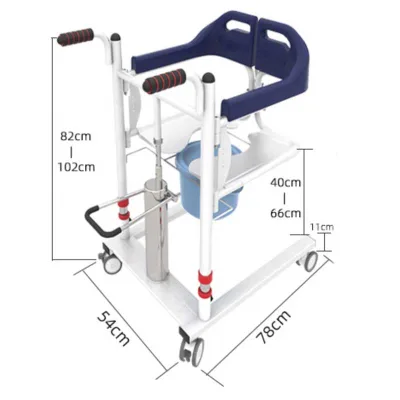
When evaluating technical specifications, buyers must verify the overall dimensions, including width, length, and height, to ensure compatibility with bathroom spaces and user mobility aids. For instance, some models feature an overall width of 62cm and a seat width of 48cm, while others may have a wider 80cm base for enhanced stability. Seat height adjustability is crucial, with ranges often spanning from 46cm to 66cm or higher, allowing users to transfer safely from wheelchairs or beds. Confirming the folded and unfolded states ensures the chair meets storage constraints and operational needs.
The loading capacity is a critical safety parameter, with observed limits ranging from 100kg to 150kg, depending on the model’s construction. Buyers should also inspect the wheel specifications, such as real wheel diameter and front wheel size, which affect maneuverability and floor protection. Net and gross weights, typically around 20kg to 23kg, influence shipping logistics and ease of handling by caregivers. Verifying these precise measurements against user profiles prevents mismatches that could compromise safety or usability in care settings.
Compliance and Safety Documentation
Compliance with international standards is essential for market entry and user safety, with CE and ISO certifications frequently observed in product listings. These certifications indicate adherence to European safety directives and quality management systems, providing assurance for buyers in regulated markets. Some listings also mention RoHS compliance, ensuring the absence of hazardous substances in electronic components, which is increasingly important for environmental and health regulations. Buyers must request valid certification documents from suppliers to verify authenticity and scope.
Safety features such as anti-tip mechanisms, secure locking systems, and robust frame construction are critical for preventing accidents during operation. Documentation should include test reports for weight capacity, stability, and electrical safety, particularly for electric lift mechanisms. Buyers should verify that the product meets local regulatory requirements in their target market, as standards can vary significantly between regions. Ensuring comprehensive safety documentation reduces liability risks and enhances consumer confidence in the product’s reliability and performance.
Cost Drivers and Commercial Terms
Cost drivers for electric lift folding commode chairs include the quality of the electric motor, frame material thickness, and additional features like adjustable armrests or commode pans. Higher-end models with advanced lift mechanisms and premium finishes command higher prices, while basic steel-frame models remain more affordable. Buyers should analyze the total cost of ownership, including shipping, customs duties, and potential maintenance costs, rather than focusing solely on the unit price. Volume discounts and negotiated MOQs can significantly impact the overall procurement budget.
Commercial terms such as payment methods, lead times, and warranty policies vary among suppliers. Standard packaging, such as carton packages or PE polybags, affects shipping efficiency and potential damage during transit. Buyers should clarify responsibilities for import clearance and ensure that the supplier provides clear instructions for assembly and maintenance. Negotiating favorable terms, including extended warranties or spare parts availability, can enhance long-term value and reduce operational disruptions for end-users.
Supplier Qualification and Quality Control
Supplier qualification involves assessing manufacturing capabilities, quality control processes, and past performance in the medical or mobility equipment sector. Buyers should verify the supplier’s production facilities, focusing on their ability to maintain consistent quality across batches. Inspecting certifications like CE and ISO ensures that the supplier adheres to recognized quality management standards. Requesting sample units for evaluation allows buyers to assess build quality, functionality, and user comfort before committing to larger orders.
Quality control measures should include routine inspections of critical components, such as the electric lift mechanism, frame welds, and wheel assemblies. Buyers should establish clear acceptance criteria for defects and ensure that the supplier has a robust process for addressing non-conformities. Regular audits or third-party inspections can provide additional assurance of product reliability. Building a strong relationship with qualified suppliers facilitates better communication, faster issue resolution, and consistent product quality over time.
Long-Term Procurement Checks
Long-term procurement success depends on continuous monitoring of product performance, user feedback, and market trends. Buyers should establish a system for collecting feedback from end-users and care providers to identify potential design improvements or common issues. Regularly reviewing supplier performance metrics, such as on-time delivery rates and defect percentages, helps maintain high standards of supply chain reliability. Adapting to changes in regulatory requirements or technological advancements ensures that the procured products remain compliant and competitive.
Sustainability and end-of-life considerations are increasingly important in procurement decisions. Buyers should inquire about the recyclability of materials and the availability of spare parts to extend the product’s lifespan. Developing a contingency plan for supply chain disruptions, such as identifying alternative suppliers or maintaining safety stock, mitigates risks associated with single-source dependencies. Continuous improvement initiatives, driven by data analysis and stakeholder input, ensure that the procurement strategy evolves to meet changing user needs and market demands effectively.
FAQs
What are the overall dimensions of the TCM-01S(E) model?
The TCM-01S(E) model measures 73cm in overall length, 62cm in width, and 69cm in height. The seat width is 48cm with a seat height ranging from 58cm to 62.5cm. This folding design ensures compact storage while providing stable support for users.
Can the TCM-02D model support heavy loads?
Yes, the TCM-02D model supports a loading capacity of 150kgs. It features a robust steel construction with an overall width of 80cm and a seat width of 45cm. The adjustable seat height ranges from 46cm to 66cm, ensuring comfort and safety for diverse users.
Which certifications do these commode chairs hold?
These commode chairs hold CE, ISO, and RoHS certifications. The TCM-01S model specifically includes CE, RoHS, and ISO standards. These certifications ensure compliance with international safety and quality requirements, providing buyers with confidence in the product's reliability and manufacturing standards for global distribution.
What is the packaging format for these products?
Packaging varies by model. The WA-4806 uses a 1 PCS/PE Polybag format. The TCM-01S(E) is packed in a carton package with standard dimensions of 60*45*83cm. The TCM-02D is packed as 1 Piece/CTN with standard dimensions of 74.5*58.5*51cm, ensuring safe transit.
Are these commode chairs suitable for elderly and pregnant users?
Yes, these chairs are explicitly designed for children, pregnant women, and the elderly. They feature multi-function characteristics, including fashion and resistance to heavy use. The adjustable heights and sturdy steel frames provide necessary support and accessibility for users with varying mobility needs and physical conditions.
What is the origin of these commode chairs?
These commode chairs originate from China, specifically Zhejiang and Guangzhou regions. The manufacturing locations ensure access to high-quality steel materials and advanced production techniques. Buyers can expect consistent quality and reliable supply chains from these established industrial hubs in China for bulk procurement needs.