Source Electric Lifting C-Arm Surgical Table for Orthopedics
Explore 30 Electric Lifting C-Arm Surgical Table options from verified manufacturers. Compare key specifications such as rated load, voltage, and material to find the right equipment for orthopedic, gynecology, and ENT procedures; compare the available evidence and request quotations based on your requirements.
Key considerations
Products List


Hydraulic Electric C Arm Compatible Medical Theatre Electrically Surgical Table
$4600.00 - $4900.00
MOQ: 1 Pieces

Hydraulic Electric C Arm Compatible Medical Theatre Electrically Operated Surgery Table
$4600.00 - $4900.00
MOQ: 1 Pieces

Hospital Operating Room Equipment C Arm Electric Carbon Fiber Surgical Table Operating Price
$2400.00 - $3800.00
MOQ: 1 Pieces


Hospital Operating Room Equipment C Arm Electric Carbon Fiber Surgical Operating Table
$1000.00 - $3000.00
MOQ: 1 Pieces

Hospital Medical Furniture Multifunctional Surgical Table C-Arm Electric Operating Table
$699.00 - $1299.00
MOQ: 1 Pieces
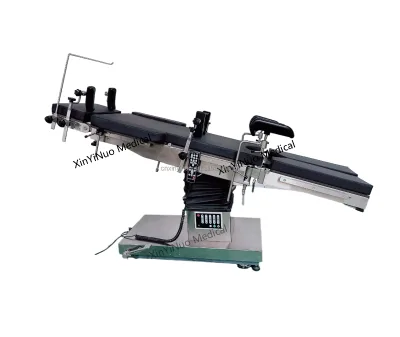


C-Arm Electric Operating Table Hospital Surgical Instrument Table with Sliding Movement
$2050.00 - $2100.00
MOQ: 1 Sets

304 Stainless Steel Electric Operating Table C-Arm Lifting Surgical Table with CE&ISO
$2050.00 - $2100.00
MOQ: 1 Sets


Electric Lifting Surgery Table Surgical Operation Table for Veterinary Hospital
$500.00 - $1000.00
MOQ: 1 Pieces

Multifunction Adjustable Electric Operating Surgical Table Economic Type
$1200.00 - $2100.00
MOQ: 1 Pieces

Medical Equipment Multi Functional Electric Surgical Operating Table
$1200.00 - $1300.00
MOQ: 1 Pieces


Comprehensive Sourcing Guide
Electric Lifting C-Arm Surgical Table Sourcing Guide
Procuring an Electric Lifting C-Arm Surgical Table requires careful evaluation of the specific model capabilities against your surgical suite's spatial and functional needs. The observed market listings indicate a range of models, such as the MX-Table 9000 and Dst-500 series, which are designed primarily for orthopedic and spine surgeries. Buyers must distinguish between tables with LCD displays and those without, as this feature significantly impacts the user interface and monitoring capabilities during complex procedures.
The supply chain for these units often originates from manufacturing hubs in Shandong and Jiangsu, China, with lead times varying between one and four days for specific configurations. When evaluating potential suppliers, it is critical to verify the rated load capacity, which typically ranges up to 250kg for heavy-duty models, ensuring the table can safely support patients and surgical equipment. Additionally, the power supply requirements, generally 220V at 50Hz, must align with your facility's electrical infrastructure to prevent operational disruptions.
Product Scope and Observed Listing Signals
The product scope for electric lifting surgical tables encompasses various configurations tailored for different medical specialties, including orthopedics, gynecology, and otolaryngology. Listings frequently highlight the "Electric" power function and "Slide" mechanisms, which are essential for precise patient positioning during minimally invasive and open surgeries. Buyers should note that while some models offer customization, others are listed as non-customized, necessitating a clear assessment of whether standard dimensions and features meet your specific clinical protocols.
Market signals reveal a diverse range of materials, with stainless steel being a common choice for durability and hygiene, alongside specific dimensions like 1400x770x960mm for standard units. The observed price range of 500 to 11,000 USD suggests significant variation based on features such as the inclusion of an LCD display, the complexity of the lifting mechanism, and the brand reputation. It is vital to scrutinize the "Group" classification, as most listed units are designed for adult patients, which may limit their utility in pediatric departments without specific verification.
Technical Specifications to Verify
Technical verification must begin with the structural integrity and load-bearing capacity of the table, as the rated load is a critical safety parameter for patient handling. Buyers should confirm the exact dimensions, such as the 2500mm bed length observed in certain models, to ensure compatibility with the C-arm imaging equipment and surrounding surgical instruments. The power system specifications, including voltage and frequency, must be validated against local grid standards to guarantee reliable operation without the need for additional transformers or converters.
The functional capabilities of the table, such as the "Slide" function and electric lifting mechanisms, require detailed testing to ensure smooth transitions between positions. Specifications like the "Single" seater configuration and the "Folded" state for storage or transport are also key factors that influence the operational workflow in the operating room. Procurement teams should request detailed technical drawings to verify the standard dimensions, such as 2040520mm or 13006004501000mm, to ensure the equipment fits within the designated surgical suite footprint.
Compliance and Safety Documentation
Compliance documentation is paramount when sourcing medical devices, with certifications like CE, ISO, and FDA serving as primary indicators of regulatory adherence. The observed listings mention certifications such as "CE ISO" and "FDA, ISOCE," which suggest a baseline level of quality and safety compliance for international markets. However, buyers must independently verify the validity of these certificates for the specific model being purchased, as certification status can vary between different product lines and manufacturing batches.
Safety standards for surgical tables often include specific requirements for electrical safety and mechanical stability, which are not always explicitly detailed in general product descriptions. Buyers should request the full technical file, including risk management reports and electrical safety test results, to ensure the device meets the stringent requirements of their local regulatory bodies. The presence of a "1 Year" or "3 Years" warranty is a positive signal, but the specific terms and coverage of the warranty must be clearly defined in the contract to protect against potential defects.
Cost Drivers and Commercial Terms
The cost of an electric lifting surgical table is driven by several factors, including the complexity of the electric lifting mechanism, the quality of materials like stainless steel, and the inclusion of advanced features such as LCD displays. The observed MOQ of 1 set allows for flexible procurement, but buyers should be aware that unit prices can vary significantly based on the specific model, such as the MX-Table 7000 versus the Dst-500B, and the level of customization required.
Commercial terms regarding delivery and packaging are equally critical, with wooden cases being the standard packing method to ensure safe transit. The lead time, observed as 1-4 days for some suppliers, should be confirmed in writing, as delays can impact surgical schedules and project timelines. Buyers must also clarify the port of shipment, such as Shanghai, and the Incoterms to understand who bears the responsibility for freight, insurance, and customs clearance during the import process.
Supplier Qualification and Quality Control
Supplier qualification involves a thorough assessment of the manufacturer's production capabilities, quality control systems, and after-sales support infrastructure. The observed "Free Spare Parts" service and "OEM/ODM" capabilities indicate a supplier's willingness to support long-term operations, but buyers should verify the actual availability of spare parts and the response time for technical support. It is essential to confirm the supplier's location, whether in Shandong or Jiangsu, and their ability to provide consistent quality across different production batches.
Quality control processes should be validated through on-site audits or third-party inspections to ensure that the manufacturing standards meet international expectations. Buyers should request evidence of the production process, including material sourcing, assembly procedures, and final testing protocols, to mitigate the risk of receiving substandard equipment. The "New" condition of the products listed is a basic requirement, but verifying the manufacturing date and storage conditions is necessary to ensure the equipment has not degraded during transit or storage.
Long-Term Procurement Checks
Long-term procurement checks focus on the sustainability of the supply relationship and the availability of technical support over the product's lifecycle. The warranty period, ranging from 1 to 3 years, is a key indicator of the manufacturer's confidence in their product, but buyers should also inquire about the availability of extended warranty options and the cost of maintenance contracts. Ensuring a steady supply of spare parts is crucial for minimizing downtime, especially for critical equipment like surgical tables that are used daily in high-volume hospitals.
Regular performance reviews and maintenance schedules should be established to ensure the electric lifting mechanisms and other components continue to function optimally. Buyers should maintain open communication channels with the supplier to address any emerging issues promptly and to stay informed about potential upgrades or new models that could enhance their surgical capabilities. The "After-Sale Service" commitment, including free spare parts, should be formalized in the contract to guarantee ongoing support and reliability for the duration of the equipment's operational life.
FAQs
What is the rated load capacity for these electric surgical tables?
The rated load capacity is 250kg for the primary electric operating table models. This specification ensures safe support for standard orthopedic and spine surgery procedures. Buyers should verify the exact weight limit for specific model variants like the MX-Table 9000 to ensure compliance with their facility's safety requirements.
Can these tables be customized for specific hospital requirements?
Yes, customization is available for these electric lifting c arm surgical tables. The supplier supports OEM and ODM services to adapt the equipment to specific hospital needs. Buyers can request modifications to meet particular surgical workflows or facility standards while maintaining the core structural integrity and safety certifications.
What certifications do these surgical tables hold?
These tables hold CE and ISO certifications, ensuring compliance with international medical device standards. Some models also feature FDA certification. These credentials verify that the manufacturing processes and product safety meet rigorous regulatory requirements for use in hospitals and clinical settings across various global markets.
What is the warranty period for the electric operating table?
The standard warranty period is one year for most models, with some specific variants offering a three-year warranty. This coverage typically includes free spare parts to support maintenance. Buyers should confirm the exact warranty terms for their selected model to understand the scope of after-sales support provided.
Where are these surgical tables manufactured?
These tables are manufactured in China, with origins in Shandong and Jiangsu provinces. The production facilities adhere to specific industrial standards for medical equipment. Buyers can expect consistent quality control measures aligned with the stated certifications and material specifications for stainless steel construction and electric components.
What is the minimum order quantity for these tables?
The minimum order quantity is one set for these electric surgical tables. This low MOQ allows hospitals and clinics to purchase individual units for immediate deployment. It facilitates flexible procurement strategies for facilities needing to replace or upgrade specific operating room equipment without committing to large bulk orders.