Source Electric Racing Car for Theme Parks, Malls, and Private Use
Compare 30 Electric Racing Car options for theme parks, shopping malls, and private car enthusiasts. Buyers can evaluate specifications, certifications, and customization features to find suitable models for racing simulators or outdoor tracks.
Key considerations
Products List


$1700.00 - $1800.00
MOQ: 1 Pieces


$52700.00 - $67600.00
MOQ: 1 Pieces



14-Seater High-Quality Electric Sightseeing Car/Electric Classic Car
$5900.00 - $7000.00
MOQ: 1 Pieces


Comprehensive Sourcing Guide
Electric Racing Car Sourcing Guide
Sourcing electric racing cars requires a nuanced understanding of the diverse product landscape, which ranges from small-scale remote-controlled toys to large-scale virtual reality simulators and closed-body electric vehicles. Buyers must first distinguish between these distinct categories, as they serve entirely different markets, regulatory environments, and operational requirements. The core keyword "Electric Racing Car" encompasses a broad spectrum of products, including 4-channel remote-controlled vehicles designed for private use, specialized VR racing simulators for theme parks, and low-speed electric vehicles with closed bodies. Each category demands specific technical verification and compliance checks that cannot be generalized across the entire product range.
Procurement teams must align their sourcing strategy with the intended end-use, whether it is consumer retail, entertainment venue installation, or private fleet operation. The observed market signals indicate a wide variance in product attributes, from battery-powered plastic models to complex steel-framed units requiring 220V or 60V power supplies. Understanding these distinctions is critical for defining accurate technical specifications, ensuring supplier qualification, and managing commercial terms. This guide provides a structured approach to navigating these complexities, focusing on evidence-based verification steps rather than generic assumptions.
Product Scope and Observed Listing Signals
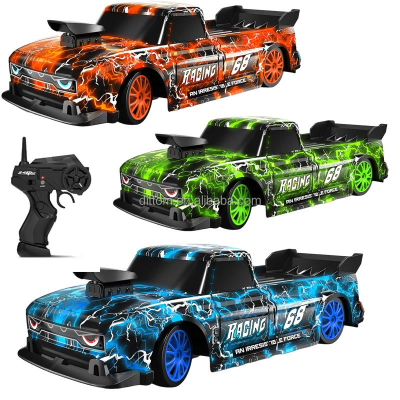
The current market landscape for electric racing cars exhibits significant heterogeneity in product types, materials, and intended applications. Observed listings reveal products categorized as remote control (R/C) vehicles with four channels, constructed primarily from plastic and designed for private car use. These items often feature racing formula shapes and are available in colors such as green and red, with customization options available for branding or design modifications. Additionally, there are products classified as simulator virtual reality units, intended for theme parks and shopping malls, which utilize handlebar and glove dual controllers for immersive experiences. Buyers must carefully filter listings to identify products that match their specific operational needs, as the term "Electric Racing Car" is applied to vastly different hardware.
Further segmentation is evident in the physical dimensions and packaging standards of the available products. Some units are compact, with standard dimensions around 15.68.14.4CM, packaged in color boxes, and targeted at users over 14 years old. In contrast, other offerings are significantly larger, with dimensions such as 30.816.810.5 or even L230 * W230 * H200cm for VR simulators, requiring wooden packing and steel components. The presence of closed-body vehicles with loading capacities of 100kg and speeds up to 45km/H indicates a subset of products designed for low-speed transport or recreational driving rather than high-performance racing. Procurement teams must verify these physical and functional attributes to ensure alignment with their logistical and usage requirements.
Technical Specifications to Verify
Technical verification must begin with power systems and voltage requirements, which vary significantly across product categories. Some electric racing cars operate on battery power for portable R/C applications, while others require fixed electrical connections, such as 220V for VR simulators or 60V and 36V for closed-body electric vehicles. Buyers must confirm the voltage compatibility with their local infrastructure and assess the battery type, capacity, and charging infrastructure needs. For larger units, the power supply stability and safety mechanisms for high-voltage components must be evaluated to prevent operational hazards. Additionally, the presence of dual controllers, such as handlebar and glove systems, requires verification of signal latency and ergonomic design for user comfort.
Performance metrics and physical construction are equally critical for ensuring product suitability. Specifications such as speed, which can reach up to 45km/H for certain closed-body models, must be validated against local safety regulations and intended use cases. The body type, whether open or closed, impacts safety features and user protection, with some units featuring plastic covers and others constructed from steel. Buyers should verify the loading capacity, which may be specified as 100kg for certain vehicles, and assess the structural integrity of the chassis and suspension systems. Furthermore, the inclusion of customization options and OEM acceptance allows for branding and functional modifications, but these must be clearly defined in technical agreements to avoid discrepancies in the final delivered product.
Compliance and Safety Documentation
Compliance with international safety standards is non-negotiable for electric racing cars, particularly those intended for consumer use or public entertainment venues. Products listed with certifications such as EN71, EN62115, CE, RoHS, and ASTM F963 indicate adherence to specific toy safety and electromagnetic compatibility regulations, which are essential for R/C vehicles and smaller electric models. Buyers must request valid certification documents and verify their authenticity with the issuing bodies, as counterfeit certificates are a known risk in the market. For larger units and simulators, certifications like CE, EEC, CCC, and ISO provide evidence of compliance with electrical safety and quality management standards, which are critical for insurance and liability purposes.
Documentation requirements extend beyond product certifications to include operational safety manuals and risk assessments. For VR racing simulators and closed-body vehicles, detailed instructions on emergency stop procedures, voltage isolation, and maintenance protocols must be provided. Buyers should verify that the supplier has conducted appropriate testing for electrical insulation, mechanical stability, and material toxicity, especially for products involving close human contact. The presence of CCC certification suggests compliance with Chinese national standards, which may be relevant for products manufactured in China or exported to markets with similar regulatory frameworks. Ensuring that all safety documentation is complete and up-to-date is a prerequisite for safe deployment and legal operation.
Cost Drivers and Commercial Terms
Cost structures for electric racing cars are influenced by a variety of factors, including material composition, technological complexity, and packaging requirements. Products constructed from steel or featuring complex VR simulation systems typically command higher prices than simple plastic R/C models. The observed price range of 3.26 to 67,600 USD reflects this disparity, with lower-end items being small-scale toys and higher-end items being large, custom-built simulators or electric vehicles. Buyers must analyze the cost breakdown to understand the value proposition, considering factors such as battery quality, controller sophistication, and structural durability. Customization and OEM services may incur additional costs, which should be negotiated upfront to avoid budget overruns.
Commercial terms, including minimum order quantities (MOQ) and packaging standards, play a significant role in total procurement costs. MOQs range from 1 to 240 units, allowing for flexibility in order sizes but potentially affecting unit pricing for smaller orders. Packaging methods, such as color boxes, DPL, wooden packing, or steel containers, impact shipping costs and product protection during transit. For large items like VR simulators, the number of units that can fit in a 40HQ container, such as 10PCS, must be considered when planning logistics. Buyers should also evaluate the supplier's willingness to accept OEM orders and provide customized packaging, as these services can enhance brand visibility but may require longer lead times and higher initial investments.
Supplier Qualification and Quality Control
Supplier qualification is a critical step in mitigating procurement risks, particularly given the diverse origins and capabilities of Electric Racing Car manufacturers. Many suppliers are located in China, with specific hubs in Guangzhou and Taizhou, which are known for their manufacturing expertise in electronics and vehicles. Buyers should verify the supplier's business license, production capacity, and quality management systems, such as ISO certification, to ensure they can consistently meet order requirements. For OEM and customized products, assessing the supplier's design and engineering capabilities is essential to ensure that modifications can be implemented without compromising safety or performance.
Quality control measures must be established before production begins and maintained throughout the manufacturing process. Buyers should implement pre-production samples reviews, in-process inspections, and final random inspections to verify that products meet specified technical and aesthetic standards. For electronic components, functional testing of controllers, motors, and battery systems is necessary to identify defects early. For larger vehicles, structural integrity tests and load-bearing assessments should be conducted to ensure safety. Establishing clear acceptance criteria and communication channels with the supplier is vital for resolving quality issues promptly and maintaining supply chain reliability.
Long-Term Procurement Checks
Long-term procurement success depends on establishing robust relationships with suppliers and implementing continuous improvement processes. Buyers should conduct regular performance reviews based on metrics such as on-time delivery, product quality, and responsiveness to issues. For customized and OEM products, maintaining detailed documentation of design specifications and changes is crucial for consistency across multiple orders. Suppliers who accept OEM and offer customization services should be evaluated on their ability to innovate and adapt to changing market trends, such as new VR technologies or improved battery efficiencies.
Sustainability and after-sales support are also key considerations for long-term procurement. Buyers should inquire about the availability of spare parts, warranty terms, and technical support services to ensure operational continuity. For products with complex electronic systems, access to firmware updates and diagnostic tools can extend the product lifecycle. Additionally, evaluating the supplier's commitment to environmental standards, such as RoHS compliance, aligns with broader corporate sustainability goals. By focusing on these long-term factors, buyers can build a resilient supply chain that supports their business objectives and minimizes operational disruptions.
FAQs
What certifications do electric racing cars typically have?
Electric racing cars often carry safety certifications such as CE, RoHS, and ASTM F963 to ensure compliance with international standards. Some models also include En71 and En62115 for toy safety, while others may feature EEC or CCC marks depending on the target region. These certifications verify that the product meets specific electrical and material safety requirements for consumers.
Can electric racing cars be customized for private use?
Yes, many electric racing cars offer customization options for private car applications. Buyers can often select specific colors like green, red, white, or black to match their preferences. Customization may also extend to packaging types, such as color boxes or wooden packing, allowing for tailored presentation and branding needs for individual or small-scale commercial use.
What is the typical voltage for Electric Racing Car models?
Electric racing cars generally operate on various voltage levels, including 36V, 60V, and 220V, depending on the model type. Smaller remote control versions may use lower voltages, while larger simulator or theme park units often require 220V or 60V power supplies. The voltage selection depends on the vehicle's size, power requirements, and intended usage environment.
How are electric racing cars packaged for shipping?
Packaging for electric racing cars varies by product type and size. Small remote control models are often packed in color boxes or dpl packaging, while larger simulator units may use wooden packing for protection. Some heavy-duty vehicles might utilize steel packaging to ensure durability during transit. The packaging choice helps protect the product and meets specific logistics requirements.
What is the loading capacity for electric racing cars?
The loading capacity for electric racing cars can vary significantly based on the model. Some units are designed with a loading capacity of up to 100kg, suitable for single riders or light loads. Larger vehicles may support higher capacities, but specific limits depend on the structural design and intended use case, such as private racing or theme park simulations.
Where are electric racing cars typically manufactured?
Electric racing cars are commonly manufactured in China, with production hubs located in cities like Guangzhou and Taizhou. These regions are known for their robust manufacturing capabilities and supply chains for both small remote control models and larger simulator units. Buyers can often find suppliers from these locations offering various customization and OEM services.