Source Elisa Microplate Reader for Lab Hospital School
Find 30 ELISA microplate readers from verified Chinese manufacturers. Compare models like HBS-1096A and MS-R500 with varying power, weight, and certification options for laboratory and hospital applications.
Key considerations
Products List


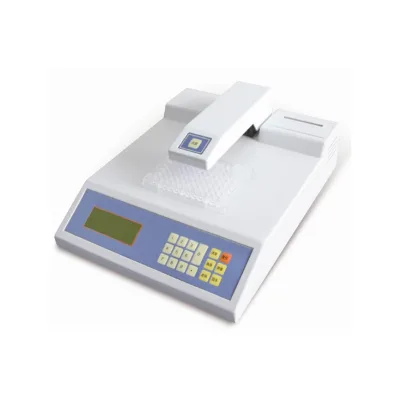


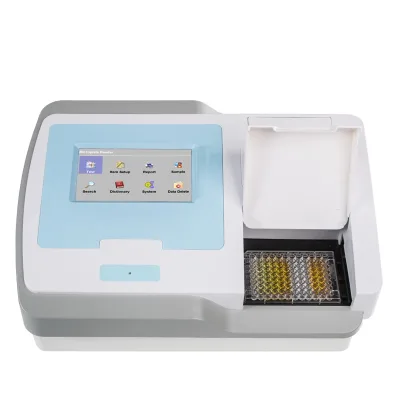
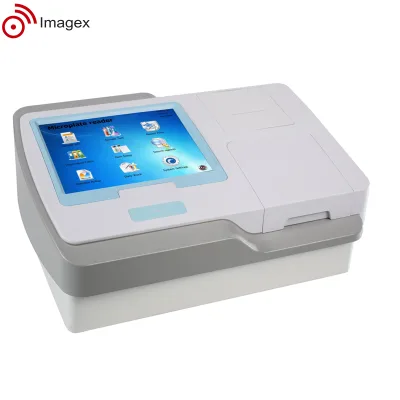
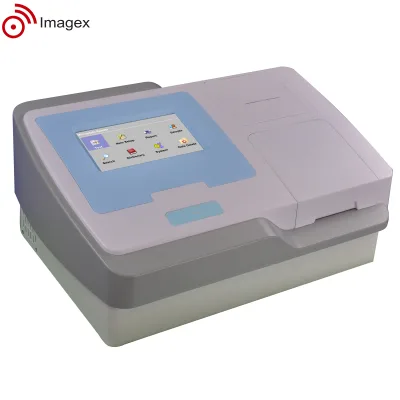

Medical Equipment Rayto Laboratory Microplate Reader/Elisa Microplate Reader/
$1030.00 - $1199.00
MOQ: 1 Pieces
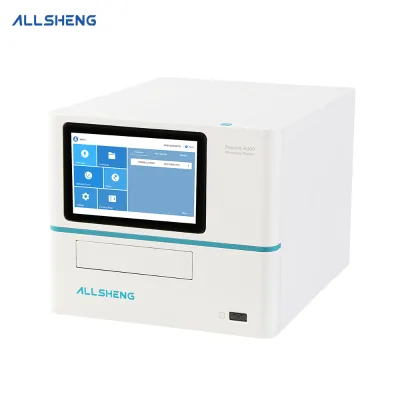

High Accuracy Digital Display Elisa Plate Reader Microplate Reader for Laboratory
$1100.00 - $1280.00
MOQ: 1 Pieces

High Quality Durable Laboratory Equipment Elisa Microplate Washer Reader
$1100.00 - $1280.00
MOQ: 1 Pieces


My-B027f Elisa Microplate Reader Clinical Analytical Instruments Microplate Reader
$2120.00 - $2650.00
MOQ: 1 Pieces

My-B027f Microplate Washer and Elisa Microplate Reader Biochemical Analysis System for Lab
$2120.00 - $2650.00
MOQ: 1 Pieces

Advanced Thermo Multiskan Spectrum Microplate Reader for Elisa Testing
$5500.00 - $6000.00
MOQ: 1 Sets

Comprehensive Sourcing Guide
Strategic Sourcing Guide for ELISA Microplate Readers
Understanding the Technical Landscape of Microplate Readers
The Elisa Microplate Reader represents a critical component in modern laboratory infrastructure, serving as the primary instrument for quantifying biological samples through optical detection. When sourcing these devices, buyers must first distinguish between the various operational architectures available in the market. The core functionality relies on measuring light absorbance, fluorescence, or luminescence across a 96-well or 384-well plate format. Based on observed product attributes, the industry standard for these instruments often involves a desktop structure designed to fit within standard laboratory workspaces.
A primary technical differentiator is the measurement range. For applications requiring visible light analysis, such as standard colorimetric ELISA assays, the optical system must cover a specific spectrum. Evidence from current product listings indicates a measurement range of 400-700nm, which is sufficient for many common chromogenic substrates used in biochemical diagnostics. However, buyers must verify if their specific assay protocols require ultraviolet or near-infrared capabilities, as this would necessitate a different optical configuration. The display interface is another critical specification; modern units frequently feature LCD displays to facilitate user interaction, data visualization, and method programming without the need for external computers.
Power requirements also vary significantly by region and model. While some units operate on a universal input of AC100-240V at 50-60Hz, ensuring compatibility with global power grids, others may be designed for specific regional standards, such as 220V at 50Hz. This variance impacts the electrical infrastructure required at the installation site. Furthermore, the physical footprint and weight are essential for logistics and placement. Observed weights range from 6kg to 12kg, with dimensions typically around 340mm in length and 280mm in width. These specifications suggest a compact, table-top design suitable for high-throughput environments like hospitals and schools, where space efficiency is paramount.
Compliance and Certification Verification
In the medical and diagnostic equipment sector, regulatory compliance is not merely a formality but a prerequisite for market entry and operational safety. Buyers must rigorously audit the certification status of any potential supplier. The supply chain for ELISA microplate readers demonstrates a variety of recognized standards. Common certifications observed include RoHS, which ensures the absence of hazardous substances, and ISO standards, which indicate adherence to quality management systems. Specific product listings reference ISO9001 as a production standard, a baseline expectation for manufacturing reliability.
Beyond general quality management, safety and medical device regulations are paramount. Listings indicate the presence of FDA, CE, and EEC certifications, alongside ISOMSDS documentation. These marks suggest that the device meets specific safety and performance criteria for use in clinical and research settings. However, the presence of a certification on a product page does not guarantee that every unit in a batch is certified; buyers must request valid, current certificates of conformity for the specific model being purchased. The classification of these devices often falls under "Biological Diagnostics" or "Biochemical Apparatus," which subjects them to stricter regulatory oversight than general laboratory equipment.
It is also crucial to verify the origin of the product, as this influences the regulatory framework under which the device was manufactured. Products originating from Zhejiang or Guangdong in China (Mainland) are common in this sector. While these regions host advanced manufacturing capabilities, buyers should ensure that the export documentation aligns with the import regulations of their destination country. The "Standard" or "Standard Package for Export" labeling indicates that the packaging meets international shipping requirements, but the internal quality assurance processes must be independently verified.
Cost Drivers and Pricing Structures
The pricing of ELISA microplate readers is influenced by a complex interplay of factors, including optical precision, software capabilities, and build quality. The observed price range in the market spans from approximately 1 USD to 34,400 USD, a disparity that reflects the vast difference between basic manual readers and high-end automated systems. This wide range should not be interpreted as a linear correlation with quality but rather as a reflection of feature sets. A unit priced at the lower end of the spectrum may offer basic absorbance reading capabilities, while a high-value unit likely includes advanced software for kinetic analysis, multi-wavelength capabilities, and robust data connectivity.
When evaluating cost, buyers must look beyond the sticker price to the total cost of ownership. This includes the cost of consumables, maintenance, and potential downtime. The "Single item" selling unit suggests that these are typically purchased as standalone units rather than part of a bulk bundle, though bulk purchasing may be negotiated. The weight of the unit, ranging from 6kg to 12kg, also impacts shipping costs, which can be a significant variable in the final procurement budget.
Another cost driver is the level of customization. Many suppliers offer OEM, ODM, and OBM support, allowing buyers to brand the device or modify its specifications. While customization adds value, it often incurs additional costs and may extend lead times. The "Customized: Non-Customized" attribute indicates that some models are available in a standard configuration, which is generally more cost-effective and faster to procure. Buyers should assess whether their specific application requires a customized solution or if a standard model suffices to avoid unnecessary expenditure.
Typical Applications and Operational Environments
The versatility of ELISA microplate readers makes them suitable for a diverse array of applications across multiple sectors. The primary application is Elisa testing, which is fundamental to immunology, virology, and clinical diagnostics. These instruments are essential for detecting antibodies, antigens, and hormones in biological samples. The "Classification: Biological Diiagnostics" attribute underscores their role in medical testing, particularly in hospital laboratories where high accuracy and throughput are required.
Beyond clinical settings, these devices are widely used in educational institutions and research facilities. The "Application: Lab, Hospital, School" designation highlights their adaptability to different environments. In schools and universities, they serve as teaching tools for students learning about biochemical assays and data analysis. In research laboratories, they support drug discovery, vaccine development, and fundamental biological research. The "Group: Middle-aged and Old" attribute suggests that some models may be specifically designed or marketed for geriatric diagnostics, though this likely refers to the target demographic for the diseases being tested rather than the age of the operator.
The operational environment also dictates the required durability and noise levels. For instance, units operating with a noise level of less than 50dB are suitable for quiet laboratory environments where minimal disturbance is preferred. The "Structure: Desktop" and "Type: Table" attributes confirm that these are designed for benchtop use, making them ideal for facilities with limited floor space. The "Usage: Microplate Reader" confirms their specialized function, distinguishing them from general-purpose spectrophotometers.
Supplier Evaluation and Customization Capabilities
Selecting the right supplier involves more than just comparing product specifications; it requires a deep dive into the supplier's capabilities and flexibility. A key indicator of a robust supplier is their support for customization. The supply chain data shows that many manufacturers offer OEM (Original Equipment Manufacturer), ODM (Original Design Manufacturer), and OBM (Original Brand Manufacturer) services. This flexibility allows buyers to have the device branded with their own logo or tailored to specific workflow requirements.
However, the presence of customization options does not imply that every product listed is customizable. Buyers must distinguish between "Customization: Available" and "Customized: Non-Customized" to understand the specific offering. For standard procurement, a non-customized unit may be preferable for its lower cost and faster delivery. For specialized needs, the ability to work with an OEM/ODM partner is essential. The "brand name: GOYOJO" observed in some listings indicates that established brands exist in this space, but buyers should not rely on brand recognition alone without verifying the specific model's capabilities.
The "Delivery Time: in 10 Days After Receiving The Payment" is a critical metric for supply chain planning. This lead time suggests a relatively agile manufacturing process, but it is contingent on the receipt of payment and the availability of stock. Buyers should confirm if this timeline applies to all models or only specific configurations. Additionally, the "prod_packing" details, such as "in Cartoon" or "1 Piece in Carton," indicate the packaging standards. While "Standard Package for Export" is common, buyers should verify that the packaging is sufficient to protect the delicate optical components during international transit.
Quality Control and Long-Term Procurement Considerations
Ensuring the long-term reliability of ELISA microplate readers requires a proactive approach to quality control and maintenance planning. The "Warranty: 1 Year" is a standard offering, but buyers should investigate the scope of this warranty. Does it cover parts, labor, or both? Are there exclusions for optical components or software updates? A robust warranty is a strong indicator of the manufacturer's confidence in their product's durability.
Quality control extends beyond the initial purchase. Buyers should inquire about the "prod_standard" and "prod_origin" to understand the manufacturing environment. Products originating from "China (Mainland)" with standards like "ISO9001" suggest a regulated production process. However, buyers must verify that the specific batch they receive adheres to these standards. The "material: ABS" indicates the use of durable plastics for the casing, which is suitable for laboratory environments, but the internal optical components must be of high quality to ensure accurate readings over time.
Long-term procurement considerations also include the availability of spare parts and technical support. As the device ages, components like lamps, filters, or detectors may need replacement. A supplier with a strong presence in the market, indicated by multiple model numbers like "HBS-1096A," "HBS-1101," and "MS-R500," is more likely to have a supply chain for spare parts. Buyers should also consider the software ecosystem; will the device receive firmware updates? Is the data export format compatible with laboratory information management systems (LIMS)?
Finally, the "Measurement Range: 400-700nm" is a fixed specification for many models. Buyers must ensure this range aligns with their future assay needs. If the laboratory plans to expand into new types of assays that require different wavelengths, the current device may become obsolete. Therefore, a strategic procurement decision involves not just the current requirements but also the projected growth and diversification of the laboratory's testing capabilities. By carefully evaluating these factors, buyers can secure a reliable, compliant, and cost-effective solution for their ELISA testing needs.
FAQs
What certifications do ELISA microplate readers typically have?
These devices commonly hold RoHS, ISO, FDA, CE, and EEC certifications. Specific models may also list ISO9001 as a production standard or include ISOMSDS documentation to ensure safety and quality compliance for medical use.
How is the power requirement configured for these readers?
Power configurations vary by model, with some supporting universal AC100-240V 50-60Hz input. Others are designed for specific regional standards such as 220V 50Hz, so buyers must verify compatibility with their local electrical infrastructure.
Which measurement range is suitable for standard ELISA assays?
A measurement range of 400-700nm is sufficient for many common chromogenic substrates used in biochemical diagnostics. Buyers should verify if their specific assay protocols require ultraviolet or near-infrared capabilities beyond this visible light spectrum.
Can buyers request customization for the microplate reader?
Customization is available for some models, including OEM, ODM, and OBM support. However, other listings indicate non-customized options, so buyers must distinguish between available customization and standard configurations to determine the best fit.
What is the typical delivery time after payment is received?
The standard delivery time is within 10 days after receiving the payment. This timeline applies to specific models and assumes stock availability, though lead times may vary depending on the specific product configuration selected.
Where are these microplate readers typically manufactured?
Products originate from regions in China, specifically Zhejiang and Guangdong provinces. Buyers should verify the place of origin to ensure alignment with import regulations and to understand the manufacturing environment under which the device was produced.