Source Engine Con Rod Bearing for Cars, Trucks, and Marine Engines
Compare 30 Engine Con Rod Bearing options from Chinese manufacturers with varying models and certifications. Buyers can review specifications, pricing, and delivery details for standard and custom components suitable for diesel and gas applications.
Key considerations
Products List




Comprehensive Sourcing Guide
Strategic Sourcing Guide for Engine Con Rod Bearings
Understanding Product Variants and Technical Specifications
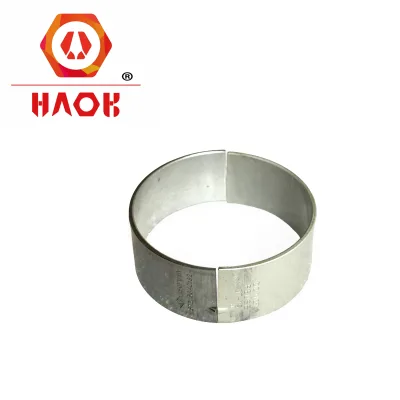
The procurement of engine con rod bearings requires a nuanced understanding of the specific variants available in the current market. Based on observed product data, the core keyword "Engine Con Rod Bearing" encompasses a diverse range of items, including specific models such as 328-5574, 8N0702, 296-4663, 2W0027, 8N1849, and 229-6259. These alphanumeric codes represent distinct engineering specifications tailored to different engine architectures. Buyers must recognize that while the general category is "Crankshaft Tile" or "Connecting Rod," the specific application dictates the necessary tolerances and material composition.
The technical attributes observed in the supply chain indicate that these components are primarily manufactured from Iron, with specific production techniques varying between "Push" and "Casting" methods. The "Push" technic suggests a specific forming process, while "Casting" indicates a different metallurgical approach, both of which impact the final density and durability of the bearing. Furthermore, the market presents a mix of "Standard Component" and "Non-Standard Component" classifications. A buyer sourcing for a standard diesel engine, such as those utilizing the ISF2.8 engine model, must verify if the bearing falls under the "Standard Component" category or requires a custom solution. The weight of these components can be as low as 0.2 kg, indicating that while individual units are light, the precision required for their assembly is high.
It is critical to distinguish between the general "Bearing" classification and the specific "Con Rod Bearing" or "Crankshaft Tile" designation. Some listings may use generic terms like "Bearing" while specifying the model as "Bearing," which requires careful verification against the engine's technical manual. The installation method is typically "Fixed," and the intended conditions of use often span both "Land Use" and "Marine" environments. This duality implies that the sourcing strategy must account for bearings capable of withstanding the vibration and load variations inherent in marine applications, in addition to standard automotive or industrial land-based machinery.
Compliance, Certification, and Quality Verification
Navigating the compliance landscape for engine con rod bearings involves rigorous verification of certifications and quality standards. The observed market data reveals a mix of certification statuses, with some products listing "ISOMaterial:Iron" or "TSCE,ISOMaterial:Iron," while others explicitly state "CE,ISO." The presence of "CE" and "ISO" certifications is a strong indicator of adherence to international safety and quality management systems. However, buyers must treat these as observations rather than universal guarantees. The distinction between "Standard" and "STANDARD PACKAGE" in product standards further highlights the need to verify that the packaging and the product itself meet the required regulatory frameworks for the destination market.
Quality verification extends beyond the paper certifications to the actual manufacturing process. The "Made in China" origin is a common attribute, with specific production hubs noted in Hebei, Henan, and Shenzhen, Guangdong. While these regions are established manufacturing centers, the variance in "Quality" descriptions necessitates a proactive approach to supplier vetting. Some listings mention "Video Outgoing Inspection" as a provided service, which is a valuable tool for remote buyers to visually confirm the condition of the goods before shipment. Conversely, other entries note that "Machinery Test Reports" are "Not Available," which presents a risk for high-performance applications where documented proof of load testing is essential.
Buyers should prioritize suppliers who can provide comprehensive documentation that aligns with the specific "Standard Component" or "Non-Standard Component" requirements of their project. The "One-Stop Service" attribute suggests that some suppliers offer end-to-end support, which can simplify the compliance process. However, the absence of a "Machinery Test Report" in certain listings means that buyers cannot rely on the supplier to provide third-party validation of performance metrics. Therefore, the procurement strategy must include a clause for independent testing or a request for detailed internal quality control records to ensure the bearings meet the necessary durability and safety standards for the intended application.
Cost Drivers and Pricing Dynamics
The pricing structure for engine con rod bearings is influenced by a complex interplay of factors, including customization, material costs, and logistics. The observed price range in the market spans from $0.34 to $2000 USD, a variance that reflects the difference between generic standard components and specialized, high-performance units. The lower end of the spectrum likely corresponds to basic "Standard Component" bearings with minimal customization, while the upper end may involve complex "Non-Standard Component" designs, specialized materials, or bundled services like video inspections and extended warranties.
Material composition is a primary cost driver. The use of "Iron" as the base material is common, but the specific alloying and processing techniques, such as "Casting" versus "Push" methods, can significantly alter the final cost. Additionally, the "Customization: Available" attribute indicates that buyers requesting specific modifications to the bearing dimensions or material properties will incur higher costs. The "Power" range of 50-200kW observed in related machinery listings suggests that bearings designed for higher power outputs will command a premium due to the increased engineering requirements for heat dissipation and load bearing.
Logistics and packaging also play a significant role in the total cost of ownership. The "Shipping Method" options, including DHL, UPS, and FedEx, vary in cost and speed. The "Product Packing" is described as "Carton Box" for standard items, but "Polywooden Box" or "Wooden Box" is used for heavier loads. These packaging choices affect shipping weight and volume, directly impacting freight charges. Furthermore, the "MOQ" (Minimum Order Quantity) ranges from 1 to 1000 units. Buyers purchasing small quantities may face higher per-unit costs, while those ordering in bulk can leverage economies of scale. The "Delivery Time" of 1-3 working days after payment is a competitive advantage that can reduce inventory holding costs, but it may come at a premium compared to suppliers with longer lead times.
Typical Applications and Operational Context
Engine con rod bearings are integral to the operation of various machinery types, with their application defined by the engine type and operational environment. The observed data highlights a strong presence in diesel engine applications, specifically referencing the "ISF2.8" engine model. These bearings are essential for converting the linear motion of the piston into rotational motion within the crankshaft, a process that demands high precision and durability. The "Gas Source" attribute and "AC Three Phase" output type suggest that these bearings are also utilized in power generation units, where reliability is paramount.
The operational context for these bearings is diverse, ranging from "Land Use" to "Marine" environments. In land-based applications, such as construction equipment or industrial generators, the bearings must withstand constant vibration and varying load conditions. In marine settings, the bearings face additional challenges, including exposure to moisture, salt, and higher humidity levels. The "Conditions of Use" specification indicates that the bearings are designed to perform in these demanding environments, but buyers must verify that the specific product selected is rated for the exact conditions of their operation.
The "Warranty" period of 3 months is a standard offering for many of these components, providing a baseline of protection for the buyer. However, the "One-Stop Service" attribute suggests that suppliers may offer extended support or maintenance services that go beyond the standard warranty. For critical applications, such as those involving high-power output (50-200kW), the reliability of the bearing is crucial to preventing catastrophic engine failure. Buyers should ensure that the selected bearing is compatible with the specific engine type, whether it is a diesel or gas-powered unit, and that it meets the performance requirements of the machinery it serves.
Supplier Evaluation and Selection Criteria
Selecting the right supplier for engine con rod bearings requires a multi-faceted evaluation process that goes beyond price and basic specifications. The "Place of Origin" data points to specific regions in China, including Hebei, Henan, and Shenzhen, Guangdong. While these regions are known for manufacturing, buyers should verify the specific factory capabilities and quality control measures in place. The "Brand Name" "HAOB" is one example of a supplier identity, but buyers should not limit their search to a single brand. Instead, they should evaluate suppliers based on their ability to meet the specific technical and logistical requirements of the project.
Key evaluation criteria include the supplier's ability to provide "Video Outgoing Inspection," which offers transparency into the product condition before shipment. The availability of "Machinery Test Reports" is another critical factor; while some suppliers may not provide these, buyers should prioritize those who can offer documented proof of quality. The "Stock" status, described as "Sufficient Stock," is a positive indicator of supply chain stability, reducing the risk of delays. However, buyers should also assess the supplier's capacity to handle "Customization" requests, as this flexibility can be crucial for unique application requirements.
The "After Service" offering of "One-Stop Service" is a significant differentiator, suggesting that the supplier can handle everything from initial inquiry to post-sales support. This level of service can streamline the procurement process and reduce the administrative burden on the buyer. Additionally, the "Delivery Time" of 1-3 working days after payment is a strong performance metric that indicates a responsive supply chain. Buyers should compare these metrics across multiple suppliers to identify the most reliable partners. Finally, the "Standard Component" or "Non-Standard Component" classification should be verified to ensure the supplier has the necessary expertise to produce the required parts.
Long-Term Procurement and Risk Management
Sourcing engine con rod bearings is not merely a transactional activity but a strategic decision that impacts long-term operational efficiency and cost management. The "Standard" and "STANDARD PACKAGE" attributes suggest that many products are designed for interchangeability, which can simplify future maintenance and replacement. However, the presence of "Non-Standard Component" options indicates that some applications require bespoke solutions, which may introduce supply chain risks if the supplier is not capable of sustaining production over the long term.
Risk management strategies should include diversifying the supplier base to mitigate the risk of single-point failures. Given the "Made in China" origin of most products, buyers should be aware of potential geopolitical or logistical disruptions that could affect supply. The "Shipping Method" options, including DHL, UPS, and FedEx, provide flexibility, but buyers should establish contingency plans for alternative logistics providers in case of service interruptions. The "Warranty" period of 3 months is a standard protection, but buyers should negotiate extended terms or service level agreements (SLAs) for critical applications.
Quality control remains a central pillar of long-term procurement success. The "Machinery Test Report" availability, or lack thereof, should be a key factor in supplier selection. Buyers should implement a robust quality assurance program that includes incoming inspection and periodic testing of bearings to ensure they meet the required specifications. The "One-Stop Service" attribute can be leveraged to establish a long-term partnership with a supplier who is committed to continuous improvement and quality enhancement. By focusing on suppliers who offer comprehensive support and transparent quality data, buyers can build a resilient supply chain that supports their operational goals for years to come.
FAQs
What certifications do engine con rod bearings have?
Some products list CE and ISO certifications, while others show TSCE and ISO. Buyers must verify specific certification status as it varies by listing and is not guaranteed for every item.
How long is the delivery time for these bearings?
Delivery typically takes 1 to 3 working days after payment is received. This fast turnaround applies to items with sufficient stock available for immediate shipment.
Can I customize the Engine Con Rod Bearing specifications?
Customization is available for many listed products. Buyers should confirm specific requirements with the supplier as standard and non-standard components are both offered.
Which materials are used for these connecting rod bearings?
The primary material observed is Iron. Some listings specify the material composition alongside certification details, but buyers should confirm material grade for specific applications.
What is the minimum order quantity for these bearings?
The minimum order quantity ranges from 1 to 1000 units depending on the supplier. Small buyers can order single units while bulk orders may require higher quantities.
How are these bearings packaged for shipping?
Standard packaging includes carton boxes, while heavy items may use polywooden or wooden boxes. The packing method depends on the weight and specific product requirements.