Source Euro 5 Cordierite Monolith Support for Filters, Catalysts, and Heat Storage
Compare 30 verified listings for Euro 5 Cordierite Monolith Support designed for automotive filters, catalyst carriers, and industrial heat storage applications. Buyers can evaluate specifications like wall thickness, temperature resistance, and material composition from suppliers in China; compare the available evidence and request quotations based on your requirements.
Key considerations
Products List
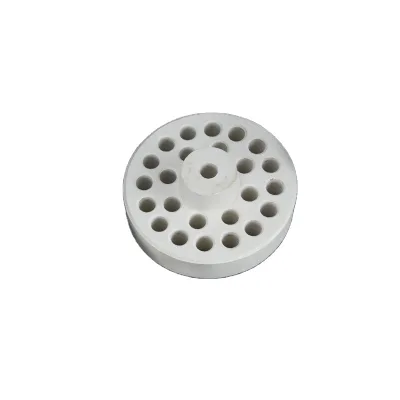


$1000.00 - $1150.00
MOQ: 10 Pieces

Factory Supply Monolith Catalyst Support Honeycomb Ceramic for Automobile Car Cordierite Material
$1000.00 - $1150.00
MOQ: 10 Pieces


Cordierite Mullite Supports T Shape Support Cordierite Mullite T Supports
$1.00 - $15.00
MOQ: 1 Pieces


Cordierite Honeycomb Ceramic Monolith Substrate
$25.00 - $186.00
MOQ: 100 Pieces
Beihai Xiaoming International Import and Export Trading Co., Ltd.




Comprehensive Sourcing Guide
Euro 5 Cordierite Monolith Support Sourcing Guide
Procuring Euro 5 compliant cordierite monolith supports requires identifying components specifically engineered for diesel particulate filter applications in modern emission control systems. Buyers must distinguish between general industrial ceramic parts and those designed for high-temperature exhaust environments where thermal shock resistance is critical. The observed market data indicates a wide range of materials, including specific cordierite formulations and high-alumina variants, necessitating careful verification of the chemical composition to ensure compatibility with Euro 5 standards.
Sourcing strategies should focus on suppliers who explicitly list temperature resistance capabilities exceeding 800°C, as this is a baseline for many exhaust applications. The observed product listings reveal diverse shapes such as hexagonal and square cells, which directly impact flow dynamics and filtration efficiency. Buyers should prioritize vendors who provide detailed specifications on wall thickness and cell density, as these physical attributes determine the structural integrity required to withstand the thermal cycling inherent in vehicle operation.
Product Scope and Observed Listing Signals
The current market offers a broad spectrum of ceramic components, ranging from simple refractory blocks to complex honeycomb structures designed for heat storage and catalytic conversion. Listings frequently mention materials like Sillimantin and various cordierite grades, alongside high-alumina classifications, indicating a need for buyers to verify the exact material grade against their specific engine requirements. The observed price range of 0.1 to 1800 USD reflects significant variation in size, complexity, and the presence of specialized features like thick copper conductive layers.
Buyers must scrutinize product descriptions for specific model numbers such as Sanhe CS HC or KS-HC01, which often denote distinct manufacturing processes or intended applications. The presence of customization options suggests that many suppliers can adapt standard designs, but this requires clear communication of technical drawings and performance expectations. Observations of packing methods, including hard cartons and wooden pallets, highlight the importance of logistics planning for fragile ceramic monoliths that require robust protection during international shipping.
Technical Specifications to Verify
Verification of thermal properties is paramount, as the observed data lists working temperatures ranging from 1200°C to 1400°C for certain refractory products, while others specify resistance up to 1400°C for industrial applications. Buyers must confirm that the selected monolith can withstand the specific thermal shock resistance values, with some listings citing a maximum of 500K, to prevent cracking during rapid heating and cooling cycles. The chemical composition, often noted as Al2O3.Sio2, must be validated to ensure it meets the thermal expansion coefficients required for the specific exhaust system geometry.
Dimensional accuracy is equally critical, with observed specifications including wall thicknesses varying from 0.3mm to 1.5mm and cell shapes defined as hexagonal or square. The bulk density, observed between 500-680 Kg/M3, influences the weight and thermal mass of the component, which affects the overall vehicle performance and fuel efficiency. Buyers should request detailed test data on water absorption rates, as observed values between 20-25% could indicate porosity levels that impact the structural strength and filtration efficiency of the final assembly.
Compliance and Safety Documentation
While specific certification statuses like ISO9001 are mentioned in background contexts, buyers must demand explicit proof of compliance with Euro 5 emission standards rather than relying on general industry claims. Documentation should include detailed material safety data sheets and certificates of analysis that verify the chemical composition and refractoriness of the cordierite used in the monolith. It is essential to ensure that the supplier can provide traceability for the raw materials, particularly regarding the specific cordierite or high-alumina grades listed in the product specifications.
Safety protocols for handling these ceramic components must be clearly defined, especially given the high-temperature applications and the potential for brittle failure under stress. Buyers should verify that the supplier adheres to recognized safety standards for industrial ceramics, ensuring that the products are free from hazardous impurities that could be released during operation. The absence of specific test results in general listings means that third-party verification of thermal shock and mechanical strength is often necessary before finalizing a procurement contract.
Cost Drivers and Commercial Terms
The observed minimum order quantity (MOQ) ranges from 1 to 2000 units, creating a significant variance in unit pricing and total procurement costs for different buyers. High-volume orders may benefit from economies of scale, but the specific material costs, such as the use of specialized cordierite or high-alumina formulations, will heavily influence the final price per unit. Buyers should analyze the cost implications of customization, as tailored dimensions or specific cell densities often incur additional tooling and processing fees.
Commercial terms must account for the fragility of the product, which necessitates specialized packaging like wooden pallets and hard cartons to prevent damage during transit. Lead times can vary significantly based on the complexity of the order and the specific manufacturing process, such as high-temperature co-firing, which requires precise control over the sintering environment. Buyers should negotiate clear terms regarding payment schedules and liability for damaged goods, ensuring that the high value of the ceramic components is protected throughout the supply chain.
Supplier Qualification and Quality Control
Selecting a supplier requires a thorough assessment of their manufacturing capabilities, particularly their experience with high-temperature ceramic processes and the ability to maintain consistent wall thicknesses. The observed product origins, including Shanghai and Jiangxi Province, suggest a concentration of manufacturing expertise in these regions, but buyers must verify the specific production facilities and quality control protocols in place. It is crucial to confirm that the supplier has the capacity to produce the required model numbers, such as JUCOS or Honeycomb Ceramic variants, with the specified dimensional tolerances.
Quality control measures should include rigorous inspection of the final product for defects such as cracks, warping, or inconsistent cell structures that could compromise performance. Buyers should request samples for independent testing to verify key attributes like thermal expansion coefficients and bulk density before committing to a large order. Establishing a clear communication channel for technical support is essential, as any deviations in the manufacturing process could lead to significant issues in the final emission control system.
Long-Term Procurement Checks
Establishing a long-term partnership requires regular audits of the supplier's production lines to ensure consistent adherence to the specified technical parameters and material standards. Buyers should implement a schedule for periodic re-verification of product quality, focusing on critical attributes like refractoriness and thermal shock resistance that may degrade over time if raw material sources change. Maintaining a buffer stock of critical components can mitigate supply chain disruptions, especially given the specialized nature of Euro 5 compliant monolith supports.
Continuous monitoring of market trends and technological advancements in ceramic materials is necessary to ensure that the procured components remain competitive and compliant with evolving emission regulations. Buyers should engage in regular reviews of supplier performance metrics, including on-time delivery rates and defect frequencies, to identify areas for improvement. By fostering a collaborative relationship with the supplier, buyers can ensure a steady supply of high-quality cordierite monoliths that meet the rigorous demands of modern diesel exhaust systems.
FAQs
What materials are used for Euro 5 Cordierite Monolith Support?
The primary material is cordierite, often combined with sillimanite grades such as SM60, SM65, and SM90 for enhanced performance. These compositions ensure the ceramic parts meet the rigorous thermal and chemical demands of automotive exhaust systems while maintaining structural integrity under high heat.
How does the honeycomb structure improve filtration efficiency?
The hexagonal cell shape provides a high surface area for catalytic reactions and particulate capture. With wall thicknesses ranging from 0.43 to 1.5 mm, the design balances low thermal conductivity with high mechanical strength, ensuring effective heat storage and filtration in industrial and automotive applications.
Can these ceramic supports be customized for specific models?
Yes, customization is available to meet specific engineering requirements. Manufacturers offer various model numbers like GT-5481 or Sanhe CS HC, allowing for tailored dimensions and specifications. This flexibility ensures the monolith support fits precisely into different RTO, RCO, or automotive exhaust system configurations.
What is the maximum temperature resistance for these supports?
These ceramic supports are designed to withstand extreme heat, with temperature resistance reaching up to 1400°C or 1580°C depending on the specific grade. The working temperature range typically spans from 1200°C to 1400°C, making them suitable for high-temperature industrial and automotive environments.
What packaging methods are used for shipping these ceramic parts?
Products are typically packed in hard cartons or wooden cartons with pallets to ensure safe transit. Some items may use wooden pallets directly. This robust packaging protects the fragile ceramic structures from damage during handling and long-distance shipping from origins like Shanghai or Jiangxi Province.
Which features make these supports suitable for industrial use?
Key features include high thermal conductivity, acid and alkali corrosion resistance, and good thermal insulation performance. The low thermal expansion coefficient and high thermal shock resistance up to 500K ensure durability. These properties make them ideal for use as filter materials, fillers, and catalyst carriers.