Source EVA Foam Adjustable Knee Pad for Crawling, Work, and Exercise
Find 30 verified listings for the EVA Foam Adjustable Knee Pad suitable for crawling, work, and exercise. Buyers can compare specifications like thickness, material density, and customization options across multiple suppliers in China.
Key considerations
Products List

Adjustable EVA Sponge Anti-Collision Knee Pads
$6.16 - $7.70
MOQ: 13 Pieces
Jinhua Hengyang Cross-Border Trade Limited Liability Company


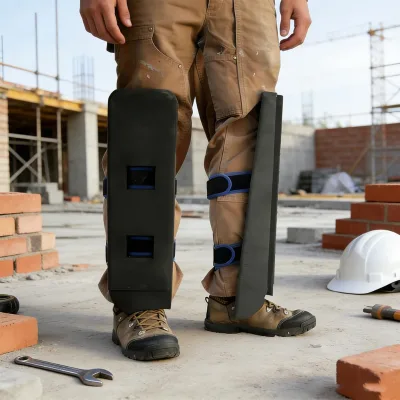


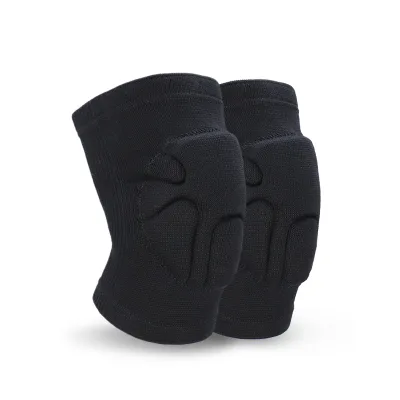


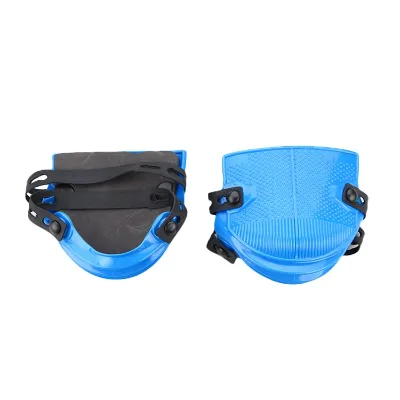


$0.25 - $0.35
MOQ: 2000 Pieces
Comprehensive Sourcing Guide
Strategic Sourcing Guide for EVA Foam Adjustable Knee Pads
Understanding Product Specifications and Material Variability
When sourcing EVA foam adjustable knee pads, buyers must first navigate the significant variance in product specifications observed across the market. The core material is consistently identified as Ethylene-Vinyl Acetate (EVA), a closed-cell foam known for its durability and shock absorption. However, the specific physical properties of the foam vary drastically between suppliers. Some listings indicate a "Medium" thickness, while others specify a precise dimension of 47mm. This discrepancy highlights the necessity for buyers to define their exact thickness requirements before engaging with suppliers, as the thickness directly correlates with the level of protection and the weight of the final product.
The dimensional flexibility of these products is another critical specification. While some manufacturers offer standard sizes, a significant portion of the market operates on a "Size as Per Your Request" basis. This customization capability extends to the shape of the knee pad, with options ranging from standard rectangles to fully customized contours. The hardness of the foam is similarly variable; while some products are pre-set, others allow the buyer to request specific hardness levels to suit different applications, such as heavy-duty industrial crawling versus light-duty home maintenance.
Color availability is another area of high flexibility. The market data indicates that "Any Color Is Available" is a common offering, with specific listings noting options for black or custom colors. This allows for branding opportunities where the knee pad color can match corporate safety gear or specific aesthetic requirements. Furthermore, the printing capabilities are widely accepted, enabling the application of logos or safety warnings directly onto the foam surface. Buyers should verify the specific printing methods supported by the supplier, as this impacts the durability of the branding under repeated friction.
Technical Standards and Performance Metrics
Evaluating the technical performance of EVA foam knee pads requires a close examination of the material's physical constants. The supplied data provides specific ranges for tensile strength, which is a measure of the material's resistance to breaking under tension. For certain EVA foam sheets, the tensile strength is observed within the range of 81 to 130 MPa. This metric is crucial for ensuring the knee pad will not tear or fail during rigorous movement or when subjected to sharp objects.
Contraction percentage is another vital technical parameter, with observed values of less than 0.4%. This low contraction rate indicates high dimensional stability, meaning the knee pad will maintain its shape and size over time, even when exposed to temperature fluctuations or mechanical stress. Water absorption rates are also critical for hygiene and longevity. Data suggests a water absorption range of 1.5% to 3.5%, which is relatively low for foam materials, ensuring the product does not become heavy or degrade quickly when exposed to moisture.
Packaging standards vary significantly, ranging from standard cartons to specific box packaging or OPP bags. The dimensions of the packaging often reflect the product size; for instance, some products are packaged in boxes measuring 17×24cm, while others are shipped in cartons with dimensions like 36×20×10. Buyers must align their logistics planning with these packaging specifications to optimize shipping costs and storage efficiency. Additionally, the origin of the product, primarily noted as Zhejiang or Guangdong in China, can influence the consistency of manufacturing standards and the speed of delivery.
Cost Drivers and Pricing Dynamics
The pricing structure for EVA foam adjustable knee pads is influenced by a complex interplay of customization, material volume, and order quantity. The observed price range in the market spans from $0.25 to $17.50 per unit. This wide disparity is not necessarily indicative of quality differences alone but is heavily driven by the level of customization and the complexity of the manufacturing process. A basic, off-the-shelf knee pad with standard dimensions and color will likely fall at the lower end of this spectrum, while a fully customized unit with specific hardness, unique shapes, and custom printing will command a higher price.
Minimum Order Quantity (MOQ) is a primary cost driver. The market data reveals a substantial range in MOQs, from as low as 100 pieces to as high as 5000 pieces, with some listings showing a range of 3 to 2448 units. Suppliers with lower MOQs often charge a premium per unit to cover the setup costs of smaller production runs. Conversely, suppliers requiring an MOQ of 5000 pieces may offer more competitive unit pricing, making them suitable for large-scale corporate procurement or distribution. Buyers must balance their budget constraints with their inventory needs to determine the optimal MOQ tier.
Payment terms also play a role in the overall cost of procurement. Standard terms observed include Letter of Credit (L/C) and Telegraphic Transfer (T/T). These terms affect cash flow and risk management. Buyers should negotiate terms that align with their financial capabilities while ensuring they have sufficient leverage to enforce quality standards before final payment is released. The combination of unit price, MOQ, and payment terms creates a total cost of ownership that buyers must calculate carefully before committing to a supplier.
Compliance, Certification, and Supplier Evaluation
When evaluating suppliers for EVA foam knee pads, buyers must prioritize compliance and certification checks, even though specific certification statuses are not universally listed in the provided data. The product attributes often highlight features such as "Eco-Friendly," "Degradable," and "Recyclable." While these are strong indicators of environmental responsibility, buyers should request independent verification or certification documents to substantiate these claims. The absence of a specific certification name in the general data does not mean the product lacks compliance; rather, it underscores the need for buyers to ask for proof of compliance with relevant international standards for foam materials.
Supplier evaluation should also focus on the consistency of their product models. The market shows a variety of model numbers, such as KHL9489, EVA-kneemat-01, and EVA-B-0002. This variety suggests that suppliers may have multiple production lines or product families. Buyers should verify that the specific model number they are ordering matches their technical requirements exactly. Additionally, the "Kind" of product is listed as "Kneepad" or "Color Plastic Sheet," which can sometimes lead to confusion. Buyers must ensure the supplier understands the end-use application, whether it is for industrial safety, medical assistance, or general crawling, to ensure the product is fit for purpose.
The location of the supplier, specifically in regions like Zhejiang and Guangdong, China, is a relevant factor for logistics and communication. These regions are known for their manufacturing clusters, but buyers should still verify the specific factory capabilities. The ability to accept customized logos and shapes is a key differentiator, but it requires a robust quality control process to ensure that customizations do not compromise the structural integrity of the foam. Buyers should request samples of custom work to assess the quality of printing and cutting before placing a large order.
Typical Applications and Usage Scenarios
EVA foam adjustable knee pads are designed for a diverse range of applications, driven by their lightweight and shock-resistant properties. One prominent application is in attic movement assistance and crawling, where the lightweight nature of the foam allows for ease of maneuverability without adding unnecessary burden to the user. The "High-density foam" variant is particularly suited for these scenarios, offering a balance of comfort and protection. The "Plus Size" attribute mentioned in some listings indicates that these products can accommodate users of various body types, making them versatile for both professional and personal use.
In industrial and construction settings, the shock resistance and hardness customization of EVA foam knee pads are essential. Workers who spend extended periods on their knees require protection against hard surfaces, and the ability to customize the hardness allows for a tailored fit that maximizes comfort and safety. The "Health Care" feature listed for some products suggests a potential application in medical or rehabilitation contexts, where gentle support and shock absorption are critical. The "Degradable" and "Eco-Friendly" attributes further align these products with modern sustainability goals, making them suitable for organizations with strict environmental policies.
The versatility of the product extends to its shape and size customization. The "Rectangle" and "Customized Shape" options allow manufacturers to design knee pads that fit specific tools or equipment, enhancing the user's ability to work in tight spaces. The "Approx. 55.8cm" size specification provides a reference point for standard large-scale applications, while the "Size as Per Your Request" option ensures that niche requirements can be met. Buyers should map these application scenarios to their specific operational needs to select the most appropriate product configuration.
Quality Control and Long-Term Procurement Considerations
Implementing a rigorous quality control (QC) process is essential when sourcing EVA foam knee pads. Given the variability in specifications such as thickness, hardness, and tensile strength, buyers must establish clear acceptance criteria before production begins. The observed tensile strength range of 81~130MPa and contraction percentage of <0.4% serve as benchmarks, but buyers should verify that the specific batch they receive meets these standards. Regular testing of water absorption and material density can help ensure that the foam maintains its performance characteristics over time.
Long-term procurement considerations involve building a sustainable relationship with suppliers who can consistently deliver high-quality products. The "Terms of Payment" such as L/C and T/T should be structured to include milestones that allow for quality checks at various stages of production. The ability to customize the product, including the logo and shape, requires a supplier with a flexible and responsive production line. Buyers should assess the supplier's capacity to handle repeat orders and their ability to maintain consistency across different batches.
Packaging integrity is another long-term consideration. The use of cartons, boxes, or OPP bags must be evaluated to ensure they protect the product during transit. Damage to the foam during shipping can render the product unusable, so packaging standards should be strictly enforced. The "Selling Units" being listed as "Single item" suggests that the products are often sold individually, which simplifies inventory management but requires careful attention to individual unit quality. By focusing on these quality control and long-term factors, buyers can secure a reliable supply chain for EVA foam adjustable knee pads that meets their operational and safety requirements.
FAQs
Can I customize the size and shape of the knee pad?
Yes, the size and shape are available as per your request, including rectangle or customized contours. This flexibility allows you to tailor the product for specific applications like attic movement or industrial crawling while ensuring a precise fit.
What is the minimum order quantity for these knee pads?
The minimum order quantity varies significantly, ranging from 100 pieces to 5000 pieces depending on the supplier. Buyers must balance their budget constraints with inventory needs to determine the optimal MOQ tier for their specific procurement requirements.
How is the hardness of the foam determined?
The hardness is available as per your request, allowing for customization to suit different applications. This feature enables users to select specific levels for heavy-duty industrial crawling or light-duty home maintenance based on their protection needs.
What are the technical specifications for tensile strength?
The tensile strength for certain EVA foam sheets is observed within the range of 81 to 130 MPa. This metric ensures the knee pad will not tear or fail during rigorous movement or when subjected to sharp objects during use.
Which packaging options are available for shipping?
Packaging options include cartons, boxes, or OPP bags, with dimensions varying by product. Buyers must align their logistics planning with these specifications to optimize shipping costs and storage efficiency while ensuring product integrity during transit.
Can I request a custom logo on the product?
Yes, customized logos are accepted and printing is widely available on the foam surface. This allows for branding opportunities where the knee pad color and logo can match corporate safety gear or specific aesthetic requirements.