Source EVA Hot Briquetting Storage Bag for Gifts, Food, and Household
Compare 30 options for the EVA Hot Briquetting Storage Bag, featuring PE and PP materials with heat-sealing closures. These versatile bags offer moisture proof and recyclable properties for gifts, food, and household applications; compare the available evidence and request quotations based on your requirements.
Key considerations
Products List


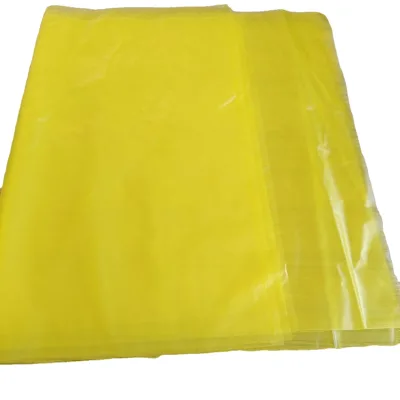


$1.00 - $9.90
MOQ: 200 Pieces


Comprehensive Sourcing Guide
EVA Hot Briquetting Storage Bag Sourcing Guide
Procurement professionals must first distinguish between standard plastic storage solutions and specialized EVA hot briquetting bags, as the supplied data primarily reflects general polyethylene and polypropylene packaging rather than specific EVA briquette containment. The observed product listings feature models like Paper Storage Bag-029C and various XH series bags, which utilize high-pressure polyethylene or PE/PP blends for food and household applications. Buyers seeking EVA-specific briquetting storage must verify if the manufacturer can adapt their existing blowing or sealing processes to meet the unique density and thermal requirements of hot briquetted materials.
The observed market signals indicate a wide range of customization options, including logo printing and custom designs up to ten colors, which are critical for branding specialized industrial packaging. While the data confirms the availability of OEM services and various bag styles such as upright, flat, and zipper bags, the specific material composition for EVA briquetting is not explicitly detailed in the provided facts. Sourcing teams should therefore treat the listed attributes as a baseline for potential customization rather than a guarantee of existing inventory for high-temperature briquette storage applications.
Product Scope and Observed Listing Signals
Buyers should analyze the observed product models, such as MS-JY045 and the XH series, to understand the baseline capabilities of manufacturers offering plastic packaging bags. The data highlights a strong focus on customization, with attributes like "Customized" and "OEM: Yes" suggesting that suppliers are willing to alter dimensions and features to fit specific client needs. However, the listed applications range from food and promotion to sand bags, indicating that the current catalog may not inherently include heavy-duty briquetting solutions without specific engineering adjustments.
The observed price range of 0 to 10 USD and MOQs spanning from 5 to 2,000,000 units suggest a highly flexible supply chain capable of handling both small prototype runs and massive industrial orders. This variability allows buyers to test market fit with low-volume orders before committing to large-scale production. Nevertheless, the absence of explicit EVA material specifications in the provided facts means that buyers must explicitly request material data sheets to confirm that the plastic bags can withstand the thermal and mechanical stresses associated with hot briquetted storage.
Technical Specifications to Verify
Verification of the raw materials is paramount, as the supplied facts list High Pressure Polyethylene and PE/PP blends but do not confirm the presence of Ethylene Vinyl Acetate (EVA). Buyers must explicitly request confirmation that the bag material possesses the necessary flexibility and thermal resistance to handle hot briquettes without deforming or releasing harmful volatiles. The observed "Making Process" of blowing and heat-sealing is standard for general packaging, but the specific parameters for EVA processing may differ significantly from the listed PE and PP manufacturing methods.
Dimensional specifications such as the observed "Middle" and "Large" sizes, along with closure types like heat-sealing, provide a starting point for defining storage requirements. However, the structural integrity required for briquetted materials often demands reinforced seams or specific thicknesses, such as the observed 20mic to 60mic range, which may need to be increased for heavy-duty applications. Buyers should demand detailed tensile strength and puncture resistance data to ensure the selected bag variety, whether upright or flat, can safely contain the specific weight and shape of the briquettes.
Compliance and Safety Documentation
The provided facts list several certifications including QS, ISO9001:2008, ISO14001:2004, SGS, RoHS, CE, EN71, and REACH, which serve as a foundation for general product safety and quality management. For EVA hot briquetting storage, buyers must verify if these certifications extend to the specific material composition and intended use for industrial or hazardous materials. The presence of "Bio-Degradable" and "Recyclable" features in the observed data is promising for sustainability goals, but these claims must be validated against the specific chemical properties of the EVA blend used in the final product.
Safety documentation should also address the thermal stability of the packaging, as hot briquettes generate heat that could compromise standard plastic bags. While the observed features include "Moisture Proof" and "Shock Resistance," these attributes must be tested under the specific temperature conditions of the briquetting process to ensure they remain effective. Buyers should require test reports confirming that the bag material does not degrade or release toxic fumes when exposed to the heat generated by the briquettes, ensuring compliance with local safety regulations and environmental standards.
Cost Drivers and Commercial Terms
The observed MOQ range of 5 to 2,000,000 units and the price range of 0 to 10 USD indicate that unit costs are heavily influenced by order volume and customization complexity. Buyers should anticipate that customizing bags for EVA briquetting, such as altering the material blend or adding specific thermal barriers, will likely increase the unit price and potentially raise the minimum order quantity. The "Custom Design up to 10 Colors" feature adds another layer of cost, as multi-color printing requires additional setup and quality control steps that are not reflected in the base price range.
Commercial terms regarding packaging, such as the observed "Carton" and "Carton Box Outer Packing," are standard but must be evaluated for their ability to protect the bags during transit and storage. The "Business Type: Manufacturer" status suggests that buyers may negotiate better terms directly with the production facility, potentially reducing lead times and costs associated with intermediaries. However, buyers must clarify lead times for custom material development, as the transition from standard PE/PP production to specialized EVA formulations may require significant time for tooling and process validation.
Supplier Qualification and Quality Control
The observed supplier attributes, including "Business Type: Manufacturer" and origins in Zhejiang and Dongguan, Guangdong, provide a geographic context for evaluating supply chain logistics and quality control capabilities. Buyers should verify the supplier's experience with EVA materials specifically, as the listed facts focus on general plastic packaging. The presence of "Best" quality claims and various certifications suggests a commitment to standards, but buyers must conduct on-site audits or request third-party quality reports to confirm that the supplier can consistently produce bags meeting the rigorous demands of hot briquetting storage.
Quality control processes should include rigorous testing of the bag's closure type, specifically the observed heat-sealing, to ensure it remains intact under the weight and heat of the briquettes. The "Feature" list includes "Antistatic" and "Shock Resistance," which are beneficial for industrial applications, but these features must be validated through specific test results for the intended use case. Buyers should establish clear acceptance criteria for defect rates and material consistency, ensuring that the supplier's internal quality checks align with the buyer's operational requirements for safe and reliable storage.
Long-Term Procurement Checks
Sourcing teams must plan for long-term consistency in material performance, as the observed "Customized" standard and "prod_standard" of EN71, SGS, RoHS, and REACH may need periodic re-verification. Regulatory landscapes and material safety standards evolve, requiring buyers to ensure that their suppliers maintain up-to-date compliance documentation for the specific EVA formulations used in briquetting storage. Regular audits should focus on the supplier's ability to maintain the "High Pressure Polyethylene" or PE/PP blends if they are adapted for EVA, ensuring no degradation in material quality over time.
Supply chain resilience is critical, given the observed wide range of MOQs and the potential for supply disruptions in specialized plastic manufacturing. Buyers should develop contingency plans that include alternative suppliers capable of producing similar EVA storage solutions, as the current data does not guarantee a single source for all required specifications. Establishing a long-term partnership with a manufacturer who demonstrates flexibility in their "Making Process" and "Raw Materials" will help mitigate risks associated with material shortages or sudden changes in production capacity.
FAQs
What materials are used for these storage bags?
The bags are primarily made from High Pressure Polyethylene Plastic Bag materials, specifically PE and PP blends. These raw materials ensure durability and flexibility for various storage needs. The manufacturing process involves blowing techniques to create strong, reliable packaging solutions for diverse applications.
Can I customize the logo on the bags?
Yes, logo printing is available with custom designs up to 10 colors. The product supports OEM services and offers full customization options. Buyers can request specific branding to enhance visibility, making these bags suitable for promotional gifts and household use with professional finishing.
What certifications do the plastic bags have?
The products hold QS Certificate, ISO9001:2008, and ISO14001:2004 certifications. Additional standards include EN71, SGS, RoHS, and REACH compliance. These credentials verify quality and safety, ensuring the bags meet international regulatory requirements for food, promotion, and household applications across different markets.
What are the features of the PE bags?
The bags feature moisture proof, recyclable, bio-degradable, shock resistance, and antistatic properties. They are designed to be disposable yet durable, offering protection against environmental factors. These attributes make them ideal for storing items that require safety and longevity in various industrial and consumer settings.
Where are these bags manufactured?
The bags originate from China, with specific production in Zhejiang and Dongguan, Guangdong Province. As a manufacturer, the supplier provides direct sourcing from these locations. This geographic presence supports efficient logistics and supply chain management for international buyers seeking reliable packaging solutions.
What styles of bags are available?
Available styles include Flat Bag, Three Sides Sealed Bag, Stand up Bag, and Zipper Bag. The variety covers Upright Bag formats and other configurations. Buyers can select the appropriate style based on their specific storage requirements, ensuring optimal functionality and ease of use for their products.