Source Evaporative Cooling Honeycomb Pad for Farms, Greenhouses, and Factories
Find 30 Evaporative Cooling Honeycomb Pad options from Chinese suppliers with CE and RoHS certifications. Compare specifications like absorption rates, material types, and sizes to suit farms, greenhouses, and industrial applications.
Key considerations
Products List


Water Paper Air Cooler Evaporative Cooling Pad for Greenhouse Farm
$12.00 - $48.00
MOQ: 70 Square Meters

Stable Cooling Performance Honeycomb Evaporative Plastic Cooling Pad
$30.00 - $45.00
MOQ: 50 Square Meters

UV Stabilized Polypropylene Honeycomb Evaporative Plastic Cooling Pad
$30.00 - $45.00
MOQ: 50 Square Meters


Honeycomb Cooling Wall Evaporative Cooling Pad for Industrial Air Cooler
$1.00 - $100.00
MOQ: 1 Pieces


5090 Honeycomb Cell Evaporative Cooling Pad for Portable Evaporator
$60.00 - $80.00
MOQ: 1 cubic meter
Nantong Yueneng Energy Saving Purification Equipment Co., Ltd



Comprehensive Sourcing Guide
Strategic Sourcing Guide for Evaporative Cooling Honeycomb Pads
Understanding Technical Specifications and Material Variants
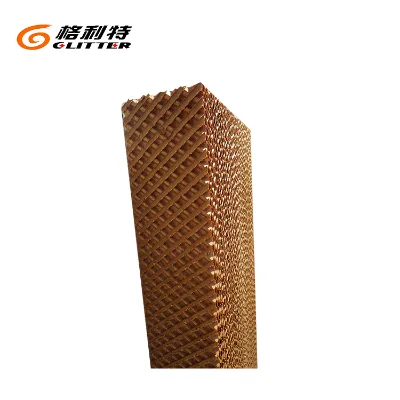
When sourcing evaporative cooling honeycomb pads, buyers must first distinguish between the primary material compositions observed in the market, as these dictate performance characteristics and suitability for specific environments. The supplied product data indicates a clear divergence in material options, ranging from natural fiber-based solutions to synthetic polymers. One prominent variant utilizes paper as the core material, often described in specifications as "Kraft Paper" with specific weight attributes. This paper-based construction is frequently paired with frame materials such as Aluminum, Stainless Steel, or Galvanized Steel to ensure structural integrity under wet conditions. The absorption capability for these paper-based units is a critical metric, with observed data suggesting an absorption rate of 60-70mm within a 5-minute window. This rapid absorption is essential for initiating the evaporative cooling process efficiently.
In contrast, another segment of the market offers pads constructed from PVC Plastic or PP (Polypropylene). These synthetic options often feature a "Sheet Pitch" of 10 mm, which influences the surface area available for water evaporation and air resistance. The size specifications for these units vary significantly, with standard dimensions including 100mm, 150mm, and 200mm thicknesses, alongside fully customizable sizing options. The physical dimensions of the paper-based units often align with a standard of 11001200150mm, while other models may be defined by specific model numbers such as MH7090, 5090, or 7060. Buyers should verify the exact "prod_model" designation against their facility's airflow requirements, as the cooling effect is directly tied to the pad's thickness and surface area. The observed cooling effect for these systems ranges from a 5-15°C reduction in ambient temperature, with evaporation efficiencies reaching up to 90% in optimal conditions.
Compliance, Certification, and Regulatory Standards
Navigating the regulatory landscape is a critical step in the procurement of industrial cooling components. The product data confirms that specific units carry CE and RoHS certifications, indicating compliance with European health, safety, and environmental protection standards. The CE mark suggests that the product meets EU safety requirements, while RoHS certification implies the absence of specific hazardous substances, which is vital for facilities aiming for sustainable operations. However, buyers must exercise caution; the presence of these certifications in the data does not guarantee that every unit from every supplier possesses them. It is imperative to request current certification documents for the specific batch being purchased.
Furthermore, the "prod_standard" field lists specific dimensional standards, such as 11001200150mm, which serve as a baseline for manufacturing consistency. Buyers should verify if the supplier adheres to these stated standards or if they operate under a "Customized" standard that requires a bespoke engineering review. In addition to product certifications, the "Place of Origin" is listed as Shandong, China, a region known for manufacturing these components. While this provides context for the supply chain, it does not inherently dictate quality. Buyers should ensure that the supplier's quality management system aligns with international standards, even if the specific certification is not explicitly listed in the initial product summary. The "Condition" of the products is noted as "New," which is a basic requirement, but buyers should also inquire about the shelf life and storage conditions of the pads prior to installation, as paper-based materials can degrade if exposed to excessive humidity during storage.
Cost Drivers and Pricing Dynamics
The pricing structure for evaporative cooling pads is influenced by several variable factors, including material composition, customization levels, and order volume. The observed price range in the market spans from 0.9 to 137.87 USD, a wide disparity that reflects the difference between small, standard-sized units and large, custom-engineered systems. The "Kraft Paper Weight" is a significant cost driver; heavier, denser paper sheets generally offer better durability and water retention but come at a higher cost. Similarly, the choice of frame material impacts the final price. Frames made of Stainless Steel or Aluminum are typically more expensive than those made of Galvanized Steel due to corrosion resistance and longevity.
Order volume plays a pivotal role in cost optimization. The Minimum Order Quantity (MOQ) ranges from 1 to 100 units, offering flexibility for small-scale projects while potentially offering volume discounts for larger industrial deployments. Buyers should note that "Customized" sizes and specifications often incur additional tooling or setup costs, which may push the unit price toward the higher end of the observed range. The "Trade Intercom" terms, including EXW, FOB, CIF, and DDP, also affect the total landed cost. EXW (Ex Works) places the burden of shipping and insurance on the buyer, whereas DDP (Delivered Duty Paid) includes all costs up to the destination, potentially simplifying budgeting but at a premium. Additionally, the availability of "Free Samples" can reduce the risk of procurement errors, allowing buyers to test performance before committing to a large order, though this may not always be applicable to custom-sized units.
Typical Applications and Operational Context
Evaporative cooling honeycomb pads are designed for a diverse range of industrial and agricultural applications, as evidenced by the "Applicable Industries" and "Application" fields in the product data. The primary sectors include Farms, Greenhouses, and Factory environments. Within the agricultural sector, these pads are specifically utilized in Horticulture, Animal Husbandry, and Livestock and Poultry Breeding. In these settings, the ability to control temperature is paramount for animal welfare and crop health. The "Function" of the pads is explicitly stated as "Control Temperature," which is achieved through the evaporative cooling process that lowers air temperature by 5-15°C.
In industrial settings, the pads are often integrated into larger "Optional Systems" that include Cooling Systems, Irrigation Systems, and Ventilation. The "Installation Type" is typically Wall Mounted, requiring careful planning of the facility's airflow dynamics to ensure uniform air distribution. The "Water Distribution" mechanism is a critical component of the system's efficiency; it must provide a "Uniform Flow" across the entire surface of the pad to prevent dry spots that reduce cooling efficiency. The "Sheet Pitch" of 10 mm in plastic variants or the specific density of paper pads determines the air resistance and water flow rate. Buyers must assess whether their facility's existing ventilation infrastructure can support the pressure drop introduced by the cooling pad. The "Advantage" of durability is frequently cited, suggesting that these units are built to withstand continuous operation in high-humidity environments, which is essential for long-term reliability in farms and greenhouses.
Supplier Evaluation and Quality Assurance
Selecting a reliable supplier requires a rigorous evaluation process that goes beyond the initial product listing. The "Brand Name" Muhe appears in the data, but buyers should not rely on brand recognition alone. Instead, they should verify the supplier's capacity to meet the "Customization" requirements, as many projects demand specific dimensions or material properties. The "prod_packing" is listed as "Carton" or "Carton Box," but for large orders, buyers should confirm if the packaging is robust enough to prevent damage during transit, especially for paper-based pads that are sensitive to moisture.
Quality control should focus on the "Condition" of the product upon arrival. Since the pads are often made of paper or plastic, they must be inspected for physical defects, such as tears, uneven sheet pitches, or frame deformations. The "Warranty" of 1 Year is a standard offering, but buyers should clarify the scope of this warranty. Does it cover material defects only, or does it include performance guarantees regarding the cooling efficiency? The "Sample" availability is a valuable tool for quality assurance; requesting a sample allows the buyer to verify the "Absorption" rate and "Evaporation Efficiency" firsthand before placing a bulk order. Additionally, the "Free Sample" option mentioned in the data can be leveraged to test the product in the actual operating environment of the facility. Buyers should also inquire about the supplier's production lead times and their ability to handle "Customizable" orders without significant delays.
Long-Term Procurement and Maintenance Considerations
Sourcing evaporative cooling pads is not a one-time transaction but part of a long-term operational strategy. The "Warranty" period of 1 Year provides a baseline for expected service life, but the actual longevity depends on maintenance practices and water quality. Paper-based pads, while offering high evaporation efficiency, may require more frequent replacement compared to PVC or PP plastic variants, which are generally more resistant to mineral buildup and biological growth. Buyers should consider the total cost of ownership, including the frequency of replacement and the cost of water treatment systems required to maintain "Uniform Flow" and prevent scaling.
The "Optional System" integration suggests that these pads are part of a larger ecosystem. Buyers should plan for the scalability of their cooling systems. If the facility expands, can the current supplier provide matching units that integrate seamlessly with existing infrastructure? The "Customized Size" option offers flexibility for future modifications, but it is essential to maintain a consistent supplier relationship to ensure compatibility. Furthermore, the "Trade Intercom" terms should be reviewed to ensure that the logistics chain remains stable over the long term. For instance, DDP terms can simplify future reordering by handling customs and delivery, reducing administrative overhead. Finally, buyers should establish a protocol for monitoring the "Cooling Effect" and "Evaporation Efficiency" over time. Regular performance checks will help identify when a pad needs replacement, ensuring that the facility maintains optimal temperature control and energy efficiency throughout the operational lifecycle.
FAQs
What materials are used for evaporative cooling honeycomb pads?
Pads are constructed from paper, PVC plastic, or PP materials. Paper variants often feature a kraft paper weight and are paired with aluminum or stainless steel frames for durability in wet conditions.
How much temperature reduction can these pads provide?
The cooling effect typically achieves a 5-15°C reduction in ambient temperature. This efficiency relies on evaporation rates up to 90% and uniform water distribution across the pad surface.
Which certifications do these products typically hold?
Some units carry CE and RoHS certifications indicating compliance with safety and environmental standards. Buyers should verify specific batch documentation as certifications vary by manufacturer and product model.
Can I request free samples for testing before bulk orders?
Free samples are available for many standard models to verify absorption and cooling performance. However, custom-sized units may have different sample policies or incur setup costs depending on the supplier.
What are the standard dimensions for these cooling pads?
Standard sizes include 1100*1200*150mm or thicknesses of 100mm, 150mm, and 200mm. Customized sizes are also available to fit specific facility airflow requirements and installation types.
How long is the warranty period for these cooling pads?
A standard 1-year warranty is typically offered for material defects. Buyers should clarify if this covers performance guarantees or only physical damage during the initial operational period.
Where are these products primarily manufactured?
The place of origin is listed as Shandong, China, a known manufacturing hub for these components. This location influences shipping terms like EXW or FOB and potential lead times for delivery.