Source Explosion-Proof Oil Drum Lifter for Warehouse, Shipboard, and Workshop Cranes
Explore 30 verified listings for the explosion-proof oil drum lifter designed for warehouse, shipboard, and workshop crane applications. Buyers can compare capacities ranging from 300kg to 550kg, lifting heights, and delivery times across multiple models.
Key considerations
Products List


Popular Exported 350kg Hydraulic Jack Lifting Oil Drum Lifter Drum Stacker
$300.00 - $500.00
MOQ: 1 Pieces


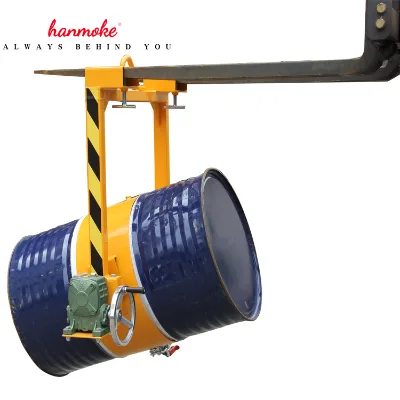


Power Drive Hand Stacker Hydraulic Oil Drum Lifter with CE Certification
$1500.00 - $2200.00
MOQ: 1 unit


Comprehensive Sourcing Guide
Strategic Sourcing Guide for Explosion-Proof Oil Drum Lifters
The procurement of industrial lifting equipment, specifically units designed for handling hazardous materials like oil drums, requires a rigorous approach grounded in verified technical data and supplier reliability. For buyers searching for an explosion-proof oil drum lifter, the market presents a complex array of specifications, material compositions, and operational capabilities. This guide synthesizes available product attributes and industry standards to provide a disciplined framework for evaluating potential suppliers and selecting equipment that meets safety and performance requirements. The focus remains on observable facts and verified parameters rather than speculative claims, ensuring that procurement decisions are based on concrete evidence.
Technical Specifications and Operational Parameters
When evaluating an explosion-proof oil drum lifter, the primary focus must be on the mechanical specifications that define its lifting capacity and physical dimensions. The observed product data indicates a wide range of capacities, with specific models listed with carrying capacities of 350kg, 500kg, and 550kg. These figures are critical for matching the equipment to the weight of standard industrial containers. For instance, a model designated as DL500C or DL500D suggests a capacity around the 500kg mark, while the DL360 and DL350 models align with the 350kg range. Buyers must verify that the rated load of the specific unit matches the maximum weight of the drums they intend to lift, including the weight of the drum itself and its contents.
The physical structure of these lifters often involves welded chain mechanisms, a feature observed in the product attributes. The chain size is specified as 1/2"*11/128", and the inner width ranges from 7.5mm to 42.5mm. These dimensions determine the compatibility with various drum sizes and the overall robustness of the lifting assembly. The pitch of the chain, ranging from 18 to 126, further influences the smoothness of operation and the load distribution across the chain links. Additionally, the lifting height is a vital specification; observed data notes a maximum lifting height of 200mm for certain configurations, while the oil pouring height is listed at 350mm. These measurements dictate the ergonomics of the operation and the clearance required in the facility.
The structural integrity is often supported by steel or stainless steel materials. While some listings specify stainless steel, others indicate standard steel, which may require specific surface treatments. The observed surface treatment of "Oil Blooming" suggests a protective coating intended to prevent corrosion, a common requirement in environments where oil drums are handled. The overall dimensions of the vehicle or unit, such as a whole vehicle size of 1000850250mm, are essential for planning floor space and maneuverability within a warehouse or workshop.
Compliance, Certification, and Safety Standards
Safety is the paramount concern when sourcing equipment for handling explosive or flammable materials. The term "explosion-proof" implies specific engineering standards designed to prevent ignition sources in hazardous atmospheres. While the provided data lists general standards such as "galvanized, steel, alloy" and a specific certification of "CE," buyers must exercise caution. The CE mark indicates conformity with health, safety, and environmental protection standards for products sold within the European Economic Area, but it does not automatically confirm explosion-proof certification (such as ATEX or IECEx) without further verification.
Buyers should explicitly request documentation regarding the specific explosion-proof rating of the motor and electrical components. The observed "Driven Type: AC" indicates the power source, but the classification of the motor for use in hazardous zones is a separate verification step. The product attributes also mention "Insulating" features, which may refer to electrical insulation to prevent short circuits or spark generation. However, the presence of an "Insulating" attribute does not replace the need for a formal explosion-proof certification from a recognized testing laboratory.
Furthermore, the test load data provides a baseline for structural integrity, with observed ranges from 10kn to 870kn. This data point is crucial for validating that the equipment can withstand forces significantly higher than its rated load, typically a factor of safety required by industrial standards. Buyers must ensure that the test load values provided by the supplier correspond to the specific model they are purchasing and that these tests were conducted according to recognized international standards. The condition of the equipment, listed as "new," is a standard expectation, but the verification of its compliance with current safety regulations is a non-negotiable step in the procurement process.
Cost Drivers and Pricing Variables
The pricing for explosion-proof oil drum lifters varies significantly based on the complexity of the design, the materials used, and the level of safety certification. The observed price range in the market spans from 16 USD to 4100 USD. This wide disparity suggests that the lower end of the spectrum may represent basic, non-explosion-proof lifting aids or smaller components, while the higher end likely corresponds to fully certified, heavy-duty units with advanced safety features.
Several factors drive these costs. First, the material composition plays a significant role; stainless steel units generally command a higher price than standard steel due to the cost of the raw material and the manufacturing process. Second, the customization options available, as noted in the product attributes, can increase the unit price. Customization might include specific chain lengths, modified drum clamps, or tailored electrical configurations for hazardous environments. Third, the certification status is a major cost driver. Obtaining and maintaining explosion-proof certifications involves rigorous testing and documentation, which adds to the manufacturing overhead.
Buyers should also consider the packaging and delivery costs. The observed packing methods include pallets, cartons, and specific configurations like "1PC/Carton." The choice of packaging affects the shipping cost and the protection of the equipment during transit. Additionally, the delivery time, observed as ranging from 10 days to 20 days, can influence the total cost of ownership if the project timeline is tight. Lead times may vary based on the supplier's location, with origins noted in China and specifically Jiangsu, China (Mainland). Buyers should factor in potential logistics delays and customs clearance times when calculating the total landed cost.
Typical Applications and Usage Scenarios
The versatility of these lifters is evident in the diverse applications listed, ranging from warehouse operations to shipboard environments. The product attributes explicitly mention usage in "Warehouse Crane, Shipboard Crane, and Workshop Crane" settings. This indicates that the equipment is designed to be adaptable to various industrial contexts. The "Drag Chain" and "Conveyor Chain" usage types suggest that these lifters can be integrated into larger material handling systems or used for moving drums along a specific path.
In a warehouse setting, the lifting height of 200mm and the capacity of up to 550kg allow for efficient stacking and unstacking of oil drums. The "Moving" attribute confirms that these units are designed for mobility, allowing operators to transport drums from storage areas to processing stations. In shipboard applications, the "Insulating" and potential explosion-proof features become critical due to the confined and potentially hazardous nature of marine environments. The ability to handle "Steel Drums" as compatible containers is a key requirement for these applications.
The "Dedicated Special Chain" and "Transmission Chain" attributes highlight the equipment's ability to handle specialized tasks that may involve complex movements or high-torque requirements. The "Heat Resistant" feature is particularly relevant for applications where the drums may contain hot liquids or where the ambient temperature is high. This attribute ensures that the chain and structural components do not degrade under thermal stress, maintaining safety and performance over time.
Supplier Evaluation and Verification
Selecting the right supplier is as important as selecting the right equipment. The observed product origins are primarily in China, with specific mentions of Jiangsu, China (Mainland). While this provides a geographical context, buyers must look beyond the location to evaluate the supplier's reputation and capabilities. The availability of "After-sales Service: YES" is a positive indicator, suggesting that the supplier is committed to supporting the equipment throughout its lifecycle. However, buyers should verify the scope of this service, including warranty terms, availability of spare parts, and response times for technical support.
The "Customization: Available" attribute indicates that the supplier is flexible and willing to tailor products to specific needs. This is a valuable trait for buyers with unique requirements, such as specific drum sizes or specialized mounting configurations. However, customization introduces complexity, and buyers must ensure that the supplier has the engineering expertise to deliver customized solutions without compromising safety standards.
Buyers should also assess the supplier's quality control processes. The observation of "Test Load" data suggests that the supplier performs load testing, but the frequency and methodology of these tests should be verified. A reliable supplier will provide detailed test reports and certifications for each batch of equipment. Additionally, the "Condition: new" status should be confirmed through inspection or third-party verification to ensure that the equipment is not refurbished or used stock.
Quality Control and Long-Term Procurement Considerations
Ensuring the long-term reliability of explosion-proof oil drum lifters requires a proactive approach to quality control. The observed "Surface Treatment: Oil Blooming" is a starting point for corrosion protection, but buyers should inquire about additional protective measures, such as galvanization or specialized coatings, especially for environments with high humidity or chemical exposure. The "Wll" (Working Load Limit) range of 1t-363t provides a broad spectrum of capabilities, but buyers must match the specific Wll to their operational needs to avoid overloading or underutilizing the equipment.
Maintenance is another critical consideration. The "Welded Chain" structure requires regular inspection for wear and tear, and the "Pitch" of the chain affects the frequency of maintenance. Buyers should establish a maintenance schedule that includes lubrication, chain tension checks, and visual inspections for cracks or deformation. The "After-sales Service" provided by the supplier should include training for maintenance personnel and access to technical documentation.
For long-term procurement, buyers should consider the scalability of their operations. If the facility plans to expand, the supplier should be able to provide additional units that are compatible with existing systems. The "Compatible Containers: Steel Drums" attribute suggests a standardization that can simplify future procurement. However, buyers should also evaluate the supplier's ability to adapt to new container types or changing safety regulations.
Finally, the "Delivery time" of 10 to 20 days is a factor in inventory management. Buyers should plan their procurement cycles to account for these lead times, ensuring that they have sufficient stock to meet operational demands without interruption. The "Pallet" and "Cartons" packing options offer flexibility in storage and transport, but buyers should ensure that the packaging is robust enough to protect the equipment during long-term storage.
In conclusion, sourcing an explosion-proof oil drum lifter requires a meticulous evaluation of technical specifications, safety certifications, cost drivers, and supplier capabilities. By focusing on verified data and adhering to strict quality control standards, buyers can secure equipment that ensures safety, efficiency, and reliability in their industrial operations. The observed product attributes provide a solid foundation for this process, but the ultimate success of the procurement depends on the buyer's diligence in verifying every aspect of the equipment and the supplier's commitment to excellence.
FAQs
What is the maximum lifting height for these lifters?
The maximum lifting height is 200mm for specific configurations. Some models also feature an oil pouring height of 350mm to facilitate safe transfer operations.
Which capacities are available for oil drum lifting?
Available capacities include 350kg, 500kg, and 550kg depending on the model. Buyers must verify the rated load matches the total weight of the drum and its contents.
Can these units be customized for specific needs?
Yes, customization is available for various requirements. This may include specific chain lengths or tailored configurations, though buyers should confirm safety standards remain intact.
What is the delivery time for these products?
Delivery times range from 10 days to 20 days depending on the order. Specific lead times vary by model and supplier location, primarily originating from Jiangsu, China.
Which materials are used to construct these lifters?
Materials include stainless steel and standard steel with oil blooming surface treatment. Stainless steel offers enhanced corrosion resistance while standard steel requires protective coatings.
How do the chain specifications affect lifting performance?
Chain sizes are 1/2 inch with pitches ranging from 18 to 126. These dimensions determine compatibility with drum sizes and ensure smooth load distribution during operation.
What certifications are listed for these lifting devices?
Some products carry CE certification indicating conformity with European safety standards. Buyers must verify specific explosion-proof ratings separately as general standards do not guarantee hazardous zone compliance.