Source Extruded Honeycomb Ceramic Foam Filter for Steel, Glass, and Aerospace
Explore 30 listings for the Extruded Honeycomb Ceramic Foam Filter designed for melt purification in steel, glass, and aerospace applications. Buyers can compare specifications including porosity, compressive strength, and thermal shock resistance to select the optimal material for their industrial needs.
Key considerations
Products List


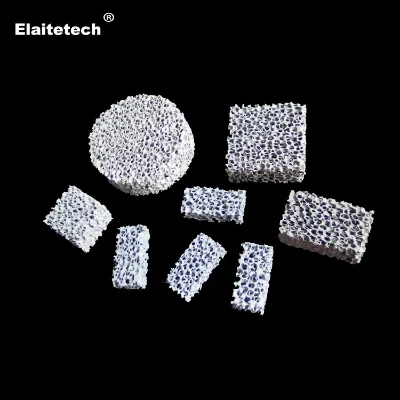


120*85*15 mm Round Hole Alumina Porous Ceramic Filter Extruded Honeycomb Ceramic Filter
$2.50 - $200.00
MOQ: 5000 Pieces


Comprehensive Sourcing Guide
Strategic Sourcing Guide for Extruded Honeycomb Ceramic Foam Filters
Understanding Core Technical Specifications and Material Composition
When sourcing extruded honeycomb ceramic foam filters, buyers must first establish a rigorous understanding of the material composition and physical properties that define product performance. The supply market for these components is characterized by a diverse range of raw materials, each offering distinct thermal and mechanical characteristics. Based on current market observations, the primary materials utilized include Vermiculite, Alumina Cement, Mullite, MgO-Carbon Brick, Castable, and Zirconia Material. The selection of a specific material is not arbitrary; it is dictated by the intended metallurgical application and the specific temperature profile of the casting process.
A critical technical parameter for evaluation is the refractoriness, which indicates the material's ability to withstand high temperatures without softening. Market data indicates that refractory grades typically fall within the range of 1580°C to 1770°C, while high-performance variants can exceed 1770°C, reaching up to 2000°C. The softening temperature of the filter must be capable of meeting the various pouring temperatures required by the user, ensuring structural integrity during the molten metal flow.
Mechanical strength is equally vital, as the filter must withstand the hydrostatic pressure of the molten metal without collapsing. Observed compressive strength values for high-grade units exceed 15 MPa, while flexural strength typically ranges between 1.3 MPa and 1.6 MPa. The bulk density is another observable metric, generally falling between 0.6 and 1.0 g/cm³. This density directly influences the porosity and pore density of the filter. Buyers should verify that the porosity falls within the 80-90% range and that the pore density (PPI) is adjustable between 8 and 60, depending on the filtration fineness required.
The physical geometry of the filter is also a key specification. While the standard shape is often a block or brick, the market offers square, round, or fully custom shapes to fit specific gating systems. The dimensional accuracy is a stated feature of high-quality products, ensuring a stable pass rate during installation. Thermal shock resistance is a non-negotiable attribute; reliable filters must withstand more than five cycles of thermal shock, specifically tested at 800°C followed by water cooling, without structural failure. The expansion coefficient should be minimized, with observed values remaining below 5x10⁻⁶ K⁻¹ to prevent cracking during rapid temperature changes.
Compliance Verification and Certification Standards
In the realm of industrial procurement, verifying compliance and certification status is essential for mitigating supply chain risks. While specific certification claims for individual suppliers vary, the industry generally looks for adherence to international quality management systems. Buyers should be aware that ISO9001:2015 is a recognized standard in this sector, though its presence should be verified on a case-by-case basis rather than assumed for all listings.
When evaluating a supplier's compliance, the focus should be on the "prod_standard" attribute. Current market data suggests that many manufacturers offer "On-Demand Customization" or "Customized" standards, meaning that the product specifications are tailored to the buyer's specific engineering requirements rather than adhering to a rigid, off-the-shelf standard. This flexibility is a significant advantage for complex casting applications but requires a more rigorous validation process from the buyer.
Buyers must also scrutinize the "prod_packing" and "prod_origin" details. The origin of the product is a critical factor in logistics and quality assurance, with China being a primary production hub for these materials. The packaging method, whether it is a carton package, carton box on a pallet, or on-demand customization, impacts the risk of damage during transit. For high-precision ceramic filters, the packaging must ensure that the dimensional accuracy and surface quality are preserved.
It is important to note that while some suppliers may claim specific certifications, the buyer's responsibility is to request and validate these documents. The absence of a specific certification claim in a product listing does not necessarily indicate non-compliance, but it does necessitate a direct inquiry to the supplier. The "prod_standard" being listed as "Customized" implies that the supplier is willing to work with the buyer to define the necessary quality benchmarks, which may include third-party testing protocols specific to the buyer's industry.
Cost Drivers and Economic Factors in Procurement
The pricing structure for extruded honeycomb ceramic foam filters is influenced by a complex interplay of material costs, manufacturing complexity, and order volume. The observed price range in the market spans from $0.01 to $200 per unit, a wide variance that reflects differences in material composition, size, and customization levels. A filter made from basic Vermiculite or Castable materials will naturally cost less than one engineered with high-purity Zirconia or Mullite.
The Minimum Order Quantity (MOQ) is another significant economic factor. Market data indicates an MOQ range from 1 to 5000 units. This flexibility allows buyers to test new suppliers with small orders or to secure bulk pricing for large-scale production runs. However, the unit price often decreases as the order volume increases, making it crucial for buyers to calculate the total cost of ownership rather than focusing solely on the unit price.
Customization is a primary driver of cost. When a buyer requests a specific shape, size, or pore density that deviates from standard offerings, the manufacturing process becomes more complex, leading to higher costs. The "prod_packing" and "prod_standard" being listed as "On-Demand Customization" further suggests that bespoke orders will carry a premium. Buyers should anticipate that filters with high dimensional accuracy and specific mechanical properties, such as those required for aerospace or large cast iron applications, will command higher prices.
Additionally, the "Application" of the filter plays a role in pricing. Filters designed for the Steel Industry, particularly for Stainless Steel or Carbon Steel, often require higher purity and stricter quality controls compared to those used in general Non-Metallic Mineral Processing. The "Usage" of the filter, such as Melt Purifying, also dictates the performance requirements, which in turn affects the cost. Buyers should request detailed cost breakdowns that separate material costs from manufacturing and customization fees to ensure transparency.
Typical Applications and Industry Use Cases
The versatility of extruded honeycomb ceramic foam filters makes them indispensable across a wide spectrum of industrial sectors. The primary application is in the Steel Industry, where these filters are used for melt purifying to remove inclusions and improve the microstructure of the final product. This application is critical for producing high-quality Stainless Steel, Carbon Steel, and Large Cast Iron components. The filters help achieve a stable pass rate and improve surface quality and product performance, which are essential for downstream manufacturing processes.
Beyond the steel industry, these filters are widely used in Scientific Research and Experiments, where precise control over material properties is required. The Non-Metallic Mineral Processing Industry also relies on these filters for various purification processes. The Glass Industry and Energy Industry are other significant sectors where the thermal stability and chemical resistance of the filters are leveraged to ensure process efficiency.
The Ceramic Industry and Aerospace sector represent the high-end applications for these products. In aerospace, the filters must meet stringent requirements for thermal shock resistance and dimensional accuracy, often utilizing advanced materials like Zirconia or Mullite. The "Usage" of the filter in these sectors often involves complex geometries and extreme operating conditions, necessitating a high degree of customization.
The "Features" of the filter, such as the ability to effectively remove inclusions and improve the microstructure, are particularly relevant in these high-value applications. The "Shape" of the filter, whether block, round, or custom, is often tailored to the specific gating system of the casting mold. Buyers should align their procurement strategy with the specific industry requirements, ensuring that the selected filter meets the rigorous standards of their target application.
Supplier Evaluation and Quality Assurance Protocols
Evaluating a supplier for extruded honeycomb ceramic foam filters requires a multi-faceted approach that goes beyond simple price comparison. The first step is to assess the supplier's capability for customization. Since the "prod_standard" and "prod_packing" are often listed as "On-Demand Customization," the supplier must demonstrate a robust engineering team capable of translating buyer requirements into precise product specifications.
Quality assurance protocols are paramount. Buyers should verify the supplier's track record in delivering filters with the observed mechanical properties, such as compressive strength >15 MPa and flexural strength of 1.3-1.6 MPa. The "Features" of the product, including high strength, stable pass rate, and high dimensional accuracy, should be validated through sample testing. The "Thermal Shock Resistance" of >5 times (800°C; Water Cooling) is a critical benchmark that should be confirmed through independent testing or certified test reports.
The "Material" composition is another area of focus. Buyers should request detailed material analysis reports to confirm the presence of Vermiculite, Alumina Cement, Mullite, or other specified materials. The "Refractoriness" of the product must be verified to ensure it meets the required temperature range for the specific application. The "Porosity" and "Pore Density" should also be measured to ensure they fall within the 80-90% and 8-60 PPI ranges, respectively.
Logistics and packaging are also critical components of supplier evaluation. The "prod_packing" method, whether it is a carton package or a carton box on a pallet, must be sufficient to protect the fragile ceramic filters during transit. The "prod_origin" being China suggests that buyers should consider lead times and shipping costs, as well as the supplier's ability to manage international logistics effectively.
Long-Term Procurement Considerations and Strategic Sourcing
Sourcing extruded honeycomb ceramic foam filters is not merely a transactional activity but a strategic decision that impacts long-term production efficiency and product quality. Buyers should consider the "Customization" availability as a key factor in building a resilient supply chain. The ability to customize the filter's shape, size, and material composition allows for continuous improvement and adaptation to changing production needs.
The "Application" of the filter in various industries, from steel to aerospace, highlights the importance of a supplier who can provide consistent quality across different use cases. Buyers should look for suppliers who demonstrate a deep understanding of the metallurgical processes and can offer technical support to optimize filter performance.
Long-term procurement also involves managing the relationship with the supplier to ensure a steady supply of high-quality filters. The "MOQ" range of 1-5000 units offers flexibility, but buyers should aim to establish a consistent order volume to secure better pricing and priority production slots. The "Features" of the filter, such as the ability to improve microstructure and remove inclusions, should be monitored over time to ensure that the supplier maintains the high standards required for the buyer's specific applications.
Finally, buyers should consider the environmental and safety implications of the materials used. The "Type" of the filter, whether it is a Heat-Resistant Material, Calcium Silicate Board, or Ablative Material, should be evaluated for its impact on the overall production process and waste management. By adopting a strategic approach to procurement, buyers can ensure a reliable supply of high-performance filters that support their long-term business goals.
FAQs
What materials are used for extruded honeycomb ceramic foam filters?
These filters are commonly made from Vermiculite, Alumina Cement, Mullite, MgO-Carbon Brick, Castable, and Zirconia Material. The specific material choice depends on the required refractoriness and the intended metallurgical application.
How strong are these ceramic filters under pressure?
High-grade units exhibit a compressive strength greater than 15 MPa and a flexural strength ranging from 1.3 to 1.6 MPa. This mechanical robustness ensures the filter withstands the hydrostatic pressure of molten metal without collapsing.
Can the filter shape be customized for specific gating systems?
Yes, the filter shape is available as Square, Round, or fully Customized according to client requirements. This flexibility allows manufacturers to tailor the product to fit specific gating systems and dimensional accuracy needs.
What is the thermal shock resistance capability of these filters?
Reliable filters can withstand more than five cycles of thermal shock at 800°C followed by water cooling. This resistance prevents structural failure during rapid temperature changes in the casting process.
Which industries utilize extruded honeycomb ceramic foam filters?
These filters are used in the Steel Industry, Scientific Research, Non-Metallic Mineral Processing, Glass, Energy, Ceramic, and Aerospace sectors. They are essential for melt purifying and improving the microstructure of final products.
How is the porosity and pore density defined for these filters?
The porosity typically falls between 80% and 90%, while the pore density ranges from 8 to 60 PPI. These parameters can be adjusted to meet specific filtration fineness requirements for different metal types.
What is the origin and packaging standard for these products?
The products originate from China and are available in Carton Packages or Carton Boxes on Pallets. Packaging can also be customized on-demand to ensure dimensional accuracy and surface quality are preserved during transit.