Source Farmhouse Style Melamine Kitchen Cabinets for Homes, Restaurants, and Showrooms
Explore 30 listings for Farmhouse Style Melamine Kitchen Cabinets with options for modular designs, various door styles, and custom finishes. Buyers can compare specifications, materials, and pricing to find suitable solutions for residential or commercial projects.
Key considerations
Products List


Modern Style Living Room Furniture Melamine Kitchen Cabinet with Storage Rack
$158.00 - $195.00
MOQ: 5 Meters


Modern Modular Designs Melamine Kitchen Cabinet for Home Furniture
$190.00 - $380.00
MOQ: 1 Square Meters

Wholesale L Shape Wood MDF Melamine Kitchen Cabinetry Modern Kitchen Cabinets
$20.00 - $230.00
MOQ: 1 Pieces

Low Prices Melamine Cabinets Quality Wooden Set Pantry Sink Modern Kitchen Cabinet
$20.00 - $230.00
MOQ: 1 Pieces

Modern Home Furniture Melamine Wooden Kitchen Wall Storage Cabinet with Doors
$58.00 - $68.00
MOQ: 30 Pieces
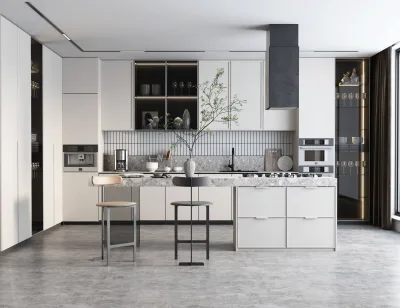

Modern Simple Style Kitchen Cabinet with Melamine Door and Lacquer Door
$100.00 - $200.00
MOQ: 1 Meters

Modular Kitchen Cabinets Modern Kitchen Cabinets Good Price Cupboards Cabinets
$1999.00 - $2999.00
MOQ: 1 Sets

Kitchen Cabinets Design Lacquer Kitchen Cabinet Wood Modern Designs
$110.00 - $188.00
MOQ: 49 Square Meters

Custom Modern Designs Gray Glossy Kitchen Cabinets for Home Furniture
$110.00 - $188.00
MOQ: 49 Square Meters
Comprehensive Sourcing Guide
Sourcing Guide for Farmhouse Style Melamine Kitchen Cabinets
Understanding the Product Category and Core Attributes
Sourcing Farmhouse Style Melamine Kitchen Cabinets requires a precise understanding of how traditional aesthetic elements intersect with modern manufacturing materials. The core keyword "farmhouse style" typically implies a design language characterized by shaker-style doors, raised panels, or flat profiles that evoke a rustic yet clean appearance. In the context of the available product data, this style is supported by specific door options including Shaker, Flat, Marquis, and Raised designs. These options allow buyers to achieve the desired visual depth and texture associated with farmhouse aesthetics while utilizing the durability and cost-efficiency of melamine surfaces.
The material composition is a critical differentiator in this category. While the term "melamine" refers to the surface finish, the structural integrity depends on the core material. The observed product specifications indicate that carcase materials can vary significantly, ranging from Particleboard to Plywood. Particleboard is a common choice for cost-effective solutions, often treated to meet specific emission standards, while Plywood offers superior moisture resistance and structural strength, which is beneficial for kitchen environments. The door material itself may be MDF (Medium Density Fiberboard) or Solid Wood, depending on the specific supplier's configuration. MDF is frequently used for its smooth surface, which is ideal for melamine laminates and painted finishes, whereas solid wood cores like Maple, Oak, or Birch provide a premium feel and enhanced durability.
The surface finish process is another vital technical aspect. The data confirms that surfaces can be treated with Melamine, PVC, Lacquer, or Wood Veneer. For a buyer specifically seeking "melamine," the focus should be on the laminate application over the core substrate. This process involves bonding a decorative paper impregnated with melamine resin to the board, creating a hard-wearing, scratch-resistant, and easy-to-clean surface. The production process generally follows a sequence of base paper preparation, printing, rewinding, quality control, and final packing. This standardized workflow ensures consistency in color and texture, which is essential for maintaining the cohesive look required in a farmhouse kitchen design.
Technical Specifications and Design Flexibility
When evaluating technical specifications for farmhouse style cabinets, buyers must look beyond the visual style to the functional dimensions and assembly methods. The product data highlights several key specifications that influence the final installation and usability. One of the most prominent features is the customization capability. Many suppliers offer "Free Design Provided" services and "Total Solution" capabilities, including graphic design and 3D model design. This is particularly relevant for farmhouse kitchens, which often require custom layouts to accommodate unique architectural features like islands, walkways, or specific appliance placements.
The configuration of the cabinets also varies. The data indicates both "Fixed" and "Unfixed" options, as well as "Modular Kitchen Cabinets." Modular systems are advantageous for their ease of installation and the ability to reconfigure the kitchen layout in the future. In contrast, fixed units may offer a more seamless, built-in appearance. The style of the cabinets is explicitly listed as "L Style" in some configurations, suggesting corner solutions that maximize space utilization in typical kitchen footprints. Additionally, the construction method can be either "Frame" or "Frameless," a decision that impacts the internal storage capacity and the visual profile of the cabinet doors.
Hardware and accessories play a significant role in the functionality of these units. The observed specifications list high-quality hardware options such as Blum or Dtc hinges and gliders, which are known for their smooth operation and longevity. However, buyers should also be aware that "Chinese Brand/Customized" hardware is available, which may offer a lower cost point but requires careful vetting for durability. The drawer guide rail kind is specified as "Hidden Drawer," a feature that contributes to the clean, streamlined look of farmhouse designs by concealing the mechanical components. Accessories such as drawer baskets, faucets, handles, and knobs are often included or available as add-ons, allowing for a complete kitchen solution.
The physical dimensions and packing standards are equally important for logistics. The product models range from specific identifiers like HX8848, KDC-02, and KDC-03 to generic descriptions like "Kitchen Cabinet" or "wooden." Sizes can vary, with some specifications noting dimensions such as 300*500/600mm, though these likely represent individual component sizes rather than the entire unit. For shipping, the packing methods include protection foam, heat-contracted plastic film, carton boxes, and shrink film on pallets. The "Knock Down" (KD) packaging option is prevalent, designed to minimize shipping volume and reduce the risk of damage during transit, while "Assembly to Carton" options are also available for buyers who prefer ready-to-install units.
Compliance, Certification, and Environmental Standards
Navigating the compliance landscape is essential for sourcing kitchen cabinets that meet international safety and environmental requirements. The product data explicitly lists certifications such as CE and ISOCCC. The CE marking indicates conformity with health, safety, and environmental protection standards for products sold within the European Economic Area. This is a critical verification point for buyers exporting to or operating within Europe. The ISOCCC designation, while less common in general consumer goods, suggests adherence to specific organizational or carbon-related standards, though buyers should request detailed documentation to understand the exact scope of this certification.
Environmental standards are a primary concern in the kitchen cabinet industry due to the use of composite wood products. The data references the E1 standard, which is a widely recognized European emission standard for formaldehyde release from wood-based panels. Cabinets meeting the E1 standard emit low levels of formaldehyde, making them safer for indoor air quality. However, the data also mentions "Standard: Customized," indicating that some suppliers may offer alternative emission ratings or proprietary standards. Buyers must verify the specific emission levels of the particleboard or MDF used in the carcase, as these materials are the primary source of volatile organic compounds (VOCs).
The "Eco-Friendly" characteristic is listed as a product feature, suggesting that certain suppliers utilize sustainable sourcing practices or low-emission adhesives. To validate this claim, buyers should request third-party test reports or specific environmental certifications beyond the general E1 rating. Additionally, the "Fire Resistance" characteristic is noted, which is a crucial safety feature for kitchen environments. Buyers should inquire about the specific fire rating of the melamine surface and the core material, as well as any relevant fire safety standards the product may comply with.
It is important to note that while ISO9001 and ISO14001 are mentioned in the background knowledge as potential standards, they are not explicitly confirmed in the high-confidence product facts. Therefore, buyers should not assume these certifications are present without direct verification from the supplier. The procurement process must include a request for valid, up-to-date certification documents for any claimed standard. The origin of the products, primarily from Guangdong, China, and Shandong Province, implies that the manufacturing facilities are subject to Chinese national standards, which may differ from international norms. Buyers should ensure that the supplier's quality management system aligns with their specific market requirements.
Cost Drivers and Pricing Structure Analysis
The pricing of Farmhouse Style Melamine Kitchen Cabinets is influenced by a complex interplay of material quality, customization levels, and logistical factors. The observed price range in the market spans from 20 to 6000 USD, a wide spectrum that reflects the diversity of product configurations. The lower end of this range likely corresponds to basic modular units with standard particleboard cores and minimal customization, while the higher end encompasses custom-designed solutions with premium materials like solid wood cores, high-end hardware, and complex assembly requirements.
Material selection is the most significant cost driver. Cabinets with Plywood carcases generally command a higher price than those with Particleboard due to the superior strength and moisture resistance of plywood. Similarly, the choice of door material impacts the cost; MDF doors are typically more affordable than solid wood doors made from Maple, Oak, or Birch. The surface finish also plays a role, with Melamine being a cost-effective option compared to Lacquer or Wood Veneer, which require more labor-intensive finishing processes.
Customization is another major factor influencing the final price. The availability of "Free Design Provided" and "Total Solution" capabilities often comes with a premium, as it involves engineering time, 3D modeling, and specialized production runs. The "Customized" standard noted in the data suggests that bespoke dimensions and finishes will increase the unit cost. Furthermore, the hardware selection can significantly alter the price; specifying Blum or Dtc hinges and gliders will be more expensive than using generic Chinese brand hardware.
Logistics and packaging also contribute to the overall cost structure. The "Knock Down" packaging method is generally more cost-effective for shipping than pre-assembled units, as it reduces volume and weight. However, the requirement for "Protection Foam+Heat Contracted Plastic Film" or "Wrapped with Shrink Film and Then on Pallet" adds to the material and labor costs. The shipping port, typically Lianyungang or Qingdao in China, and the destination location will determine freight charges, which can vary widely based on volume and weight.
The Minimum Order Quantity (MOQ) is another critical cost consideration. The observed MOQ range is 1 to 300 units. For buyers with smaller project needs, an MOQ of 1 allows for the purchase of single units or small batches, though the per-unit cost may be higher. Conversely, larger orders with an MOQ of 300 can leverage economies of scale to reduce the per-unit price. Buyers must balance their inventory needs and budget constraints against the flexibility offered by lower MOQs.
Supplier Evaluation and Quality Control Protocols
Selecting the right supplier for Farmhouse Style Melamine Kitchen Cabinets requires a rigorous evaluation process that goes beyond price comparison. The supplier's location, primarily in Guangdong and Shandong Province, China, offers access to a robust manufacturing ecosystem, but it also necessitates careful due diligence regarding their production capabilities and quality control systems. Buyers should verify the supplier's "Project Solution Capability," which includes their ability to provide graphic design, 3D model design, and total solutions. This capability indicates a higher level of technical competence and customer service support.
Quality control should be a central focus during the supplier evaluation. The data mentions a "Producing Process" that includes "Quality Control" as a distinct step. Buyers should request details on the specific quality control measures implemented at each stage, from raw material inspection to final packing. The "Eco-Friendly" and "Fire Resistance" characteristics should be backed by verifiable test results. It is essential to ask for third-party laboratory reports that confirm the formaldehyde emission levels (E1 or higher) and fire resistance ratings.
The "Condition" of the products is listed as "New," which is a baseline expectation. However, buyers should also assess the supplier's track record for delivering products in this condition. The "After-Sale Service" attribute is a crucial differentiator. A supplier that offers comprehensive after-sales support can help resolve issues related to installation, missing parts, or product defects. Buyers should inquire about the specific terms of this service, including response times, warranty periods, and the availability of replacement parts.
The "Hardware" and "Accessories" provided by the supplier are also indicators of quality. While some suppliers offer "Chinese Brand/Customized" hardware, others provide premium brands like Blum or Dtc. Buyers should evaluate the supplier's supply chain for these components to ensure they are sourcing genuine, high-quality parts. The "Drawer Guide Rail Kind" being "Hidden Drawer" suggests a focus on aesthetics and functionality, but the smoothness and durability of these rails must be tested.
Finally, the "Packing" standards are a proxy for the supplier's attention to detail. The use of "Carton Box Packing," "Protection Foam," and "Heat Contracted Plastic Film" demonstrates a commitment to protecting the product during transit. Buyers should inspect the packing process to ensure that fragile components like glass or delicate finishes are adequately protected. The "Shipment Port" being Lianyungang or Qingdao is standard, but buyers should verify the supplier's experience with international logistics to ensure timely and damage-free delivery.
Long-Term Procurement Considerations and Strategic Sourcing
Sourcing Farmhouse Style Melamine Kitchen Cabinets is not merely a transactional activity but a strategic decision that impacts long-term operational efficiency and customer satisfaction. The "Modular Kitchen Cabinets" nature of the products offers significant advantages in terms of scalability and flexibility. As market demands change or as buyers expand their product lines, modular systems can be easily reconfigured or expanded without the need for complete replacement. This adaptability is particularly valuable in the fast-paced kitchen renovation market.
The "Customized" nature of the products allows buyers to differentiate their offerings in a competitive market. By leveraging the "Free Design Provided" and "Total Solution" capabilities, buyers can offer unique kitchen layouts that cater to specific client needs. This level of customization can command higher margins and build stronger customer loyalty. However, it also requires a robust supply chain management system to handle the complexity of custom orders and ensure timely delivery.
Sustainability is becoming an increasingly important factor in long-term procurement strategies. The "Eco-Friendly" characteristic of the cabinets aligns with growing consumer demand for sustainable building materials. Buyers should prioritize suppliers who can demonstrate a commitment to environmental responsibility through certified materials and sustainable manufacturing practices. This not only mitigates regulatory risks but also enhances the brand image of the buyer.
The "After-Sale Service" provided by the supplier is a critical component of long-term success. A reliable supplier who offers comprehensive support can help buyers manage warranty claims and resolve installation issues efficiently. This support reduces the burden on the buyer's internal resources and ensures a positive experience for the end-user. Buyers should establish clear communication channels and service level agreements with their suppliers to ensure consistent support over the life of the product.
Finally, the "Production Process" and "Quality Control" measures implemented by the supplier will determine the longevity and performance of the cabinets. Buyers should invest time in understanding the supplier's manufacturing capabilities and quality assurance protocols. By selecting a supplier with a proven track record of delivering high-quality, durable products, buyers can minimize the risk of product failures and maintain a strong reputation in the market. The strategic selection of a supplier who aligns with the buyer's long-term goals is essential for sustainable growth and success in the kitchen cabinet industry.
FAQs
What certifications do Farmhouse Style Melamine Kitchen Cabinets have?
These cabinets typically carry CE and ISOCCC certifications to ensure safety and compliance. Buyers should verify specific documentation as standards may vary by supplier origin in Guangdong or Shandong Province.
Which materials are used for the carcase and doors in these cabinets?
Carcase materials often include Particleboard or Plywood, while doors are commonly made from MDF or Solid Wood. Surface finishes may feature Melamine, PVC, Lacquer, or Wood Veneer depending on the specific model selected.
Can I get custom designs and total solutions for my kitchen?
Yes, suppliers offer Free Design Provided services and Total Solution capabilities including 3D model design. This allows for customized layouts and specific dimensions to fit unique kitchen spaces effectively.
What hardware options are available for the cabinet doors and drawers?
Hardware options range from premium Blum or Dtc hinges to customized Chinese brands. Drawer guide rails are often hidden, and accessories like baskets and faucets are available as add-ons.
How are these cabinets packaged for shipping and delivery?
Cabinets are usually packed in carton boxes with protection foam or shrink film on pallets. Knock Down packaging is common to reduce volume, though assembly to carton options exist for convenience.
What is the minimum order quantity for purchasing these kitchen cabinets?
The minimum order quantity ranges from 1 to 300 units depending on the supplier and customization level. Lower MOQs allow for smaller batches, while larger orders may benefit from economies of scale.
Are these cabinets available in fixed or unfixed configurations?
Both fixed and unfixed configurations are available to suit different installation needs. Modular kitchen cabinets offer flexibility, while fixed units provide a seamless built-in appearance for permanent setups.