Source Fascinator for Weddings, Parties, and Races
Compare 30 Fascinator options from verified Chinese suppliers. Buyers can evaluate materials like sinamay and polyester, customization services, and pricing for events such as weddings, parties, and races.
Key considerations
Products List
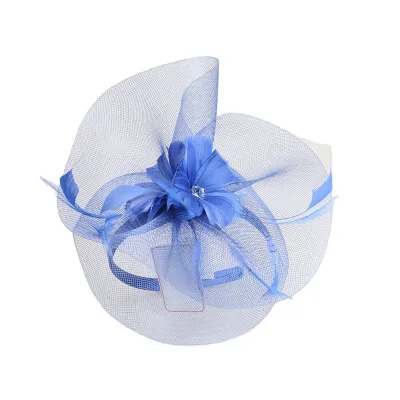
New Style Women Ladies Fashion Fascinator Feather Flower Sinamay Crin Fascinator
$10.22 - $15.33
MOQ: 10 pieces

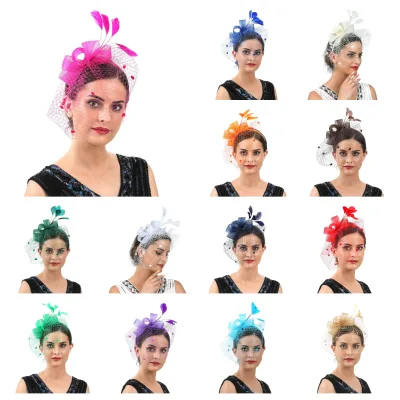


$39.00 - $41.00
MOQ: 530 Square Meters







Comprehensive Sourcing Guide
Strategic Sourcing Guide for Fascinator Headwear Procurement
Understanding Product Specifications and Material Composition
The procurement of fascinators requires a precise understanding of their structural definition, as they differ significantly from traditional hats. Based on observed market data, these items are characterized by the absence of a brim and a crown, functioning instead as decorative headpieces designed to be attached via a headband, clip, or comb. The primary material composition observed in high-volume listings includes sinamay, a stiffened straw-like fabric, alongside general fabric blends, 100% polyester, feathers, and veils. The choice of material directly influences the aesthetic finish and the durability of the piece. For instance, sinamay provides a structured, architectural look often associated with formal events, while fabric and polyester blends offer a softer drape suitable for custom designs.
Buyers must verify the specific material composition for each order, as product attributes vary between listings. Some suppliers specify "High Quality" sinamay, while others list generic fabric or mixed materials including feathers and veils. The production process often involves specific techniques such as silk screen printing or sublimation transfer printing, which affect the colorfastness and detail of the design. Additionally, the pattern technology is frequently noted as "Plain Dyed," indicating the base material coloration method before assembly. When sourcing, it is critical to request physical samples to confirm that the material weight and texture match the intended application, as the "One Size Fit All" or custom sizing claims do not guarantee a uniform fit across different head circumferences. The standard head circumference ranges observed in the market typically span from 56-58 cm to 58-60 cm, though custom sizing is available upon request.
Compliance, Certification, and Safety Standards
In the B2B sector, compliance is a non-negotiable aspect of sourcing, particularly for products worn close to the skin. The market data indicates that reputable suppliers often adhere to specific international standards to ensure product safety and ethical manufacturing. Key certifications observed include the Oeko-Tex Standard 100, which verifies that the textile materials are free from harmful substances, and BSCI (Business Social Compliance Initiative), which addresses social responsibility in the supply chain. These certifications are critical for buyers targeting markets in Europe and North America where regulatory scrutiny on textile safety is high.
Furthermore, safety mechanisms regarding metal components are essential. A specific attribute noted in high-confidence facts is "Needle detection: Yes." This implies that the manufacturing process includes a metal detection stage to ensure no sharp metal objects, such as broken needles or pins, remain embedded in the product. This is particularly relevant for fascinators that may incorporate wire frames or metal clips for attachment. Buyers should explicitly verify that their supplier has a documented metal detection protocol and can provide test reports or certificates confirming the absence of metal contaminants. Relying on the supplier's claim of "Eco-Friendly" features should be backed by tangible evidence, such as the aforementioned Oeko-Tex certification, rather than generic marketing language. The absence of a brim and crown simplifies the structural integrity checks but does not eliminate the need for rigorous safety testing regarding the attachment mechanisms and material toxicity.
Cost Drivers and Pricing Dynamics
The pricing structure for fascinators is influenced by several variable factors, including material complexity, customization levels, and order volume. The observed price range in the market spans from $0 to $26,400, a wide variance that reflects the difference between single-unit samples and bulk industrial orders. However, the Minimum Order Quantity (MOQ) is a significant cost driver. Data indicates that MOQs can range from as low as 1 piece to as high as 10,000 pieces, with common thresholds observed at 10 pieces or 30 pieces. Suppliers offering lower MOQs often charge a premium per unit to cover setup costs for molds and samples, whereas higher volume orders benefit from economies of scale.
Customization is a primary cost variable. The market supports "Customer Logo Accepted," "Customization: Available," and "Design: Accept Customer Requirement." Orders requiring custom molds, unique colorways, or specific branding will incur additional tooling and sampling fees. The "mould making and sample making service" is explicitly mentioned as a capability, suggesting that buyers should budget for these upfront costs if they require proprietary designs. Additionally, packaging requirements impact the final landed cost. While standard packing is often a simple carton, options for "Shipping Package or Custom Packing" can increase the unit price. Buyers should analyze the total cost of ownership, including the single gross weight of 0.350 kg per unit and the single package size of approximately 21x23x23 cm or 25x25x25 cm, as these dimensions affect shipping logistics and freight charges.
Typical Applications and Seasonal Usage
Fascinators are versatile accessories designed for specific high-visibility occasions. The primary applications observed include parties, weddings, church services, races, and tours. The "Applicable Season" is noted as "Four Seasons," indicating that these items are not restricted to summer events but can be utilized year-round depending on the design and material weight. For instance, lighter fabrics and feathers may be preferred for spring and summer events, while heavier sinamay or fabric blends might be suitable for autumn and winter gatherings.
The "Applicable scene" is further defined as "Outdoor, Party," highlighting the dual nature of these products for both casual and formal outdoor events. Specific usage cases include Halloween, Carnival, and Cosplay, where the "Fashionable" and "Luxury" attributes are leveraged to create striking visual impacts. The "Gender" is consistently listed as "Female," and the "Age Group" is "Adults," confirming the target demographic. When planning procurement, buyers should align their inventory with the seasonal demand cycles of the fashion and event industry. The "Selling Units" are typically listed as "Single item," suggesting that these are often sold as individual pieces rather than sets, which influences packaging and inventory management strategies.
Supplier Evaluation and Geographic Considerations
Geographic origin plays a significant role in the sourcing strategy for fascinators. The market data identifies two primary production hubs: Guangdong, China, and Zhejiang, China. Both regions are known for their textile manufacturing capabilities, but they may offer different specializations. Guangdong is often associated with a broader range of export-oriented manufacturing, while Zhejiang is a major hub for textile and garment production. Buyers should evaluate suppliers based on their specific location, as this can impact lead times, shipping costs, and communication efficiency.
Supplier evaluation must extend beyond location to include their technical capabilities. The ability to provide "OEM/ODM: Customization Service Provided" is a key differentiator. Buyers should assess whether the supplier can handle the full lifecycle of product development, from "mould making" to final "sample making." The "Brand Name" is another factor; some listings show established names like "LINGLONG" or "ERXI," while others may be generic. However, buyers should not rely solely on brand recognition but rather on the supplier's track record for quality control and adherence to specifications. The "Quality" attribute is frequently listed as "High Qualiy" (noting the spelling variation in source data), which underscores the need for buyers to verify quality through independent inspection rather than accepting marketing claims at face value.
Quality Control and Long-Term Procurement Strategy
Effective quality control for fascinators requires a multi-stage approach. Given the delicate nature of materials like feathers and sinamay, visual inspection is paramount. Buyers should establish clear acceptance criteria for color consistency, particularly when "Watermelon Red" or "Customized" colors are specified. The "Printing Methods" of sublimation transfer print and silk screen printing require verification to ensure that the designs do not fade or peel after handling. Additionally, the structural integrity of the attachment mechanism must be tested to ensure it can support the weight of the decorative elements without slipping or breaking.
For long-term procurement, establishing a relationship with a supplier that offers "Customization: Available" and accepts "Customer Logo" is essential for brand differentiation. Buyers should negotiate clear terms regarding the "Single package size" and "Packing" to ensure that the products arrive in pristine condition. The "Needle detection" protocol should be a mandatory part of the quality assurance plan, with random sampling required for every production batch. Finally, buyers should consider the "Standard" of "Adult Size" when planning inventory, ensuring that the sizing accommodates the majority of the target demographic while allowing for custom options for specific client needs. By focusing on these technical and operational details, buyers can mitigate risks and ensure a steady supply of high-quality fascinators for their respective markets.
FAQs
What materials are commonly used for fascinators?
Common materials include sinamay, fabric, 100% polyester, feathers, and veils. Buyers should verify specific composition as listings vary between structured sinamay and softer fabric blends.
Which certifications ensure textile safety for fascinators?
Reputable suppliers often hold Oeko-Tex Standard 100 and BSCI certifications. These verify the absence of harmful substances and confirm ethical manufacturing practices for skin-contact products.
Can suppliers provide custom designs and logos?
Yes, customization is available with customer logo acceptance and design requirements. Buyers should budget for additional tooling fees if they require custom molds or unique branding.
What is the typical minimum order quantity for orders?
MOQs range from 1 to 10,000 pieces, with common thresholds at 10 or 30 pieces. Lower MOQs often incur higher per-unit costs to cover setup expenses for samples.
How do suppliers ensure safety regarding metal components?
Suppliers implement needle detection protocols to ensure no sharp metal objects remain in the product. Buyers must verify this metal detection process is documented for every production batch.
Where are the primary manufacturing hubs for these items?
Primary production hubs are located in Guangdong and Zhejiang, China. Both regions offer strong textile capabilities, though lead times and shipping costs may vary by specific location.