Source FDA ISOCE Dental Handpiece for Oral Surgery, Implant, and Clinic
Compare 30 verified listings for the FDA ISOCE Dental Handpiece featuring high-speed and low-speed options with CE and ISO certifications. Buyers can evaluate specifications like rotation speed, bearing type, and warranty terms for adult and child applications.
Key considerations
Products List


Comprehensive Sourcing Guide
Strategic Sourcing Guide for FDA and ISO-Certified Dental Handpieces
The global market for dental handpieces is characterized by a high degree of technical specialization and stringent regulatory oversight. For procurement professionals seeking "FDA ISO CE dental handpiece" solutions, the primary challenge lies in navigating a fragmented supply chain where certification claims must be rigorously verified against actual product specifications. The core keyword implies a demand for instruments that meet multiple international standards, specifically those recognized by the U.S. Food and Drug Administration (FDA) and the International Organization for Standardization (ISO), alongside the European Conformity (CE) marking. This guide provides a structured approach to sourcing these critical dental instruments, focusing on technical verification, compliance validation, and long-term operational reliability without relying on unverified marketing assertions.
Technical Specifications and Performance Parameters
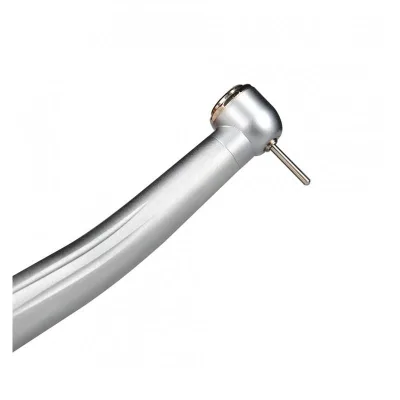
When evaluating dental handpieces, buyers must distinguish between high-speed and low-speed variants, as the application dictates the necessary engineering tolerances. The market data indicates a clear segmentation in rotational speeds. High-speed handpieces, often described as turbine-driven, typically operate within a range of 350,000 to 420,000 RPM. These units are designed for precision cutting and are frequently categorized as "Dental Standard Handpiece" or "High-Speed Handpiece." In contrast, low-speed applications, such as those involving implant drivers or polishing, may operate at significantly lower velocities, with observed maximum speeds around 2,000 RPM.
The physical construction of the handpiece is equally critical. The material composition is predominantly metal, ensuring durability under the high-torque conditions of oral surgery. A specific observation in the supply chain notes a "Ceramic Bearing" configuration, which is a preferred attribute for reducing friction and heat generation during high-speed rotation. The chuck type is another vital specification; "Push Button" mechanisms are common, allowing for rapid bur changes, which is essential for clinical efficiency. Furthermore, the head size varies by model, with observed dimensions ranging from 9.6mm in width to 13.5mm in height for certain low-speed units, while others measure 12.2mm by 13.4mm.
Water spray systems are a defining feature of modern handpieces. Buyers should verify whether the unit utilizes a "Single Water" spray or a more complex "External and Inner" spray configuration. The latter is often preferred for cooling and debris removal during extended procedures. Additionally, the detachability of components, such as the head, is a significant factor for maintenance. Some models are marked as "Detachable Type: Yes," facilitating easier sterilization and part replacement. The power source is almost exclusively turbine-based for high-speed units, while the nature of the equipment is classified as "Specialized Instrument Equipment" or "Specialized Equipment," indicating its role as a critical tool rather than a general supply.
Compliance and Certification Verification
The core keyword "FDA ISO CE" suggests a requirement for multi-jurisdictional compliance. In the provided data, specific certification attributes are listed, including "CE," "ISO," and "CE FDA." It is imperative for buyers to understand that these are distinct regulatory milestones. The CE marking indicates conformity with health, safety, and environmental protection standards for products sold within the European Economic Area. The ISO certification, often referencing ISO 13485 for medical devices, signifies adherence to quality management systems. The FDA reference implies that the device may be cleared for the U.S. market, though the specific regulatory pathway (510(k) or De Novo) must be confirmed.
A critical observation in the dataset is the presence of a "Medical Devices Reg./Record No." such as Zxzz20142550208. This number serves as a unique identifier for regulatory tracking. Buyers must treat this number as a verification key rather than a guarantee of current validity. The "Instrument Classification" is listed as "Class II," which in many regulatory frameworks denotes a moderate risk device requiring special controls. This classification aligns with the typical risk profile of dental handpieces.
When sourcing, procurement teams must not assume that a product labeled with "CE FDA" automatically possesses valid, current clearance in all jurisdictions. The data shows a mix of certifications, with some entries listing "CE, ISO" and others listing "CE FDA." The "prod_standard" field also references "CE," reinforcing the European compliance aspect. Buyers should request the actual certificate documents and cross-reference the registration numbers with the official databases of the relevant health authorities. The "Nature" of the product is consistently described as "Specialized Instrument Equipment," which underscores the need for strict adherence to the specific standards applicable to Class II medical devices.
Cost Drivers and Pricing Structures
The pricing landscape for dental handpieces is influenced by a complex interplay of factors, including certification status, material quality, and order volume. The observed listed price range in the market data spans from $2 to $160 USD. This wide variance suggests that the market includes both basic, potentially lower-specification units and premium, fully certified models with advanced features like ceramic bearings and waterproof capabilities.
The Minimum Order Quantity (MOQ) is a significant cost driver. The data indicates an MOQ range of 1 to 50 units. Some listings explicitly state an MOQ of "50PCS," which can impact the total cost of ownership for smaller clinics or startups. Conversely, the ability to order single units allows for testing and evaluation before committing to larger volumes. The "Packing" specifications, such as "1set/Box" or "One Piece Each Package," also influence logistics costs. A "Paper Box" packing method is noted, which is standard for protecting the delicate internal mechanisms of the handpiece during transit.
Additional cost factors include the "Warranty" terms, with a standard offering of "1 Year" observed in the dataset. Products with extended warranties or those that include "Customization" options may command a higher price point. The "Condition" is consistently listed as "New," ensuring that buyers are not purchasing refurbished units unless explicitly stated. The "Shelf Life" of 2 years for certain components or the entire unit adds a temporal dimension to cost planning, as inventory must be managed to avoid expiration.
Typical Applications and Operational Context
Dental handpieces are not one-size-fits-all instruments; their application is dictated by the specific department and procedure. The data highlights "Oral Surgery" as a primary applicable department. This context requires instruments with high torque and precision, such as the "2.35mm Implant Driver" mentioned in the specifications. The "Bur Type" is a critical compatibility factor, as the handpiece must accept the specific burs required for the procedure.
The "Usage" is described as "Dentist Working Partner," emphasizing the ergonomic and functional relationship between the tool and the operator. The "Application" field lists both "Child" and "Adult," indicating that the product line is versatile enough to serve a broad patient demographic. However, the "Rotating Speed" and "Torque" (observed at 80 N) must be matched to the specific clinical need. For instance, high-speed units are ideal for cavity preparation, while low-speed units with detachable heads are better suited for implantology or endodontics.
The "Feature" of being "Waterproof" is particularly relevant for applications requiring frequent sterilization. In a clinical setting, the ability to withstand repeated autoclaving cycles without degradation is essential. The "Net Weight" of 107g for certain models suggests a balance between durability and operator fatigue reduction. Heavy handpieces can lead to strain during long procedures, so weight is a key consideration for the "Dentist Working Partner" experience.
Supplier Evaluation and Quality Assurance
Evaluating suppliers for FDA and ISO-certified handpieces requires a rigorous due diligence process. The "prod_origin" is listed as "Hebei, China (Mainland)," which is a significant manufacturing hub for medical devices. While this location offers competitive pricing, it necessitates a heightened focus on quality control. Buyers should verify the supplier's ability to maintain consistent quality across batches, especially given the "High-Speed" nature of the products which demands tight tolerances.
The "Customization" attribute being "Available" suggests that suppliers may offer tailored solutions, but this introduces complexity in quality assurance. Customized units must still meet the core "CE" and "ISO" standards. The "Condition" being "New" is a baseline requirement, but buyers should also inspect the "prod_packing" to ensure it meets the "1set/Box" standard to prevent damage during shipping.
Quality control should extend to the "Bearing" type. The presence of "Ceramic Bearing" in the data is a positive indicator of higher quality, as ceramic bearings generally offer better longevity and heat resistance than steel alternatives. Buyers should request test results or performance data regarding the "Max Speed" and "Torque" to ensure the product meets the claimed specifications. The "Instrument Classification" of Class II requires that the supplier maintains a robust Quality Management System (QMS) compliant with ISO 13485.
Long-Term Procurement and Maintenance Considerations
Sourcing dental handpieces is not merely a transactional event but a long-term partnership. The "Warranty" of 1 year is a standard starting point, but buyers should negotiate terms that cover the lifespan of the "Ceramic Bearing" and other critical components. The "Shelf Life" of 2 years implies that inventory management is crucial to avoid obsolescence.
Maintenance is a key factor in the total cost of ownership. The "Detachable Type" feature allows for easier cleaning and part replacement, which can extend the life of the handpiece. The "Spray" system, whether "Single Water" or "External and Inner," requires regular maintenance to prevent clogging and ensure effective cooling. Buyers should inquire about the availability of spare parts, such as burs and seals, to minimize downtime.
The "Nature" of the equipment as "Specialized Instrument Equipment" means that it is not a commodity item. Procurement strategies should focus on building relationships with suppliers who can provide technical support and training. The "Usage Times" being "Non-Disposable" highlights the need for durable, reusable products. This aligns with the "Material" being "Metal," which is designed for repeated sterilization cycles.
In conclusion, sourcing FDA, ISO, and CE-certified dental handpieces requires a meticulous approach that balances technical specifications, regulatory compliance, and cost efficiency. By focusing on verified certifications, understanding the specific application requirements, and evaluating the long-term maintenance needs, procurement professionals can secure high-quality instruments that meet the rigorous demands of modern dental practice. The data provided offers a solid foundation for these decisions, but continuous verification of supplier claims and product performance remains essential for success in this specialized market.
FAQs
What certifications do these dental handpieces hold?
The products hold CE, ISO, and CE FDA certifications. Some listings specifically mention Medical Devices Reg./Record No. Zxzz20142550208 and classify the instrument as Class II. Buyers must verify these documents against official databases for current validity.
Which rotation speeds are available for high-speed models?
High-speed handpieces operate between 350,000 and 420,000 RPM. These turbine-driven units are designed for precision cutting in oral surgery. Low-speed variants may operate at maximum speeds around 2,000 RPM for implant drivers.
Can I customize the handpiece specifications for my clinic?
Customization is available for these specialized instrument equipment units. Buyers can request tailored solutions while ensuring the product maintains CE and ISO standards. The nature of the equipment allows for specific adjustments to meet clinical needs.
What is the minimum order quantity for these dental tools?
The minimum order quantity ranges from 1 to 50 pieces. Some listings explicitly state an MOQ of 50PCS, which impacts total cost for smaller clinics. Single unit orders are possible for testing before committing to larger volumes.
How long is the warranty period for the handpieces?
The standard warranty period is 1 year for these new condition units. This coverage applies to the metal construction and internal components like ceramic bearings. Buyers should negotiate terms that cover critical parts to extend the lifespan.
Where are these dental handpieces manufactured?
The products originate from Hebei, China (Mainland). This location is a significant manufacturing hub for medical devices offering competitive pricing. Buyers should verify the supplier's quality control capabilities given the high-speed nature of the products.
What material is used for the handpiece construction?
The handpieces are constructed primarily from metal to ensure durability. Some models feature ceramic bearings to reduce friction and heat during high-speed rotation. The material is designed for repeated sterilization cycles in clinical settings.