Source Flow Battery Inverter for Solar, Backup, and Home Use
Compare 30 Flow Battery Inverter options from verified suppliers. Buyers can evaluate specifications like capacity, efficiency, and cooling methods for solar energy storage, backup power, and residential applications.
Key considerations
Products List


Programmable Flow Battery Energy Storage Inverter Intelligent Monitoring and Control
$100.00 - $99999.00
MOQ: 1 Pieces


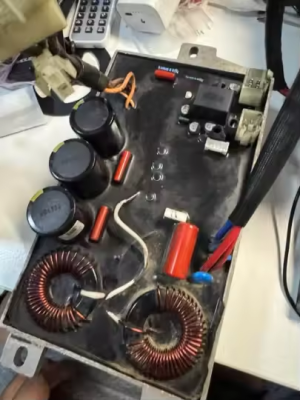


High Performance Energy Storage Inverter with Lithium Battery Pack
$22200.00 - $51000.00
MOQ: 1 Pieces


Comprehensive Sourcing Guide
Strategic Sourcing Guide for Flow Battery Inverter Systems
The procurement of energy storage systems, particularly those involving flow battery technologies and their associated inverters, requires a rigorous approach to technical validation and supplier evaluation. While the market often groups various inverter types under broad categories, buyers must distinguish between specific architectures to ensure compatibility with their energy storage needs. The following guide outlines the critical factors for sourcing these systems, drawing on observed market data and technical specifications to provide a structured framework for decision-making.
Technical Architecture and Core Specifications
When evaluating flow battery inverters, the primary focus must be on the electrical topology and conversion efficiency. The market data indicates that a prevalent configuration for these systems is the Full-Bridge Type inverter. This topology is selected for its ability to handle high power levels with reduced harmonic distortion, which is essential for maintaining grid stability in large-scale storage applications. Buyers should verify that the inverter supports a Sine Wave Output, as this is the standard requirement for most grid-tied and off-grid residential or commercial loads. A square wave or modified sine wave output can damage sensitive electronics and reduce the efficiency of the connected battery bank.
Efficiency is a critical performance metric. Observed specifications for high-performance units in this category indicate an Inverter Efficiency of 96%. This figure represents the ratio of AC output power to DC input power. In a 500kWh system, even a 1% deviation in efficiency translates to significant energy loss over the system's lifecycle. Furthermore, the operating frequency must align with local grid standards, typically 50Hz or 60Hz. The system should support dual-frequency operation to ensure flexibility in international deployments.
The physical integration of the inverter is equally important. Many units are designed with a Cabinet Appearance, allowing for floor-mounted installation in residential or commercial settings. The cooling method is a decisive factor for longevity; while small units may utilize Natural Cooling, larger commercial systems often require Forced Air Cooling to manage thermal loads during high-power discharge cycles. The protection level is another key specification, with IP20 being a common rating for indoor cabinet installations, ensuring protection against solid objects larger than 12.5mm but not against water ingress.
Compliance, Certification, and Safety Standards
Navigating the regulatory landscape is a non-negotiable aspect of sourcing industrial energy storage equipment. The Harmonized System (HS) code 8507600090 is the standard classification for lithium-ion batteries and associated storage components, which helps in determining import duties and compliance requirements. Buyers must insist on documentation that verifies the product has undergone rigorous testing against international safety standards.
Certification is the primary indicator of compliance. The most frequently observed certifications for these units include CE (Conformité Européenne), which is mandatory for sales within the European Economic Area. Some suppliers may also list ISO certifications, such as ISO 9001 for quality management or specific circuit safety standards like IEC 62109. However, buyers should treat these as observations rather than guaranteed attributes for every listed product. It is essential to request valid, up-to-date certificates from the manufacturer or an accredited third-party testing laboratory. The absence of a CE mark or equivalent regional certification should be considered a red flag, as it implies the product may not meet basic safety requirements for electrical equipment.
Additionally, the product standard documentation should be reviewed. While some listings reference specific dimensions like 430×480×655mm, others may list "customizable" standards. Buyers must ensure that the physical dimensions and mounting requirements match their site constraints. The standard for the product should also align with local grid codes, particularly regarding High/Low Voltage Ride-Through capabilities, which allow the inverter to remain connected during transient grid disturbances rather than tripping offline immediately.
Cost Drivers and Pricing Dynamics
The pricing of Flow Battery Inverter systems is influenced by a complex matrix of factors, including capacity, efficiency, and customization. The observed price range in the market spans from $1 to $690,000, reflecting the vast difference between small residential units and large-scale industrial energy storage systems. This wide variance is not arbitrary; it correlates directly with the energy capacity and power configuration.
For systems with an energy capacity ranging from 5kWh to 50kWh, the cost is driven by the battery chemistry and the inverter's ability to manage that specific range. Larger systems, such as those with capacities of 100kWh to 500kWh, involve significantly more complex power electronics and cooling infrastructure, driving the price upward. The power configuration is another major cost driver; systems rated above 500kW require robust transformers and advanced control systems, which increase the unit cost.
Minimum Order Quantity (MOQ) also impacts the effective cost per unit. The observed MOQ range is between 1 and 1000 units. For small-scale projects, an MOQ of 1 allows for single-unit procurement, though the unit price may be higher due to the lack of economies of scale. Conversely, large commercial projects may negotiate lower per-unit costs by meeting higher MOQ thresholds. Buyers should also consider the packaging costs; while some units are shipped in standard Carton Boxes, larger or more fragile systems may require Wooden Crates, which adds to the overall logistics expense.
Typical Applications and Use Cases
Understanding the intended application is vital for selecting the right inverter specifications. The market data highlights several distinct use cases. The primary application is Solar Energy Storage, where the inverter converts DC power from solar panels and the battery bank into usable AC power. This is often paired with Residential Energy Storage systems, where the goal is to provide backup power during grid outages or to store excess solar generation for evening use.
For commercial and industrial sectors, the application shifts toward PV Supporting Energy Storage and Back up Power for critical infrastructure. These systems often require higher power configurations, such as those exceeding 500kW, to support large loads. The "Household/Home Use / Small and Medium-Sized Commercial" category suggests a flexibility in design that allows the same technology to be scaled for different environments.
The physical installation method is also application-dependent. While some units are designed for Wall Mounted installation to save floor space in residential settings, others are specified for Cabinet Floor-Mounted installation, which is common in commercial basements or dedicated energy rooms. The stackable feature observed in some models allows for modular expansion, making it easier to scale the system as energy needs grow.
Supplier Evaluation and Geographic Considerations
When evaluating potential suppliers, geographic origin plays a significant role in logistics and supply chain reliability. The majority of the observed products originate from China, with specific manufacturing hubs noted in locations like Jinan. This concentration of manufacturing can offer competitive pricing but requires careful vetting of the supplier's export capabilities and after-sales support network.
Buyers should assess the supplier's ability to provide customization. The market data confirms that customization is available for many products, allowing buyers to tailor specifications such as color, dimensions, and communication interfaces to their specific needs. The communication interface is a critical feature for modern energy management; systems offering Ethernet, RS485, and CAN bus protocols enable seamless integration with Building Management Systems (BMS) and remote monitoring platforms.
The user interface is another indicator of supplier maturity. Units equipped with an LCD Touchscreen provide operators with real-time data on system status, efficiency, and error codes, facilitating easier troubleshooting. The supplier should also demonstrate a clear understanding of the product's nature, such as whether it is a DC/AC Inverter or a complete Energy Storage System. The "Nature of Wave String" being a Sine Wave Inverter is a baseline requirement, but the supplier's ability to guarantee this performance under varying load conditions is a key differentiator.
Quality Control and Long-Term Procurement Strategy
Ensuring long-term reliability requires a robust quality control strategy. The cycle life of the battery system is a critical metric; observed data indicates a cycle life of 8000 cycles at 80% Depth of Discharge (DOD). This figure suggests a long operational lifespan, but it is contingent on the inverter's ability to manage charge and discharge rates correctly. Buyers should verify that the supplier provides a warranty that aligns with these cycle life expectations.
Load regulation is another technical parameter that affects power quality. A load regulation of 0.01% indicates a high degree of stability, ensuring that the output voltage remains consistent even when the load fluctuates. This is particularly important for sensitive equipment connected to the energy storage system.
For long-term procurement, buyers should consider the isolation method. Power-Frequency Transformer Isolation is a common specification that provides galvanic isolation between the DC and AC sides, enhancing safety and reducing the risk of ground faults. The supplier should also provide clear documentation on the cooling method, as improper thermal management can lead to premature failure of the inverter components.
Finally, the procurement process should include a verification of the product's standard compliance. While some listings may claim "standard" or "customizable" standards, buyers must ensure that the final delivered product meets the specific regulatory requirements of the destination country. This includes verifying the HS code, certification validity, and any local grid interconnection standards. By adhering to these rigorous evaluation criteria, buyers can mitigate risks and secure a reliable, high-performance energy storage solution that meets their operational needs.
Comparative Analysis of System Specifications
To assist in the decision-making process, the following table summarizes the key technical specifications observed in the market for Flow Battery Inverter systems. This comparison highlights the variability in capacity, efficiency, and installation methods that buyers must consider.
| Specification Category | Observed Range / Value | Application Context |
|---|---|---|
| Inverter Efficiency | 96% | High-efficiency residential and commercial |
| Cycle Life | 8000 Cycles (80% DOD) | Long-term energy storage projects |
| Energy Capacity | 5kWh to 500kWh | Residential to Industrial scale |
| Power Configuration | Up to >500kW | Large commercial PV supporting |
| Cooling Method | Natural or Forced Air | Small units vs. High-load units |
| Protection Level | IP20 | Indoor cabinet installations |
| Communication | Ethernet, RS485, CAN | Smart grid integration |
| Installation | Wall Mounted or Floor-Mounted | Space-constrained vs. dedicated rooms |
| Output Frequency | 50Hz / 60Hz | Global grid compatibility |
| Certification | CE, ISO (varies) | European and international markets |
This table serves as a reference point for buyers to compare different offerings. It is important to note that while these values are observed in the market, they are not universal guarantees. Each supplier may have unique specifications, and buyers must request specific datasheets for the exact models they are considering. The ability to customize the system, as indicated by the "customizable" standard attribute, allows buyers to bridge the gap between standard offerings and their specific project requirements.
In conclusion, sourcing Flow Battery Inverter systems requires a balanced approach that considers technical performance, regulatory compliance, and long-term operational costs. By focusing on the key specifications outlined above and maintaining a rigorous evaluation process, buyers can identify suppliers that offer reliable, high-quality solutions tailored to their energy storage needs. The market offers a wide range of options, from small residential units to large industrial systems, and the right choice depends on a detailed understanding of the specific application requirements and site constraints.
FAQs
What is the typical efficiency of these inverters?
The observed inverter efficiency is 96%, representing the ratio of AC output power to DC input power. This high efficiency minimizes energy loss over the system lifecycle, particularly important for large-scale storage applications.
Which certifications are commonly required for these units?
CE certification is the most frequently observed requirement for these units, ensuring compliance with European safety standards. Buyers should verify valid certificates from accredited laboratories before procurement.
Can the system be customized for specific needs?
Yes, customization is available for many products, allowing buyers to tailor specifications like dimensions and communication interfaces. This flexibility supports integration with specific Building Management Systems and remote monitoring platforms.
How long is the cycle life of the battery system?
The observed cycle life is 8000 cycles at 80% Depth of Discharge. This long operational lifespan depends on the inverter correctly managing charge and discharge rates to ensure reliability.
What cooling methods are used for these inverters?
Small units may utilize natural cooling, while larger commercial systems often require forced air cooling. The cooling method is a decisive factor for longevity and managing thermal loads during high-power discharge cycles.
Where are these products typically manufactured?
The majority of observed products originate from China, with specific manufacturing hubs noted in locations like Jinan. This concentration offers competitive pricing but requires careful vetting of export capabilities.
What is the minimum order quantity for these systems?
The observed MOQ range is between 1 and 1000 units, depending on the specific supplier and project scale. Small-scale projects can procure single units, while large projects may negotiate lower costs with higher thresholds.