Source Foldable Aluminum Camping Rocking Chair for Beach, Hiking, and Camping
Find and compare 30 Foldable Aluminum Camping Rocking Chair options from verified suppliers. These chairs feature modern designs with or without armrests, suitable for beach, mountain, and outdoor rest applications.
Key considerations
Products List


Customized Simple Aluminum Collapsible Portable Folding Rocking Moon Camping Chair
$11.09 - $11.79
MOQ: 50 Pieces


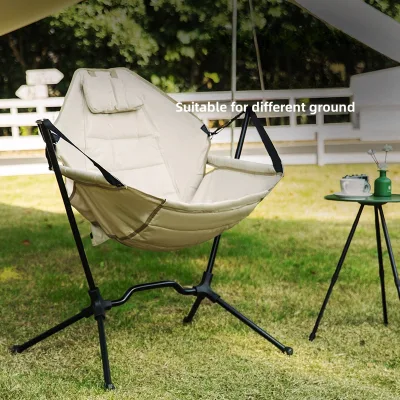


Outdoor Lightweight Portable Swing Chair Rocking Chair Foldable Camping Chair
$8.00 - $20.00
MOQ: 500 Pieces


Oeytree Ultralight Rocking Recliner Folding Aluminum Frame Camping Hammock Chair
$8.00 - $20.00
MOQ: 500 Pieces


Factory Price Foldable Rocking Recliner Camping Swinging Moon Rock Chair
$30.00 - $43.00
MOQ: 100 Pieces

Freestyle Folding Camping Hammock Rocking Outdoor Chair with Custom Logo
$30.00 - $43.00
MOQ: 100 Pieces
Comprehensive Sourcing Guide
Strategic Sourcing Guide for Foldable Aluminum Camping Rocking Chairs
The global market for outdoor recreational furniture has seen a sustained surge in demand, driven by the growing popularity of camping, beach activities, and backyard leisure. Among the various product categories, the Foldable Aluminum Camping Rocking Chair represents a niche yet highly functional segment. Buyers seeking this specific item must navigate a complex landscape of material specifications, mechanical designs, and supply chain variables. This guide provides a disciplined approach to sourcing, relying strictly on observable product attributes and verified industry knowledge to ensure procurement decisions are grounded in fact rather than speculation.
Technical Specifications and Material Analysis
The foundation of any successful procurement strategy lies in a precise understanding of technical specifications. For a Foldable Aluminum Camping Rocking Chair, the primary material of construction is a critical differentiator. While the core keyword specifies "aluminum," the observed market data reveals a diversity of metal alloys in use. Specific product listings indicate the use of Aluminum Alloy, which offers an optimal balance of weight reduction and structural integrity. However, other listings in the same category utilize Stainless Steel or general Steel Tube frames.
When evaluating technical specifications, buyers must scrutinize the frame construction. The presence of a "Steel Tube" frame suggests a focus on durability and load-bearing capacity, whereas "Aluminum Alloy" prioritizes portability. The folding mechanism is another essential technical component. Data indicates that products are available in both "Folded" and "Rotary" configurations. A "Fixed" rotary mechanism implies a static rocking motion, while a "Rotary" designation might suggest a swivel capability or a specific pivot point for the rocking action.
Dimensions are equally vital for logistics and user comfort. Observed product standards list a wide range of dimensions, from compact units measuring 202038cm to larger structures reaching 1052060cm. Specific models, such as those with the designation EZ-HQ016, adhere to standards like 735452cm, while others, like model 1901008, may reach 806098cm. These variations significantly impact the volume of cargo required and the final retail price. Buyers must verify the exact unfolded and folded dimensions to ensure the chair fits within their intended storage or transport constraints.
Mechanical Design and Functional Attributes
The functional design of a camping rocking chair extends beyond simple folding capabilities. The presence or absence of armrests is a distinct attribute that defines the user experience. Market observations show products available with armrests and others without, catering to different preferences for support versus compactness. The "Kind" of the product is also varied, ranging from standard "Fishing Chairs" to specialized "Moon Chairs" and generic "Beach Chairs."
The rocking mechanism itself requires careful evaluation. The term "Rotary" appears in product attributes, suggesting a specific type of motion or pivot. In the context of a rocking chair, this often refers to the curved runners or the pivot point that allows the back-and-forth motion. Buyers should verify if the rocking action is smooth and stable, as a "Fixed" rotary type might indicate a non-moving base, which contradicts the "rocking" function unless the term refers to a specific locking mechanism.
Furthermore, the "Style" of the chair influences its market appeal. Listings describe styles as "Modern" or "Simple," indicating a spectrum from contemporary, sleek designs to utilitarian, no-frills constructions. The "Type" of chair is also categorized as "Single" or "Multiple," which may refer to the seating capacity or the configuration of the product line. Understanding these nuances helps buyers align their inventory with specific customer demographics, whether they are targeting luxury campers or budget-conscious beachgoers.
Cost Drivers and Pricing Dynamics
Pricing in the outdoor furniture sector is influenced by a complex interplay of materials, customization, and order volume. The observed price range for these products spans from $3 to $53.93 USD. This wide disparity is not merely a function of brand but is heavily driven by the material composition and the level of customization. Products made from Aluminum Alloy generally command a higher price point than those using standard steel tubes, reflecting the cost of the raw material and the manufacturing processes required to work with it.
Customization is a significant cost driver. The data confirms that "Customization" is available and that many suppliers offer "Custom" options, including the ability to add logos ("Logo: Can Make"). Custom branding, unique color schemes (such as "Green"), and tailored packaging (e.g., "Carry Bag/Custom" or "Single Color Box Packing") all add to the unit cost. Additionally, the "MOQ" (Minimum Order Quantity) plays a crucial role in the effective unit price. While some listings indicate an MOQ of 50 sets, others require a minimum of 1000 units. Higher order volumes typically unlock lower per-unit costs, but they also increase the initial capital outlay.
Buyers must also consider the "Packing" method. Products packed in "Carton" or "Polybag" will have different shipping efficiencies. A "Carry Bag" adds value but increases the weight and volume of the shipment. The "Product Name" itself, such as "Amazon Portable Beach Folding Chair," may imply specific marketing positioning that influences the final retail price, even if the manufacturing cost remains similar to a generic model.
Compliance, Certification, and Safety Standards
Ensuring compliance with safety and quality standards is paramount when importing outdoor furniture. While specific certification bodies are not explicitly listed in the provided data, buyers must verify that the products meet the safety standards of their target market. The "Standard" attribute in the product data often refers to dimensions (e.g., 735452cm) rather than safety certifications. Therefore, procurement teams must independently verify that the aluminum alloy or steel used meets relevant structural integrity standards for outdoor furniture.
The "Condition" of the products is listed as "New," which is a baseline requirement. However, buyers should request test results regarding the stability of the rocking mechanism, the durability of the folding joints, and the resistance of the materials to corrosion, especially for beach and mountain usage. The "Usage" attributes, such as "Beach," "Mountain," and "Camping," imply exposure to various environmental conditions. Products intended for "Outdoor Rest" must be able to withstand UV exposure, moisture, and temperature fluctuations.
Buyers should also verify the "Origin" of the products. Listings indicate origins in "China," specifically in regions like "Zhejiang" and "Sichuan." While these are major manufacturing hubs, the specific location can influence the supply chain reliability and the ability to conduct on-site audits. It is essential to confirm that the supplier adheres to international labor and environmental standards, even if not explicitly stated in the product listing.
Supplier Evaluation and Quality Control
Evaluating suppliers for foldable aluminum camping rocking chairs requires a multi-faceted approach. The "Type" of supplier and their specific capabilities should be assessed against the buyer's requirements. The availability of "Custom" options suggests that many suppliers are flexible and capable of OEM (Original Equipment Manufacturer) services. However, the "MOQ" of 1000 units for some products indicates that smaller suppliers may not be able to accommodate low-volume orders.
Quality control measures should be rigorous. Given the mechanical nature of the product, buyers should implement a quality assurance plan that includes checking the "Folded" state for ease of use and the "Rotary" mechanism for smooth operation. The "Frame" construction, whether "Steel Tube" or "Aluminum Alloy," must be inspected for weld quality and finish. The "Package" should also be evaluated to ensure it protects the product during transit, with "Single Color Box Packing" or "Carton" options offering different levels of protection.
Buyers should verify the "Product Name" and "Model" consistency. Discrepancies between the model number (e.g., SN-164, 1901003) and the actual product delivered can lead to significant logistical issues. Additionally, the "Application" of the chair, whether for "Outdoor Furniture" or specific activities like "Hicking" (Hiking), should be validated against the product's actual design features.
Typical Applications and Market Segmentation
The versatility of foldable aluminum camping rocking chairs allows them to serve a wide range of applications. The "Usage" attributes highlight "Beach," "Mountain," and "Camping" as primary use cases. The "Kind" of chair, such as "Moon Chair" or "Fishing Chair," further refines the target audience. For instance, a "Moon Chair" might be designed for a more relaxed, reclined posture, suitable for beach lounging, while a "Fishing Chair" might prioritize stability and storage for gear.
The "Style" and "Color" options also play a role in market segmentation. "Modern" styles with "Green" coloring might appeal to eco-conscious consumers or those looking for a specific aesthetic in their outdoor spaces. The "Simple" style, on the other hand, might target budget-conscious buyers or those prioritizing function over form. The "Purpose" of "Outdoor Rest" encompasses a broad spectrum of activities, from family picnics to solo camping trips.
Buyers should consider the "Suit" of the chair for specific environments. A chair designed for "Beach, Mountain" usage must be robust enough to handle uneven terrain and salty air. The "Mail Packing" status, noted as "N" in some listings, suggests that direct mail-order packaging might not be standard, requiring additional preparation for e-commerce fulfillment.
Long-Term Procurement Considerations
Sourcing foldable aluminum camping rocking chairs is not a one-time transaction but a long-term partnership. The "Customization" and "Custom" options allow for brand differentiation, which is crucial for building a loyal customer base. However, maintaining consistency in quality and design over time is essential. Buyers should establish clear communication channels with suppliers to ensure that any changes in materials or manufacturing processes are communicated well in advance.
The "MOQ" of 1000 units for some products suggests that buyers should plan their inventory carefully to avoid overstocking or stockouts. The "Lead Time" and "Location" of the supplier, such as "Zhejiang, China" or "Sichuan, China," will impact the supply chain resilience. Buyers should consider diversifying their supplier base to mitigate risks associated with geopolitical events or natural disasters.
Finally, the "Product Name" and "Model" consistency should be maintained to ensure brand recognition. As the market evolves, buyers should stay informed about new trends in outdoor furniture, such as the integration of sustainable materials or smart features. By adhering to a disciplined, evidence-based approach, buyers can successfully navigate the complexities of sourcing foldable aluminum camping rocking chairs and build a robust, profitable product line.
FAQs
Can I get a Foldable Aluminum Camping Rocking Chair with custom branding?
Yes, customization is available including logo printing on the product. Suppliers offer custom options for colors like green and tailored packaging such as carry bags or single color boxes to meet specific brand requirements.
What materials are used for the frame of these chairs?
Frames are constructed from metal alloys including aluminum alloy, stainless steel, and steel tube. Aluminum alloy offers a balance of weight and strength, while steel provides durability for outdoor rest applications.
What is the minimum order quantity for these folding chairs?
The minimum order quantity varies by product, ranging from 50 sets to 1000 units. Buyers should verify the specific MOQ for each model, as some listings require 1000 units while others accept 50.
Which dimensions are standard for these beach and camping chairs?
Standard dimensions vary significantly, with examples including 73*54*52cm and 80*60*98cm. Compact models can be as small as 20*20*38cm, while larger units may reach 105*20*60cm depending on the specific model.
Are these chairs available with armrests for added comfort?
Yes, options are available both with and without armrests to suit different preferences. Some models feature armrests for support, while others are designed without them for a more compact profile.
How are these chairs packaged for shipping and storage?
Packaging options include polybags, cartons, carry bags, and single color boxes. The specific packing method depends on the model, with some designed for easy transport in a carry bag and others in protective cartons.
Where are these outdoor furniture products manufactured?
Products originate from manufacturing hubs in China, specifically regions like Zhejiang and Sichuan. Buyers can source from these locations which are known for producing outdoor furniture for beach and mountain usage.