Source Foldable Aluminium Alloy Steel Wheelchair for Patient Care, Outdoor Use, and Hip Rehabilitation
Explore 30 listings of Foldable Aluminium Alloy Steel Wheelchair options tailored for patient care, outdoor mobility, and hip rehabilitation. Buyers can compare models like BS-7001 and SC-AW13, reviewing features such as folding mechanisms, leg rest types, and certifications including CE and ISO.
Key considerations
Products List


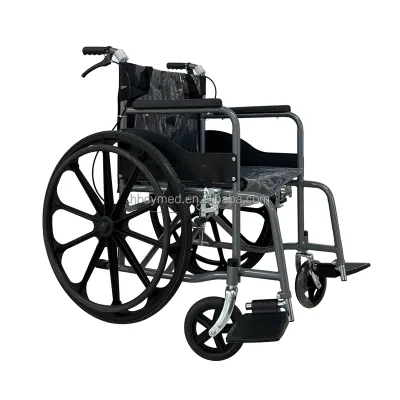
New Design with Steel Medical Wheel Chair Foldable Wheelchair for Handicapped
$49.90 - $50.90
MOQ: 100 Pieces


Health Care Supplier Aluminum Alloy Steel Wheelchair for Personal Using
$420.00 - $450.00
MOQ: 10 Pieces



Comprehensive Sourcing Guide
Strategic Sourcing Guide for Foldable Aluminium Alloy and Steel Wheelchairs
The global medical device market presents a complex landscape for procurement professionals seeking mobility solutions. When the core search parameters focus on foldable aluminium alloy and steel wheelchairs, buyers must navigate a spectrum of product attributes ranging from lightweight portability to heavy-duty durability. The observed market data indicates a diverse inventory where materials, dimensions, and functional features vary significantly between models. This guide provides a structured approach to evaluating these products, ensuring that procurement decisions are grounded in verified specifications rather than marketing assertions. The following sections detail the technical evaluation, compliance verification, cost analysis, and supplier assessment strategies necessary for successful B2B acquisition.
Technical Specifications and Material Analysis
The foundation of any wheelchair procurement strategy lies in a rigorous understanding of the material composition and structural design. The market data reveals a distinct bifurcation in material usage, with products explicitly categorized as either Steel or Aluminium Alloy. Steel models, such as those identified by model number BS-7001, often prioritize structural rigidity and load-bearing capacity. In contrast, Aluminium Alloy variants, including the SC-AW13 series, are engineered for reduced weight and enhanced portability. The distinction is critical; a steel frame may offer superior longevity in high-traffic institutional settings, while an aluminium frame is preferable for users requiring frequent transport or manual handling.
Dimensions and folding mechanisms are equally vital technical parameters. The supplied facts list specific standard dimensions, such as 64(W)*86(H)*100(L)CM for one model and 65(W)*120(H)*120(L)CM for another. These measurements dictate the spatial requirements for storage and usage. Buyers must verify that the folded dimensions align with their logistical constraints, particularly for models intended for travel or compact storage. The "Folded" attribute is a key differentiator, with some models offering a "Tilted" configuration while others remain "Non-Tilted." The SC-Q05LABJ-20" model, for instance, is noted as non-tilted, whereas other entries suggest customizable tilt options.
Wheel and footrest configurations further define the technical suitability of a unit. The presence of 24" spoked rear wheels is a specific observation for certain models, influencing rolling resistance and terrain adaptability. Footrests are described as either detachable or featuring elevating capabilities, such as the "Detachable Elevating Footrest" found in the SC-Q05LABJ-20" specification. The leg rest type is another variable, ranging from "Both Sides Separate" to "Across Both Sides." Procurement teams must match these mechanical features to the specific mobility needs of the end-user, ensuring that the "Using Site" (e.g., Hip or Whole body) aligns with the intended therapeutic application.
Compliance and Certification Verification
In the medical device sector, regulatory compliance is not merely a formality but a prerequisite for market entry and liability protection. The observed data highlights several certification markers, including CE and ISO standards. For example, specific models are listed with "CE, ISO" or "CE, RoHS, ISO" certifications. These designations suggest adherence to European safety directives and international quality management systems. However, buyers must exercise caution and treat these as observations of specific listed items rather than universal guarantees for all products in the category.
The standard "CE ISO" mentioned in the context of model SC-AW13 indicates a baseline level of conformity, but the specific ISO standard (e.g., ISO 13485 for medical devices) should be explicitly requested in the supplier's documentation. Similarly, the presence of "RoHS" (Restriction of Hazardous Substances) on certain models like SC-SW20 is a positive indicator for environmental compliance, particularly relevant for electronics or components containing metals. Buyers should verify that the certification documents provided are current and issued by accredited bodies. The "Standard" field in the product data often lists dimensions (e.g., 1100630980mm) rather than regulatory codes, which underscores the need to distinguish between physical specifications and compliance standards.
When evaluating suppliers, request copies of the actual certificates rather than relying on marketing claims. Verify the scope of the certification to ensure it covers the specific product line being purchased. For instance, a general ISO certification may not automatically cover the specific manufacturing process for a foldable wheelchair frame. The "OEM: Yes" attribute suggests that suppliers are capable of custom branding, but this does not inherently alter the regulatory status of the device. Buyers must ensure that any customization does not void existing certifications or require new testing protocols.
Cost Drivers and Pricing Structures
Understanding the cost structure of foldable wheelchairs requires an analysis of material costs, manufacturing complexity, and order volume. The observed price range in the market spans from 10 to 450 USD, a wide variance that reflects differences in material quality, feature sets, and production scale. Steel models generally command different price points compared to aluminium alloy variants due to the raw material costs and the weight implications. The "New Style" and "Easy Cleaning" features also contribute to the final price, as they may involve additional engineering or surface treatments.
The Minimum Order Quantity (MOQ) is a significant factor in total cost of ownership. The data indicates an MOQ range of 1 to 1000 units. For buyers seeking to test the market or fulfill small-scale institutional needs, an MOQ of 1 is advantageous. However, larger orders may unlock volume discounts, though the specific discount tiers are not provided in the source data. Buyers should negotiate based on the total lifecycle cost, including maintenance and replacement parts, rather than just the unit price.
Packing and logistics also influence the final landed cost. The product data lists various packing methods, from "Carton Packing" to specific dimensions like "802891 Cm /PC." Efficient packing reduces shipping volume and associated freight charges. Models with complex folding mechanisms or detachable parts may require more robust packaging to prevent damage during transit, potentially increasing the unit cost. Buyers should request detailed packing lists and shipping quotes to accurately calculate the total cost per unit, factoring in freight, insurance, and customs duties.
Typical Applications and Usage Scenarios
The versatility of foldable wheelchairs allows them to serve a wide array of applications, from patient care in hospitals to outdoor mobility for individuals. The "Usage" attribute is explicitly listed as "Patient Care," indicating a primary design focus on medical and rehabilitation environments. However, the "Using Ambient" field notes "Outdoor" suitability for certain models, suggesting that some units are robust enough for varied terrain and weather conditions.
The "Suitable for: Patient" designation reinforces the medical context, but the specific features determine the exact use case. Models with "Detachable" footrests and "Flip up" armrests are ideal for transfer assistance in clinical settings where space is limited. Conversely, units with "Tilted" capabilities and "Both Sides Separate" leg rests are better suited for long-term users requiring pressure relief and positioning support. The "Using Site" of "Hip" or "Whole" body implies different levels of support; a hip-specific model might be designed for partial mobility assistance, while a whole-body model offers comprehensive support.
For procurement in institutional settings, the "Easy Cleaning" feature is paramount. Hospitals and care facilities require equipment that can be sanitized frequently to prevent cross-contamination. The "Lifetime: More Than 5 Years" attribute suggests that these products are designed for durability in high-use environments. Buyers should match the product features to the specific operational needs of their facility. For example, a facility with limited storage space should prioritize the "Folded" and "Carton Packing" attributes to maximize efficiency.
Supplier Evaluation and OEM Capabilities
Selecting the right supplier is as critical as selecting the right product. The data indicates that the "prod_origin" is primarily "China," with specific mentions of "Hebei" as a production hub. While this provides a geographical context, buyers must look beyond location to assess the supplier's reliability and capacity. The "OEM: Yes" attribute confirms that suppliers are open to custom branding, which is essential for distributors and healthcare networks looking to establish their own product lines.
When evaluating suppliers, verify their ability to meet the "Customization" and "Customized" requirements. Some models are listed as "Non-Customized," while others offer "Customized" options. This distinction affects lead times and production flexibility. Suppliers offering customization must demonstrate a robust quality control process to ensure that modifications do not compromise the structural integrity or safety of the wheelchair.
The "Warranty: 1 Year" and "Lifetime: More Than 5 Years" attributes provide insight into the supplier's confidence in their product. A one-year warranty is standard, but the claim of a five-year lifetime suggests a focus on long-term value. Buyers should clarify the terms of the warranty, including what is covered (e.g., frame, wheels, upholstery) and the process for claims. Additionally, the "prod_packing" details, such as "1PCS/CTN" or "by Carton," indicate the supplier's attention to detail in logistics. A supplier that provides clear, standardized packing instructions is more likely to be reliable in terms of delivery and inventory management.
Quality Control and Long-Term Procurement Considerations
Ensuring consistent quality requires a proactive approach to quality control (QC). The "Certification: CE, ISO" and "RoHS" markers are indicators of a supplier's commitment to standards, but on-site audits or third-party inspections are often necessary to verify actual production practices. Buyers should request test reports for critical components, such as the folding mechanism, wheel bearings, and frame welds. The "Folded" and "Tilted" attributes involve moving parts that are prone to wear; therefore, durability testing is essential.
Long-term procurement considerations extend beyond the initial purchase. The "Weight: 14kg" specification for the SC-SW20 model is a key metric for users and caregivers. Lighter models reduce fatigue during manual operation but may sacrifice some structural strength. Buyers must balance weight with durability based on the expected usage frequency. The "Power Supply: Manual" attribute simplifies maintenance by eliminating battery-related issues, but it places a higher demand on the user's physical strength.
Sustainability and end-of-life management are also emerging factors. The "Aluminium Alloy" material is highly recyclable, which may be a consideration for organizations with green procurement policies. The "Carton Packing" suggests the use of cardboard, which is also recyclable, but buyers should inquire about the recyclability of other components like tires and upholstery. Establishing a long-term relationship with a supplier who offers consistent quality, reliable lead times, and responsive after-sales support is crucial for maintaining a stable supply chain. Regular performance reviews and feedback loops can help ensure that the procurement strategy remains aligned with the evolving needs of the end-users.
Conclusion
Sourcing foldable aluminium alloy and steel wheelchairs requires a meticulous approach that balances technical specifications, regulatory compliance, and cost efficiency. The market offers a diverse range of models, each with unique attributes such as specific dimensions, folding mechanisms, and certification levels. By focusing on verified data and avoiding unproven claims, procurement professionals can make informed decisions that meet the needs of patients and healthcare institutions. The key lies in understanding the nuances of material selection, verifying certifications, and evaluating supplier capabilities to ensure a reliable supply of high-quality mobility solutions.
FAQs
What certifications do these wheelchairs hold?
The products hold CE and ISO certifications, with some models also featuring RoHS compliance. These markers indicate adherence to European safety directives and international quality management systems, ensuring regulatory conformity for medical device markets.
Which materials are used for the frames?
Frames are constructed from either Steel or Aluminium Alloy depending on the specific model. Steel variants prioritize structural rigidity for high-traffic settings, while Aluminium Alloy versions offer reduced weight for enhanced portability and ease of transport.
Can the wheelchairs be customized for buyers?
Customization is available for many models, allowing for specific branding or feature adjustments. However, some units are listed as non-customized, so buyers must verify the customization status of the specific product model before placing an order.
How long is the warranty period?
The standard warranty period is one year for the supplied products. This coverage protects against manufacturing defects, complementing the expected product lifetime of more than five years for durable use in patient care environments.
What is the typical minimum order quantity?
The minimum order quantity ranges from one to one thousand units depending on the supplier and model. This flexibility allows buyers to test the market with small orders or secure volume discounts for larger institutional procurement needs.
Where are these wheelchairs manufactured?
The products originate from China, with specific production hubs noted in regions like Hebei. Buyers should verify the exact origin location for shipping logistics and to ensure the supplier meets their specific regional sourcing requirements.