Source Foldable High View Baby Stroller for Travel, Daily Use, and Shopping
Compare 30 listings for the Foldable High View Baby Stroller to find options with customizable frames, various wheel sizes, and specific packing requirements. Buyers can evaluate models like the Daily use-5878D and Travel System Baby Stroller-023E based on dimensions and material specs.
Key considerations
Products List


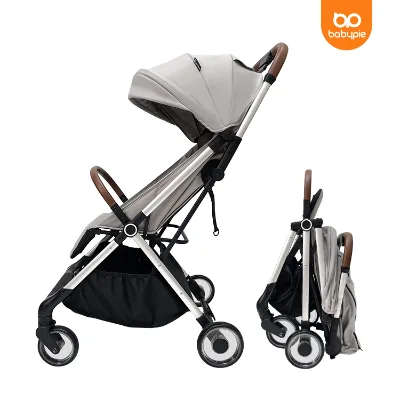


Portable Baby Stroller with Easy Folding in Two Directions Baby Stroller
$37.00 - $38.00
MOQ: 1 Pieces


Comprehensive Sourcing Guide
Strategic Sourcing Guide for Foldable High View Baby Strollers
The global demand for infant mobility solutions has intensified, with a specific market segment emerging around foldable high view baby strollers. These products are engineered to provide parents with elevated sightlines for better interaction with their children while maintaining the portability required for modern urban and travel lifestyles. For B2B procurement professionals, sourcing these items requires a rigorous approach that balances technical specifications, supply chain reliability, and compliance verification. This guide outlines the essential factors for evaluating suppliers and products in this category, ensuring that procurement decisions are grounded in verified data and industry best practices rather than marketing assertions.
Technical Specifications and Design Architecture
The core functionality of a Foldable High View Baby Stroller relies on a robust structural design that supports both safety and maneuverability. Based on observed product attributes, the frame material is frequently specified as stainless steel, a choice that offers superior corrosion resistance and structural integrity compared to standard aluminum or plastic alternatives. This material selection is critical for a product that must withstand repeated folding cycles and varying load conditions. The "High Landscape" or high view configuration is a distinct design feature, often associated with models like the Multifunction Baby Stroller-021G, which positions the infant seat higher to facilitate eye-level contact with caregivers.
Portability is achieved through specific folding mechanisms. Data indicates that these units are universally foldable, with folded dimensions varying significantly by model. For instance, specific configurations have been observed with folded sizes measuring approximately 886425cm, while other models may offer different compact profiles. The wheel assembly is another critical technical component. High-performance models often feature a dual-wheel setup, such as a front 7-inch wheel paired with a rear 10-inch wheel, or variations like 7-inch front and 9-inch rear wheels. The wheel material is equally important; observed specifications include anti-explosion materials, as well as combinations of EVA and PU, which provide a balance of shock absorption and durability on varied terrains.
The fabric composition also plays a role in the product's longevity and comfort. Specifications point to the use of Oxford or Linen materials, which are selected for their breathability and ease of cleaning. The overall dimensions of the stroller when unfolded are substantial, with some models measuring up to 7564102cm, necessitating careful consideration of storage space in retail environments or end-user homes. Buyers must verify that the specific model's unfolded and folded dimensions align with their logistical requirements and the spatial constraints of their target market.
Customization and Manufacturing Capabilities
A defining characteristic of the current market for these strollers is the high degree of customization available to buyers. Suppliers frequently offer OEM (Original Equipment Manufacturer) services, allowing brands to tailor products to their specific identity. The customization options extend to multiple attributes, including color, which is often listed as "Custom," and design, which can be adapted "as Your Requirement." This flexibility is essential for private label strategies where brand differentiation is paramount.
Packaging is another area where customization is prevalent. While some standard configurations utilize polybags for individual unit protection, others employ carton packaging, sometimes with specific quantities per carton, such as 2PCS/CTN. The carton dimensions themselves can be customized to optimize shipping efficiency, with observed standards ranging from 47.53057cm to larger configurations like 95X46X61CM. The ability to adjust the standard and packing specifications allows buyers to reduce shipping costs and minimize damage during transit.
Furthermore, the production models vary widely, ranging from specific model numbers like "Daily use-5878D" to more descriptive names like "Folding Baby Carriage Stroller-092M." This variety suggests a mature manufacturing ecosystem capable of producing diverse iterations of the core product. Buyers should leverage this flexibility to request samples that match their exact branding and functional requirements before committing to large-scale orders. The availability of customization implies that the supply chain is agile, but it also requires clear communication of specifications to avoid production errors.
Compliance, Safety Standards, and Certification Verification
Safety is the non-negotiable priority when sourcing baby products. While specific certification statuses for every listed product cannot be universally asserted without direct verification, the industry standard for infant mobility products involves rigorous testing against international safety norms. Buyers must actively verify that suppliers possess valid certifications relevant to the target market, such as ASTM F833 in the United States or EN 1888 in Europe. Although some background information mentions OEKO-TEX, this standard specifically relates to textile safety and should be confirmed for the fabric components rather than assumed for the entire unit.
The structural integrity of the stroller is paramount. The use of stainless steel frames and anti-explosion wheels suggests a focus on durability, but these features must be validated through third-party testing reports. Buyers should request proof of compliance for load-bearing capacity, braking systems, and stability tests, particularly for the high-landscape design which may alter the center of gravity. It is critical to understand that "High Landscape" models must meet specific stability criteria to prevent tipping, a risk that is higher in elevated seating configurations.
Additionally, the trade mark "Yuxin Baby" appears in the data, indicating that some suppliers operate with established brand identities. However, buyers sourcing for their own brands must ensure that the manufacturing process includes strict quality control measures to prevent counterfeiting or brand dilution. The verification of origin is also part of the compliance picture; while many products originate from China, with specific mentions of Hubei, buyers should confirm the factory's location and audit status to ensure ethical labor practices and consistent quality control.
Cost Drivers and Pricing Dynamics
The pricing structure for foldable high view baby strollers is influenced by several key variables. The observed price range in the market spans from $3.38 to $95, a wide spectrum that reflects differences in material quality, feature sets, and order volumes. The lower end of the range likely corresponds to basic models with standard materials and minimal customization, while the higher end reflects premium configurations with advanced suspension, specialized fabrics, and extensive branding.
Order Volume is a primary cost driver. The Minimum Order Quantity (MOQ) varies significantly, with observed ranges from 1 to 680 units, and specific model requirements often citing MOQs of 300, 400, or 500 pieces. Buyers must align their procurement strategy with these thresholds; smaller orders may incur higher per-unit costs, while larger volumes can unlock significant economies of scale. The weight of the product also impacts logistics costs. Net weights (N.W) observed range from 8.3kg to 10kg, with gross weights (G.W) slightly higher due to packaging. These figures are essential for calculating freight charges, especially for air freight or expedited shipping options.
Material costs are another significant factor. The use of stainless steel and specialized wheel materials like EVA and PU contributes to the overall unit cost. Buyers should request a detailed breakdown of costs to understand how much of the price is attributed to raw materials versus manufacturing overhead. Additionally, the customization of packaging and design adds to the initial setup costs, which may be amortized over the order volume. Understanding these drivers allows buyers to negotiate more effectively and forecast total landed costs accurately.
Supplier Evaluation and Quality Control Protocols
Selecting the right supplier requires a multi-faceted evaluation process that goes beyond price comparisons. Buyers should assess the supplier's production capacity, lead times, and track record for delivering on time. The diversity of models available, from the Travel System Baby Stroller-023E to the H9 model, indicates a supplier with a broad production capability. However, buyers must verify that the specific factory has the expertise to handle the specific customization requirements of their order.
Quality control (QC) protocols are essential to mitigate the risks associated with mass production. Buyers should implement a QC strategy that includes pre-production sample approval, in-process inspections, and final random inspections (FRI) before shipment. Given the safety-critical nature of baby strollers, a zero-defect tolerance for structural components is advisable. The supplier's ability to provide detailed inspection reports and test data is a strong indicator of their commitment to quality.
Communication is another critical factor. Suppliers offering "Customized" standards and packing must demonstrate clear communication channels to ensure that design changes are implemented correctly. The presence of specific trade marks and model numbers suggests that the supplier maintains a catalog of existing designs, but the ability to adapt these designs quickly is what separates top-tier manufacturers from the rest. Buyers should prioritize suppliers who offer transparent communication regarding production status and potential delays.
Long-Term Procurement and Market Considerations
Sourcing foldable high view baby strollers is not merely a transactional activity but a strategic partnership that impacts long-term business success. The market for these products is driven by parental demand for convenience, safety, and interaction. The "High Landscape" feature addresses a specific consumer need for better visibility and bonding, making it a valuable selling point. However, market trends are dynamic, and buyers must remain agile to adapt to changing preferences.
Sustainability is an emerging consideration in the baby product sector. While specific environmental certifications are not universally confirmed in the provided data, buyers should inquire about the recyclability of materials and the environmental impact of the manufacturing process. The use of durable materials like stainless steel and high-quality fabrics can extend the product lifecycle, reducing waste and appealing to eco-conscious consumers.
Finally, the long-term viability of the supply chain depends on the supplier's ability to scale. As demand grows, the supplier must be able to increase production without compromising quality or lead times. Buyers should establish a relationship that includes regular performance reviews and a clear roadmap for future collaboration. By focusing on technical excellence, compliance, and strategic partnership, buyers can secure a reliable supply of foldable high view baby strollers that meets the evolving needs of the global market.
Comparative Analysis of Key Product Attributes
To assist in the decision-making process, the following table summarizes the key technical and logistical attributes observed in the current market for foldable high view baby strollers. This comparison highlights the variability in specifications that buyers must navigate.
| Attribute Category | Observed Specification Range | Key Variations |
|---|---|---|
| Frame Material | Stainless Steel | High durability vs. standard alternatives |
| Wheel Configuration | Front 7" / Rear 9" or 10" | Varies by model for terrain handling |
| Wheel Material | Anti-Explosion, EVA, PU | Impact absorption and durability differences |
| Folded Dimensions | ~886425cm (example) | Varies significantly by model design |
| Unfolded Dimensions | ~7564102cm (example) | Affects storage and transport space |
| Net Weight (N.W) | 8.3kg - 10kg | Impacts portability and shipping cost |
| MOQ Requirements | 300 - 500 PCS (typical) | Ranges from 1 to 680 depending on supplier |
| Customization | Color, Design, Packing | High flexibility for OEM branding |
| Packaging | Polybag, Carton, 2PCS/CTN | Affects unit protection and logistics |
| Target Age Group | 0-1 Years Old | Specific safety requirements for infants |
This table underscores the importance of detailed specification verification. Buyers should not assume that all products in this category share the same attributes. Instead, they must request detailed datasheets for each potential supplier to ensure the product meets their specific operational and safety requirements. By adhering to these rigorous evaluation criteria, buyers can mitigate risk and secure high-quality supply chains for foldable high view baby strollers.
FAQs
Can I customize the color and design of the stroller?
Yes, customization is available for both color and design to match your specific requirements. Suppliers offer custom colors and can adapt the design as your requirement, allowing for unique branding options on the final product.
What are the typical minimum order quantities for these strollers?
Minimum order quantities vary by model, with observed ranges starting from 300 to 500 pieces. Specific models like the Multifunction Baby Stroller-021G require 400 pieces, while others may need 300 or 500 units depending on the supplier.
Which materials are used for the frame and wheels of these strollers?
Frames are frequently constructed from stainless steel to ensure durability and corrosion resistance. Wheels are made from anti-explosion materials or a combination of EVA and PU to provide shock absorption and stability on various terrains.
How are the strollers packaged for shipping and what are the dimensions?
Packaging options include polybags for individual units or cartons with specific quantities per box. Carton sizes vary by model, with observed dimensions ranging from 47.5 by 30 by 57 cm to larger configurations like 95 by 46 by 61 cm.
What is the origin location for these foldable high view baby strollers?
The products originate from China, with specific manufacturing hubs noted in Hubei. This location is a primary source for the stainless steel frames and customized packaging solutions observed in the current market data.
Which folded size specifications are available for portable stroller models?
Folded dimensions vary by model, with specific configurations measuring approximately 88 by 64 by 25 cm. Other models may offer different compact profiles, so buyers should verify the exact folded size for their storage needs.
What is the price range for these baby strollers based on order volume?
The observed price range spans from 3.38 to 95 USD per unit, influenced by material quality and customization. Lower prices typically reflect basic models, while higher costs correspond to premium features and extensive branding options.