Source Foldable Letter Travel Toiletry Bag for Cosmetic, Travel, Makeup
Compare 30 Foldable Letter Travel Toiletry Bag options featuring soft handles, large capacity, and durable polyester or PU materials. Buyers can evaluate zipper closures, portable designs, and customization availability for cosmetic, travel, and makeup applications.
Key considerations
Products List
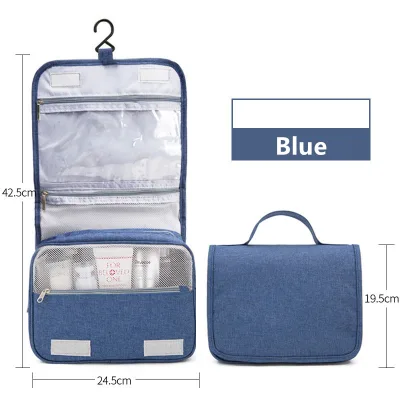
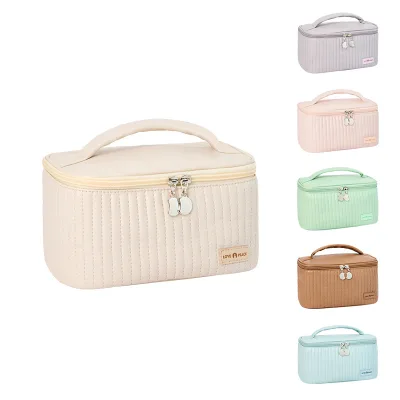


Print Words Cheap Portable Travel Women Pouch Organizer Toiletry Cosmetic Bag
$0.50 - $2.00
MOQ: 1000 Pieces


New Pattern Toiletry Bag Portable Multi Functional Travel Makeup Storage Bag
$1.42 - $1.45
MOQ: 200 Pieces

Compact Portable Waterproof Lightweight Multipurpose Travel Cosmetic Toiletry Bag
$3.99 - $4.36
MOQ: 500 Pieces


Multifunctional Travel Cosmetic Toiletry Bag Makeup Bag with 4 Inner Removable Pouches
$5.89 - $7.86
MOQ: 500 Pieces


Custom Makeup Bag Portable PU Leather Waterproof Toiletry Pouch Travel Make up Bag
$0.35 - $0.55
MOQ: 100 Pieces


Custom Printed Large Waterproof Makeup Pouch Travel Cosmetic Toiletry Bag
$3.50 - $5.00
MOQ: 1000 Pieces

Custom Printed Logo Foldable Cosmetic Toiletries Storage Bag for Travelling
$1.88 - $2.28
MOQ: 100 Pieces


Multifunctional Makeup Portable Travel Toiletry Bag Waterproof Mask Storage Bag
$0.32 - $0.55
MOQ: 100 Pieces

Comprehensive Sourcing Guide
Strategic Sourcing Guide for Foldable Letter Travel Toiletry Bags
The global market for travel accessories has seen a sustained shift toward multifunctional, space-saving solutions, with the Foldable Letter Travel Toiletry Bag emerging as a distinct category. For B2B procurement professionals, sourcing this specific item requires a nuanced understanding of material properties, structural design, and supply chain variables. The term "foldable" implies a specific construction method that allows the bag to be compressed when empty, while "letter" often refers to the shape or the branding style, though in many contexts, it denotes a flat, expandable profile. This guide synthesizes available product data and industry standards to provide a disciplined framework for evaluating suppliers and specifications without relying on unverified claims.
Technical Specifications and Material Composition
When evaluating the technical attributes of a foldable toiletry bag, the primary focus must be on the material composition and structural integrity. The supplied data indicates a diverse range of materials, with Polyester and Pu (Polyurethane) being the most frequently observed options. Polyester is often selected for its durability and resistance to abrasion, making it suitable for the "Large Capacity" and "Durable" features noted in high-confidence product observations. Conversely, Pu materials are frequently associated with a softer texture and a specific aesthetic finish, often described as "Soft Handle" or "Medium Soft" hardness in product listings.
The structural design is equally critical. The observed "Foldable" and "Portable" features suggest a construction that utilizes flexible yet supportive materials. The "Single package size" of 28.0x18.0x2.0 cm provides a concrete reference point for the compressed state of certain models, indicating a compact footprint ideal for travel. However, buyers must verify if the "Large" capacity claim aligns with the specific volume requirements of their target market. Some data points suggest a capacity range of 3-6 liters, while others simply categorize the item as "Large." This discrepancy highlights the need for precise verification of internal dimensions and volume before finalizing an order.
Closure mechanisms also vary significantly across the supply base. The "zipper" is a standard feature for securing contents, but the "Open" handle or "Single Open" design suggests alternative access points that may be preferred for quick retrieval. The "Hardness" of the bag, ranging from "Soft" to "Medium Soft," directly impacts the user experience; a bag that is too soft may collapse under the weight of heavy toiletries, while one that is too rigid may lose its foldable advantage. Buyers should request physical samples to assess the balance between structural support and flexibility.
Design Variations and Functional Applications
The design landscape for these bags is characterized by a blend of fashion and utility. The "Fashion" style and "Thread" pattern type observed in the data suggest that aesthetic appeal is a key driver for this category. Color options are extensive, ranging from specific shades like "Sakura powder," "Mocha brown," and "Matcha green" to more neutral tones like "Black" and "Cream white." The "Horizontal Square" and "Box Type" shapes indicate that the bags are designed to stand upright or lay flat, maximizing space in luggage.
Applications for these bags extend beyond simple storage. The "Cosmetic," "Travel," and "Makeup" labels confirm their primary use case, but the "Camping & Traveling," "Professional," and "Household" tags suggest a broader utility. For instance, a bag with "Waterproof" properties would be essential for camping scenarios, whereas a "Not Waterproof" variant might be more suitable for professional or household use where moisture resistance is less critical. The "Intended Use" as "Travel" is consistent across most listings, but the specific features must align with the end-user's environment.
A comparison of key design attributes helps clarify the distinctions between different product lines:
| Attribute Category | Observation A (Polyester Focus) | Observation B (PU Focus) | Observation C (Specialized) |
|---|---|---|---|
| Material | Polyester | Pu | 210d Inside Material |
| Water Resistance | Not Waterproof | Waterproof | Variable |
| Capacity | Large (General) | 3-6L | High-value series |
| Shape | Horizontal Square | Box Type | Foldable Profile |
| Closure | Zipper | Open / Single Open | Zipper |
| Hardness | Medium Soft | Soft | Soft |
| Origin | Fujian, China | Zhejiang, China | Xiamen, China |
This table illustrates that while the core function remains the same, the material and feature sets vary significantly. A buyer targeting the camping market should prioritize the "Waterproof" and "Durable" attributes, whereas a buyer focusing on luxury cosmetic retail might prioritize the "Fashion" style and specific color palettes like "Sakura powder."
Compliance, Certification, and Safety Standards
In the realm of B2B procurement, compliance is a non-negotiable pillar of supplier evaluation. The provided data mentions "BSCI" and "OEKO-TEX" as background certifications, but these are listed under low-confidence background information. This distinction is crucial: buyers cannot assume that a supplier possesses these certifications based solely on product listings. Instead, these should be treated as potential verification targets.
Buyers must explicitly request current, valid certificates from suppliers. For textile and leather-adjacent products like Pu and Polyester bags, OEKO-TEX certification ensures that the materials are free from harmful substances, which is particularly important for cosmetic bags that come into direct contact with skin. Similarly, BSCI certification verifies that the supplier adheres to ethical labor practices, a requirement for many Western retailers.
Regarding product standards, the data references a "prod_standard" of 281025.5CM. This appears to be a dimensional specification rather than a safety standard. Buyers should verify if the supplier adheres to international safety standards for travel goods, such as flammability regulations or chemical restrictions (e.g., REACH in Europe or CPSIA in the US). Without explicit confirmation from the supplier, any claim of compliance should be treated as unverified. The "Customized" and "Logo" options available in the supply base also require attention to intellectual property rights and trademark compliance, ensuring that custom branding does not infringe on existing marks.
Cost Drivers and Pricing Dynamics
The observed price range of $0.27 to $7.99 USD reflects the wide variance in material quality, production complexity, and order volume. The lower end of the spectrum likely corresponds to basic Polyester models with standard zippers and minimal customization. The higher end, approaching $8.00, likely includes PU materials, waterproof coatings, complex colorways, and custom branding.
The Minimum Order Quantity (MOQ) range of 10 to 1000 units is a significant factor in cost calculation. Suppliers with lower MOQs (e.g., 10 units) often charge a premium per unit due to the inefficiency of small-batch production. Conversely, suppliers requiring 1000 units can offer lower unit costs but demand higher capital commitment. The "Selling Units" being listed as "Single item" suggests that the base price is for a single unit, but bulk discounts are almost certainly available for larger orders.
Other cost drivers include the "Customization" options. Adding a custom logo or altering the design to specific dimensions will increase the unit cost. The "Single gross weight" of 1.000 kg for certain models indicates that heavier materials or additional packaging (such as poly bags) can impact shipping costs. Buyers should calculate the total landed cost, including freight, duties, and any customization fees, rather than focusing solely on the FOB price.
Supplier Evaluation and Origin Verification
Geographic origin plays a pivotal role in the sourcing strategy for these bags. The data points to three primary manufacturing hubs: Fujian, Zhejiang, and Xiamen (Fujian). Each region has its own supply chain ecosystem. Fujian is known for its strong textile and bag manufacturing base, while Zhejiang is a major hub for general merchandise and accessories. Xiamen, being a port city, often has advantages in logistics and export efficiency.
When evaluating suppliers, buyers should verify the "place of origin" claims against the supplier's business license and factory audit reports. The presence of multiple origin locations in the data suggests that some suppliers may be trading companies sourcing from different factories, while others may be direct manufacturers with multiple production lines. Direct manufacturers often offer better control over quality and lead times, whereas trading companies may provide a wider variety of styles.
The "Brand Name" variations, such as "KNY" and "DIXIU," indicate that the market includes both private label manufacturers and established brands. For B2B buyers seeking private label opportunities, it is essential to confirm that the supplier has the capacity to produce under the buyer's own brand without infringing on existing trademarks. The "Logo: as Custom" attribute confirms that customization is a standard service, but the complexity of the logo application (e.g., screen printing, embroidery, or heat transfer) will affect the timeline and cost.
Quality Control and Long-Term Procurement
Quality control (QC) is the final barrier between a successful procurement and a product failure. Given the "Foldable" nature of these bags, the durability of the hinges and the strength of the zippers are critical failure points. Buyers should implement a rigorous QC plan that includes stress testing the zipper cycles and checking the seam strength. The "Waterproof" claim, if made, must be verified through water resistance testing, as the "Not Waterproof" variants are equally common in the market.
Long-term procurement considerations involve building a relationship with a supplier who can scale with demand. The "Customization: Available" feature suggests that suppliers are flexible, but buyers should assess their capacity to handle volume spikes. Lead times are not explicitly provided in the data, but the complexity of customization and the origin location will influence the timeline. Buyers should establish clear communication channels and define quality acceptance criteria before production begins.
Furthermore, the "Hardness" and "Shape" of the bag must remain consistent across production batches. A shift from "Soft" to "Medium Soft" could alter the user experience and lead to returns. Regular third-party inspections are recommended to ensure that the "Single package size" and "prod_model" specifications remain consistent. For buyers focusing on the "Travel" and "Cosmetic" markets, the aesthetic consistency of colors like "Sakura powder" or "Matcha green" is also vital, as color variations can be perceived as quality issues by end consumers.
In conclusion, sourcing a Foldable Letter Travel Toiletry Bag requires a meticulous approach that balances technical specifications, material quality, and supplier reliability. By focusing on verified data points and avoiding unconfirmed claims, buyers can navigate the complex landscape of this category effectively. The diversity in materials, from Polyester to Pu, and the wide range of applications, from camping to professional use, offer ample opportunities for differentiation. However, success depends on rigorous due diligence, clear communication of requirements, and a steadfast commitment to quality control throughout the supply chain.
FAQs
What materials are used for foldable letter travel toiletry bags?
These bags are primarily made from Polyester or Pu materials. Polyester offers durability and abrasion resistance, while Pu provides a softer texture and specific aesthetic finishes suitable for fashion applications.
Can these bags be customized with a specific logo?
Yes, customization is available for these products. Suppliers offer options to add custom logos, though the complexity of the application method will influence the final unit cost and production timeline.
Which capacity options are available for these travel bags?
Capacity varies from specific volumes like 3-6 liters to general large sizes. Some models feature a single package size of 28.0x18.0x2.0 cm, indicating a compact footprint ideal for travel storage.
How does the closure type affect the bag functionality?
Most bags utilize a zipper for secure closure, while others feature an open or single open design for quick access. The choice depends on whether the user prioritizes security or rapid retrieval of items.
What is the typical price range for these toiletry bags?
The observed price range is between 0.27 and 7.99 USD per unit. Lower prices typically correspond to basic Polyester models, while higher prices reflect PU materials, waterproof features, and custom branding options.
Which countries are the main origins for these products?
Products originate from Fujian, Zhejiang, and Xiamen in China. These regions host distinct manufacturing ecosystems, with Fujian known for textiles and Xiamen offering logistical advantages for export efficiency.