Source Foldable Massage Polyurethane Foam for Bedroom, Hotel, Home Office
Compare 30 listings of Foldable Massage Polyurethane Foam from verified Chinese manufacturers. Buyers can evaluate features like cold-resistance, heat-resistance, and impact-resistance for applications in bedrooms, hotels, and home offices.
Key considerations
Products List


Natural Beauty and Excellent Factory Wholesale Breathable High Resilient Polyurethane Foam
$0.31 - $0.35
MOQ: 2000 Square Meters


Durable Cushioning Support Flexible Self-Skinning Polyurethane PU Foam
$0.50 - $10.00
MOQ: 1000 Pieces

Breathable Waterproof Self-Skinning Flexible Polyurethane PU Elastic Foam
$0.50 - $10.00
MOQ: 1000 Pieces


Polyurethane Integral Skin Foam Massage Head for Fascial Muscle Massage Gun
$4.50 - $28.50
MOQ: 50 Pieces


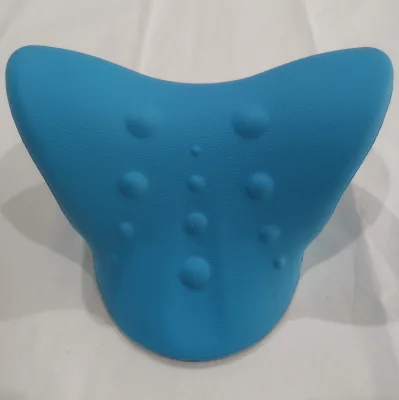

Hotsales Gift 4 Colours White Blue Deep Tissue Massage Collapsible High Density Foam Roller
$11.20 - $11.50
MOQ: 90 Pieces

Comprehensive Sourcing Guide
Strategic Sourcing Guide for Foldable Massage Polyurethane Foam
Understanding the Product Landscape and Technical Specifications
When sourcing Foldable Massage Polyurethane Foam, buyers must first distinguish between the broad category of polyurethane materials and the specific functional requirements of massage applications. The market presents a diverse array of product models, ranging from general furniture foam to specialized insole materials and liquid precursors. Based on available industry data, the core material is consistently identified as Polyurethane, often derived from specific raw materials such as Mdi. The physical form of the product varies significantly depending on the intended end-use. For furniture applications, such as those intended for bedrooms, home offices, living rooms, or hotels, the foam is typically supplied as a solid block or slab. In contrast, specialized applications like insoles may utilize specific models such as FU121 or FP900, which are often packaged with PU paper and packing bags to maintain integrity during transit.
The technical specifications for these materials are critical for ensuring they meet the demands of massage therapy equipment. Buyers should verify the density and hardness, which are often linked to the specific model numbers observed in the market, such as PU Foam F3050, F4345, A30, or F4145. While specific density values are not universally fixed, the standard for flexible polyurethane foam is a key benchmark. For applications requiring specific dimensions, such as 20x20x5cm or custom rolls with widths of 1.4m and 1.5m, the supplier must confirm the ability to meet these exact measurements. Furthermore, the physical properties of the foam must include resistance to environmental stressors. High-confidence observations indicate that suitable products for this sector should possess cold-resistant, heat-resistant, impact-resistant, and wear-resistant attributes. These characteristics ensure the material maintains its structural integrity and "foldable" nature without cracking or degrading under the mechanical stress of massage devices or repeated use.
Compliance, Certification, and Regulatory Standards
Navigating the compliance landscape is essential for B2B procurement, particularly when the product is intended for commercial or consumer use in various regions. The supply chain for polyurethane foam is subject to rigorous certification requirements to ensure safety and environmental compliance. Current market data confirms that reputable suppliers often provide products with RoHS certification, which restricts the use of specific hazardous materials. Additionally, CE and ISO certifications are frequently observed as indicators of adherence to international safety and quality management standards. Buyers must verify that the specific batch or model they are purchasing carries these valid certifications, as the presence of one does not guarantee the other for every SKU.
Beyond general certifications, specific standards define the quality of the foam. The "Flexible Polyurethane Foam" standard is a primary reference point for general applications. However, for specialized forms, such as liquid precursors or specific insole materials, other standards apply. For instance, liquid polyurethane components may be subject to chemical standards regarding acid value, hydroxyl value, and viscosity. Observations suggest that for certain liquid formulations, the acid value should be less than or equal to 2mgKOH/g, and the hydroxyl value should fall within the 170-220gKOH/g range. Viscosity is another critical parameter, with observed ranges of 800-1200 GPS at 25 degrees Celsius. Moisture content is also a vital compliance metric, typically required to be less than or equal to 0.15%. Procurement teams must request test reports or certificates of analysis (CoA) that explicitly confirm these numerical ranges, as these figures directly impact the curing process and final product performance.
Cost Drivers and Pricing Dynamics
The pricing structure for Foldable Massage Polyurethane Foam is influenced by a complex interplay of material costs, customization levels, and order volumes. The observed price range in the market is exceptionally broad, spanning from $0.31 to $150 USD. This variance is not indicative of a single product type but rather reflects the diversity of the supply chain, which includes everything from raw liquid components to finished, custom-molded foam blocks. The low end of the spectrum likely corresponds to bulk raw materials or standard, non-customized items, while the higher end reflects specialized models, custom shapes, or finished goods ready for immediate integration into massage equipment.
Order Volume is the most significant driver of cost efficiency. The Minimum Order Quantity (MOQ) ranges from as low as 2 units to as high as 3000 units. Buyers purchasing small quantities for prototyping or testing may face a higher unit cost but benefit from lower upfront capital expenditure. Conversely, large-scale procurement allows for economies of scale, potentially bringing the unit price closer to the lower end of the observed range. Customization is another major cost factor. While customization is available and OEM/ODM services are acceptable, the complexity of the design, the specific model number required (e.g., RCW or R.C.Z-M6), and the packaging requirements (such as aluminum drums for liquids or cartons for solids) will influence the final price. Buyers should also consider the origin of the product, with major manufacturing hubs in Shandong, Jinjiang, and Zibo, China, offering competitive pricing due to established supply chains, though logistics costs may vary based on the destination.
Typical Applications and Functional Versatility
The versatility of polyurethane foam makes it suitable for a wide array of applications beyond the core keyword of massage. The material is explicitly designed for use in bedroom, home office, living room, and hotel environments, serving as the foundational layer for furniture and bedding. In the context of massage, the foam's "foldable" nature and resilience are paramount. The material's ability to be cold-resistant and heat-resistant ensures it performs consistently in different climates, which is crucial for equipment used in spas or mobile therapy settings.
Specific product models highlight the diverse utility of this material. For example, the "Insole Material" category utilizes specific models like FU121, which are designed for footwear applications but share similar mechanical properties with massage foam. The "Appearance" of the product can vary, with some forms appearing as an oily liquid (yellow in color) before curing, while others are solid white blocks. The "Season" attribute is noted as "All-Season," indicating that the foam maintains its flexibility and structural integrity regardless of temperature fluctuations. Furthermore, the product is suitable for both indoor and outdoor applications, provided the specific model is rated for such exposure. The "Gender" attribute is listed as "Unisex," and the "Applicable User" is often "Unlimited," suggesting broad market applicability. However, buyers must ensure that the specific model selected matches the mechanical load requirements of the massage device, as not all polyurethane foams are engineered for high-impact, repetitive compression cycles.
Supplier Evaluation and Origin Verification
Selecting the right supplier requires a meticulous evaluation of their location, capabilities, and production standards. The primary manufacturing origins for these products are identified as Shandong, Jinjiang, and Zibo in China. Each region may have a specialization; for instance, Shandong is noted for both solid foam and liquid components, while Jinjiang is associated with specific insole and roll-based products. Buyers should verify the "prod_origin" field for every supplier to ensure it matches the claimed location, as this can impact shipping times and logistics costs.
Supplier evaluation should also focus on their customization capabilities. The market data confirms that OEM and ODM services are acceptable, meaning suppliers can tailor the foam's density, color, and dimensions to specific client needs. However, buyers must confirm the "Customization" attribute is active for the specific model they intend to purchase. Packaging is another critical evaluation point. Suppliers may offer different packaging solutions, such as bags, rolls in boxes, aluminum drums, or cartons. The choice of packaging affects the product's protection during transit and its readiness for the buyer's production line. For example, liquid components are often shipped in aluminum drums with a standard of 200kg/barrel, while solid foams might be packed in rolls or boxes. A reliable supplier will provide clear documentation regarding their packaging standards and ability to handle custom requests without compromising product quality.
Quality Control and Long-Term Procurement Considerations
Ensuring long-term supply chain stability requires a robust quality control (QC) framework. Buyers must establish clear acceptance criteria based on the technical specifications observed in the market. This includes verifying the "prod_standard" for the specific model, whether it is a standard dimension like 20x20x5cm or a customized roll width. For liquid precursors, QC must include testing for viscosity, moisture content, and chemical values to ensure the curing process will yield the desired foam properties. The "Thickness" of the final product, which can range from 2mm to 20mm, must be strictly controlled to ensure consistency across batches.
Long-term procurement considerations also involve the scalability of the supplier. With an observed MOQ range of 2 to 3000, buyers should assess whether the supplier can ramp up production to meet increased demand without sacrificing quality. The availability of "All-Season" performance ensures that the product will not degrade over time due to environmental factors, but this must be validated through third-party testing. Additionally, buyers should consider the "Product Number" and "Model" consistency. Switching between models like RCW, R.C.Z-M6, or various PU Foam designations can introduce variability in performance. A strategic procurement approach involves locking in a specific model and standard with a trusted supplier to ensure continuity. Finally, the "Source" of the raw materials, such as organic acids or Mdi, should be traceable to ensure the final product meets all safety and environmental regulations. By focusing on these technical and operational details, buyers can secure a reliable supply of high-quality Foldable Massage Polyurethane Foam that meets their specific operational needs.
FAQs
What certifications are available for this foam?
Products typically carry RoHS, CE, and ISO certifications. Buyers must verify that specific batches hold these valid certifications, as the presence of one does not guarantee the other for every SKU.
Can I customize the product dimensions and packaging?
Customization is available for dimensions and packaging types like bags or cartons. OEM and ODM services are acceptable, allowing buyers to tailor density, color, and specific model numbers to their needs.
Which raw materials are used in this foam?
The core material is Polyurethane, often derived from Mdi as a raw material. Some liquid precursors are sourced from organic acids and must meet specific chemical standards before curing into solid foam.
How does the MOQ affect the unit price?
The minimum order quantity ranges from 2 to 3000 units, significantly impacting cost efficiency. Lower volumes suit prototyping but may have higher unit costs, while large orders allow for economies of scale.
What are the key physical properties of the foam?
Suitable products feature cold-resistant, heat-resistant, impact-resistant, and wear-resistant attributes. These characteristics ensure the material maintains structural integrity and foldability without cracking under mechanical stress or environmental changes.
Where are the primary manufacturing locations?
Major manufacturing hubs are located in Shandong, Jinjiang, and Zibo in China. Buyers should verify the specific origin field to ensure it matches the claimed location for accurate logistics planning.