Source Food Grade Ammonium Carbonate Powder for Baking, Cleaning, and Water Treatment
Explore 30 listings for Food Grade Ammonium Carbonate Powder suitable for baking, cleaning, and water treatment applications. Buyers can compare specifications, prices, and supplier details to find the right match for their industrial needs.
Key considerations
Products List




Comprehensive Sourcing Guide
Strategic Sourcing Guide for Food Grade Ammonium Carbonate Powder
Understanding Product Specifications and Variability
When sourcing Food Grade Ammonium Carbonate Powder, buyers must first navigate a complex landscape of product attributes that often appear contradictory in general market listings. The core keyword suggests a specific chemical compound, yet observed product data reveals a mix of attributes associated with different chemical families, including calcium carbonate and sodium carbonate. This discrepancy highlights the critical need for buyers to verify the exact chemical identity before proceeding with any transaction. The supplied data indicates that some listings describe a product with a purity of 99% or higher, while others specify impurity levels at 99.2%, suggesting that "99%" may be a minimum threshold rather than a guaranteed average for all suppliers.
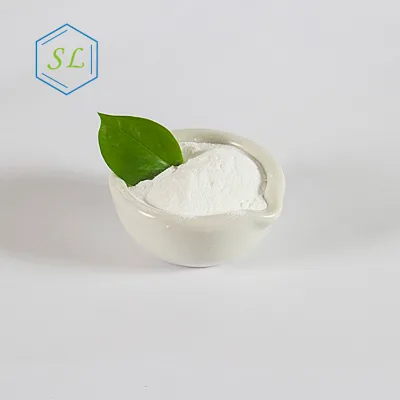
A significant point of confusion in the market data is the solubility profile. Some records list the substance as "Insoluble in Water," while others claim it is "Easily Soluble in Water" or simply "Soluble." For ammonium carbonate, the chemical reality is that it is highly soluble in water, decomposing into ammonia, carbon dioxide, and water. Therefore, any listing claiming insolubility for a product marketed as ammonium carbonate requires immediate technical validation. Buyers should treat these observed attributes as observations of specific listings rather than universal truths. The physical appearance is consistently described as a white powder or solid powder, which aligns with the standard morphology of the chemical.
The classification data further complicates the picture, with some entries referencing "MHCOGrade Standard" and others "M2COGrade Standard," both labeled as Food Grade. These non-standard nomenclatures suggest that suppliers may be using proprietary or internal classification codes rather than international chemical standards. To mitigate risk, procurement teams must demand a Certificate of Analysis (COA) that explicitly states the chemical name, CAS number, and purity percentage, rather than relying on the generic "Type" or "Classification" fields found in catalog listings. The storage requirements are generally consistent across listings, recommending a "Cool and Dry Place" to maintain stability, as the compound is sensitive to heat and moisture, which can cause premature decomposition.
Compliance, Certification, and Regulatory Verification
Navigating the compliance landscape for food grade additives requires rigorous verification of certifications and standards. The observed data lists ISO, RoHS, and COA as common certifications. While ISO certification indicates a quality management system, it does not automatically guarantee that the specific batch of ammonium carbonate meets food safety regulations for the target export market. RoHS compliance is typically relevant for electronic components and may be less critical for food additives, yet its presence suggests a supplier's broader quality adherence. The Certificate of Analysis (COA) is the most vital document for this category, as it provides the specific test results for the batch being sold.
The "Food Grade" standard is frequently cited in the product data, but buyers must understand that "Food Grade" is a broad term. In many jurisdictions, such as the United States or the European Union, food additives must meet specific monograph standards (e.g., FCC in the US or E-number standards in the EU). The supplied text mentions a "Grade Standard: Food Grade" but does not specify the jurisdiction or the specific regulatory body. Consequently, buyers cannot assume that a supplier claiming "Food Grade" status automatically complies with the regulations of their destination country. The presence of a COA is a strong indicator of compliance, but the data within that COA must be cross-referenced against the specific regulatory limits for heavy metals, arsenic, lead, and other contaminants relevant to the intended application.
Furthermore, the data mentions "Industrial Grade" classifications alongside "Food Grade." This distinction is paramount. Industrial grade ammonium carbonate may contain higher levels of impurities or different processing aids that are not permissible in food products. A supplier listing a product as "Food Grade" must be able to demonstrate a clear separation between their food-grade and industrial-grade production lines to prevent cross-contamination. The "Hazardous" flag observed in some listings requires careful interpretation. While ammonium carbonate is generally considered safe for food use, it can release ammonia gas, which is hazardous in high concentrations. This classification often refers to transport regulations (e.g., UN numbers) rather than food safety status. Buyers must ensure that the transport classification aligns with the food-grade nature of the product and that the supplier has the necessary documentation to handle the material safely during logistics.
Cost Drivers and Pricing Dynamics
The pricing landscape for Food Grade Ammonium Carbonate Powder is characterized by a wide observed range, spanning from $0.27 to $1,200 per unit. This extreme variance is not indicative of a single market price but rather reflects differences in packaging, quantity, purity levels, and the specific chemical formulation being offered. The lower end of the range likely corresponds to bulk industrial grades or smaller sample quantities with minimal packaging, while the higher end may represent specialized food-grade batches with extensive documentation, smaller packaging units (e.g., 25kg bags), or premium branding.
Several factors drive the cost of this commodity. First, the packaging method significantly impacts the unit price. The data shows packaging options ranging from 25kg bags to 1000kg bags (jumbo bags). Smaller packaging units, such as the 25kg bags, incur higher handling and material costs per kilogram compared to bulk 1000kg bags. Second, the Minimum Order Quantity (MOQ) plays a crucial role. The observed MOQ range of 1 to 1000 units suggests that buyers can access small trial quantities, but the per-unit cost will likely be higher for these smaller orders. Bulk buyers can negotiate better rates by committing to larger volumes, potentially utilizing the full capacity of a 20-foot container, which is noted to hold 20-22 metric tons.
Shipping and logistics costs are also major components of the final landed price. The origin of the product is listed as China, specifically Guangdong and Guangxi provinces. These regions are major chemical manufacturing hubs, but the distance to the buyer's location will dictate freight costs. The "Common" transport information suggests standard shipping methods, but the hazardous nature of the material (due to ammonia release) may require specialized handling or documentation, potentially increasing freight charges. Additionally, the "Neutral" shipping marks and "No" shipping marks indicate that the supplier does not apply proprietary branding to the packaging, which can reduce costs but may affect the perceived value for certain buyers.
Buyers should be wary of prices that seem too good to be true. A price significantly below the market average may indicate a compromise in purity, a mislabeled product (e.g., selling industrial grade as food grade), or hidden costs in shipping and customs. The observed impurity level of 99.2% MIN suggests that higher purity grades may command a premium. Therefore, the cost driver analysis must balance the upfront price with the total cost of ownership, including potential rejections due to non-compliance or the need for additional testing.
Typical Applications and Usage Scenarios
The versatility of Food Grade Ammonium Carbonate Powder makes it a valuable ingredient in several industrial and culinary applications. The primary use case identified in the data is for "Detergent Powder," although this is more commonly associated with industrial cleaning agents. In the food industry, ammonium carbonate is widely used as a leavening agent in baked goods, particularly in recipes that require a crisp texture, such as cookies, crackers, and certain types of bread. It decomposes at relatively low temperatures, releasing carbon dioxide and ammonia gases that create the desired lift and texture without leaving a soapy aftertaste, unlike some other leavening agents.
Another significant application noted is "Water Treatment." In this context, ammonium carbonate can be used to adjust pH levels or as a source of ammonia for specific treatment processes. However, for food applications, the purity and safety of the water treatment grade must be scrutinized to ensure it meets food safety standards. The "Usage: Food Grade" label confirms its suitability for direct food contact, but the specific application must be defined clearly to ensure the correct grade is supplied. The "White Powder" appearance and "Odorless" characteristic are desirable traits for food ingredients, ensuring that the additive does not alter the sensory profile of the final product.
The stability of the product is a key factor in its application. The data indicates the product is "Stable" and has a "Good" stability profile, with an expiration date of 24 months or 2 years. This shelf life is critical for manufacturers who need to maintain consistent product quality over time. However, the storage conditions must be strictly adhered to; the requirement for a "Cool and Dry Place" is essential to prevent premature decomposition. If the product is stored in humid or hot environments, it may lose its efficacy before reaching the end-user, leading to production failures.
Buyers should also consider the "Loading Qty" of 20-22 metric tons per container when planning their supply chain. This volume is substantial and suitable for large-scale manufacturers. For smaller operations, the availability of 25kg or 40kg bags allows for more flexible ordering, though at a higher unit cost. The "Neutral" shipping marks and "No" branding on the packaging suggest that the product is often used as a raw material by other manufacturers who will apply their own branding to the final product. This is common in the food processing industry, where the raw ingredient is not visible to the consumer.
Supplier Evaluation and Selection Criteria
Selecting the right supplier for food grade ammonium carbonate requires a multi-faceted evaluation process that goes beyond simple price comparison. The observed data lists several brand names, such as "Chang" and "Haihua," but buyers should not rely on brand recognition alone. Instead, the focus should be on the supplier's ability to provide consistent quality, reliable logistics, and comprehensive documentation. The presence of certifications like ISO and RoHS is a positive indicator, but the supplier must be willing to share their full quality management system documentation and audit reports.
One of the most critical evaluation criteria is the supplier's ability to provide a valid Certificate of Analysis (COA) for every batch. The data mentions COA as a standard certification, but the quality of the COA can vary. A robust COA should include specific test results for purity, heavy metals, and microbial counts, along with the batch number and production date. Buyers should verify that the supplier has a traceability system in place that allows them to track the product from the raw material source to the final shipment. This is particularly important given the conflicting data regarding solubility and classification observed in the market.
The supplier's location in China, specifically Guangdong and Guangxi, is a significant factor. These regions have a high concentration of chemical manufacturers, which can lead to competitive pricing and a wide variety of options. However, buyers must assess the supplier's logistical capabilities to ensure they can meet the required lead times and shipping schedules. The "Common" transport information suggests standard shipping, but the supplier should have experience in handling food-grade chemicals and navigating customs regulations for food additives.
Another important aspect of supplier evaluation is their responsiveness and communication. The data shows a wide range of MOQs, from 1 to 1000 units, indicating that some suppliers are flexible with order sizes. Buyers should engage with potential suppliers to gauge their willingness to accommodate specific requirements, such as custom packaging or specific purity levels. The "Customization: Available" attribute suggests that suppliers may be open to tailoring their products to meet specific buyer needs, which can be a significant advantage for large-scale operations with unique requirements.
Quality Control and Testing Protocols
Implementing a robust quality control (QC) protocol is essential for ensuring the safety and efficacy of Food Grade Ammonium Carbonate Powder. The observed data highlights several potential quality issues, such as conflicting solubility claims and varying purity levels. To mitigate these risks, buyers should establish a clear set of testing protocols that align with international food safety standards. The first step is to verify the chemical identity of the product through spectroscopic analysis or other appropriate methods to confirm that the substance is indeed ammonium carbonate and not a different compound like calcium carbonate or sodium carbonate.
Purity testing is another critical component of the QC process. The data mentions a purity of ≥99% and an impurity level of 99.2% MIN, which suggests that buyers should specify a minimum purity threshold in their purchase agreements. Regular testing for heavy metals, such as lead, arsenic, and mercury, is mandatory to ensure compliance with food safety regulations. The supplier should provide a COA that includes these specific test results, and buyers should consider conducting independent third-party testing to verify the supplier's claims.
Stability testing is also important, given the product's sensitivity to heat and moisture. Buyers should verify that the product has been stored under the recommended "Cool and Dry Place" conditions and that the packaging is intact and free from damage. The expiration date of 24 months should be clearly marked on the packaging, and buyers should ensure that the product they receive has sufficient shelf life remaining to meet their production needs. The "Stable" and "Good" stability attributes in the data suggest that the product is generally reliable, but this must be confirmed through batch-specific testing.
Finally, buyers should implement a sampling plan that ensures representative testing of each shipment. Given the "Loading Qty" of 20-22 metric tons per container, it is impractical to test every kilogram of the product. Instead, a statistically valid sampling plan should be used to select representative samples for testing. This approach balances the need for quality assurance with the practical constraints of testing large volumes. By adhering to these QC protocols, buyers can minimize the risk of receiving substandard or non-compliant product and ensure the safety of their final food products.
Long-Term Procurement and Supply Chain Resilience
Building a resilient supply chain for Food Grade Ammonium Carbonate Powder requires a strategic approach that considers long-term factors beyond immediate transactional needs. The observed data indicates a wide range of packaging options, from 25kg bags to 1000kg bags, which offers flexibility in inventory management. However, buyers should develop a diversified supplier base to mitigate the risk of supply disruptions. Relying on a single supplier, even one with a strong track record, can be risky given the potential for production issues, regulatory changes, or logistical delays.
The "Customization: Available" attribute suggests that suppliers may be willing to work with buyers to develop long-term partnerships that include tailored solutions. This could involve custom packaging, specific purity levels, or dedicated production lines to ensure consistent quality. Buyers should explore these opportunities to strengthen their relationship with suppliers and secure a reliable supply of high-quality product. Additionally, the "Neutral" shipping marks and "No" branding indicate that the product is often used as a raw material, which means buyers should consider the potential for rebranding or private labeling in their long-term strategy.
Logistics and transportation are also critical long-term considerations. The "Common" transport information and the origin in China suggest that buyers should have a clear understanding of the shipping routes and lead times involved. The "Loading Qty" of 20-22 metric tons per container is a significant volume, and buyers should plan their inventory levels accordingly to avoid stockouts or overstocking. The "Cool and Dry Place" storage requirement must be maintained throughout the supply chain, from the supplier's facility to the buyer's warehouse. This may require investing in specialized storage facilities or working with logistics partners who have the necessary infrastructure.
Finally, buyers should stay informed about regulatory changes and market trends that could impact the supply of food grade ammonium carbonate. The "Food Grade" standard is subject to change, and new regulations may be introduced that affect the production, import, or use of the product. By maintaining a proactive approach to regulatory compliance and supply chain management, buyers can ensure the long-term success of their procurement strategy and the safety of their food products.
FAQs
What is the typical purity level for food grade ammonium carbonate?
The product typically meets a purity threshold of 99% or higher, with some listings specifying a minimum of 99.2%. Buyers must verify the exact percentage on the Certificate of Analysis for each batch to ensure compliance with food safety standards.
How should Food Grade Ammonium Carbonate Powder be stored?
Store the powder in a cool and dry place to maintain stability and prevent premature decomposition. The product has a shelf life of approximately 24 months, but exposure to heat or moisture can compromise its quality before the expiration date.
Which certifications are commonly available for this chemical product?
Common certifications include ISO, RoHS, and a Certificate of Analysis (COA). While ISO indicates quality management, the COA is critical as it provides specific test results for purity and contaminants required for food grade compliance in various jurisdictions.
Can buyers request customization for packaging sizes?
Yes, customization is available for packaging, with options ranging from 25kg bags to 1000kg jumbo bags. Buyers should confirm specific packaging requirements with the supplier, as smaller units often incur higher handling costs per kilogram compared to bulk options.
What is the minimum order quantity for sourcing this powder?
The minimum order quantity ranges from 1 unit to 1000 units depending on the supplier and packaging configuration. Smaller trial orders are possible, but bulk buyers can negotiate better rates by committing to larger volumes like a full 20-foot container.
Where are the primary manufacturing locations for this product?
The primary manufacturing origins are in China, specifically within the Guangdong and Guangxi provinces. These regions are major chemical hubs, and buyers should account for logistics costs and shipping times when sourcing from these specific locations.