Source Food Processing Basmati Rice for Enriched Rice, Snacks and Instant Meals
Buyers can compare 24 listings for Food Processing Basmati Rice equipment and production lines, including twin screw extruders with outputs from 250 to 3000kg/h. Review specifications such as PLC automation, SUS304 barrels, Siemens motors, heating options, and CE or ISO certification before requesting quotes from suppliers.
Updated
Key considerations
Products List

Instant Rice Artificial Rice Fortified Rice Nutritional Rice Food Processing Line
$24000.00 - $26000.00
MOQ: 1 Sets


Hot Sale Artificial Rice Processing Machine Nutritional Rice Processing Machine
$18000.00 - $20000.00
MOQ: 1 Pieces


Instant Rice/Nutritional Rice Food /Artificial Rice Processing Line/Machine
$44000.00 - $46000.00
MOQ: 1 Sets


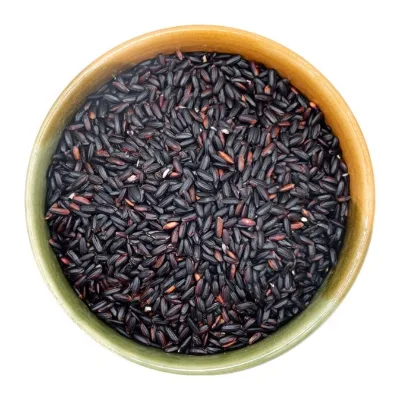
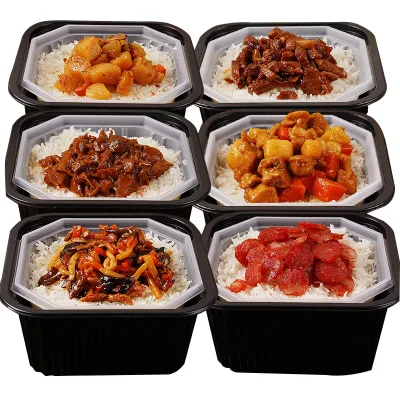
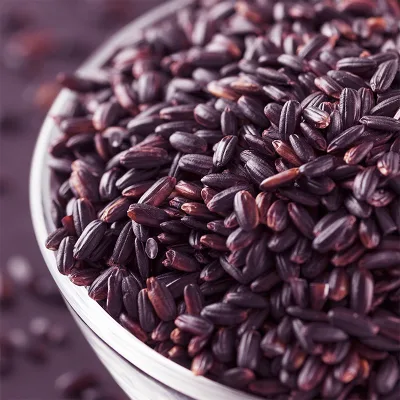
$2.4086 - $2.7227
MOQ: 1000 Minimum
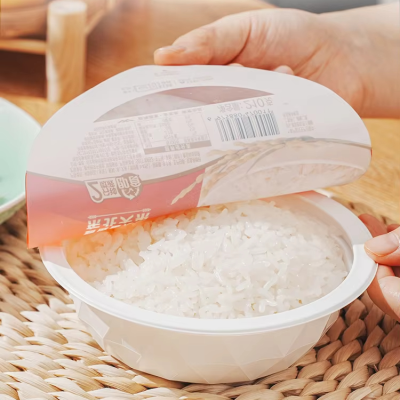
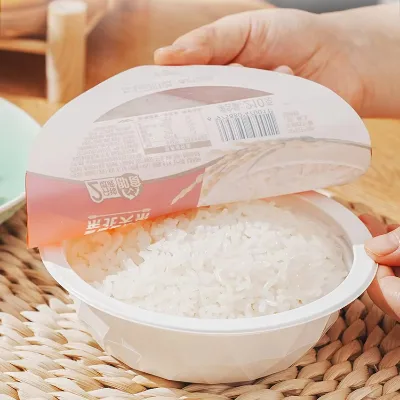
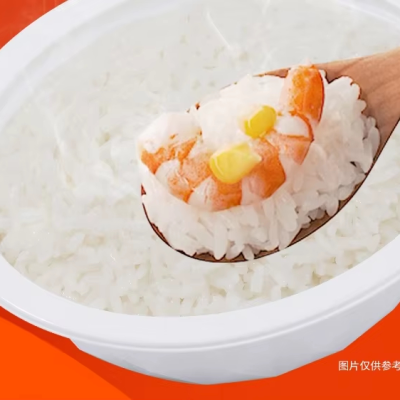
Top Selling Quick & Easy Instant Rice Packs Precooked Rice for Busy Weeknights
$0.4084 - $1.0218
MOQ: 1 Minimum


Comprehensive Sourcing Guide
Food Processing Basmati Rice Sourcing Guide
Procurement teams searching for Food Processing Basmati Rice equipment or processed rice products encounter a fragmented supplier landscape, where listings may refer to raw grain supply, fortified rice production lines, or complete extrusion plants. This guide helps buyers separate those categories, interpret listing signals with discipline, and structure verification steps before committing capital. The observations below are drawn from actual product-page data for nutritional artificial rice process machines, not from assumed market conditions, so treat every attribute as an indication to confirm rather than a universal guarantee.
The central product category in the observed listings is the nutritional enriched rice processing machine: equipment that takes broken rice as raw material and converts it into nutritional rice through thermal processing. Listings describe output capacities spanning roughly 250–350 kg/h, 1500–2000 kg/h, and 2500–3000 kg/h, with broader plant capacity stated as 300–3000 kg/h. Buyers should first match their intended finished product—enriched or artificial rice grains—against this capability, since a rice mill or grain trader will not satisfy an extrusion-processing requirement.
Product Scope and Observed Listing Signals
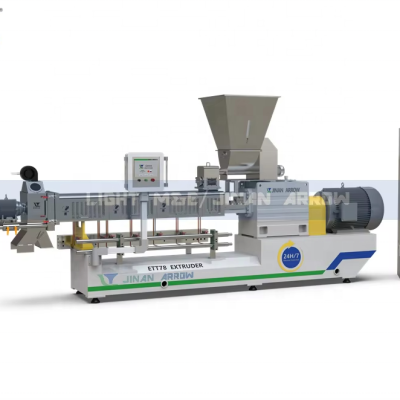
Observed listings consistently describe a production flow of mixing, extrusion, drying, and cooling, with the main machine specified as a double screw extruder or twin screw food extruder. Model identifiers such as AHE62 and ATE65 appear alongside stated footprints of 2100035004300 and 1800035004300, which buyers should read as plant-layout planning inputs rather than guaranteed shipping dimensions. One listing names Shandong Arrow as the brand and labels the product a Nutritional Artificial Rice Process Machine, while another uses Nutritional Enriched Rice Processing Machine—essentially the same equipment category described differently.
Signal interpretation matters when prices in a search result range from trivially low values to 80000 USD, and MOQs span from 1 to 10000 units. Such spread usually reflects a mix of spare parts, accessories, and complete lines rather than one product family. Buyers should filter by whether the listing specifies extrusion processing, states a capacity output, and names the finished product. Listings missing those three anchors rarely represent the complete plant a fortified rice producer actually needs.
Technical Specifications to Verify
Observed specifications give buyers a concrete verification checklist. Power ratings appear as 90kw installed power on one model and 55kw on another, with voltages listed as 380V and 220/380/Customized. Heating approaches vary across listings: electric heating, and heating sources including electricity, gas, steam, and thermic oil. One listing states adjustable heating temperature, a critical feature for rice-based extrusion where formulation changes affect cooking behavior. Confirm which heating source your facility can support before shortlisting, since a gas-heated line cannot simply substitute for an electric one.
Mechanical construction claims deserve equal scrutiny. Listings state the barrel is stainless steel alloy with lining, or modular with easy replacement, and that screws use a modular alloy design for easy replacement—both relevant to wear life when processing abrasive rice formulations. Material is specified as SUS304 stainless steel in one listing, and color as silver. Ask suppliers to confirm contact-part materials in writing, specify which components are modular and how replacements are ordered, and verify the stated Siemens motor and Rexroth inverter brands are included in the quoted configuration.
Compliance and Safety Documentation
Certification claims in the observed listings include CE, ISO, and a combined "ISOCE" notation, which buyers should treat as claims to verify through certificate numbers and issuing bodies rather than accepted at face value. Request copies of the actual certificates and confirm their scope covers the machine category being purchased, not merely the factory. A CE mark on an accessory does not demonstrate conformity for a complete extrusion line, so clarify what assembly-level documentation the supplier can issue for export to your destination market.
Beyond marks, thermal processing equipment requires food-safety documentation tied to product contact surfaces. Since listings cite SUS304 stainless steel and rice as press materials, ask for material certificates confirming the stated grade, cleaning and sanitation guidance for the mixing-through-cooling flow, and electrical safety documentation matching your site voltage. Where listings state video technical support as the after-sales provision, confirm in writing whether on-commissioning supervision is available, because documentation alone does not validate safe operation of heated extrusion equipment in a live plant.
Cost Drivers and Commercial Terms
Observed listing prices ranging from 0.01 to 80000 USD illustrate why buyers must decompose quotations into components: extruder barrel and screw configuration, motor and inverter brands, drying and cooling sections, heating source hardware, and control system. A fully automatic PLC operation command adds cost over simpler controls, and heating-source choice materially shifts both capital and operating expense. Ask each shortlisted supplier to price the complete mixing-extrusion-drying-cooling line separately from optional items so comparisons remain like-for-like.
Commercial terms in the observed data are limited: packing is described as plastic film in containers or general packing, and origin is stated as China. Neither shipping scope, lead time, nor payment terms appear in the data, so these must be negotiated explicitly. Define Incoterms, container loading responsibility given the stated large footprints, spare-part inclusion at dispatch, and warranty duration. With MOQs observed from 1 to 10000, clarify whether you are buying one complete line or pricing spare screws and barrels, since that distinction changes unit economics dramatically.
Supplier Qualification and Quality Control
Qualification should start with the attributes suppliers themselves volunteer, then probe deeper. Listings claim advantages such as low consumption and high efficiency and describe operation as fully automatic or fully automatic PLC. Ask for energy consumption data at the stated output levels—250–350 kg/h, 1500–2000 kg/h, or 2500–3000 kg/h—and a trial run using broken rice similar to your formulation. Observed customization availability means you can also request configuration changes, but each deviation should be documented in a technical annex with acceptance criteria.
Quality control during production benefits from defined inspection points: verify modular screw and barrel dimensions on receipt, confirm the lined barrel construction matches the specification, and check motor and inverter nameplates against the quoted Siemens and Rexroth brands. Request factory test videos showing the full flowchart running, not just the extruder alone. For buyers purchasing remotely from China, appoint a third-party inspection at pre-shipment to check the stated 2100035004300 or 1800035004300 footprints, packing integrity, and completeness against the packing list before containers are sealed.
Long-Term Procurement Checks
Long-term value depends on consumable availability and support responsiveness. Because the screw and barrel are advertised as modular and easy to replace, build a spare-parts schedule from day one: quantity of screw segments, barrel liners, and heating elements consumed per production volume, ordered against confirmed part numbers. Confirm that video technical support covers troubleshooting as well as installation, and establish response-time expectations in the contract. A line idled for weeks awaiting a replacement screw segment erases any purchase-price saving quickly.
Finally, plan for evolution in your product portfolio. Enriched rice formulations change as nutritional requirements shift, so verify that adjustable heating temperature and modular screw configuration allow recipe changes without new hardware, and ask how customization works after commissioning—whether formulation, capacity, or voltage upgrades are supported for an installed base. Track actual output against the stated 300–3000 kg/h capacity band over the first production quarters, and use that data to negotiate service agreements, spare-part pricing, and any future capacity expansion with evidence rather than promises.
FAQs
How does a nutritional artificial rice processing line work?
The line follows a flowchart of mixing, extrusion, drying, and cooling. Broken rice is blended with nutritional additives, then conveyed into a double screw extruder where adjustable heating shapes and cooks the material. The extruded grains pass through a dryer to reduce moisture and a cooler to stabilize them before packaging. Fully automatic PLC operation keeps the process consistent at production scale.
What capacity options are available for artificial rice production machines?
Configurations typically cover 300-3000kg/H, with specific models rated at outputs of 250-350kg/H, 1500-2000kg/H, and 2500-3000kg/H. Your choice depends on raw material availability, drying capacity, and staffing. Smaller outputs suit pilot production or new product testing, while the higher-output lines fit continuous industrial operation. Capacity should be matched across mixing, extrusion, drying, and cooling stages to avoid bottlenecks.
What raw material can these machines process?
The press material is rice, specifically broken rice, which is the standard input for nutritional artificial rice production. Broken rice is economical and widely available as a milling byproduct, making it well suited for reconstitution into enriched grains. The material is mixed with nutritional fortificants before extrusion. Consistent particle size and moisture conditioning of the raw material help maintain stable extrusion and uniform final grain quality.
Which heating sources can be used with these machines?
Heating sources include electricity, gas, steam, and thermic oil, with some models configured for electric heating. Selection depends on local energy costs, available infrastructure, and plant safety rules. Electric heating suits facilities without gas supply, while gas or steam options can lower operating costs where those utilities are already installed. Heating temperature is adjustable on the extruder barrel to match recipe requirements.
What certifications do these rice processing machines carry?
Listed certifications include CE and ISO, though certification coverage varies by specific model, so buyers should confirm the exact certificates for the configuration they intend to purchase. CE supports European market compliance for machinery safety, and ISO reflects a documented quality management approach. Request certificate copies and scope statements during supplier evaluation, and verify that the certified scope covers the extrusion line you are sourcing.
Can the machines be customized for specific production needs?
Yes, customization is available, and machines are offered as customized units. Options can include voltage configurations such as 220V, 380V, or customer-specific requirements, as well as heating method selection between electric and other sources. Capacity targets, layout, and material contact surfaces can also be specified. Discuss your raw material characteristics, target output, and plant utilities with the supplier so the configuration matches your production line.
What are the key machine specifications buyers should review?
Important specifications include the main machine, a twin screw food extruder with modular screw design in alloy material for easy replacement, and a stainless steel alloy barrel with lining. Model examples include ATE65 and AHE62, with installed power of 55kw and 90kw respectively, operating at 380V. Footprints are around 18000*3500*4300 and 21000*3500*4300. Motors use Siemens components and inverters are Rexroth.
What after-sales support and packaging are provided for these machines?
After-sales support is provided through video technical support, which allows remote guidance for installation, commissioning, and troubleshooting. Packaging typically uses plastic film in containers for shipment, with some listings noting general packing. Before shipment, confirm packing details, container loading arrangement, and spare parts inclusion in writing. Also clarify what documentation, operating manuals, and remote assistance response times are covered under the after-sales service agreement.