Source Food Storage Glass Jar for Daily Use, Food, and General
Compare 30 Food Storage Glass Jar options from Chinese manufacturers featuring high borosilicate glass, acacia wood lids, and customizable designs. Buyers can evaluate capacities ranging from 150ml to 1000ml with various packing and certification standards for daily use and food applications.
Key considerations
Products List


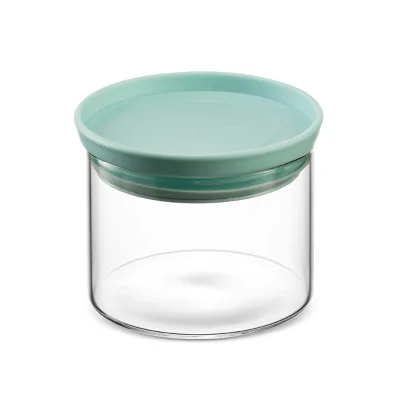
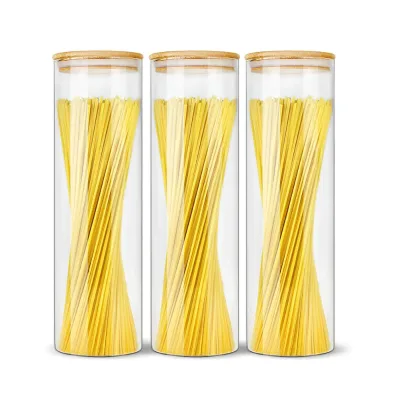
High Quality Kitchenware Storage Jar Borosilicate Glass Jar with Different Lid
$0.60 - $1.80
MOQ: 3000 Pieces


Storage Containers with Lids Glass Jar Glass Containers for Food Storage
$6.70 - $7.00
MOQ: 300 Pieces




Comprehensive Sourcing Guide
Strategic Sourcing Guide for Food Storage Glass Jars
Understanding Product Specifications and Material Integrity
When sourcing food storage glass jars, the primary focus must remain on the fundamental material composition and structural design that ensure safety and longevity. Based on the available market data, the core material for high-quality storage vessels is high borosilicate glass. This specific type of glass is distinguished by its ability to withstand significant thermal shock, making it suitable for both hot and cold food storage applications without cracking. The transparency of the glass is a critical visual attribute, allowing for immediate identification of contents, which is essential for inventory management in both commercial and domestic settings.
The physical dimensions and capacity of these jars vary significantly across different product lines. Buyers should anticipate observing capacity ranges that span from 150ml to 700ml for smaller, individual-use containers, while larger storage solutions may offer capacities between 500ml and 1000ml. The physical footprint is equally important for logistics; standard packaging dimensions observed in the market include compact units measuring approximately 12x12x12cm and larger configurations around 15x15x20cm. The shape of the jar is predominantly round, facilitating efficient stacking and storage, though some variations may present irregular shapes depending on the specific design intent.
Lid construction is a pivotal specification that dictates the seal integrity and overall utility of the jar. The most common configuration involves a combination of acacia wood and food-grade silicone. This pairing offers an aesthetic appeal associated with natural materials while ensuring an airtight seal through the silicone gasket. Alternative lid types include glass lids, which provide a fully transparent aesthetic, and screw lids, which offer a mechanical locking mechanism. The presence or absence of handles is another variable; many units are designed without handles to maximize space efficiency, while others may incorporate handles for easier transport of larger volumes.
Compliance, Certification, and Safety Standards
In the realm of food contact materials, compliance is not merely a regulatory formality but a prerequisite for market access and consumer trust. The primary certification observed in the current supply landscape is the CE mark, which indicates conformity with health, safety, and environmental protection standards for products sold within the European Economic Area. However, buyers must verify that the CE certification specifically covers the food-contact aspects of the glass and the silicone components, as general CE marking does not automatically guarantee food safety compliance.
The term "Safe Food Grade Glass Ware" is frequently used as a product feature, but this is an observation rather than a guaranteed universal attribute for every listed item. Buyers should request specific documentation proving that the glass meets international food safety standards, such as those set by the FDA in the United States or equivalent regulations in other regions. The use of food-grade silicone in the lid assembly is a critical component that must be verified separately, as not all silicone compounds are suitable for direct food contact.
Additionally, the eco-friendly status of the product is a growing consideration. While many suppliers list their products as eco-friendly, this claim should be substantiated by the recyclability of the glass and the sustainability of the wood sourcing. The raw material, high borosilicate glass, is inherently recyclable, but the environmental impact of the wood lid and the packaging materials must also be assessed. Buyers should inquire about the specific standards or certifications that validate these eco-friendly claims, ensuring they align with the sustainability goals of their organization.
Cost Drivers and Pricing Dynamics
The pricing structure for food storage glass jars is influenced by a complex interplay of material costs, manufacturing processes, and order volumes. The observed price range in the market spans from $0.03 to $7.00 USD, a wide variance that reflects differences in size, complexity, and customization levels. The lower end of this spectrum typically corresponds to basic, smaller capacity jars with minimal customization, while the higher end includes larger units with premium materials like acacia wood lids and extensive branding options.
Minimum Order Quantity (MOQ) is a significant factor in determining the unit cost. The market data indicates an MOQ range from 40 units to 10,000 units. Smaller MOQs, such as 40 units, are often associated with custom or prototype orders, which carry a higher per-unit cost due to the setup and handling overhead. Conversely, bulk orders approaching 10,000 units benefit from economies of scale, resulting in a lower unit price. Buyers must balance their inventory needs with cash flow constraints, recognizing that ordering in larger quantities reduces the per-unit cost but increases the initial capital outlay.
Customization is another major cost driver. The availability of OEM/ODM services allows for tailored designs, including customized logos and specific product models. While these services add value, they also increase the production complexity and cost. The choice of packaging, whether it is safe packaging for individual units or bulk packing on pallets, also impacts the final price. Buyers should request detailed cost breakdowns that separate the base product cost from customization fees and packaging expenses to ensure transparency in their procurement decisions.
Typical Applications and Usage Scenarios
The versatility of food storage glass jars makes them suitable for a wide array of applications across different sectors. The primary usage is for food storage, encompassing everything from dry goods like grains and spices to wet ingredients like sauces and preserves. The transparency of the glass allows for easy visual inspection of the contents, which is particularly beneficial for inventory management in retail and hospitality environments.
In the domestic sector, these jars are often used for daily use, serving as containers for pantry organization, meal prep, and beverage storage. The Japanese style and European style variations cater to different aesthetic preferences, allowing consumers to match the storage solution with their kitchen decor. The capacity range of 150ml to 1000ml supports various needs, from single-serving portions to family-sized storage.
For commercial applications, the jars are utilized in settings such as restaurants, cafes, and retail stores. The screw lid and glass lid options provide secure sealing for products that require long-term storage or frequent access. The eco-friendly nature of the glass material aligns with the sustainability initiatives of many modern businesses, making these jars an attractive choice for brands aiming to reduce their environmental footprint. The "General" application scenarios listed in the market data suggest that these jars are adaptable to a broad range of food types, provided the specific compatibility of the lid material with the food is verified.
Supplier Evaluation and Sourcing Strategy
Evaluating suppliers requires a meticulous approach to ensure reliability and quality consistency. The origin of the products is a key factor, with major manufacturing hubs located in Hebei and Shandong, China. These regions are known for their glass manufacturing capabilities, but buyers should verify the specific factory capabilities and quality control processes of the supplier. The presence of a "Customizable" product model and "Handmade/Other" processes indicates that some suppliers offer artisanal or semi-automated production, which may affect lead times and consistency.
Buyers should assess the supplier's ability to meet customization requirements, including logo placement and design modifications. The availability of OEM/ODM services is a positive indicator of a supplier's flexibility, but it is essential to confirm their capacity to handle the desired order volume and timeline. The payment terms, such as T/T and LC, are standard in the industry, but buyers should negotiate terms that protect their interests, especially for large orders.
Packaging is another critical aspect of supplier evaluation. The observed packaging options include safe packaging, carton/pallet, and bulk pack configurations. The supplier's ability to provide secure packaging that prevents breakage during transit is paramount. Buyers should request samples of the packaging to ensure it meets their logistical requirements and can withstand the rigors of shipping.
Quality Control and Long-Term Procurement Considerations
Quality control is essential to mitigate the risks associated with glass products, which are susceptible to breakage and defects. Buyers should implement a rigorous inspection protocol that includes visual checks for cracks, chips, and imperfections in the glass. The seal integrity of the lid, particularly the silicone gasket, must be tested to ensure it provides an airtight seal. The use of high borosilicate glass is a strong indicator of quality, but batch-to-batch consistency must be verified through testing.
Long-term procurement considerations involve building a sustainable relationship with suppliers that can adapt to changing market demands. The ability to customize products, such as adding logos or modifying designs, allows buyers to differentiate their offerings in a competitive market. However, buyers must be prepared for the potential variability in lead times and production schedules, especially when dealing with custom orders.
The environmental impact of the product is also a long-term consideration. The recyclability of glass and the sustainability of the wood components should be factored into the procurement strategy. Buyers should seek suppliers who are committed to sustainable practices and can provide evidence of their eco-friendly claims. By focusing on these long-term factors, buyers can ensure a reliable supply chain that supports their business goals and sustainability initiatives.
Comparative Analysis of Product Variants
To facilitate informed decision-making, the following table compares key attributes of the observed product variants. This comparison highlights the diversity in specifications, materials, and capabilities available in the market.
| Attribute | Variant A (Standard) | Variant B (Premium) | Variant C (Custom) |
|---|---|---|---|
| Material | High Borosilicate Glass | High Borosilicate Glass | High Borosilicate Glass |
| Lid Material | Acacia Wood + Silicone | Acacia Wood + Silicone | Customizable |
| Capacity | 150ml - 700ml | 500ml - 1000ml | Customizable |
| Shape | Round | Round | Irregular |
| Style | Japanese Style | European Style | Customizable |
| Certification | CE | CE | To Be Verified |
| MOQ | 40 - 10000 | 1000 | Customizable |
| Packaging | Safe Packaging | Carton/Pallet | Bulk Pack |
| Origin | Hebei, China | Shandong, China | China |
This table illustrates that while the core material remains consistent, the variations in capacity, style, and customization options allow buyers to select the most appropriate product for their specific needs. The MOQ and packaging differences further emphasize the importance of aligning supplier capabilities with procurement requirements. By carefully evaluating these factors, buyers can optimize their sourcing strategy and ensure the acquisition of high-quality food storage glass jars that meet their operational and strategic objectives.
FAQs
What materials are used for the jar and lid?
The jar is made of high borosilicate glass, and the lid combines acacia wood with food-grade silicone. This combination ensures thermal shock resistance and an airtight seal suitable for daily food storage applications.
Which capacities are available for these glass jars?
Available capacities range from 150ml to 700ml for smaller units and 500ml to 1000ml for larger storage solutions. Buyers can select specific sizes based on their inventory needs and intended usage scenarios.
Can suppliers provide customized logos and designs?
Yes, suppliers accept OEM and ODM requests for customized logos and designs. The product model and style can be tailored, allowing buyers to create unique branding for their specific market requirements.
What certifications do the products typically hold?
The products often carry CE certification, indicating conformity with health and safety standards. Buyers should verify that this certification specifically covers food-contact aspects for the glass and silicone components used.
How is the product packed for safe shipping?
Products are shipped in safe packaging, cartons, or on pallets depending on the order size. Bulk packs typically contain 24 pieces per carton to ensure stability and prevent breakage during transit.
What is the minimum order quantity for these jars?
The minimum order quantity ranges from 40 units for custom prototypes up to 10,000 units for bulk orders. Lower MOQs usually incur higher per-unit costs due to setup overheads.
Where are these glass jars manufactured?
Manufacturing origins include Hebei and Shandong provinces in China. These regions are known for their glass production capabilities, offering a range of styles from Japanese to European designs.