Source Food Steamer for Commercial Kitchens, Hotels, and Catering
Find 30 Food Steamer options including electric models with timing devices and stainless steel units. Compare specifications like power, capacity, and structure to select the right equipment for your kitchen needs.
Key considerations
Products List


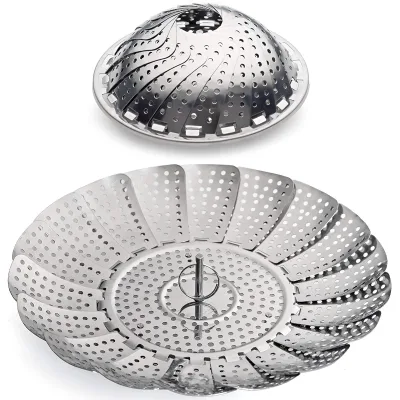


Stainless Steel Commercial Electric Tamale Steamer Food Steamer Machine Food Steaming Machine
$2000.00 - $3500.00
MOQ: 1 Pieces


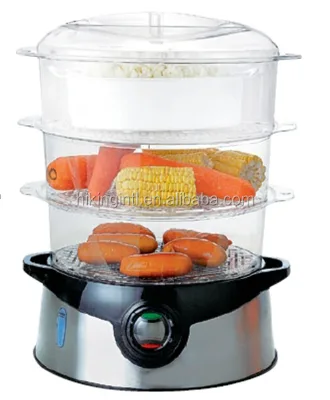


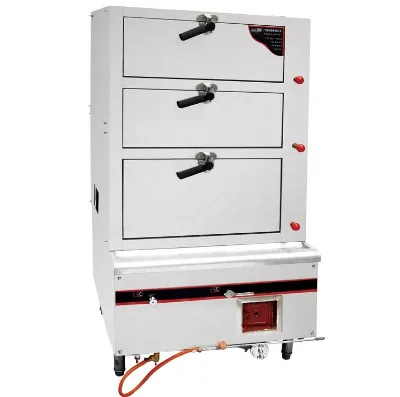
Industrial Multi Purpose Gas Food Steamer Machine Food Grade Steam Cabinet
$608.61 - $710.05
MOQ: 1 pieces

Large Oval Shape Steaming Steam Cooking Silicone Food Microwave Steamer with Lid
$3.71 - $3.98
MOQ: 1000 Pieces


Comprehensive Sourcing Guide
Strategic Sourcing Guide for Industrial and Commercial Food Steamers
Procuring food steamers for B2B operations requires a rigorous understanding of the distinction between industrial-scale equipment and smaller commercial or semi-commercial units. The market presents a wide spectrum of options, ranging from high-capacity electric cabinets designed for institutional kitchens to compact, stainless steel units suitable for specific culinary applications. Buyers must navigate a complex landscape of technical specifications, power requirements, and material standards to ensure the selected equipment aligns with operational throughput and safety protocols. This guide outlines the critical factors for evaluating Food Steamer suppliers, focusing on the observable data points and technical realities present in the current supply chain.
Technical Specifications and Operational Capacity
The first step in sourcing food steamers is defining the operational capacity required for the specific use case. The market data indicates a significant divergence in product architecture. On one end of the spectrum, there are large-scale industrial units characterized by a "Three Door" structure and a power rating of 15 Kw. These units are designed for high-volume production, often featuring a specific model designation such as ADMD-ZG-3M. For these heavy-duty applications, the physical dimensions are substantial, with standard dimensions observed around 840mm in width, 640mm in depth, and 1795mm in height. The capacity for these units is often quantified by the number of rounds, with specific configurations noted as 6kg per round across 12 rounds, suggesting a massive throughput capability suitable for large catering or factory settings.
Conversely, the market also offers mid-range and compact solutions. A "Single Door" structure is available with a lower power consumption of 6 Kw, identified by model numbers such as ADMD-RX-6 or ADMD-PH-6. These units typically feature a smaller footprint, with dimensions observed around 710mm x 665mm x 1175mm or 710mm x 645mm x 1110mm. The capacity for these models is often defined by the number of plates, with a 6-plate configuration being a common specification. For even smaller applications, there are portable units with a single layer, constructed from stainless steel, and featuring dimensions that vary significantly, such as an open size of 23.5cm and a closed size of 14cm. These compact units often carry model numbers like 3892 or HT-FS003 and are designed for environments where space is a premium, such as small restaurants or specific food preparation stations.
When evaluating technical specifications, buyers must verify the power source. All observed industrial and commercial units in this category utilize an electric power source, eliminating the need for gas line infrastructure but requiring robust electrical connections. The presence of a timing device is a critical feature for consistency in cooking processes, ensuring that steaming times are precise and repeatable. Additionally, the material composition is paramount; the majority of observed units utilize stainless steel for the main body and pot covers, ensuring durability and resistance to corrosion in humid environments. Some smaller components or specific models may utilize PP (polypropylene) materials, which should be verified for food-grade safety.
Compliance, Certification, and Safety Standards
In the realm of B2B procurement, compliance is not merely a formality but a prerequisite for operational safety and legal liability management. While the supply chain data mentions CE certification as a background element, buyers must treat this as a verification point rather than a guaranteed attribute for every listed product. The presence of a CE mark indicates conformity with health, safety, and environmental protection standards for products sold within the European Economic Area, but it does not automatically apply to all markets or all product lines within a supplier's catalog.
Buyers must explicitly request and verify certification documents for the specific model being purchased. For industrial units with high power ratings (15 Kw), electrical safety certifications are critical to prevent fire hazards and equipment failure. The "Three Door" and "Single Door" structures imply different pressure and heat distribution dynamics, which may require specific safety interlocks or pressure relief valves that are not always standard. Furthermore, the origin of the product, primarily identified as China (specifically Guangdong), necessitates a thorough review of the manufacturing standards applied at the source. Buyers should not assume that all products from a specific region meet international standards without direct verification.
The "Eco-Friendly" feature noted in some product descriptions should be scrutinized. This claim often relates to energy efficiency or the use of recyclable materials, but without third-party testing data, it remains a marketing observation. Procurement teams should request energy consumption reports or efficiency ratings to validate these claims, especially for high-power units where energy costs are a significant operational expense. Additionally, the "Hand Wash Only" care instruction for certain components suggests limitations in the durability of specific materials or seals, which must be factored into the maintenance budget and labor planning.
Cost Drivers and Pricing Dynamics
The pricing for food steamers is highly variable, influenced by capacity, material quality, and customization options. The observed price range in the market spans from $0.64 to $3,815 USD, reflecting the vast difference between small, single-layer units and large, multi-door industrial cabinets. The lower end of the spectrum typically corresponds to compact, single-item units with basic features, such as the 1-layer stainless steel steamers or smaller models with minimal accessories. These units often have a low Minimum Order Quantity (MOQ), sometimes as low as 1 unit, making them accessible for small businesses or pilot testing.
In contrast, the upper end of the price range is driven by industrial-grade equipment. The 15 Kw, three-door units with high capacity (6kg x 12 rounds) represent a significant capital investment. The cost is driven by the complexity of the manufacturing process, the volume of stainless steel used, the integration of timing devices, and the structural integrity required for continuous operation. Customization is a major cost driver; the availability of customized options allows buyers to tailor dimensions, power ratings, or internal configurations to their specific kitchen layouts. However, these customizations often come with higher MOQs, ranging up to 5,000 units for large-scale industrial orders, which can impact the unit price and cash flow requirements.
Buyers must also consider the packaging and shipping costs, which are often separate from the unit price. The observed packaging methods include carton boxes, wooden frames, and freight shipping, which vary significantly in cost depending on the weight and dimensions of the unit. For heavy industrial units, freight shipping is the standard, whereas smaller units may be shipped via standard courier services. The "Small Orders Accepted" attribute for some models indicates flexibility for buyers with lower volume needs, but the unit price for these smaller orders is typically higher due to the lack of economies of scale.
Typical Applications and Usage Scenarios
The application of food steamers varies widely based on the unit's capacity and design. Large industrial units with a "Three Door" structure and high power ratings are ideal for institutional settings such as large hospitals, university cafeterias, or commercial food processing plants. These environments require the ability to steam large quantities of food, such as rice or vegetables, with high consistency and speed. The specific data point of "Steamed Rice Time: 33/Min" suggests a high-throughput capability for rice preparation, which is a staple in many Asian cuisines and institutional menus.
Mid-range units with a "Single Door" structure and 6 Kw power are suitable for medium-sized restaurants, hotels, or catering services that need to prepare food in batches without the overhead of a full industrial line. These units often feature a specific number of plates (e.g., 6 plates), allowing for the simultaneous steaming of different dishes or ingredients. The "Apply for: Food Steamer use for cooking" designation confirms their primary function in active food preparation.
Compact, single-layer units are best suited for small businesses, food trucks, or home-based businesses that require a versatile, space-saving solution. The "Suit for: Kitchen" and "Usage: Storage" attributes for some models indicate dual functionality, where the unit can serve as both a cooking appliance and a storage container for prepared food. The "Light Grey" color and "Stainless Steel" material suggest a focus on aesthetics and hygiene, which are important for customer-facing environments. The "Rechargeable Battery: No" attribute confirms that these units rely on a constant power supply, making them unsuitable for off-grid applications without additional power infrastructure.
Supplier Evaluation and Quality Control
Evaluating suppliers for Food Steamer procurement requires a multi-faceted approach that goes beyond price comparison. The origin of the products, primarily Guangdong, China, indicates a mature manufacturing hub with a high concentration of appliance producers. However, the presence of multiple model numbers and varying specifications suggests that buyers must carefully distinguish between original equipment manufacturers (OEM) and private label suppliers. The "Brand Name: OEM" attribute for some models indicates that the supplier may be producing for other brands, which can be a cost-effective option but requires careful vetting of the underlying manufacturing quality.
Quality control should be a central part of the supplier evaluation process. Buyers should request detailed specifications for the "Stainless Steel" material used, including the grade (e.g., 304 or 316), to ensure resistance to corrosion and durability. The "Care Instructions: Hand Wash Only" for certain components suggests that some parts may not be dishwasher-safe, which is a critical operational detail for high-volume kitchens. Additionally, the "Accessories: With None" attribute for some models indicates that buyers may need to source additional parts separately, which can impact the total cost of ownership.
Suppliers should be evaluated on their ability to provide consistent quality across batches. The "Available Quantities" ranging from 120-150 to 200-250 units suggest that some suppliers have limited stock, while others may have larger inventory or production capacity. Buyers should verify the lead times and production schedules to ensure that the supplier can meet their demand, especially for custom orders. The "Small Orders Accepted" attribute is a positive sign for flexibility, but buyers should confirm the quality standards applied to these smaller batches to ensure they match the specifications of larger orders.
Long-Term Procurement and Maintenance Considerations
Long-term procurement strategies for food steamers must account for maintenance, spare parts availability, and lifecycle costs. The "Customized" nature of many units means that spare parts may not be readily available off-the-shelf, requiring a relationship with the supplier for ongoing support. Buyers should negotiate service agreements that include access to replacement parts, such as seals, timers, and heating elements, to minimize downtime.
The "Power Source: Electric" requirement means that buyers must ensure their facility has the necessary electrical infrastructure to support the high power ratings of industrial units. A 15 Kw unit, for example, requires a dedicated circuit and potentially a three-phase power supply, which can involve significant installation costs. The "Timing Device" is a critical component for operational efficiency, and its reliability should be verified through testing or warranty coverage.
Finally, buyers should consider the environmental impact and energy efficiency of the units. The "Eco-Friendly" feature, while noted, should be validated through energy consumption data. In high-volume operations, even small improvements in energy efficiency can lead to significant cost savings over the lifespan of the equipment. The "Packing: each one pack with polybag" for smaller units suggests that packaging waste may be a consideration for sustainability-focused organizations, and buyers should inquire about recyclable packaging options.
Conclusion
Sourcing food steamers for B2B applications requires a balanced approach that considers technical specifications, compliance, cost, and long-term operational needs. The market offers a diverse range of products, from compact, single-layer units to large, industrial-grade cabinets with high power ratings. Buyers must carefully evaluate the specific requirements of their operation, verify the quality and safety of the equipment, and establish strong relationships with suppliers to ensure reliable performance. By focusing on these key areas, organizations can make informed procurement decisions that support their operational goals and maintain high standards of food safety and efficiency.
FAQs
What power sources are available for food steamers?
All observed industrial and commercial units utilize an electric power source. This eliminates the need for gas line infrastructure but requires robust electrical connections to support power ratings ranging from 6 Kw to 15 Kw depending on the model.
Which customization options are available for these units?
Customization is available for buyers who need tailored dimensions or configurations. However, these custom options often come with higher Minimum Order Quantities, which can range up to 5,000 units for large-scale industrial orders.
How is the capacity defined for large industrial steamers?
Large industrial units are often quantified by the number of rounds, with specific configurations noted as 6kg per round across 12 rounds. This massive throughput capability is suitable for large catering or factory settings requiring high-volume production.
Can small orders be accepted for these products?
Small orders are accepted for certain models, offering flexibility for buyers with lower volume needs. While this allows for pilot testing, the unit price for these smaller orders is typically higher due to the lack of economies of scale.
What materials are used in the construction of food steamers?
The majority of observed units utilize stainless steel for the main body and pot covers to ensure durability. Some smaller components or specific models may utilize PP materials, which should be verified for food-grade safety before purchase.
What is the typical origin location for these products?
The origin of the products is primarily identified as China, specifically Guangdong. Buyers should not assume that all products from this region meet international standards without direct verification of manufacturing standards and quality control processes.