Source Forged Carbon Steel Pipe Elbow for Oil Gas and Power Plants
Find 30 Forged Carbon Steel Pipe Elbow options from Chinese manufacturers. Buyers can compare specifications, certifications, and pricing for applications in oil and gas, petrochemical, and power plant industries.
Key considerations
Products List


Pipe Elbow Street Elbow API5l Carbon Steel Elbow 45 and 90 Degree Elbow Butt Weld Elbow
$1.00 - $2.00
MOQ: 5 metric tons


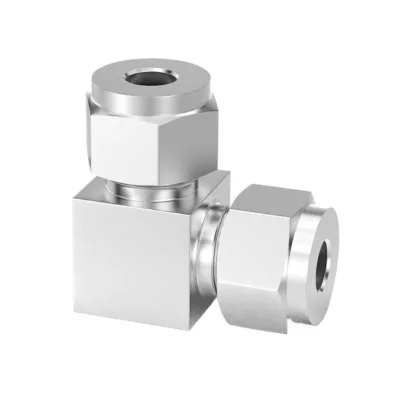
Comprehensive Sourcing Guide
Strategic Sourcing Guide for Forged Carbon Steel Pipe Elbows
Understanding Technical Specifications and Manufacturing Methods
When sourcing forged carbon steel pipe elbows, the primary objective is to align technical specifications with the operational demands of the intended piping system. The core product category under review involves fittings manufactured through forging processes, which generally impart superior grain structure and mechanical strength compared to cast or welded alternatives. The observed manufacturing techniques for these components include both "Forged" and "Hot-pressed" methods. Buyers must verify which specific technique is employed, as hot-pressing may offer different dimensional tolerances and surface finishes compared to traditional drop forging.
The geometric configuration of the elbow is a critical specification. The product data indicates that these fittings are available in "Equal" shapes, meaning the inlet and outlet diameters remain consistent. The angular variations are diverse, with specific observations noting 90-degree, 60-degree, and 45-degree configurations. Furthermore, the bending radius is a vital parameter, with observed data suggesting a range of 1D to 10D (where D represents the nominal diameter). Selecting the correct bend radius is essential for minimizing pressure drop and managing flow turbulence in high-velocity applications.
Wall thickness is another non-negotiable specification. The market data references "Sch80" as a specific wall thickness standard, but buyers should not assume this applies universally to all listings. Instead, procurement teams must explicitly request the schedule number or wall thickness measurement for the specific project requirements. The standard size range observed spans from 1/2" to 110", with other data points indicating coverage from DN15 to 3000, and a separate range of 1/2" to 24". This discrepancy in reported ranges highlights the necessity for buyers to confirm the exact size availability with the supplier before finalizing an order. The head code is observed as "Round," and the connection type is predominantly "Welding," which necessitates precise beveling and fit-up procedures during installation.
Compliance Verification and Certification Standards
In the industrial sector, compliance with international standards is not merely a formality but a prerequisite for safety and liability protection. The observed certification landscape for forged carbon steel elbows is extensive, featuring a robust list of recognized standards including ASME, ANSI, DIN, JIS, BS, GB, GS, KS, and API. Additionally, ISO and PED (Pressure Equipment Directive) certifications are noted in the product attributes.
Buyers must exercise caution when interpreting these certifications. The presence of a certification list in a product description does not automatically guarantee that every specific unit or batch possesses that specific certification. The verification process should involve requesting valid, up-to-date certificates of conformity (CoC) or mill test reports (MTR) that explicitly reference the specific batch number and the relevant standard (e.g., ASME B16.9 or ASTM A234). While background knowledge suggests standards like ASTM A234, ASTM A105, and ASTM A860 are relevant to carbon steel fittings, the provided facts do not explicitly confirm their universal application to every listed item. Therefore, the procurement strategy must prioritize direct confirmation of the standard against which the product was manufactured.
The origin of the product is also a factor in compliance. The data indicates origins in "China" and specifically "Hebei China." While this is a major manufacturing hub, it necessitates a rigorous due diligence process to ensure that the local manufacturing practices align with the international standards claimed. The trade mark is noted as "Customized," which implies that branding and specific compliance markings can be applied, but the underlying material and process compliance must still be independently verified.
Cost Drivers and Pricing Dynamics
The pricing structure for forged carbon steel pipe elbows is influenced by a complex interplay of material costs, manufacturing complexity, and order volume. The observed price range in the market is broad, spanning from $0.09 to $200 USD. This wide variance is likely driven by the significant differences in size, wall thickness, and the specific certification requirements attached to each unit. A 1/2" Sch80 elbow will naturally cost significantly less than a 110" API-certified fitting.
The Minimum Order Quantity (MOQ) is a critical cost driver. The observed MOQ ranges from 1 to 1000 units. For buyers with low-volume requirements, the unit cost may be higher due to the fixed setup costs of the forging process. Conversely, suppliers offering an MOQ of 500 units or higher may provide more competitive pricing structures. The data explicitly lists an MOQ of 500 for certain items, while others accept orders as low as a single unit. Buyers should evaluate their total volume requirements against these thresholds to optimize the cost per unit.
Customization is a significant factor in cost escalation. The product attributes confirm that "Customization" is available and "ODM & OEM" are supported. Custom sizes, non-standard angles, or specific material grades will invariably increase the unit price and potentially extend the lead time. The "Selling Units" are listed as "Single Item," which suggests flexibility in purchasing, but this flexibility often comes at a premium compared to bulk orders. Additionally, the packing method, described as "Wooden Case," "Wooden Pallets," or "Wooden Box," adds to the overall landed cost, particularly for international shipments where wooden packaging must meet ISPM 15 standards.
Typical Industrial Applications and Usage Scenarios
The versatility of forged carbon steel pipe elbows makes them suitable for a wide array of heavy-industry applications. The primary usage sectors identified include Oil and Gas, Petrochemical, and Power Plant operations. These industries demand high reliability and resistance to harsh environmental conditions, which forged carbon steel provides through its enhanced tensile strength and fatigue resistance.
Beyond the energy sector, the data points to applications in Metal Casting Machinery, Metal Forging Machinery, and Metal Processing Machinery Parts. This indicates that these fittings are integral to the internal piping systems of heavy manufacturing equipment. Furthermore, the attributes list "Construction Equipment" and "General Industrial Use" as application areas. This broadens the scope to include infrastructure projects and general plant maintenance where durability is paramount.
The "Quality" attribute is described as "High Quality," and the "Advantages" include "Precision-Driven Quality" and "Proven Industry Expertise." These claims suggest that the fittings are designed to withstand high-pressure and high-temperature environments. The specific application of "Metal Casting Machinery" implies that the elbows may be used in systems handling molten metals or high-temperature fluids, where thermal shock resistance is critical. Buyers should ensure that the specific grade of carbon steel matches the temperature and pressure ratings required for their specific application, rather than relying solely on the general "High Quality" descriptor.
Supplier Evaluation and Selection Criteria
Selecting the right supplier requires a multi-faceted evaluation strategy that goes beyond price comparisons. The supplier profile data indicates a factory establishment date of "Since 2012," which provides a baseline for operational experience. However, buyers should look for more than just the age of the company; they should assess the depth of their technical expertise and the consistency of their production output.
The "Delivery Time" is a critical metric for supply chain planning. The observed data shows a range of "15~30 Days" and "15 Days," with some items listed as "In Stock." Buyers must clarify whether the quoted lead time applies to standard sizes or if customization will extend this window. The "Loading Port" is identified as "Tianjin Port," which is a major logistics hub in China. Buyers should factor in the shipping logistics from this specific port to their destination, as freight costs and transit times can vary significantly based on the final destination.
The ability to support "ODM & OEM" and "Customized" trade marks is a strong indicator of a supplier's flexibility. However, this capability must be balanced with quality control measures. A supplier that offers extensive customization but lacks rigorous testing protocols poses a higher risk. Buyers should evaluate the supplier's capacity to handle "High Quality" claims through documented quality assurance processes. The "Quality" attribute is listed, but the absence of specific test results in the provided data means that buyers must request third-party inspection reports or witness factory audits to validate these claims.
Quality Control Protocols and Long-Term Procurement
Ensuring the long-term reliability of forged carbon steel pipe elbows requires a robust quality control framework. The "Quality" attribute is listed as "High Quality," and the "Condition" is noted as "New." However, these are general statements that must be backed by specific testing data. Buyers should insist on non-destructive testing (NDT) results, such as ultrasonic testing or radiographic testing, to verify the integrity of the forging process and the absence of internal defects.
The "prod_packing" details, including "Wooden Case," "Wooden Cases or Wooden Pallets," and "Wooden Box," are essential for protecting the fittings during transit. Improper packaging can lead to damage, especially for precision-forged components. The buyer should specify the packaging requirements in the purchase order to ensure that the fittings arrive in pristine condition.
For long-term procurement, the relationship with the supplier should be built on consistency and transparency. The "Factory" data suggests a long-term operation, which is a positive indicator. However, buyers should establish clear communication channels regarding changes in material grades, certification updates, or production capacity. The "Customization" feature allows for adaptability, but it also requires a clear specification process to avoid misunderstandings.
Summary of Key Procurement Parameters
To facilitate a streamlined procurement process, buyers should utilize the following summary of key parameters observed in the market. This table consolidates the critical data points for quick reference during the sourcing phase.
| Parameter | Observed Values / Options | Verification Requirement |
|---|---|---|
| Material | Carbon Steel, Metal | Verify Mill Test Report (MTR) for grade. |
| Technics | Forged, Hot-pressed | Confirm specific process in technical data sheet. |
| Connection | Welding | Check bevel type and preparation requirements. |
| Shape | Equal | Confirm inlet/outlet diameter match. |
| Angle | 45, 60, 90, 180 Degree | Specify exact angle in PO. |
| Bending | 1D - 10D | Verify radius against system design. |
| Wall Thickness | Sch80 (Observed) | Confirm Schedule or mm thickness required. |
| Size Range | 1/2" - 110", DN15-3000 | Validate specific size availability. |
| Certifications | ASME, ANSI, DIN, JIS, BS, GB, GS, KS, API, ISO, PED | Request valid CoC/MTR for specific batch. |
| Origin | China, Hebei China | Confirm country of origin for tariff purposes. |
| Lead Time | 15-30 Days, In Stock | Clarify stock status vs. production time. |
| MOQ | 1 - 1000, 500 (Specific) | Negotiate based on total volume. |
| Packing | Wooden Case, Pallets, Box | Specify packaging to prevent damage. |
| Application | Oil & Gas, Petrochemical, Power Plant, Machinery | Ensure material grade matches service conditions. |
By adhering to these structured guidelines and verifying the specific data points against the actual product offerings, buyers can mitigate risks and secure high-quality forged carbon steel pipe elbows that meet their operational and safety requirements. The focus must remain on evidence-based verification rather than relying on general marketing claims, ensuring that the final procurement delivers value and reliability over the long term.
FAQs
What certifications do forged carbon steel pipe elbows have?
These fittings carry certifications including ASME, ANSI, DIN, JIS, BS, GB, GS, KS, and API. Some listings also mention ISO and PED certificates. Buyers must verify specific batch certificates rather than assuming all units hold every listed standard.
Which manufacturing techniques are used for these elbows?
The observed production methods include both Forged and Hot-pressed techniques. These processes create superior grain structures compared to cast alternatives. Buyers should confirm the specific method used as it affects dimensional tolerances and surface finishes.
Can I order custom sizes and angles for this product?
Yes, customization is available with ODM and OEM support. The product data lists angles of 45, 60, and 90 degrees, plus bending radii from 1D to 10D. Custom sizes and specific trade marks can be arranged but may impact lead time.
What is the typical delivery time for forged elbows?
Delivery times generally range from 15 to 30 days, though some items are listed as in stock. The lead time depends on whether the order requires standard sizes or custom specifications. Buyers should confirm the exact timeline before finalizing the purchase order.
How are these pipe fittings packaged for shipment?
Products are typically packed in wooden cases, wooden boxes, or on wooden pallets. Custom packaging options are available as per customer requirements. This robust packaging ensures protection during transit, especially for international shipments from ports like Tianjin.
What are the standard size ranges for these fittings?
The observed size standards span from 1/2 inch to 110 inches, with some data indicating DN15 to 3000. Other listings specify ranges up to 24 inches. Buyers must explicitly confirm the exact size availability for their specific project requirements.