Source Forged Carbon Steel Tees for Oil Gas Water Systems
Compare 30 listings of Forged Carbon Steel Tees with varying pressure ratings, standards, and connection types. Buyers can evaluate specifications for pipe connections in oil, gas, and water applications.
Key considerations
Products List




Comprehensive Sourcing Guide
Strategic Sourcing Guide for Forged Carbon Steel Tees
Understanding the Technical Architecture of Forged Fittings
When sourcing Forged Carbon Steel Tees, buyers must first distinguish the manufacturing method from alternative production techniques. The core attribute of these components is the forging process, which aligns the grain structure of the metal to enhance mechanical strength and resistance to pressure fluctuations. Unlike cast fittings, forged tees are shaped under high pressure, resulting in a denser material structure that is critical for high-pressure piping systems. The observed product data indicates that the manufacturing way is consistently listed as "Forging" or "Forged," with some specifications noting "Hot Forged" or "Cold-Drawn" techniques. This distinction is vital because the forging process directly influences the pressure rating and structural integrity of the final component.
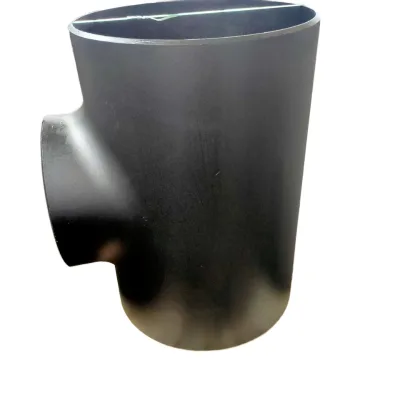
The physical geometry of these fittings is another primary consideration. The standard structure is described as "Round," and the specific configuration often falls under the "Equal Tee" or "90°Tee" categories. In an equal tee, the three openings are of the same diameter, facilitating flow distribution without turbulence. However, the market also offers "Reducing" and "Female Tee" variants, as well as "Cross" and "Thread Tee" options. The sealing surface is frequently identified as "RF" (Raised Face), a standard finish that ensures a tight seal when paired with flanged connections. Buyers should verify the specific sealing surface requirement for their application, as the RF finish is distinct from other finishes like "Black Painting" or "Polished" surfaces that may be observed in different product listings.
Material composition is the cornerstone of performance for carbon steel tees. The primary material listed is "Carbon Steel," with specific grades such as 10#, 20#, 35#, and 45# appearing in the data. These grades denote varying levels of carbon content, which directly affect hardness, ductility, and weldability. The body material is also sometimes broadly categorized as "Q235/Alloy/Stainless/Carbon Steel," indicating that while the core keyword focuses on carbon steel, suppliers may offer alloy or stainless steel alternatives for corrosive environments. For a strict carbon steel tee, the buyer must confirm the specific grade (e.g., 20#) to ensure compatibility with the intended medium, which is typically water, oil, or gas.
Compliance Standards and Certification Verification
Navigating the complex landscape of international standards is essential for ensuring that Forged Carbon Steel Tees meet regulatory and safety requirements. The supplied data reveals a diverse array of standards that products may adhere to, including GOST, GB, DIN, ANSI, BSW, and ASTM. This variety highlights the importance of specifying the exact standard required for the project. For instance, a project in China might require GB standards, while a project in the United States would likely mandate ANSI or ASTM specifications. The presence of multiple standards in a single listing suggests that suppliers often produce to multiple international specifications, but the buyer must explicitly state the required standard in the purchase order to avoid non-compliant deliveries.
Certification serves as the third-party validation of these standards. The observed certifications include ISO, API, and CE. These marks indicate that the manufacturer has undergone rigorous quality audits and that the products meet specific industry benchmarks. API certification, in particular, is crucial for the oil and gas industry, as it validates the fitting's ability to withstand the harsh conditions of hydrocarbon transport. ISO certification ensures adherence to international quality management systems, while CE marking indicates compliance with European health, safety, and environmental protection standards. Buyers should not assume that all listed products carry these certifications; instead, they must request current certification documents for the specific batch of tees being procured.
The pressure rating is a critical compliance metric that must align with the system design. The data lists pressure ratings such as 2000LBS, 3000lb, 6000lb, and 9000lb. These ratings correspond to specific pressure classes and must be matched to the operating pressure of the piping system. A mismatch in pressure rating can lead to catastrophic failure. Additionally, the wall thickness is specified as "SCH STD" or ranging from "Sch 20-Sch 160." This schedule (SCH) indicates the wall thickness relative to the nominal pipe size. Buyers must verify that the selected schedule matches the system's pressure and temperature requirements, as a thinner wall may not suffice for high-pressure applications.
Cost Drivers and Procurement Economics
The cost of Forged Carbon Steel Tees is influenced by several dynamic factors, including raw material prices, manufacturing complexity, and order volume. The observed price range in the market spans from $0.15 to $233.94 USD. This wide disparity is not indicative of quality variance alone but reflects differences in size, pressure rating, material grade, and finishing requirements. A small, low-pressure carbon steel tee will naturally cost significantly less than a large, high-pressure alloy or stainless steel fitting. Buyers should be cautious of outliers in pricing; extremely low prices may indicate substandard materials or a lack of proper certification, while high prices may include premium finishing or specialized engineering.
Minimum Order Quantity (MOQ) is another significant economic factor. The data shows an MOQ range from 1 to 1000 pieces, with a specific high-confidence fact noting an MOQ of 100 pieces for certain listings. This variability allows for flexibility in procurement strategies. Small projects or maintenance repairs may benefit from suppliers with low MOQs, allowing for the purchase of single units or small batches. Conversely, large-scale industrial projects can leverage economies of scale by ordering in bulk, potentially negotiating better unit prices. However, buyers must balance the cost savings of bulk ordering against the inventory holding costs and the risk of obsolescence if project specifications change.
Packing and logistics also contribute to the total cost of ownership. The observed packing methods include "Pallet," "Wooden Case," and "Plawood Case" (likely a variation of Plywood Case). Proper packaging is essential to prevent damage during transit, especially for forged fittings which are heavy and can be prone to surface scratches or deformation. The choice of packaging should align with the shipping method and the destination's handling capabilities. For international shipments, wooden cases often provide superior protection but may incur higher freight costs and require fumigation certificates. Buyers should factor these logistics costs into their total budget rather than focusing solely on the unit price of the fitting.
Typical Applications and Operational Environments
Forged Carbon Steel Tees are engineered for robust performance in demanding industrial environments. The primary usage is identified as "Pipe Connection," specifically for transporting fluids such as water, oil, and gas. The data explicitly lists "Water, Oil, Gas" as the applicable media, confirming the versatility of these fittings across various sectors. The temperature classification is noted as "Medium Temperature Piping," suggesting that these tees are suitable for standard industrial operating ranges but may not be designed for extreme cryogenic or ultra-high-temperature applications without specific alloy modifications.
The pressure classification further defines the application scope. The data mentions "High Pressure Piping" and "MPa Classfication," indicating that these tees are capable of withstanding significant internal pressures. This makes them ideal for power generation plants, petrochemical refineries, and natural gas transmission lines where pressure integrity is paramount. The "90°Tee" structure is particularly common in these applications, allowing for efficient flow diversion in complex piping networks. The "Equal" and "Reducing" types offer flexibility in system design, enabling engineers to maintain flow velocity or reduce pipe size at specific junctions without introducing unnecessary turbulence.
In addition to pressure and temperature, the chemical compatibility of the carbon steel must be considered. While carbon steel is generally resistant to water and hydrocarbons, it is susceptible to corrosion in the presence of certain chemicals or moisture over long periods. The "Black Painting" finish observed in some listings provides a basic layer of protection against rust, but for highly corrosive environments, additional coatings or the use of stainless steel alternatives may be necessary. Buyers should evaluate the specific chemical composition of the medium being transported to ensure the carbon steel grade selected will not degrade prematurely.
Supplier Evaluation and Quality Assurance Protocols
Evaluating a supplier for Forged Carbon Steel Tees requires a multi-faceted approach that goes beyond price comparison. The origin of the product is a key indicator of supply chain reliability. The data points to "China" and specifically "Wenzhou, China" as common origins. Wenzhou is a known manufacturing hub for pipe fittings, but buyers should verify the specific factory location and its track record. A supplier with a long-standing presence in the region may offer better consistency, but this should be balanced with an assessment of their quality control infrastructure.
Quality control begins with the manufacturing process. The "Forging" technique must be executed with precision to ensure uniform grain structure and absence of internal defects. Buyers should request mill test reports (MTRs) that verify the chemical composition and mechanical properties of the steel used. The presence of certifications like ISO, API, and CE is a strong positive signal, but these should be current and applicable to the specific product line. It is also prudent to ask for third-party inspection reports or evidence of in-house testing for pressure and tensile strength.
The supplier's ability to handle customization is another critical evaluation criterion. The data confirms that "Customization" is available, with options for "Customized" size and specific wall thicknesses ranging from Sch 20 to Sch 160. A capable supplier should be able to accommodate non-standard requirements without compromising quality. This flexibility is essential for projects with unique piping layouts or legacy systems that require specific dimensions. Buyers should assess the supplier's lead time for custom orders and their communication responsiveness during the design and quoting phases.
Long-Term Procurement and Lifecycle Management
Sourcing Forged Carbon Steel Tees is not merely a transactional activity but a strategic decision that impacts the long-term reliability of the piping system. The warranty period, observed as "1 Years" in the data, provides a baseline for product confidence. However, buyers should look beyond the warranty and consider the expected service life of the fittings. Properly installed and maintained forged tees can last for decades, making the initial investment in high-quality components a cost-saving measure in the long run.
Inventory management and supply chain resilience are also critical considerations. The availability of standard sizes like the "273mm" diameter and common pressure ratings ensures that replacements can be sourced quickly in the event of a failure. However, for specialized or custom-sized tees, lead times may be longer. Buyers should establish a relationship with a supplier who can provide reliable lead times and maintain a buffer stock of critical items. The "Pallet" and "Wooden Case" packing options facilitate efficient storage and handling, reducing the risk of damage in the warehouse.
Finally, buyers must consider the total cost of ownership, which includes installation, maintenance, and potential replacement costs. A fitting that is slightly more expensive upfront but offers superior corrosion resistance or pressure rating can save significant money over the lifecycle of the plant. The "High Pressure Piping" classification suggests that these tees are designed for critical applications where failure is not an option. Therefore, investing in rigorous supplier vetting, strict quality control, and certified materials is essential to ensure the safety and efficiency of the entire piping network. By adhering to these principles, buyers can secure a reliable supply of Forged Carbon Steel Tees that meet the demanding requirements of modern industrial infrastructure.
FAQs
What manufacturing process is used for these tees?
These tees are produced using the forging process, which aligns the metal grain structure for enhanced strength. This method creates a denser material structure compared to casting, making them suitable for high-pressure piping systems and demanding industrial applications.
Which standards do these forged tees comply with?
Products comply with multiple international standards including ASTM, GB, DIN, ANSI, BSW, and GOST. Buyers must explicitly specify the required standard in their purchase order, as suppliers often produce to various specifications but need clear direction for compliance.
What certifications are available for these pipe fittings?
Available certifications include ISO, API, and CE, which validate quality management and industry benchmarks. API certification is particularly crucial for oil and gas applications, while ISO and CE ensure adherence to international quality and safety standards for export markets.
Can I order custom sizes for these carbon steel tees?
Yes, customization is available for size and wall thickness ranging from Sch 20 to Sch 160. Suppliers can accommodate non-standard requirements for unique piping layouts, though buyers should verify lead times and minimum order quantities for these custom specifications.
What is the typical pressure rating for these fittings?
Pressure ratings observed include 2000LBS, 3000lb, 6000lb, and 9000lb classes. These ratings must match the operating pressure of the piping system to prevent failure, with wall thickness varying by schedule to support the specific pressure class required.
Which materials are used to manufacture these tees?
Primary materials include Carbon Steel grades like 10#, 20#, 35#, and 45#, as well as Stainless Steel and Alloy options. The specific grade determines hardness and weldability, so buyers should confirm the material composition to ensure compatibility with the intended medium like water or oil.