Source Heavy Duty Adjustable Toggle Clamp for Cabinet, Vehicle, and Industrial
Compare 22 Heavy Duty Adjustable Toggle Clamp options from verified Chinese manufacturers. These clamps feature stainless steel construction, polished or zinc-plated finishes, and support OEM customization for cabinet, vehicle, and mechanical equipment applications.
Key considerations
Products List


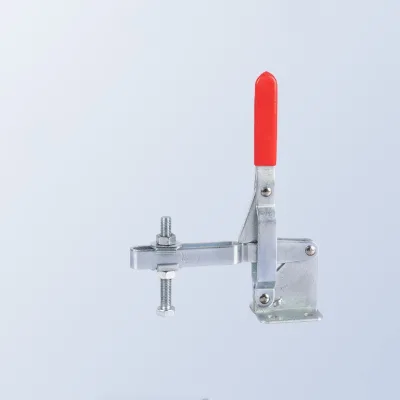
OEM Toggle Clamp Toggle Clamp Good Quality Steel Heavy Duty Toggle Clamp
$0.50 - $5.50
MOQ: 100 Pieces




Comprehensive Sourcing Guide
Strategic Sourcing Guide for Heavy Duty Adjustable Toggle Clamps
Navigating the global market for heavy-duty adjustable toggle clamps requires a disciplined approach that balances technical precision with supply chain reliability. These components are critical in industrial settings where securing loads, maintaining structural integrity, and ensuring operator safety are paramount. The following guide synthesizes available product attributes and industry standards to provide a robust framework for procurement professionals. By focusing on verified specifications and observable market data, buyers can mitigate risks associated with substandard hardware and ensure long-term operational continuity.
Technical Specifications and Structural Integrity
The foundation of a successful procurement strategy lies in a deep understanding of the technical specifications that define a heavy-duty toggle clamp. The core mechanical structure of these devices often varies, but the "F Clamp" configuration is a prevalent design observed in the current market. This structure is particularly effective for providing high clamping force in confined spaces or along linear edges. When evaluating potential suppliers, buyers must verify the material composition, as the load-bearing capacity is directly correlated with the base metal. The observed market data indicates a strong preference for Stainless Steel and general Steel variants. Stainless Steel is frequently selected for applications requiring corrosion resistance, while standard steel is often utilized for general industrial environments where cost efficiency is a priority.
Surface treatment is another critical technical parameter that influences both durability and performance. The available data highlights "Polished" and "Zinc-Plated" finishes as standard options, with some suppliers offering a combination of Nickel-Plated and Zinc-Plated treatments. These finishes are not merely aesthetic; they serve as the primary defense against oxidation and wear. For heavy-duty applications, the hardness of the steel is equally important. Specific product attributes note that bodies are often "Heat-Treated and Hardened Steel," which significantly enhances the clamp's ability to withstand repeated stress cycles without deformation. The presence of a rubber toggle in the handle mechanism is also a notable feature, designed to provide a secure grip and prevent slippage during operation.
The locking mechanism itself is a point of differentiation. Heavy-duty models often feature a "Multiple Bolt" structure or a "Quad" body type, which distributes the clamping force more evenly across the workpiece. This is essential for applications involving uneven surfaces or high-tension loads. Furthermore, the adjustability of the clamp is a key requirement for the "Adjustable" classification. Buyers should verify that the screw mechanisms allow for fine-tuning of the clamping height and pressure, ensuring the device can accommodate variations in workpiece thickness. The observed "Toggle Latch" and "Lock Case" attributes suggest that these devices often integrate locking features that prevent accidental release, a vital safety feature in dynamic manufacturing environments.
Compliance, Certification, and Standard Verification
In the realm of industrial hardware, compliance with international standards is non-negotiable. While specific certification documents must be requested from the supplier, the market data provides clear indicators of the standards buyers should expect. The "RoHS" (Restriction of Hazardous Substances) standard is explicitly mentioned in the product attributes, indicating that compliant clamps must adhere to strict limitations on hazardous materials. This is particularly relevant for exports to the European Union and other regions with stringent environmental regulations. Buyers must ensure that the supplier can provide a valid RoHS declaration for the specific batch of clamps being purchased.
Beyond environmental compliance, the structural standards of the clamp must align with industry expectations. The "Standard" and "OEM" (Original Equipment Manufacturer) designations found in the data suggest that these products are often manufactured to meet specific client requirements rather than a single universal standard. However, the "Standard" classification implies adherence to general industry norms for dimensional accuracy and load capacity. When evaluating a supplier, procurement teams should request documentation that confirms the product meets the "Standard" classification for heavy-duty clamps. This often involves verifying that the clamp has undergone rigorous testing for fatigue life and tensile strength.
It is crucial to distinguish between the product's origin and its compliance status. The data indicates origins in "Donguan China," "Shandong," "Ningbo," and "China Main Land." While these locations are hubs for manufacturing, the origin itself does not guarantee compliance. Buyers must verify that the specific factory has the necessary quality management systems in place to consistently produce RoHS-compliant and standard-compliant goods. The absence of a specific certification name in the general data does not mean the product is non-compliant; rather, it underscores the need for the buyer to actively request and validate these documents before finalizing a purchase order.
Cost Drivers and Pricing Dynamics
Understanding the cost drivers for heavy-duty adjustable toggle clamps is essential for budgeting and negotiation. The observed price range in the market spans from $0.2 to $20 USD, a wide variance that reflects differences in material quality, manufacturing complexity, and order volume. The primary driver of cost is the material composition. Clamps made from high-grade Stainless Steel will inherently cost more than those made from standard steel due to the raw material expense and the additional processing required to achieve corrosion resistance. Similarly, the surface treatment plays a significant role; a polished finish or a multi-layer plating process (such as Zinc-Plated followed by Nickel-Plated) adds to the manufacturing cost compared to a basic finish.
Order volume is another critical factor influencing the unit price. The observed Minimum Order Quantity (MOQ) ranges from 5 to 2000 units. Suppliers typically offer tiered pricing structures where the unit cost decreases as the order volume increases. For a buyer requiring a large quantity, negotiating an MOQ closer to the higher end of the range can result in significant savings. Conversely, for small-batch procurement, the higher unit cost is expected, but buyers should be wary of suppliers who do not offer flexibility in their MOQ policies. The "Customization" and "ODM/OEM" availability also impact pricing. Custom designs, unique color options, or specific branding requirements will incur additional tooling and setup costs, which are often passed on to the buyer in the form of a higher unit price or a one-time setup fee.
Packaging and logistics are secondary but relevant cost factors. The data indicates that products are packed in "Cartons," "PE Bags and Cartons," or "Standard" packaging. The choice of packaging affects the shipping volume and weight, which in turn influences freight costs. For heavy-duty clamps, robust packaging is necessary to prevent damage during transit, but over-packaging can increase shipping expenses. Buyers should evaluate the packaging specifications to ensure they are sufficient for protection without being excessive. Additionally, the "Lead Time" is a hidden cost driver; longer lead times can disrupt production schedules, leading to inventory shortages or the need for expedited shipping, which adds to the overall procurement cost.
Typical Applications and Industry Use Cases
Heavy-duty adjustable toggle clamps are versatile tools found across a wide spectrum of industries. The "Cabinet" application is a primary use case, where these clamps are employed to secure doors, panels, and access points in industrial enclosures. In this context, the "Fire Resistant Lock Style" and "Supper B" lock cylinder level attributes suggest that some models are designed for high-security or safety-critical environments where fire resistance and robust locking mechanisms are required. The "Quad" body type and "Multiple Bolt" structure provide the necessary stability to keep cabinet doors firmly shut under vibration or impact.
Beyond cabinetry, these clamps are extensively used in "Woodworking" and "Mechanical Equipment" applications. In woodworking, the "Adjustable" nature of the clamp allows it to secure irregularly shaped workpieces, while the "Heavy Duty" classification ensures it can withstand the forces generated during cutting, sanding, or assembly. The "Pipe Clamp" and "Glass Clamp" attributes indicate that these devices are also adapted for holding pipes and glass panels, which require precise pressure control to prevent slippage or breakage. The "Vehicle" application further expands the utility of these clamps, where they are used in assembly lines for securing vehicle components during manufacturing or repair.
The "Industrial" and "Mechanical Equipment" sectors rely heavily on the "Toggle Clamps" and "Quick Release Spring clamps" variants for their efficiency. The ability to quickly release and re-engage the clamp is crucial in high-volume production environments where cycle time is a critical metric. The "General Purpose Spring clamps" offer a balance between speed and security, making them suitable for a variety of tasks. The "Adjustable" feature is particularly valuable in these settings, as it allows a single clamp model to be used on multiple different workpieces, reducing the need for a large inventory of specialized tools.
Supplier Evaluation and Sourcing Strategy
Selecting the right supplier is as important as selecting the right product. The market data reveals a diverse landscape of suppliers located in "Donguan," "Shandong," "Ningbo," and other parts of "China Main Land." While these regions are known for their manufacturing capabilities, buyers must conduct a thorough evaluation of each potential supplier. The first step is to verify the supplier's ability to meet the "ODM/OEM" and "Customization" requirements. Suppliers that offer these services demonstrate a level of flexibility and technical capability that is essential for meeting specific project needs.
Buyers should also assess the supplier's quality control processes. The "warranty" attribute in the data shows a range, with some products listed as having "0 year" warranty, while others may offer longer terms. This discrepancy highlights the importance of negotiating a clear warranty agreement that covers defects in material and workmanship. A supplier that is willing to offer a substantial warranty demonstrates confidence in their product quality. Additionally, the "Standard" and "OEM" designations should be cross-referenced with the supplier's production capabilities. A supplier claiming to produce "Standard" products must have the necessary machinery and expertise to maintain consistent quality across large batches.
Communication and responsiveness are also key indicators of a reliable supplier. The "Customization" and "ODM/OEM" options require close collaboration between the buyer and the supplier. A supplier that is responsive and transparent about their production timeline, material sourcing, and quality assurance processes is more likely to deliver a satisfactory outcome. Buyers should request samples before placing a large order to verify the product's quality and fit for purpose. The "Package" dimensions and "Weight" attributes provided in the data can be used to verify that the supplier's samples match the specifications of the bulk order.
Quality Control and Long-Term Procurement Considerations
Implementing a robust quality control (QC) protocol is essential for ensuring the reliability of heavy-duty toggle clamps. The "Surface Treatment" and "Material" attributes must be verified through visual inspection and, where necessary, laboratory testing. Buyers should establish clear acceptance criteria for surface finishes, ensuring that the "Polished," "Zinc-Plated," or "Nickel-Plated" coatings are uniform and free from defects such as pitting, peeling, or uneven coverage. The "Locking Load" of 150kgs observed in the data serves as a benchmark for performance, but buyers should verify that this load capacity is maintained over time and under varying environmental conditions.
Long-term procurement considerations involve building a sustainable relationship with suppliers that can adapt to changing market demands. The "Adjustable" and "Customization" features suggest that buyers may need to modify their clamp requirements over time. A supplier that offers "OEM" services can help buyers adapt their product lines to new standards or customer needs. Additionally, the "Warranty" terms should be reviewed periodically to ensure they remain competitive and relevant. Buyers should also consider the "Lead Time" and "MOQ" flexibility of their suppliers. A supplier that can accommodate smaller, more frequent orders without significant price penalties can help buyers manage inventory more effectively and reduce the risk of stockouts.
Finally, buyers should maintain a comprehensive record of all product specifications, test results, and supplier interactions. This documentation is invaluable for troubleshooting any issues that arise and for making informed decisions about future procurement. By adhering to a disciplined approach that prioritizes technical verification, compliance, and supplier reliability, buyers can secure a steady supply of high-quality heavy-duty adjustable toggle clamps that meet their operational needs.
Summary of Key Product Attributes for Verification
| Attribute Category | Key Observations from Market Data | Verification Requirement |
|---|---|---|
| Material | Stainless Steel, Steel | Verify grade and corrosion resistance |
| Surface Treatment | Polished, Zinc-Plated, Nickel-Plated | Check for uniformity and adhesion |
| Structure | F Clamp, Quad Body, Multiple Bolt | Confirm load distribution and stability |
| Locking Mechanism | Toggle Latch, Fire Resistant, Supper B | Test locking load and release mechanism |
| Compliance | RoHS, Standard, OEM | Request valid certification documents |
| Packaging | Carton, PE Bags, Standard | Ensure protection during transit |
| Origin | Donguan, Shandong, Ningbo, China | Verify factory location and capacity |
| Customization | Available, ODM/OEM Accept | Confirm design flexibility and lead times |
This table serves as a quick reference for buyers to ensure all critical aspects of the product are addressed during the sourcing process. By systematically verifying each attribute, procurement teams can minimize risks and secure a reliable supply chain for their heavy-duty toggle clamp needs.
FAQs
What materials are used for heavy duty adjustable toggle clamps?
These clamps are primarily constructed from Stainless Steel or general Steel variants. Stainless Steel is selected for corrosion resistance, while standard steel is used for general industrial environments where cost efficiency is a priority.
Which surface treatments are available for these clamps?
Common surface treatments include Polished, Zinc-Plated, and Nickel-Plated finishes. These treatments serve as the primary defense against oxidation and wear, ensuring durability in heavy-duty applications.
Can these clamps be customized for specific industrial needs?
Yes, customization and OEM services are available for these products. Buyers can request specific designs, unique color options, or branding requirements, though this may incur additional tooling and setup costs.
What is the typical locking load capacity for heavy duty models?
Specific heavy duty models feature a locking load capacity of up to 150kgs. This high capacity is achieved through multiple bolt structures or quad body types that distribute clamping force evenly.
Where are these clamps typically manufactured?
Manufacturing origins include Donguan, Shandong, Ningbo, and other parts of China Main Land. These regions are known hubs for producing industrial hardware with varying levels of customization and standard compliance.
How are these clamps packaged for shipping?
Products are typically packed in Cartons, PE Bags and Cartons, or Standard packaging. Robust packaging is necessary to prevent damage during transit, though over-packaging can increase shipping expenses.