Source Forged Flexible Brass Ball Valve for industrial, water, and household usage
Compare 30 Forged Flexible Brass Ball Valve options from verified Chinese manufacturers. These valves feature manual or hydraulic driving modes, thread connections, and are designed for industrial, water, and household applications with nominal pressures up to 32.0MPa.
Key considerations
Products List


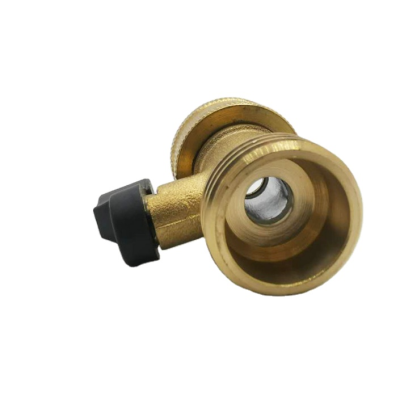


$1.50
MOQ: 1000 Pieces


Comprehensive Sourcing Guide
Strategic Sourcing Guide for Forged Flexible Brass Ball Valves
Understanding the Core Product Architecture
When sourcing forged flexible brass ball valves, buyers must first distinguish the specific mechanical architecture that defines this component class. The term "forged" indicates a manufacturing process where brass is shaped under high pressure, resulting in a denser grain structure that offers superior strength and leak resistance compared to cast alternatives. This is a critical differentiator for industrial applications where pressure integrity is non-negotiable. The "flexible" aspect of the valve structure often refers to the specific design of the ball or the seat mechanism, allowing for a degree of movement that accommodates thermal expansion or slight misalignments in piping systems, ensuring a tighter seal over a wider range of operating conditions.
In the current market data, we observe a distinct split in structural classifications. While the primary focus is on flexible designs, the supply base also includes "fixed ball valve" configurations. A fixed ball valve typically features a ball that is mechanically held in place by top and bottom stems, whereas a flexible design may rely on the elasticity of the seat or a specific floating ball mechanism to maintain the seal. Buyers must verify the specific structure of the unit they are procuring, as the "Flexible Ball Valve" designation implies a different set of maintenance requirements and pressure handling capabilities compared to the "Fixed Ball Valve" variant. Both types are available in the brass material category, but the functional behavior under stress differs significantly.
The connection form is another fundamental attribute to validate. The observed market data highlights "Thread" as the predominant connection form for these units. This includes various standard thread sizes ranging from 1/4" to 2", and specific metric equivalents like DN15 or DN20. The presence of "Straight Through Type" channels in some listings contrasts with "Angle Type" configurations found in others. The choice between straight and angle flow paths dictates the hydraulic efficiency and the physical layout of the installation. A straight-through design minimizes pressure drop, making it ideal for main lines, while an angle type is often preferred for corner connections or where space constraints require a 90-degree turn in the piping.
Technical Specifications and Operational Limits
Defining the operational envelope of a Forged Flexible Brass Ball Valve requires a rigorous review of nominal pressure, temperature ratings, and media compatibility. The brass material itself is highly compatible with water, which is the primary media observed in the product listings. This makes these valves suitable for water industrial usage and general household applications. However, the pressure rating is not uniform across all units. The data indicates a broad nominal pressure range of PN1.0 to 32.0 MPa. This wide variance suggests that buyers cannot assume a single pressure rating for all "brass ball valves" and must explicitly confirm the PN rating of the specific model before ordering. A valve rated for PN1.0 is suitable for low-pressure domestic systems, whereas a unit rated for 32.0 MPa is engineered for high-pressure industrial hydraulic or process lines.
Temperature ratings are another critical specification. The observed data points to "Normal Temperature" as the standard operating range. This implies that while the forged brass construction is robust, these valves are not necessarily designed for cryogenic or extreme high-temperature environments without specific verification. The driving mode is predominantly "Manual," utilizing a lever or handle for operation, though "Hydraulic" driving modes are also present in the market for automated or remote control applications. The surface finish, often "Nickel Plating" or "Brass Natural Color," plays a role in corrosion resistance and aesthetic integration. Nickel plating provides an additional barrier against oxidation, which is beneficial in humid or chemically aggressive water environments.
The standardization of these components varies by region and manufacturer. Listings reference standards such as "Pn 20," "1/4"-2"," and "DN15 x 3/4" x 32mm." These designations often mix pressure classes with dimensional specifications. For instance, "Pn 20" refers to a specific pressure class, while "DN15 x 3/4" x 32mm" describes a specific size configuration. Buyers must ensure that the standard cited by the supplier aligns with the piping standards used in their facility. The presence of models like "BVB201-14" or "DR 1023-13" indicates that manufacturers use internal coding systems that may not be immediately intuitive. It is essential to cross-reference these model numbers with the actual dimensional and pressure data provided in the technical datasheet to avoid compatibility issues.
Compliance, Certification, and Verification Protocols
Navigating the compliance landscape for brass ball valves requires a cautious approach, particularly regarding certifications. While "CE" and "RoHS" are frequently mentioned in the broader industry context as desirable markers, the specific product data provided does not confirm these certifications for every listed unit. Therefore, buyers should not assume that a "Made in China" product automatically carries CE or RoHS compliance. Instead, the procurement strategy must involve a direct request for certification documentation. The "Anti-Fraud" advantage noted in some listings suggests a focus on supply chain integrity, but this is a qualitative claim rather than a verified standard.
Verification of origin is straightforward, as the data consistently points to "China" or "Made in China" as the place of origin. This is a common source for brass fittings due to established manufacturing clusters, but it necessitates strict quality control measures. The "Export Standard Package" and "Carton+Pallet" packing methods indicate that the products are prepared for international logistics, which helps mitigate damage during transit. However, the buyer must verify that the packaging meets the specific requirements of their destination country, especially if there are strict regulations regarding wood pallets or cardboard materials.
When evaluating compliance, buyers should look for evidence of adherence to international standards beyond the generic "Pn 20" or size designations. While specific test results are not provided in the general data, the presence of "Forged" technique implies a manufacturing process that typically undergoes more rigorous quality checks than casting. Buyers should request mill test reports or material certificates that verify the brass composition, ensuring it meets the required lead content limits for potable water applications if that is the intended use. The "Customization" attribute available in the market allows for tailoring the valve to specific compliance needs, such as specific thread types or surface treatments, which can be leveraged to meet local regulatory requirements.
Cost Drivers and Pricing Dynamics
The pricing structure for forged flexible brass ball valves is influenced by several key factors, including material costs, manufacturing complexity, and order volume. The observed price range in the market spans from $0.50 to $10.00 USD. This significant spread reflects the diversity in valve sizes, pressure ratings, and customization levels. A valve at the lower end of this spectrum is likely a smaller, standard-size unit with a basic manual drive and minimal surface treatment. Conversely, a unit at the higher end may feature a larger size, a higher pressure rating (approaching 32.0 MPa), hydraulic driving mechanisms, or specialized nickel plating.
The Minimum Order Quantity (MOQ) is another critical cost driver, with observed ranges from 1 to 4000 units. This flexibility allows buyers to scale their procurement based on project needs. Small-scale projects or prototype development can be supported by low MOQs, while large industrial installations can benefit from economies of scale by ordering in bulk. The "Customization" availability also impacts cost; custom colors, specific thread configurations, or unique packaging requirements will likely increase the unit price and potentially extend the lead time. Buyers should be aware that while the base price for a standard forged brass valve is competitive, the cost of customization and the requirement for specific certifications can shift the total cost of ownership.
It is important to note that the price range observed does not necessarily include shipping, duties, or taxes. The "Export Standard Package" suggests that the quoted price may be FOB (Free on Board) or similar, requiring the buyer to account for logistics costs separately. When evaluating cost, buyers should consider the total value proposition, including the durability of the forged construction and the potential for reduced maintenance costs due to the flexible design. A slightly higher upfront cost for a high-pressure, nickel-plated valve may result in significant savings over the lifecycle of the system by preventing leaks and corrosion-related failures.
Typical Applications and Industry Use Cases
The versatility of forged flexible brass ball valves is evident in their diverse application areas. The data explicitly lists "Industrial Usage," "Water Industrial Usage," and "Household Usage" as primary application domains. In industrial settings, these valves are often employed in water treatment plants, chemical processing facilities, and manufacturing lines where reliable flow control is essential. The "Straight Through Type" and "Angle Type" configurations allow for flexible installation in complex piping networks, accommodating various layout constraints.
For water industrial usage, the compatibility with water as the media is paramount. The forged brass construction provides the necessary resistance to corrosion and wear, ensuring long-term performance in systems that handle potable water or industrial process water. The "Normal Temperature" rating suggests these valves are well-suited for standard heating and cooling systems, but not for extreme thermal applications. In household usage, the smaller sizes and manual driving modes make these valves ideal for residential plumbing, including connections to water heaters, sinks, and irrigation systems.
The "Relief Valve" and "Bypass-Valve" functions observed in the product data indicate that these components are also used in safety and control systems. A relief valve is critical for preventing over-pressurization in closed systems, while a bypass valve allows for flow diversion around a primary component for maintenance or system balancing. The "Anti-Fraud" advantage mentioned in some listings may be particularly relevant in applications where counterfeit or substandard components could lead to system failure or safety hazards. Buyers should match the specific function of the valve to the operational requirements of their system, ensuring that the chosen valve provides the necessary safety margins and flow characteristics.
Supplier Evaluation and Quality Assurance
Selecting a reliable supplier for forged flexible brass ball valves requires a multi-faceted evaluation process. Since specific supplier names cannot be recommended, buyers must focus on the attributes of the supplier's offerings. The "Customization" capability is a strong indicator of a supplier's flexibility and technical competence. A supplier that can accommodate custom sizes, colors, and packaging demonstrates a robust manufacturing process capable of meeting diverse client needs. The "Forged" technique is a key quality indicator; buyers should verify that the supplier actually performs forging rather than casting, as this directly impacts the mechanical properties of the valve.
Quality control should be a central part of the supplier evaluation. The presence of "Export Standard Package" and "Standard Export Package" suggests that the supplier is experienced in handling international shipments and understands the importance of protecting the product during transit. However, buyers should request detailed quality assurance protocols, including in-process inspections and final testing procedures. The "Nickel Plating" and "Brass Natural Color" options should be inspected for uniformity and adhesion to ensure long-term corrosion resistance.
When evaluating suppliers, buyers should also consider the transparency of their product data. The listing of specific model numbers like "BVB201-14" and "NR-L052" alongside precise standards and dimensions indicates a level of detail that facilitates accurate procurement. Suppliers that provide clear, consistent data regarding pressure ratings, temperature limits, and material composition are more likely to deliver products that meet expectations. The "Made in China" origin is a common factor, but the quality of manufacturing varies. Buyers should look for evidence of consistent quality control practices, such as statistical process control or ISO certifications, even if specific certification names are not explicitly listed in the product data.
Long-Term Procurement and Lifecycle Management
Sourcing forged flexible brass ball valves is not just a transactional activity but a strategic decision that impacts the long-term reliability of the fluid handling system. The "Flexible Ball Valve" structure offers advantages in terms of sealing performance and resistance to thermal expansion, which can reduce the frequency of maintenance and replacement. However, the buyer must ensure that the specific valve selected matches the operational environment. The "Normal Temperature" rating and "Water" media compatibility are suitable for many applications, but any deviation from these parameters requires careful engineering analysis.
The availability of "Customization" allows buyers to future-proof their procurement strategy. As system requirements evolve, the ability to order valves with specific thread types, pressure ratings, or surface finishes ensures that the supply chain remains flexible. The "Carton+Pallet" and "Export Standard Package" options facilitate efficient inventory management and storage, reducing the risk of damage and loss. Buyers should establish long-term relationships with suppliers who can provide consistent quality and reliable lead times, as the "MOQ" range of 1 to 4000 units suggests that suppliers are capable of scaling production to meet fluctuating demand.
In conclusion, the procurement of forged flexible brass ball valves requires a balanced approach that considers technical specifications, compliance requirements, cost dynamics, and supplier reliability. By focusing on the verified attributes of the product, such as the forged construction, brass material, and specific pressure ratings, buyers can make informed decisions that ensure the safety and efficiency of their industrial and household systems. The diversity of the market, with its wide range of models and standards, offers ample opportunities for customization and optimization, provided that buyers conduct thorough due diligence and maintain rigorous quality control standards throughout the procurement process.
FAQs
What driving modes are available for forged flexible brass ball valves?
Manual and hydraulic driving modes are available for these valves. Most units operate manually with a lever, while hydraulic options exist for automated control in industrial settings requiring remote operation.
Which connection forms are standard for forged flexible brass ball valves?
Thread is the predominant connection form for these valves. They come in various sizes ranging from 1/4 inch to 2 inches, including specific metric equivalents like DN15 or DN20 for standard piping.
Can forged flexible brass ball valves handle high-pressure applications?
Yes, they can handle high pressures up to 32.0 MPa. The nominal pressure rating varies significantly across models, ranging from PN1.0 to 32.0 MPa, so specific pressure ratings must be verified for each unit.
What materials and surface finishes are used for these valves?
The valves are constructed from forged brass with options for nickel plating or natural brass color. Nickel plating provides enhanced corrosion resistance, which is beneficial for humid or chemically aggressive water environments.
How does the flexible ball valve structure differ from fixed types?
Flexible designs allow movement in the ball or seat to accommodate thermal expansion, whereas fixed ball valves are mechanically held in place. Both types are available, but they exhibit different behaviors under stress and maintenance needs.
What are the typical applications for forged flexible brass ball valves?
These valves are used in industrial, water industrial, and household applications. They are suitable for water treatment plants, residential plumbing, and safety systems requiring relief or bypass functions in normal temperature environments.