Source Forged Loader Rock Teeth for Tunnel Boring, Excavators, and Backhoes
Find and compare 28 listings for Forged Loader Rock Teeth suitable for tunnel boring machines, excavators, and backhoes. Buyers can evaluate specifications like material, hardness, and customization options from verified suppliers in China.
Key considerations
Products List


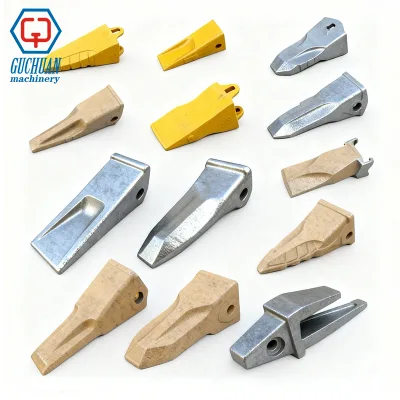

Forged Bucket Teeth for Excavators - Durable Hard Rock Solutions at Wholesale
$1250.00 - $1300.00
MOQ: 1 Tons

Wholesale Durable Bucket Teeth for Hard Rock Excavation - Forged Quality
$1250.00 - $1300.00
MOQ: 1 Tons

High-Performance Forged Bucket Teeth for Hard Rock Excavators - Wholesale
$1250.00 - $1300.00
MOQ: 1 Tons

Forged Bucket Teeth for Hard Rock Excavation - Wholesale Price for Durability
$1250.00 - $1300.00
MOQ: 1 Tons


Steel Casting Bucket Teeth for Excavators Forging Services Rock Bucket Teeth
$10.00 - $20.00
MOQ: 1000 Pieces
Comprehensive Sourcing Guide
Strategic Sourcing Guide for Forged Loader Rock Teeth
Understanding the Technical Landscape of Heavy-Duty Bucket Teeth
When sourcing Forged Loader Rock Teeth, buyers must first distinguish between general excavator components and specialized equipment designed for high-impact rock environments. The core keyword "Forged Loader Rock Teeth" implies a specific manufacturing process and application context that differs from standard casting methods. Based on available industry data, the production of these critical wear parts often utilizes precision investment forging or standard forging techniques to ensure superior structural integrity. The material composition is a primary determinant of performance; observed specifications indicate the use of alloy steel, with some suppliers offering 16Mn or customized material requests to meet specific operational demands.
The mechanical properties of these teeth are non-negotiable for rock applications. High-performance teeth typically exhibit a surface hardness ranging between HRC 48 and 58, achieved through automated furnace heat treatment processes. This surface hardness is crucial for resisting abrasion from sharp rocks and abrasive soil. However, the core hardness is equally vital to prevent catastrophic brittle failure under impact loads. Data suggests a core hardness range of HRC 30 to 40, providing a necessary balance between a hard, wear-resistant exterior and a tough, shock-absorbing interior. Buyers should verify that the supplier explicitly states these dual-hardness specifications, as a uniform hardness across the entire tooth often leads to premature shattering in rock environments.
Furthermore, the geometry of the tooth plays a significant role in efficiency. The "Tooth Type" is often categorized by specific model codes, such as RC types, which are designed for rock conditions. The "Product Name" may vary between "Rock Bucket Tooth," "Excavator Bucket Teeth," or "Bucket Teeth," but the underlying application remains consistent: attachment to the bucket of heavy machinery. The "Compatible Brand" is frequently listed as "Other," indicating that these components are often designed to fit a wide array of machinery brands rather than being exclusive to a single manufacturer. This universality requires buyers to cross-reference model numbers, such as 1462201M2, 2713-1219RC, LD60RC, or 6Y3222RC, to ensure physical compatibility with their existing fleet.
Compliance, Certification, and Regulatory Standards
In the global B2B market, compliance is not merely a formality but a prerequisite for risk management. When evaluating potential suppliers for Forged Loader Rock Teeth, buyers must rigorously check for recognized certifications. The most frequently observed certifications in this sector include CE and ISO9001. The CE marking indicates conformity with health, safety, and environmental protection standards for products sold within the European Economic Area, while ISO9001 certifies that the supplier maintains a quality management system capable of consistently producing products that meet customer and regulatory requirements.
It is important to note that while "Condition: New" is a standard attribute for these products, the presence of certifications does not automatically guarantee that every listed item meets every specific national standard without further verification. Buyers should request current, valid certificates directly from the supplier rather than relying solely on product page assertions. The "prod_standard" is often listed as "Standard" or "Standard Specifications or Customized," which implies that while the products meet general industry norms, specific project requirements may demand deviations from these baseline standards.
Additionally, the "prod_packing" method is a critical component of compliance regarding logistics and safety. Standard packaging often involves paperboard boxes and wood pallets, which must adhere to international phytosanitary standards if the wood is untreated. For heavy industrial components, "Standard Packaging or Customized" options are available, but buyers must ensure that the packaging protects the teeth from damage during transit, especially given the high value and weight of alloy steel components. The "Single package size" and "Single gross weight" (e.g., 10x10x10 cm and 1.000 kg respectively) are essential data points for calculating freight costs and ensuring that the shipping method aligns with the product's dimensions and weight class.
Cost Drivers and Pricing Dynamics
The pricing of Forged Loader Rock Teeth is influenced by a complex interplay of material costs, manufacturing complexity, and order volume. The observed price range in the market spans from $1 to $1,300 USD, a wide variance that reflects differences in tooth size, hardness specifications, and the specific loader model compatibility. A single small tooth may fall at the lower end of this spectrum, while a set of large, high-hardness teeth for a massive rock loader could approach the upper limit.
Material costs are a primary driver. The use of "Alloy Steel" or "16Mn" is more expensive than standard carbon steel due to the enhanced mechanical properties required for rock applications. The "Precision Investment Forging" process is also a significant cost factor compared to traditional casting. This process involves more labor, specialized tooling, and energy consumption, resulting in a higher unit cost but offering superior durability. Buyers should be aware that the "Customization" option, which includes custom colors, OEM branding, or specific model adaptations, will invariably increase the unit price.
The Minimum Order Quantity (MOQ) is another critical cost driver. The observed MOQ range is 1 to 1,000 units, with a specific observation of "Each Style 20" being a common threshold. Ordering below the MOQ often results in a significantly higher per-unit cost or may not be feasible at all. Conversely, ordering in bulk can leverage economies of scale, reducing the cost per unit. However, buyers must balance bulk purchasing with inventory holding costs. The "Delivery Time" of 7-15 days suggests a relatively short lead time for production, which can help mitigate the need for large safety stock, thereby reducing capital tied up in inventory.
Typical Applications and Operational Compatibility
Forged Loader Rock Teeth are engineered for the most demanding environments in construction, mining, and quarrying. The primary application is for "All Excavator" and "Loader" machines operating in rock-heavy conditions. The "Bucket" type specified is often a "Backhoe," but the teeth are also applicable to various loader configurations where rock excavation is the primary task. The "Application" field explicitly lists "Tunnel Boring Machine" in some contexts, indicating that these high-strength components are versatile enough for specialized heavy machinery beyond standard earthmoving equipment.
The "Tooth Type" classification, such as "RC," is specifically designed for rock conditions. These teeth feature a geometry that minimizes the risk of jamming and maximizes penetration into hard rock faces. The "Hardness" of HRC 48-52 or HRC 48-58 ensures that the teeth can withstand the abrasive nature of rock without rapid wear. In contrast, standard soil teeth would wear out too quickly in such an environment. The "After Warranty Service" of "Video Technical Support" indicates that suppliers recognize the complexity of installation and maintenance, offering remote assistance to ensure the teeth are fitted correctly and operated within their design parameters.
Buyers should also consider the "Brand Name" and "Compatible Brand" aspects. While some products carry specific brand names like "SEWOOMIC," the majority are designed to be compatible with "Other" brands. This universality is a key advantage for fleets with mixed machinery. However, the "Model Number" must be matched precisely. Whether it is 1462201M2, 2713-1219RC, LD60RC, or 6Y3222RC, the fitment is critical. A mismatch can lead to inefficient digging, increased fuel consumption, and potential damage to the bucket adapter.
Supplier Evaluation and Verification Protocols
Evaluating a supplier for Forged Loader Rock Teeth requires a multi-faceted approach that goes beyond surface-level product listings. The "Place of Origin" is consistently listed as "Fujian, China" or generally "China," which provides context for the supply chain but does not guarantee quality. Buyers must verify the actual manufacturing facility's capabilities. The "Process" field mentions "Forging /Casting" and "Precision Investment Forging," but the distinction is vital. For rock teeth, forging is generally preferred for its grain structure and toughness. Buyers should request evidence of the specific forging equipment and heat treatment processes used, such as the "Automated Furnace Heat Treatment" mentioned in the data.
The "OEM/ODM" capability is a strong indicator of a supplier's flexibility and technical maturity. The data shows "Accept" and "Support" for OEM/ODM, meaning suppliers can produce custom designs or private-label products. This is crucial for buyers who need specific geometries or branding. However, the "Customization" availability should be scrutinized. Does it include custom hardness, custom material, or just custom packaging? The "Height: OEM" attribute suggests that dimensions can be tailored, but buyers must confirm the tolerances and engineering support provided for such customizations.
Quality assurance is another pillar of supplier evaluation. The "Warranty" period of "1 Year" is a standard offering, but the terms of this warranty must be clear. Does it cover material defects, or does it also cover premature wear due to improper operation? The "After Warranty Service" of "Video Technical Support" is a positive sign, but buyers should also inquire about the supplier's return policy and their track record for handling warranty claims. The "Single gross weight" and "Single package size" data points are useful for verifying the supplier's logistical capabilities and ensuring they can handle the specific weight and dimensions of the order without damage.
Quality Control and Long-Term Procurement Considerations
Ensuring the long-term viability of the supply chain for Forged Loader Rock Teeth requires a focus on quality control and strategic procurement planning. The "Surface Hardness" and "Core Hardness" ranges are the primary metrics for quality. Buyers should insist on mill test reports or third-party inspection certificates that verify these hardness values for every batch. The "Standard" designation is vague; therefore, buyers must define the specific standard they require, whether it is a national standard, an international standard, or a custom specification.
The "prod_packing" of "Paperboard Box/Wood Pallet" or "Standard Packaging or Customized" must be evaluated for durability. Rock teeth are heavy and can damage each other if not properly separated. The "Single package size" of 10x10x10 cm suggests individual or small-batch packaging, which is suitable for high-value items. For larger orders, the use of wood pallets is essential for forklift handling and stacking stability. Buyers should verify that the wood used meets international standards to avoid customs delays.
Long-term procurement considerations include the availability of spare parts and the consistency of the supply. The "Delivery Time" of 7-15 days is favorable, but buyers should assess the supplier's ability to scale production during peak demand. The "MOQ" of 20 units per style is relatively low, allowing for flexibility, but buyers should negotiate better terms for recurring orders. The "Condition: New" attribute is standard, but buyers should ensure that the products are not refurbished or remanufactured items sold as new.
Finally, the "Keywords" such as "Bucket Tooth" and "Rock Bucket Tooth" are useful for search optimization but should not be the sole basis for selection. Buyers must look beyond the keywords to the technical specifications, certifications, and supplier reputation. The "Brand Name" and "Compatible Brand" information should be cross-referenced with the buyer's existing equipment manuals to ensure compatibility. By focusing on these detailed aspects, buyers can secure a reliable supply of high-performance Forged Loader Rock Teeth that minimize downtime and maximize operational efficiency in the most challenging rock environments.
Comparative Analysis of Product Attributes
To facilitate a clearer decision-making process, the following table summarizes the key attributes observed in the market for Forged Loader Rock Teeth. This comparison highlights the variations in specifications that buyers must consider when selecting a supplier.
| Attribute | Observed Value / Range | Relevance to Procurement |
|---|---|---|
| Material | Alloy Steel, 16Mn, or as requested | Determines wear resistance and toughness; critical for rock applications. |
| Surface Hardness | HRC 48 - 58 (or HRC 48-52) | Primary indicator of abrasion resistance; higher values generally indicate better wear life. |
| Core Hardness | HRC 30 - 40 | Ensures impact resistance; prevents shattering under heavy load. |
| Production Process | Precision Investment Forging, Casting | Forging is preferred for rock teeth due to superior grain structure. |
| Certification | CE, ISO9001 | Essential for regulatory compliance and quality assurance. |
| MOQ | 1 - 1000 (Commonly 20 per style) | Influences initial investment and inventory strategy. |
| Lead Time | 7 - 15 Days | Affects production planning and project scheduling. |
| Warranty | 1 Year | Indicates supplier confidence in product durability. |
| Origin | Fujian, China; China | Provides context for logistics and supply chain risks. |
| Compatibility | Other (Universal), Specific Models | Ensures fitment with existing loader/excavator fleet. |
This table serves as a checklist for buyers to verify that the products they are considering meet the necessary technical and operational requirements. By systematically comparing these attributes against their specific project needs, buyers can make informed decisions that balance cost, quality, and performance.
FAQs
What is the surface hardness of Forged Loader Rock Teeth?
The surface hardness ranges from HRC 48 to 58, achieved through automated furnace heat treatment. This high hardness resists abrasion from sharp rocks, while the core hardness remains between HRC 30 and 40 to prevent brittle failure under impact loads.
Which certifications do these rock teeth typically hold?
Products commonly carry CE and ISO9001 certifications. These indicate conformity with safety standards and a verified quality management system, though buyers should request current certificates directly from suppliers to ensure validity for specific projects.
Can buyers request custom specifications for these teeth?
Yes, customization is available for color, height, and model adaptations. Suppliers support OEM and ODM requests, allowing buyers to tailor dimensions and branding to fit specific machinery brands or operational requirements beyond standard specifications.
How long does delivery take for these excavator parts?
The standard delivery time is 7 to 15 days. This relatively short lead time allows buyers to maintain lower inventory levels, though actual times may vary based on order volume and specific customization requirements.
What is the minimum order quantity for these teeth?
The minimum order quantity is typically 20 units per style, though ranges can extend from 1 to 1000 units. Ordering below the standard MOQ may result in higher per-unit costs or may not be feasible depending on the supplier.
Where are these forged teeth manufactured?
The place of origin is consistently listed as Fujian, China. Buyers should verify the specific manufacturing facility capabilities, as the location provides context for the supply chain but does not guarantee quality without further facility verification.
What material is used to make these bucket teeth?
The primary material is alloy steel, with some options for 16Mn or customized material requests. This composition ensures the necessary mechanical properties for high-impact rock environments, offering superior durability compared to standard carbon steel.