Source Forged Iron Oil Cap for Irrigation, Shipbuilding, Water Treatment
Find 30 listings for the Forged Iron Oil Cap suitable for irrigation, shipbuilding, and water treatment applications. Buyers can compare specifications including wall thickness, pressure classes, and material properties from verified Chinese manufacturers.
Key considerations
Products List


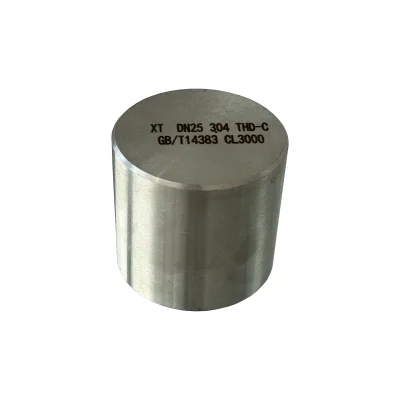


Premium Forged Stainless Steel Female Threaded Round Cap for Durable Connections
$1.00 - $50.00
MOQ: 100 Pieces


Comprehensive Sourcing Guide
Strategic Sourcing Guide for Forged Iron Oil Caps
Understanding Product Definitions and Material Composition
When initiating a procurement search for forged iron oil caps, buyers must first distinguish between the broad category of oil caps and the specific manufacturing method implied by the term "forged." In the context of industrial supply chains, a forged component is created by shaping metal using localized compressive forces, a process that typically enhances grain structure and mechanical strength compared to casting. However, the available market data presents a complex landscape of materials and definitions. While the core keyword specifies "iron," the observed product attributes indicate a significant presence of general "Metal" as a material category and specific instances of "NBR" (Nitrile Butadiene Rubber) for sealing applications.
Buyers must verify the exact material composition of the specific unit they intend to purchase. The supply chain data confirms that "Metal" is a standard attribute for items such as the "Oil Nozzle Cap" and "Screw Cap" types. Conversely, other listings in the same category describe "Oil Seal" or "Rotary Seal" products made from "NBR." This distinction is critical because a forged iron cap serves a structural or protective function, whereas an NBR seal serves a fluid containment function. A procurement strategy that conflates these two distinct material classes may result in receiving a rubber seal when a metal cap was required, or vice versa.
Furthermore, the manufacturing method is a key differentiator. The data explicitly lists "Forging" as a manufacturing way for certain flange and cap products. This suggests that for high-pressure or high-stress applications, buyers should specifically request forged variants. The "Oil Nozzle Cap" is described with a "Screw Cap" type and "OEM" specifications, indicating that these are often custom-machined or formed to fit specific equipment. The "Structure" is noted as "Round," which is the standard geometry for caps designed to cover threaded openings or nozzles. Buyers should not assume that all oil caps are forged; many may be cast or machined from bar stock. The verification of the "Forging" attribute must be a primary step in the supplier qualification process to ensure the component meets the required durability standards.
Technical Specifications and Dimensional Standards
The technical requirements for forged iron oil caps are governed by a variety of dimensional standards and manufacturing tolerances. The observed data reveals a wide spectrum of standardization practices, ranging from specific size ranges to adherence to international drawing standards. One critical observation is the listing of "2-3/8 2-7/8 3-1/2" as a product standard, which likely refers to thread diameters or nominal pipe sizes (NPS) relevant to oil and gas applications. Another dataset indicates a broader range of "1/2" - 24", suggesting that the market supports everything from small instrumentation caps to large industrial flange covers.
Buyers must carefully align their technical requirements with the supplier's capabilities regarding "Standard" versus "Nonstandard" production. The data shows that some suppliers operate under "Standard" and "Nonstandard" classifications, while others adhere strictly to "as per drawings." This implies that for off-the-shelf items, a buyer might find a supplier adhering to a specific size range, but for custom applications, the supplier will rely on the buyer's provided engineering drawings. The "prod_standard" attribute also lists "ISO" and a comprehensive list of international standards including "GOST, GB, DIN, ANSI, BSW, JIS." This indicates that a competent supplier should be capable of producing caps that meet the specific regional or industry standards required by the buyer's equipment.
Thread specifications are another vital technical parameter. The data explicitly mentions "NPT" (National Pipe Thread) as a connection type, with a note that "NPT" dimensions are "According to Customer." This confirms that while NPT is a common standard, the specific thread profile and tolerance are often customized. Additionally, the "Wall Thickness" specification lists "Sch20, Sch30, Sch40, Std, Xs, Xxs," which are standard schedule numbers for pipe wall thicknesses. A forged iron cap intended for high-pressure service must match the schedule of the pipe or vessel it is capping. If the cap is too thin, it may fail under pressure; if too thick, it may not fit the thread engagement depth.
The following table summarizes the observed technical parameters that buyers should verify against their specific project requirements:
| Parameter Category | Observed Attributes in Market Data | Verification Requirement for Buyer |
|---|---|---|
| Material | Metal, NBR | Confirm "Metal" for structural caps; distinguish from rubber seals. |
| Manufacturing | Forging, OEM | Explicitly request "Forging" process confirmation for strength. |
| Dimensions | 2-3/8 to 3-1/2, 1/2" to 24" | Match specific thread diameter to equipment specs. |
| Wall Thickness | Sch20, Sch30, Sch40, Std, Xs, Xxs | Select schedule based on pressure rating of the system. |
| Thread Type | NPT (Custom) | Provide exact thread profile or request NPT compliance. |
| Structure | Round | Confirm geometry matches the nozzle or opening shape. |
Compliance, Certification, and Quality Assurance
In the industrial sector, the integrity of oil caps is paramount due to the potential risks associated with fluid leaks, pressure failures, and environmental contamination. Consequently, compliance with international standards and third-party certifications is a non-negotiable aspect of the sourcing process. The market data highlights several key certifications and inspection protocols that serve as indicators of a supplier's quality management system. The "Certificate" attribute lists "CE" and "ISO," which are fundamental markers of compliance with European safety directives and international quality management systems, respectively.
The "ISO" certification mentioned in the data likely refers to ISO 9001, a standard for quality management, though the specific version (e.g., 2008, 2015) is not explicitly detailed in the high-confidence facts. Buyers should verify the specific version of the ISO standard held by the supplier to ensure it aligns with current industry expectations. Additionally, the "Standard" attribute lists "GOST, GB, DIN, ANSI, BSW, JIS," indicating that suppliers may be certified to produce components that meet the specific regulatory requirements of Russia, China, Germany, the US, the UK, and Japan. This flexibility is crucial for buyers operating in global supply chains where equipment must comply with local regulations.
Quality assurance extends beyond paper certifications to physical inspection and testing protocols. The data explicitly mentions "BV" (Bureau Veritas) and "SGS" as inspection agencies. These are globally recognized third-party inspection bodies that provide independent verification of product quality. A supplier that accepts BV or SGS inspection demonstrates a commitment to transparency and quality control. Furthermore, the "Test" attribute lists "Ut/PT/Mt," which correspond to Ultrasonic Testing, Penetrant Testing, and Magnetic Particle Testing. These are non-destructive testing (NDT) methods essential for detecting internal and surface defects in forged metal components.
For forged iron caps, the "Ut" (Ultrasonic Testing) is particularly relevant as it can detect internal voids or inclusions that might compromise the structural integrity of the forged metal. "PT" (Penetrant Testing) and "Mt" (Magnetic Particle Testing) are critical for identifying surface cracks that could lead to failure under pressure. Buyers should require suppliers to provide test reports from these specific methods, especially for high-pressure applications. The "Quality" attribute is described simply as "High Quality," which is a subjective claim. To validate this, buyers must demand evidence of the NDT tests and the specific inspection agencies involved.
Cost Drivers and Procurement Economics
The economics of sourcing forged iron oil caps are influenced by a variety of factors, including material costs, manufacturing complexity, and logistical considerations. The observed price range in the market spans from $0.01 to $398.32 USD. This wide variance is not indicative of a single product but rather reflects the diversity of the category, which includes small, simple caps to large, complex flange covers. A cap priced at $0.01 is likely a small, non-critical component, whereas a unit at $398.32 could be a large, heavy-duty forged flange or a custom-engineered cap with significant material volume.
The Minimum Order Quantity (MOQ) is another significant cost driver. The observed MOQ range is from 1 to 10,000 units. This suggests that the market accommodates both small-batch procurement for maintenance, repair, and operations (MRO) and large-scale production runs. For buyers requiring custom forged caps, the MOQ may be higher due to the setup costs associated with forging dies and tooling. Conversely, suppliers offering standard sizes may have lower MOQs, sometimes as low as a single unit, to attract smaller buyers.
Material costs play a substantial role in the final price. The data identifies "Metal" as the primary material, but the specific alloy (e.g., carbon steel, stainless steel, cast iron) is not explicitly detailed in the high-confidence facts. However, the "Forging" process implies the use of high-quality metal billets, which are generally more expensive than cast metal due to the energy and labor intensity of the process. The "Painting Color" attribute lists "Black/Yellow/Transparent Paint," indicating that surface finishing is an additional cost factor. Protective coatings are essential for preventing corrosion, especially in outdoor or marine environments, and the type of paint and application method will influence the unit price.
Logistics and packaging also contribute to the total cost of ownership. The "prod_packing" attribute lists "Plywood Case," "Standard Export Packing," "Wooden Cases or on Wooden Pallets," and "Carton or as Your Required." Heavy forged items require robust packaging to prevent damage during transit. The use of "Plywood Case" or "Wooden Cases" suggests that the supplier is prepared for international shipping, which may incur additional freight costs. Buyers should factor in the cost of packaging and the potential for freight charges when comparing quotes, as a lower unit price might be offset by higher shipping costs if the packaging is not optimized for the buyer's logistics network.
Typical Applications and Operational Context
Forged iron oil caps are utilized in a diverse range of industrial applications where fluid containment, pressure sealing, and equipment protection are critical. The data explicitly lists "Irrigation," "Ship Building," and "Water Treatment" as application areas. These sectors require components that can withstand harsh environmental conditions, including exposure to water, varying temperatures, and potential chemical contaminants. In shipbuilding, for instance, oil caps must resist saltwater corrosion and vibration, making the "Forging" process particularly valuable for its enhanced grain structure and fatigue resistance.
The "Application" attribute also mentions "Electric," suggesting that these caps may be used in electrical enclosures or machinery where oil is used for cooling or lubrication. In such contexts, the cap must provide a secure seal to prevent oil leakage, which could lead to electrical hazards or equipment failure. The "Pressure" attribute lists "Class 150, Class 300, Class 600, Class 900," which are standard pressure ratings for flanges and fittings. This indicates that forged iron oil caps are often part of high-pressure systems, such as those found in oil and gas pipelines, hydraulic systems, or industrial processing plants.
The "Connection" type is listed as "Flanged," which implies that these caps are designed to be bolted onto flanged openings rather than threaded directly. This is common in large-diameter pipes where a threaded connection would be impractical or too weak. The "Round" structure is consistent with the need to cover circular openings efficiently. The "Customization" attribute being "Available" suggests that buyers can request modifications to fit unique equipment configurations, such as specific flange dimensions or thread types.
In the context of "Gas Cylinder Caps & Necking Rings," the application shifts to the storage and transport of compressed gases. Here, the cap serves a safety function, protecting the valve from damage and preventing gas leaks. The "Screw Cap" type mentioned in the data is particularly relevant for this application, as it allows for a secure, removable closure. The "NPT" thread specification is also common in gas cylinder applications, ensuring compatibility with standard valve threads.
Supplier Evaluation and Long-Term Procurement Strategy
Selecting the right supplier for forged iron oil caps requires a rigorous evaluation process that goes beyond price comparison. Buyers should prioritize suppliers who demonstrate a clear understanding of the "Forging" process and can provide evidence of their manufacturing capabilities. The "OEM" (Original Equipment Manufacturer) and "Customization" attributes indicate that many suppliers are willing to work with buyers to produce custom solutions. However, buyers must verify the supplier's ability to maintain consistency in custom production, as the "as per drawings" standard implies a reliance on the buyer's specifications.
Location is another factor to consider. The data lists origins in "Sichuan," "Puyang Henan," "Ningbo, China," "Jiangsu, Jiangyin," and generally "China." These regions are known for their manufacturing clusters, but the specific location can impact lead times and logistics costs. For example, a supplier in Ningbo, a major port city, may offer faster shipping options for international buyers compared to a supplier in an inland province like Sichuan. However, inland suppliers might offer lower labor costs, which could offset the additional freight expenses.
The "Delivery" time is listed as "30 Days" in the data, which serves as a benchmark for lead times. Buyers should confirm this timeline with the supplier, as it may vary based on the complexity of the order, the availability of raw materials, and the current production schedule. For custom forged items, lead times may be longer due to the time required to create dies and set up the forging line.
Long-term procurement considerations include the supplier's ability to scale production and maintain quality over time. The "Quality" attribute is listed as "High Quality," but this must be validated through ongoing performance reviews. Buyers should establish a relationship with suppliers who are willing to engage in continuous improvement and who can provide consistent test reports for every batch. The availability of "BV" and "SGS" inspection services suggests that the supplier is open to third-party verification, which is a positive indicator for long-term reliability.
Finally, buyers should consider the total cost of ownership, including maintenance and replacement costs. A forged iron cap that is slightly more expensive upfront but offers superior durability and corrosion resistance may result in lower long-term costs by reducing the frequency of replacements and minimizing the risk of downtime. The "Painting Color" options, such as "Black/Yellow/Transparent Paint," also play a role in the longevity of the component, as certain coatings may offer better protection against specific environmental conditions. By carefully evaluating these factors, buyers can build a resilient supply chain that ensures the availability of high-quality forged iron oil caps for their critical operations.
FAQs
What materials are used for forged iron oil caps?
Metal is the primary material used for these caps, while NBR is used for specific seals. Buyers must verify the exact material to distinguish structural caps from rubber seals for fluid containment.
Which manufacturing methods are available for these caps?
Forging is the specific manufacturing method listed for high-stress applications. Buyers should explicitly request this process to ensure enhanced grain structure and mechanical strength compared to casting.
Can I get custom sizes for forged iron oil caps?
Customization is available, with dimensions often produced as per drawings. Suppliers also offer standard sizes ranging from 1/2 inch to 24 inches and specific thread standards like NPT.
What certifications do these products typically hold?
Products often carry CE and ISO certifications to ensure compliance. Suppliers may also adhere to international standards like GOST, GB, DIN, ANSI, BSW, and JIS for regional requirements.
How long is the delivery time for these caps?
The standard delivery time is typically 30 days. This lead time applies to the manufacturing and packaging process before the goods are shipped to the buyer.
What inspection methods are used for quality assurance?
Quality assurance includes inspection by BV and SGS agencies. Products undergo non-destructive testing methods such as Ultrasonic Testing, Penetrant Testing, and Magnetic Particle Testing to detect defects.