Source Forged Steel Crane Wheels for Cranes, Wagons, Carts
Explore 30 listings for Forged Steel Crane Wheels designed for cranes, wagons, and transfer carts. Buyers can compare specifications like diameter, material, and certifications from suppliers in China to find suitable machinery parts.
Key considerations
Products List


China Factory Direct Sale Crane Wheels with Shaft Forged Steel Crane Wheels
$270.00 - $300.00
MOQ: 1 Pieces


Forged Steel and Casting Steel Wheels with Multi-Function Crane Wheels
$210.00 - $230.00
MOQ: 1 Pieces

Forged Steel Crane Wheels Gantry Rail Wheel Crane Trolley Block Wheels
$210.00 - $230.00
MOQ: 1 Pieces

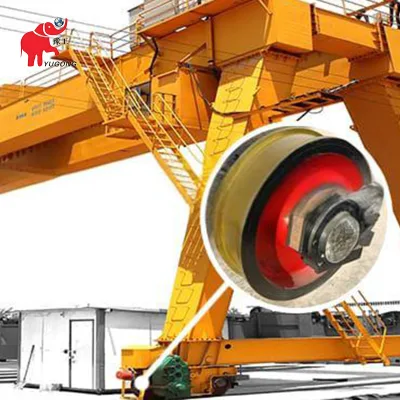


High Precision Alloy Steel Cold and Hot Forged Forgings Wheel Crane Rail Wheels
$200.00 - $3000.00
MOQ: 1 Pieces


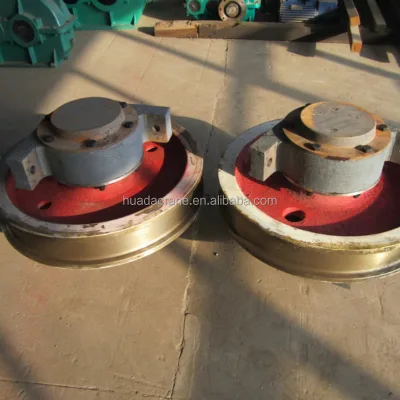
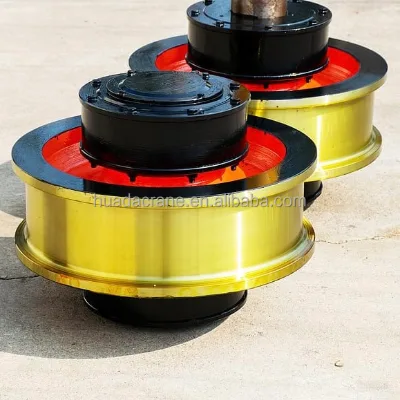
Comprehensive Sourcing Guide
Strategic Sourcing Guide for Forged Steel Crane Wheels
Understanding Technical Specifications and Material Standards
When initiating a procurement strategy for Forged Steel Crane Wheels, the primary focus must be on the precise technical attributes that define performance and longevity. The core material specification for these components is consistently identified as steel, selected for its high tensile strength and durability under heavy cyclic loading. The manufacturing process is predominantly forging, a method that aligns the grain structure of the metal to enhance mechanical properties compared to casting. This forging process is critical for applications involving cranes, wagons, transfer carts, and tunnel boring machines, where impact resistance is paramount.
Buyers must scrutinize the dimensional specifications, as these vary significantly based on the specific machinery requirements. Observed market data indicates a diameter range spanning from 25cm to 80cm, though many suppliers offer customization "as per the drawing" to accommodate unique engineering constraints. The standard model identifiers often include designations such as "OEM," "LD," "KCICRANES Crane Wheel," and specific model numbers like "up-W01." It is essential to verify that the supplier's "prod_model" aligns with the load-bearing capacity required for the intended application, whether it be a lifting platform, bridge crane, gantry crane, or double beam crane.
The tolerance levels for forging are another critical technical parameter. In high-precision environments, a forging tolerance of +/-0.5mm is a benchmark that buyers should seek to confirm. This level of precision ensures smooth operation within the crane trolley assembly and minimizes wear on the rail. Furthermore, surface treatment processes, such as polishing, are frequently employed to reduce friction and prevent corrosion, extending the service life of the wheel. The assembly status is also a key specification; some suppliers provide the complete assembly, while others supply the wheel component alone, requiring the buyer to manage the integration process separately.
Compliance, Certification, and Regulatory Standards
Navigating the compliance landscape is a non-negotiable aspect of sourcing industrial components. The supply chain for Forged Steel Crane Wheels is characterized by a variety of certifications and standards that validate quality and safety. ISO 9001 is a recurring certification observed in the market, often paired with specific heat treatment processes like quenching. This combination suggests a rigorous quality management system that ensures the material properties are consistent and reliable. Additionally, CE certification is frequently cited, indicating compliance with European health, safety, and environmental protection standards, which is vital for equipment exported to or used within the European market.
Beyond general quality certifications, specific material standards play a role in defining the product's metallurgical integrity. While the GB (Guobiao) standard is a common reference point, particularly for products originating from China, other standards such as AISI (American Iron and Steel Institute) are also relevant for international buyers requiring specific alloy compositions. The "prod_standard" field often lists "Custom" or "Large," which implies that the product may not adhere to a single rigid international standard but rather meets the specific engineering drawings provided by the client. Buyers must verify that the "Standard" attribute matches the regulatory requirements of their local jurisdiction.
The condition of the product is another compliance factor. Listings consistently describe the items as "New," which is a baseline expectation for industrial procurement. However, the presence of certifications like SGS (Société Générale de Surveillance) adds a layer of third-party verification regarding the product's quality and safety. When evaluating a supplier, procurement teams should request documentation proving these certifications are current and applicable to the specific batch of goods. It is crucial to understand that while certifications like ISO 9001 and CE are common, they are not universal guarantees for every single unit; they represent the supplier's capability and the batch's adherence to specific protocols.
Cost Drivers and Pricing Dynamics
The pricing structure for Forged Steel Crane Wheels is influenced by a complex interplay of factors, including material costs, manufacturing complexity, and order volume. The observed price range in the market spans from 1 to 3000 USD, reflecting the vast diversity in product size, weight, and customization requirements. A wheel with a diameter of 25cm will naturally carry a different price point than one measuring 80cm, with the larger units commanding higher prices due to increased material consumption and processing time.
Customization is a significant cost driver. The "Customization: Available" attribute indicates that buyers can request specific dimensions, tolerances, and surface treatments. While this flexibility is essential for matching unique machinery, it often incurs additional costs compared to standard off-the-shelf inventory. The "OEM: Supported" status further suggests that branding and specific engineering modifications are possible, which can impact the final unit price. Buyers should anticipate that "as per the drawing" orders will be priced differently than standard models like "LD" or "KCICRANES."
Packaging also contributes to the overall cost. The market observes various packaging types, including "Wooden Case," "Wood Box," and "Plywood Case." The choice of packaging affects the final price, especially for international shipping where robust protection is necessary to prevent damage during transit. Furthermore, the "MOQ" (Minimum Order Quantity) is a critical financial consideration. While some listings indicate an MOQ of 1, others specify an MOQ of 2. For buyers requiring large quantities, the unit price may decrease due to economies of scale, but the initial investment is dictated by these minimum thresholds. Understanding these variables allows buyers to budget accurately and negotiate effectively based on their specific volume needs.
Typical Applications and Operational Context
Forged Steel Crane Wheels are engineered for a wide array of heavy-duty industrial applications. The primary use cases include cranes, wagons, and transfer carts, which form the backbone of material handling in manufacturing and logistics facilities. The "Application" attribute frequently lists "Machinery Parts," "Hoisting Machinery," and specific crane types such as "Lifting Platform," "Bridge Crane," "Gantry Crane," and "Double Beam Crane." These applications demand wheels that can withstand significant vertical loads and lateral forces without deforming.
In addition to standard crane operations, these wheels are utilized in specialized machinery like tunnel boring machines. The ability to operate in diverse environments, from indoor warehouses to outdoor construction sites, requires wheels with high durability and resistance to environmental factors. The "Forging Tolerance" of +/-0.5mm is particularly relevant here, as it ensures that the wheels fit precisely into the trolley assemblies of these complex machines, preventing misalignment and premature failure.
The versatility of the product is further highlighted by the "prod_model" variations, which range from generic designations to specific model numbers tailored for different crane systems. Whether the application involves a simple transfer cart or a massive gantry crane, the fundamental requirement remains the same: a wheel that provides reliable movement under load. Buyers should match the wheel specifications, such as diameter and material, to the specific operational demands of their machinery. For instance, a tunnel boring machine may require different surface treatments or tolerances compared to a standard warehouse transfer cart, emphasizing the need for a detailed needs analysis before procurement.
Supplier Evaluation and Geographic Considerations
Evaluating suppliers for Forged Steel Crane Wheels requires a careful assessment of their geographic origins and production capabilities. The observed data points to a concentration of suppliers in specific regions of China, with "Henan" and "Luoyang" being prominent locations. These regions are known for their industrial manufacturing bases, particularly in the steel and heavy machinery sectors. The "prod_origin" field often lists "China" or specific cities like "Luoyang," indicating the source of the manufacturing.
When selecting a supplier, buyers should verify the "Assembly: Provided" attribute. Some suppliers offer complete assembly services, which can simplify the procurement process and reduce the risk of integration errors. Others may supply only the wheel component, requiring the buyer to manage the assembly separately. The "prod_packing" details, such as "Plywood Case" or "Wooden Box," also serve as indicators of the supplier's attention to detail and logistics capabilities. A supplier that invests in high-quality packaging is more likely to maintain high standards throughout the production process.
It is important to note that while specific supplier names are not provided in the data, the presence of certifications like ISO 9001 and CE, along with the "Customization: Available" attribute, suggests a mature supply chain. Buyers should prioritize suppliers who can demonstrate a track record of meeting the "Standard" requirements, whether that is GB, AISI, or custom specifications. The "OEM: Supported" status is another positive indicator, suggesting that the supplier is experienced in working with clients to produce tailored solutions.
Quality Control and Long-Term Procurement Strategy
Ensuring the quality of Forged Steel Crane Wheels is essential for maintaining operational safety and efficiency. The "Heat Treatment: Quenching" process is a key quality control measure that enhances the hardness and wear resistance of the steel. Buyers should verify that this process is consistently applied and that the resulting material properties meet the required specifications. The "Surface Treatment: Polishing" is another quality indicator, ensuring that the wheel surface is smooth and free from defects that could cause friction or damage to the rail.
For long-term procurement, buyers should establish a relationship with suppliers who offer consistent quality and reliable lead times. The "MOQ" of 1 or 2 suggests flexibility, but for ongoing operations, securing a contract that guarantees consistent supply is advisable. The "Custom" standard and "as Per The Drawing" attributes highlight the importance of clear communication and documentation. Buyers should maintain detailed records of the specifications and standards agreed upon to ensure that future orders match the initial requirements.
In conclusion, sourcing Forged Steel Crane Wheels requires a comprehensive understanding of technical specifications, compliance standards, cost drivers, and supplier capabilities. By focusing on the observed facts and maintaining a disciplined approach to quality control, buyers can secure high-performance components that meet the demands of their industrial applications. The diversity in models, diameters, and certifications offers a wide range of options, but careful evaluation is necessary to select the right product for the specific operational context.
FAQs
What certifications do Forged Steel Crane Wheels typically have?
Many products carry ISO 9001 and CE certifications to ensure quality and safety standards. Some listings also include SGS verification for third-party quality assurance. Buyers should verify that these certifications apply to the specific batch being purchased.
Can I get custom dimensions for these crane wheels?
Yes, customization is available with options to specify dimensions as per the client's drawing. The standard diameter range spans from 25cm to 80cm, but custom orders are supported for unique engineering requirements. This flexibility allows for tailored solutions.
What is the minimum order quantity for these wheels?
The minimum order quantity varies, with some listings accepting a single unit while others require two. Buyers should check specific supplier requirements before placing an order. This flexibility supports both small-scale testing and larger procurement needs.
Where are these Forged Steel Crane Wheels manufactured?
Products originate from industrial regions in China, specifically Henan and Luoyang. These locations are known for their steel and heavy machinery manufacturing capabilities. The origin is often listed as China or the specific city of manufacture.
How are these wheels packaged for shipping?
Packaging options include wooden cases, wood boxes, and plywood cases to ensure safe transit. The choice of packaging depends on the supplier and the specific product requirements. Robust packaging is essential to prevent damage during international shipping.
What material standards are used for these wheels?
The wheels are made of steel and often adhere to GB or AISI standards. Some products follow custom standards based on client drawings. The material selection ensures high tensile strength and durability for heavy-duty applications.