Source Foldable Portable Travel Commode for Elderly, Disabled, and Travelers
Compare 30 Foldable Portable Travel Commode options from verified Chinese manufacturers. Buyers can evaluate specifications like weight capacity, folding mechanisms, and certifications including CE and RoHS for medical and home care applications.
Key considerations
Products List


Adjustable Folding Lightweight Portable Medical Commode Toilet Move Wheelchair
$441.00 - $661.00
MOQ: 100 Pieces


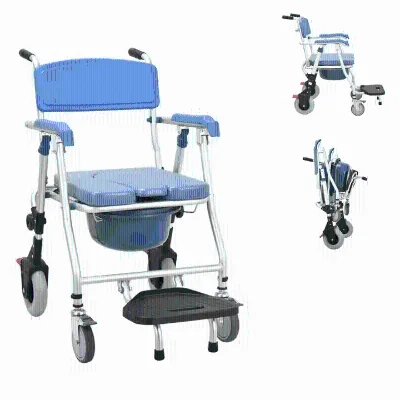
150kg Capacity Easy-Setup Folding Assisted Living Commode: Independence & Dignity
$62.50 - $68.00
MOQ: 10 Minimum


Hight Adjustable Aluminum Portable Commode for Elderly and Seniors up Load 120kg
$22.99 - $25.99
MOQ: 100 Pieces

Comprehensive Sourcing Guide
Strategic Sourcing Guide for Foldable Portable Travel Commode Units
The global demand for accessible mobility aids has intensified, driven by aging demographics and increased awareness of disability rights. Among the most critical categories within this sector is the Foldable Portable Travel Commode. These units serve as essential medical devices for individuals with limited mobility, offering a solution for hygiene and independence in both home and travel environments. For B2B procurement professionals, sourcing these devices requires a rigorous understanding of technical specifications, regulatory compliance, and supply chain dynamics. This guide provides a structured approach to evaluating and acquiring foldable portable travel commodes, ensuring that procurement decisions are grounded in verified facts and industry best practices.
Technical Specifications and Functional Design
When evaluating foldable portable travel commodes, the primary focus must be on the mechanical design and material composition that ensure durability and portability. The core functionality relies on a folding mechanism that allows the unit to be compacted for transport while maintaining structural integrity during use. Based on observed product attributes, the standard construction often utilizes steel as the primary material. This choice of material is critical for balancing weight with load-bearing capacity. The observed loading capacities in the market range from 100kg to 150kg, a variance that buyers must carefully match to the specific needs of their target demographic.
Dimensions are another pivotal specification. The standard footprint for these units often adheres to specific measurements, such as 604583cm or 7258.533.5cm, depending on the model. These dimensions dictate the portability of the unit; a smaller folded size is essential for travel applications, while a larger base may offer greater stability for stationary use. The seat height is a variable that significantly impacts user comfort and safety. Available models feature adjustable seat heights ranging from 47cm to 67cm, allowing customization for different user statures. Furthermore, armrest heights are often adjustable, spanning from 74cm to 94cm, which is crucial for users requiring assistance with transfers.
The configuration of the commode chair also varies. Some models are designed as "Type Tilted: Non-Tilted," while others offer a "Folding" mechanism as a standard feature. The leg rest type is another differentiator, with options including "Both Sides Separate" or "Across Both Sides." These variations affect the ease of cleaning and the suitability for specific medical conditions. Buyers should verify that the specific model selected aligns with the intended application, whether it is for elderly care, pediatric use, or rehabilitation therapy. The presence of a "Removable Commode Wheelchair" function or an "Adjustable Toilet Lift" feature adds significant value, transforming a simple chair into a versatile medical device.
Regulatory Compliance and Certification Verification
In the medical device sector, regulatory compliance is not merely a formality but a prerequisite for market entry and liability protection. The supply chain for foldable portable travel commodes is heavily regulated, with certifications serving as the primary evidence of safety and quality. The most frequently observed certifications in the market include CE, RoHS, UL, and ISO. The CE mark indicates conformity with health, safety, and environmental protection standards for products sold within the European Economic Area. RoHS compliance ensures that the product is free from specific hazardous materials, which is increasingly important for environmental and health reasons.
UL certification is another critical standard, particularly for markets in North America, signifying that the product has been tested by a recognized laboratory for safety. ISO certification, specifically for management systems, suggests that the manufacturer adheres to international standards for quality and consistency. However, buyers must exercise caution, as certification status can vary between different product lines from the same supplier. For instance, while one model may carry CE, RoHS, UL, and ISO certifications, another model from the same manufacturer might only list CE and ISO. Therefore, procurement teams must verify the specific certification status for each SKU before placing an order.
The regulatory type of the device is also a key consideration. Products are often classified under specific medical device regulatory types, such as "Type Tilted: Non-Tilted." This classification can influence the level of regulatory scrutiny required for import and sale in different jurisdictions. Buyers should ensure that the supplier can provide valid documentation for all claimed certifications, as the absence of these documents can lead to customs delays or legal liabilities. Additionally, the origin of the product, often listed as China or specific provinces like Hebei, may impact the regulatory framework applicable to the goods, requiring specific import licenses or testing in the destination country.
Cost Drivers and Pricing Dynamics
Understanding the cost structure of foldable portable travel commodes is essential for effective budgeting and negotiation. The observed price range in the market is broad, spanning from $0.01 to $661 USD. This wide variance is not indicative of a single product but rather reflects the diversity of models, materials, and feature sets available. The lower end of the price spectrum typically corresponds to basic, non-adjustable models with minimal features, while the higher end includes units with advanced functionalities such as adjustable armrests, specialized leg rests, and premium materials.
Several factors drive the cost of these devices. Material quality is a primary driver; steel construction is standard, but the gauge and finish of the steel can significantly affect the price. Customization is another major cost factor. While many products offer "Customization: Available," the extent of this customization—whether it involves color, dimensions, or specific medical features—will influence the final unit cost. The observed MOQ (Minimum Order Quantity) ranges from 1 to 500 units, meaning that buyers can source small quantities for testing or large volumes for distribution, with the unit price likely decreasing as volume increases.
Packaging also plays a role in the overall cost. Products are typically packed in "Color Box" or "Carton" formats, with specific packing standards such as "5pcs/carton" or "1 Piece /CTN." Efficient packaging reduces shipping costs and minimizes damage during transit, which is a critical consideration for international procurement. Buyers should request detailed cost breakdowns that include material, labor, packaging, and logistics to understand the true cost drivers. It is important to note that the price range observed is an aggregate of various market listings and should not be used as a definitive benchmark for a specific high-end model without further verification.
Typical Applications and User Demographics
The versatility of foldable portable travel commodes makes them suitable for a wide range of applications and user demographics. The primary application is for the elderly, who often require assistance with mobility and hygiene. However, the market data indicates that these devices are also designed for children and pregnant women, highlighting their adaptability to different physical needs. The "Use Crowd" attribute explicitly lists "Handicapped Elderly Paralyzed Disabled People," underscoring the device's role in rehabilitation therapy and daily living support.
In a travel context, the "Fold Compact" and "Portable" nature of these commodes is paramount. They allow individuals with mobility issues to maintain independence while away from home, whether for vacation or business travel. The "Multi-Function" characteristic is a key selling point, as these units often serve as both a commode and a wheelchair, or include features like "Removable Commode Wheelchair" functionality. This dual-purpose design reduces the need for multiple devices, offering a cost-effective solution for caregivers and institutions.
The application also extends to medical facilities and rehabilitation centers. The "Rehabilitation Therapy Supplies" classification suggests that these units are integral to physical therapy programs. The adjustable features, such as seat height and armrest height, allow therapists to customize the device for specific exercises or patient needs. Buyers should consider the specific requirements of their end-users when selecting a model. For instance, a facility serving paralyzed patients may require a unit with a "Leg Rest Type: Both Sides Separate" for easier transfers, while a travel-focused product might prioritize a compact "Folding" design.
Supplier Evaluation and Sourcing Strategy
Selecting the right supplier is a critical step in the procurement process. Given the global nature of the market, with products originating from locations such as China and Hebei, buyers must conduct thorough due diligence. The first step is to verify the supplier's ability to meet the specific technical and regulatory requirements outlined in the product specifications. This includes confirming the availability of certifications like CE, RoHS, UL, and ISO for the specific models being sourced.
Buyers should also evaluate the supplier's production capacity and lead times. While specific lead times are not provided in the observed data, the MOQ range of 1 to 500 units suggests flexibility in production scaling. Suppliers that can accommodate both small and large orders are preferable, as they offer greater adaptability to changing market demands. The "Customized: Customized" attribute indicates that some suppliers offer tailored solutions, which can be a significant advantage for buyers with unique requirements.
Quality control is another essential aspect of supplier evaluation. Buyers should request samples to verify the build quality, material strength, and functionality of the commode units. The "Condition: New" attribute is a standard expectation, but physical inspection is necessary to ensure that the product meets the buyer's quality standards. Additionally, buyers should assess the supplier's after-sales support, including warranty terms and availability of spare parts. A reliable supplier will provide comprehensive support to ensure the long-term success of the procurement.
Quality Control and Long-Term Procurement Considerations
Ensuring the quality of foldable portable travel commodes requires a robust quality control (QC) process. Given the critical nature of these devices for user safety, buyers should implement strict QC measures at various stages of the supply chain. This includes pre-production inspections to verify material specifications, in-process inspections to monitor manufacturing quality, and pre-shipment inspections to ensure the final product meets all requirements. The "Characteristic: Beautiful, Fashion, Resistance to Heavy, Design Sense, Multi-Function" attribute suggests that aesthetic and functional quality are both important, and QC should reflect this balance.
Long-term procurement considerations involve building a sustainable relationship with suppliers. This includes establishing clear communication channels, agreeing on consistent quality standards, and planning for future product iterations. The "Standard: Universal" attribute indicates that many products adhere to general industry standards, but buyers should also consider specific standards that may apply to their market. For example, the "Standard: 1100630980mm" or "Standard: 604583CM" dimensions should be verified against local regulations and user needs.
Buyers should also consider the environmental impact of their procurement decisions. The "RoHS" certification indicates a commitment to reducing hazardous materials, which aligns with global sustainability goals. Additionally, the "Product Packing: Color Box" or "Carton" options should be evaluated for their recyclability and environmental footprint. By prioritizing suppliers who demonstrate a commitment to quality, compliance, and sustainability, buyers can ensure a reliable supply chain that meets the evolving needs of the market.
Conclusion
Sourcing foldable portable travel commodes requires a comprehensive approach that balances technical specifications, regulatory compliance, cost efficiency, and supplier reliability. By focusing on the key attributes observed in the market, such as steel construction, adjustable dimensions, and diverse certifications, buyers can make informed decisions that meet the needs of their end-users. The broad price range and MOQ flexibility offer opportunities for both small-scale and large-scale procurement, but careful evaluation of each supplier and product model is essential. As the demand for accessible medical devices continues to grow, a strategic and evidence-based sourcing approach will be critical for success in this dynamic market.
FAQs
What certifications do foldable portable travel commodes typically have?
These units commonly carry CE, RoHS, UL, and ISO certifications. Some models may only list CE and ISO, so buyers must verify the specific certification status for each SKU before ordering to ensure regulatory compliance.
How much weight can these commodes support?
The loading capacity typically ranges from 100kg to 150kg depending on the model. Buyers should match this capacity to the specific needs of their target demographic to ensure safety and structural integrity during use.
Can I customize the dimensions or features of these chairs?
Customization is available for many models, allowing adjustments to dimensions and features. However, some products are listed as non-customized, so procurement teams must confirm the customization status for the specific product line they intend to purchase.
What materials are used to construct these portable commodes?
Steel is the standard material used for construction to balance weight with load-bearing capacity. This choice ensures durability while maintaining the portability required for travel and home use applications.
Where are these products typically manufactured?
Products are primarily sourced from China, with specific origins including Hebei province. Buyers should consider the origin when evaluating regulatory frameworks and import requirements for their destination markets.
What is the minimum order quantity for these units?
The minimum order quantity ranges from 1 to 500 units depending on the supplier. This flexibility allows buyers to source small quantities for testing or large volumes for distribution without strict volume constraints.